


Techniques for better golf impact separate golfers who strike the ball purely, round after round, from those who battle inconsistent contact. Impact position — the split second the clubface meets the ball — shapes distance, direction, and trajectory more than any other part of the swing. Yet most golfers spend hours grooving a pretty backswing while ignoring the moment that actually decides the outcome. This guide breaks down the biomechanics, drills, and common mistakes behind a powerful, repeatable impact, drawing on kinesiology-based coaching methods used by elite-level instructors such as those at yourgolfguru.com.
Quick Answer
Techniques for better golf impact are the specific swing adjustments — such as forward shaft lean, proper weight transfer, and a flat lead wrist — that golfers use to compress the ball and produce consistent, powerful contact. Focusing on these three elements typically improves ball-striking within a few weeks of deliberate practice.
What Is Impact Position in Golf?
Impact position refers to the exact posture, hand location, and clubface angle at the moment the club strikes the ball. It typically lasts less than five milliseconds, yet it determines nearly everything about ball flight. Specifically, three variables define quality impact: where your weight sits, how your wrists are oriented, and where the clubhead travels relative to the ball.
Golfers who understand the golf swing as a coordinated kinetic chain can diagnose impact issues far faster than those who only watch ball flight. In particular, this is where golf swing biomechanics becomes useful — it is the science of how muscles, joints, and forces combine to move the body and the club through space.
Why Techniques for Better Golf Impact Matter
TrackMan launch-monitor data shows that tour professionals typically produce a downward attack angle of roughly three to five degrees with their irons, compressing the ball against the turf for maximum control. Amateur golfers, in contrast, often swing upward on iron shots, which adds unwanted loft and reduces both distance and accuracy.
Poor impact position doesn’t only cost distance; it also increases stress on the wrists, elbows, and lower back, since compensations like early extension pull joints outside their natural range. As a result, techniques for better golf impact aren’t only about performance — they’re also about protecting your body from long-term injury, a philosophy reinforced by kinesiology-trained instructors. Even major champions occasionally battle impact issues under pressure, as shown in this breakdown of lessons from the PGA Seniors Championship by KitchenAid.

Solid contact starts with the right techniques for better golf impact, not just a fast swing.
The Biomechanics Behind a Powerful Golf Impact
Every efficient impact position begins well before the club reaches the ball. In fact, the body’s kinetic chain — the sequence in which the hips, torso, arms, and hands move — determines whether energy arrives at the clubhead or leaks out along the way. Understanding this sequence, as explained on Wikipedia’s overview of the golf swing, helps explain why timing matters as much as strength.
Weight Transfer and Ground Force
During the downswing, elite players shift their center of mass toward the target before the arms swing down. This movement generates ground reaction force, a concept rooted in biomechanics that describes how pushing against the ground creates upward and rotational energy. Consequently, that force travels up through the legs and hips, adding speed at impact without requiring extra arm effort.
Wrist and Clubface Control at Impact
While the lower body drives power, the wrists control direction and compression. A flat lead wrist — meaning the back of the hand stays aligned with the forearm — keeps the clubface square through contact. In contrast, a cupped wrist opens the face, causing weak, high shots that lose both distance and accuracy.
Step-by-Step Process to Improve Your Impact Position
Building better impact mechanics works best as a sequence rather than a single fix. Follow these five steps in order for lasting change.
- Assess your current impact pattern. Record several swings from a face-on and down-the-line angle, then check for indicators of thin, fat, or toe strikes to identify your specific impact flaw.
- Set up with a slight forward lean. Position the shaft leaning slightly toward the target at address so your hands sit ahead of the clubhead, encouraging a descending strike on irons.
- Practice the step-through drill. Take practice swings while stepping your trail foot toward the target through impact, training your lower body to shift weight forward before the club arrives.
- Groove a flat lead wrist. Hold an alignment stick against your lead forearm during slow-motion swings to feel a flat wrist position at impact instead of a cupped, weak release.
- Validate with video or launch monitor data. Compare your attack angle, shaft lean, and clubface angle numbers against tour averages to confirm your new technique under real conditions.
Common Mistakes That Ruin Impact Quality
Even motivated golfers repeat a handful of predictable errors. Above all, watch for these patterns during practice sessions:
- Early extension — standing up out of your posture through the downswing, which pushes the club outward and causes shanks or slices.
- Casting the club — releasing wrist angles too soon, which scoops the ball instead of compressing it.
- Hanging back — leaving weight on the trail foot at impact, a common cause of thin or fat contact.
- Reverse spine angle — tilting the upper body away from the target, which limits rotation and power transfer.
Fixing these habits often requires looking beyond the swing itself. For a broader perspective, this piece on thinking outside the golf swing box explains why mental and physical factors both play a role in consistent contact.
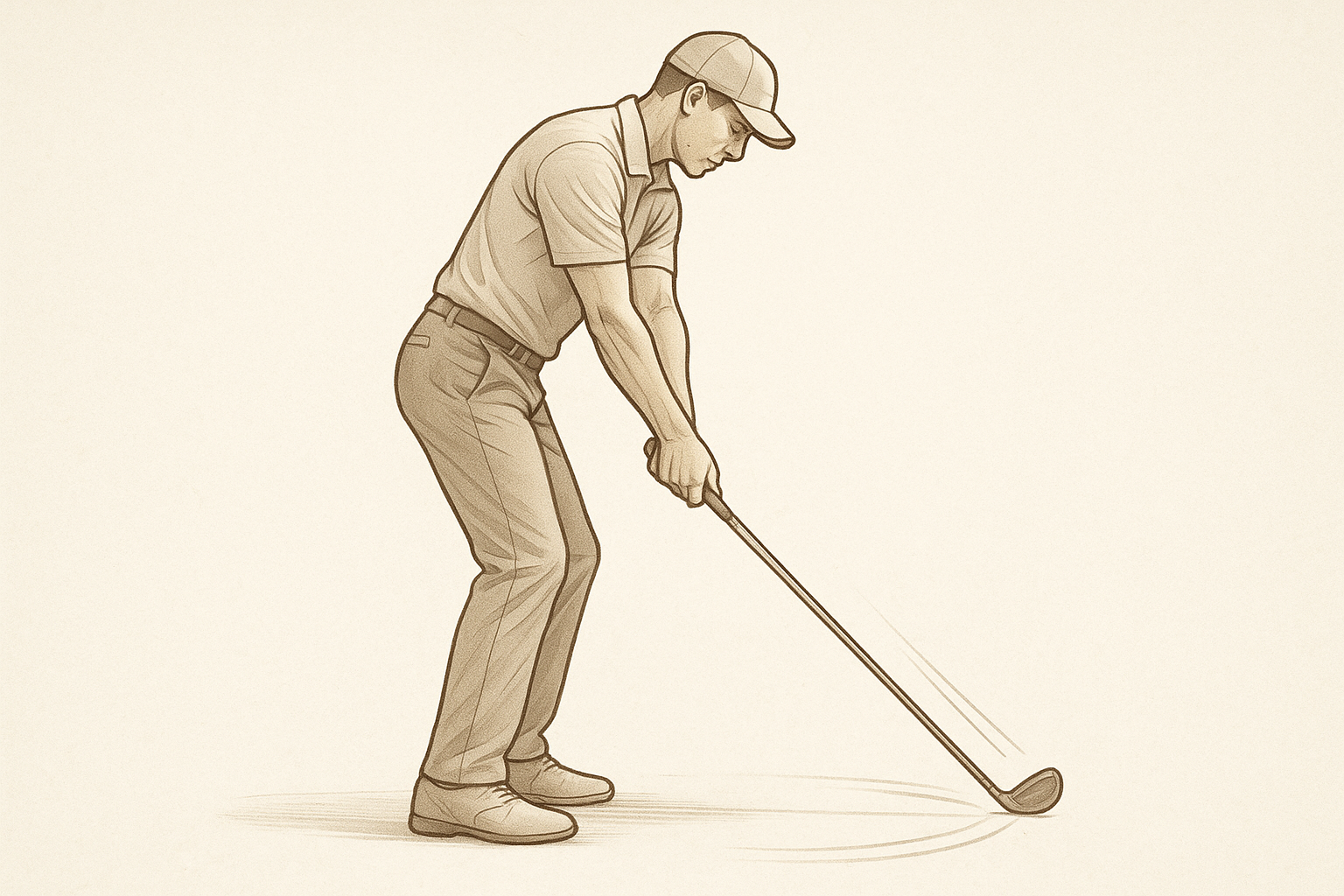
Proper weight transfer feeds directly into a powerful, compressed impact position.
Drills to Build Consistent Impact
Drills work best when they isolate one variable at a time. For example, the “towel under the arm” drill limits excess arm movement, forcing the body to rotate through impact instead of relying on the hands. Similarly, hitting punch shots with a shortened swing builds a strong feel for a flat wrist and forward shaft lean without the distraction of full-speed timing.
Once these feels become automatic, gradually add speed back into the swing. In addition, tracking distance gains during this process can be motivating; this guide on how to hit the ball further, straighter, and higher pairs well with impact-focused drills for measurable results.
How Expert Coaching Improves Your Impact Position
Self-diagnosis has limits, particularly for competitive amateurs, collegiate players, and aspiring professionals chasing marginal gains. Yourgolfguru.com addresses this gap through remote instruction led by an LPGA Master Professional who also holds a PhD in kinesiology. This combination blends biomechanical analysis with decades of elite teaching experience, targeting impact flaws that generic advice usually misses. Author credentials and a short bio are available on the coach profile and About page to verify expertise.
Because lessons are delivered digitally, golfers anywhere can access this level of data-driven coaching without traveling to a physical facility. Furthermore, the curriculum prioritizes injury prevention alongside performance, ensuring that added power never comes at the cost of joint health. Golfers ready to commit to long-term improvement can explore practical planning ideas in this resource on how to make this your best-ever golf year.
Frequently Asked Questions About Techniques for Better Golf Impact
What is impact position in golf?
Impact position is the exact posture, hand location, and clubface angle at the moment the club strikes the ball. It lasts less than five milliseconds but determines nearly all of the ball’s distance, direction, and trajectory.
What are the best techniques for better golf impact?
The best techniques for better golf impact include forward shaft lean, proper weight transfer toward the target, and maintaining a flat lead wrist through the strike. Together, these produce compressed, powerful, and repeatable contact.
How long does it take to improve golf impact position?
Most dedicated golfers notice measurable improvement within two to four weeks of focused drill work. However, permanently changing impact habits under pressure often takes a full season of practice and on-course reinforcement.
Why do amateur golfers struggle with ball-striking at impact?
Amateurs typically struggle because they shift weight backward, cup the lead wrist, or rely on the arms instead of the body to deliver the club. These compensations add loft and reduce clubhead speed at contact.
What is the difference between impact position for irons and drivers?
Irons require a slightly downward attack angle to compress the ball against the turf, while drivers benefit from a neutral or slightly upward angle since the ball sits on a tee. The wrist and weight principles, though, stay consistent across both clubs.
How much does online golf swing coaching cost?
Online coaching pricing varies depending on the coach’s credentials and the depth of video or biomechanical analysis provided. Programs led by advanced-credential instructors, such as an LPGA Master Professional, typically reflect that specialized expertise in their pricing tiers.
What is a flat lead wrist and why does it matter at impact?
A flat lead wrist means the back of the lead hand stays aligned with the forearm at impact rather than cupping upward. This position keeps the clubface stable and square, which is essential for consistent ball-striking.
What are common mistakes golfers make at impact?
Common mistakes include early extension, casting the club too early, hanging back on the trail foot, and a cupped lead wrist. Each of these reduces compression and increases mishits like thin or fat contact.
Can a launch monitor help me improve my impact position?
Yes, a launch monitor provides objective data on attack angle, clubface angle, and dynamic loft at impact. Comparing your numbers to tour averages helps confirm whether a drill is actually changing your impact conditions.
Is forward shaft lean necessary for every golfer?
Forward shaft lean benefits most iron shots by promoting solid, descending contact. In contrast, some shots around the green or from specialty lies may call for a more neutral setup, so context matters.
How does weight transfer affect impact quality?
Weight transfer moves your body’s center of mass toward the target before the club arrives, generating ground reaction force. This force feeds up through the legs and torso, adding speed and stability at impact.
How does biomechanics relate to golf swing safety?
Biomechanics studies how joints and muscles move under load, revealing which impact patterns place excess stress on the spine, wrists, or elbows. Applying that science helps golfers generate power while reducing injury risk.
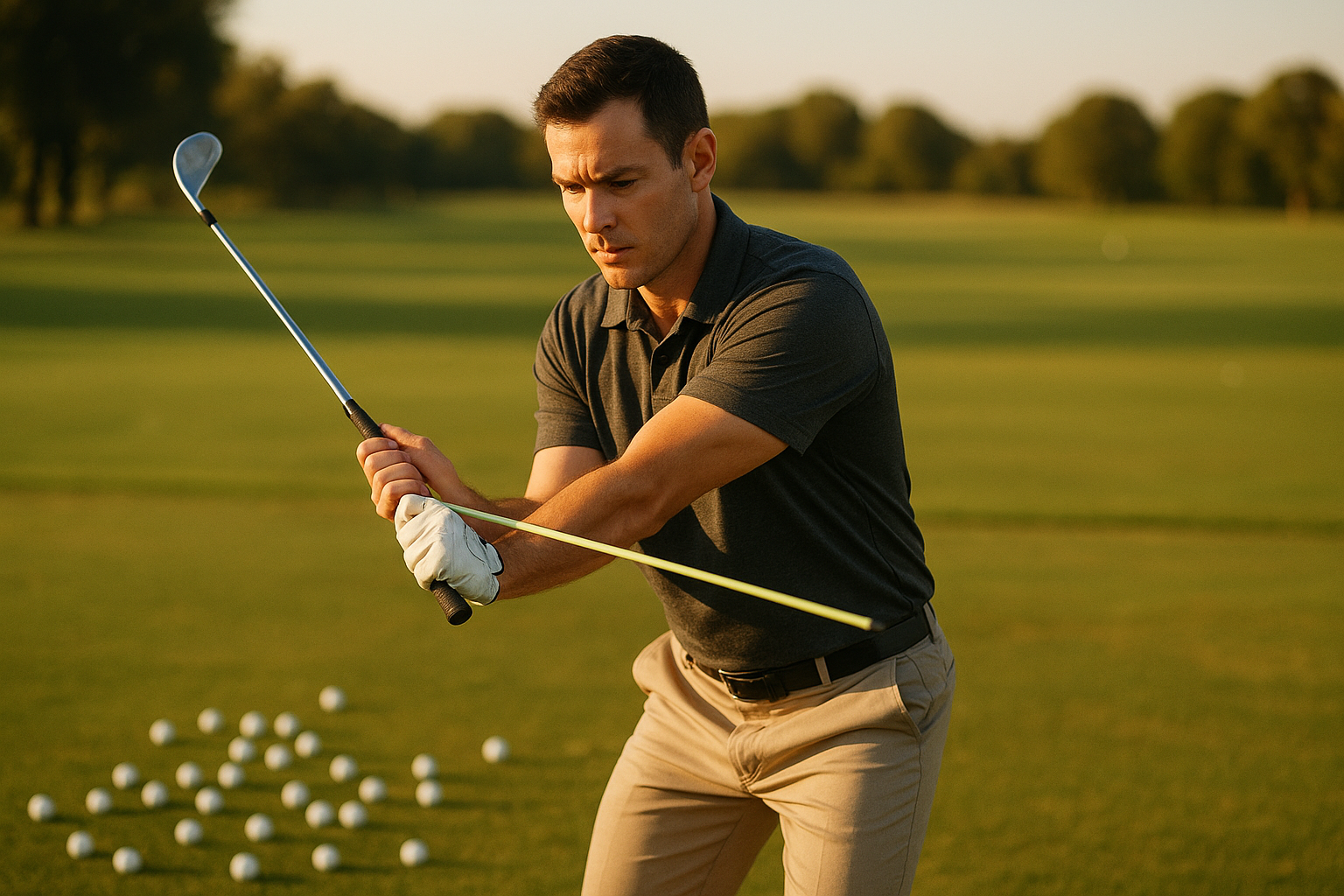
Deliberate drills, repeated consistently, turn new impact techniques into automatic habits.
Final Thoughts on Better Golf Impact
Ultimately, techniques for better golf impact come down to a few repeatable fundamentals: shifting weight forward, keeping a flat lead wrist, and delivering the clubhead with the handle leading the face. Practicing these elements deliberately, rather than hoping for random improvement, builds the kind of consistent ball-striking that separates advancing players from those who plateau.
Above all, remember that lasting change takes structured feedback and patient repetition. Whether you work through the drills in this guide or pursue personalized, data-driven coaching, refining your impact position remains one of the highest-leverage investments you can make in your game. To explore expert-led, kinesiology-based instruction built specifically for serious players, visit yourgolfguru.com.