


Swing dynamics for elite players describes the biomechanical forces, sequencing, and timing that separate tour-level ball striking from average amateur play. Unlike casual instruction that focuses on isolated tips, this approach examines how the whole body — hips, torso, arms, and club — works together through every phase of the swing. For competitive amateurs, collegiate athletes, and aspiring professionals, understanding these mechanics is essential to unlocking consistent power and accuracy while protecting the body from injury.
In particular, elite-level performance depends less on raw athleticism and more on how efficiently force moves through the body. As a result, coaches who understand kinesiology — the scientific study of human movement — can pinpoint exactly where a swing loses energy and how to fix it.

Studying swing dynamics for elite players reveals how force transfers efficiently from the ground into the clubhead.
What Is Swing Dynamics for Elite Players?
Swing dynamics for elite players refers to the measurable sequence of forces, angles, and rotational speeds that occur during a golf swing at the highest competitive levels. It combines kinematics, or motion, with kinetics, or force, to explain how energy transfers efficiently from the ground through the body into the clubhead. Coaches use this data to refine technique, increase clubhead speed, and reduce injury risk.
Specifically, this analysis goes beyond simply watching a swing on video. It requires understanding joint angles, timing gaps, and rotational velocity in relation to one another. Consequently, two golfers with similar swing speeds can have very different underlying dynamics, which explains why one may generate power more sustainably than the other.
According to general biomechanical models of the golf swing, the motion unfolds in distinct phases: setup, backswing, transition, downswing, impact, and follow-through. Each phase contributes to the overall dynamic chain, and a breakdown in any single phase affects everything that follows.
Why Swing Mechanics Matter for Competitive Golfers
At the recreational level, minor inefficiencies often go unnoticed because scoring margins are wide. However, at the elite and competitive level, tiny timing differences translate directly into strokes gained or lost. Therefore, refining swing mechanics becomes a priority rather than an afterthought.
Sports biomechanics research using 3D motion capture has found that elite players can generate peak hip rotation speeds well above those of recreational golfers during the downswing, often nearly double in some comparisons. This gap in rotational speed, combined with better sequencing, is a major reason elite players achieve greater clubhead speed without swinging harder.
In addition, consistent mechanics reduce variability under pressure. For example, a player with a repeatable kinetic sequence is less likely to see their ball flight change drastically during the final round of a tournament. This is one reason why reducing unnecessary overall swing movement is often a focus of advanced coaching.
The Kinesiology Behind Elite Swing Performance
Kinesiology is the scientific study of human movement, including how muscles, joints, and the nervous system coordinate to produce motion. When applied to golf, this science explains why certain positions generate more power while others create unnecessary strain.
For instance, an instructor trained in kinesiology can identify whether a player’s lower back pain stems from over-rotation, poor hip mobility, or compensations elsewhere in the chain. As a result, corrections are grounded in anatomy rather than guesswork, which is particularly valuable for athletes managing heavy competitive schedules.
This scientific lens is also why programs built around newer research-backed swing science tend to produce more sustainable results than generic tips found online. Similarly, examining real competitive swings, such as those analyzed in a breakdown of U.S. Women’s Open participants’ swings, shows how varied elite technique can look while still following sound biomechanical principles.
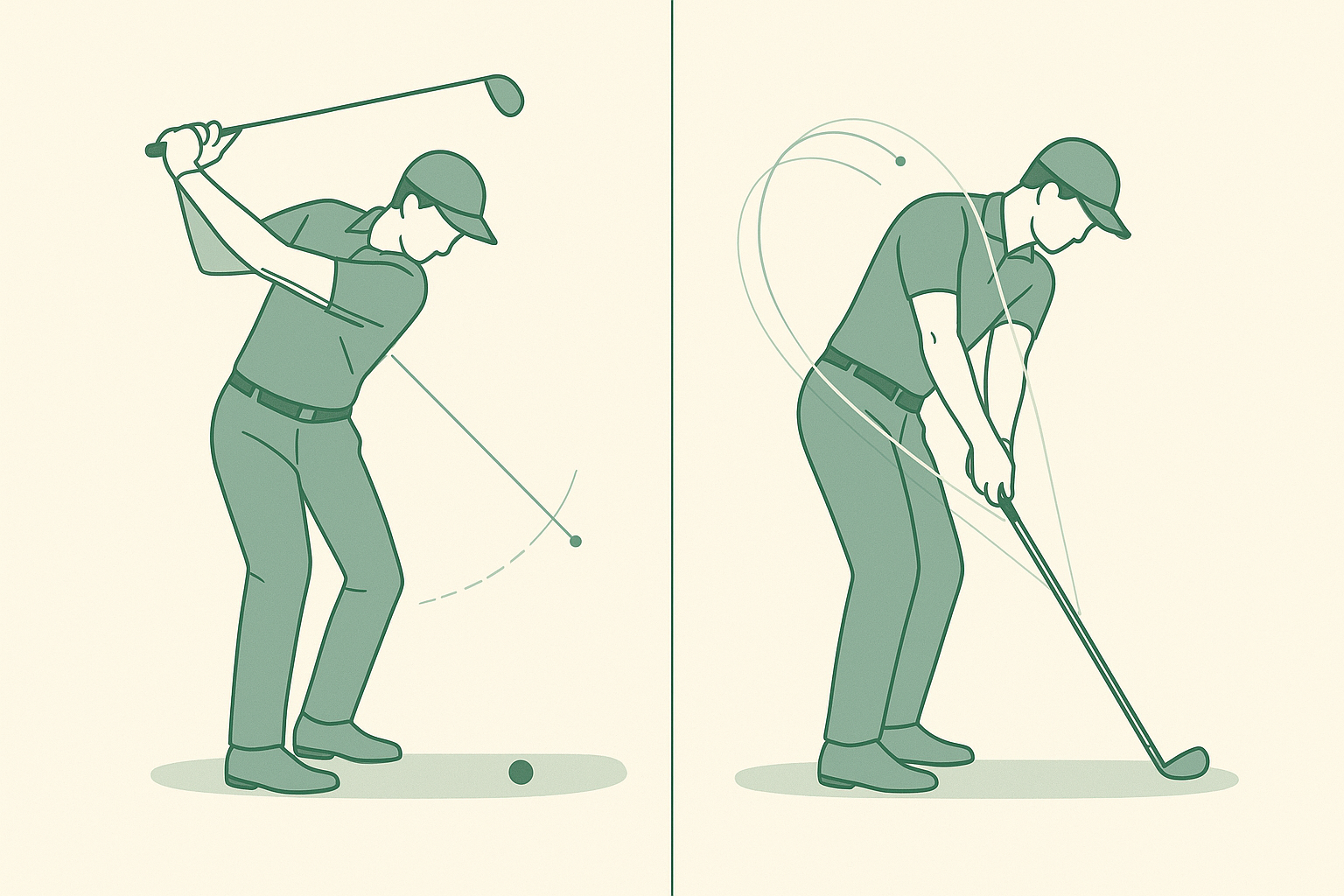
Motion capture and force-plate data reveal subtle differences in elite swing sequencing.
Key Components of Elite Swing Dynamics
Several measurable components make up elite swing dynamics. Understanding each one helps clarify what separates advanced players from the rest of the field.
- Kinetic chain sequencing: the order in which the hips, torso, arms, and club accelerate through the swing.
- Ground reaction forces: the pressure applied into the ground that powers rotational speed.
- X-factor stretch: the separation between hip and shoulder rotation during the backswing and downswing.
- Clubhead path consistency: how repeatable the swing plane remains under competitive pressure.
- Impact position: the alignment of the body and club at the exact moment of contact.
Notably, a shared pattern often appears among top performers. As highlighted in an analysis of six top women’s backswings, elite players frequently share specific positional traits despite otherwise unique swing styles.
How to Improve Your Swing Dynamics: A Step-by-Step Approach
Improving swing dynamics is a structured process rather than a single fix. The following steps outline a proven approach used by advanced coaches.
- Assess your current mechanics by recording your swing on video and, when possible, using force-plate or motion-capture data to establish a clear baseline of your sequencing and force output.
- Identify sequencing inefficiencies by working with a qualified coach to pinpoint exactly where energy transfer breaks down between the hips, torso, arms, and clubhead.
- Retrain movement patterns through targeted drills that isolate the specific segment of the kinetic chain needing correction, starting slowly before adding speed.
- Reinforce the changes under pressure by introducing the new pattern into on-course practice and simulated competitive situations until it becomes automatic.
- Reassess with follow-up analysis every few months to confirm the new sequencing has been retained and to catch any new compensations early.
Common Mistakes That Hurt Swing Mechanics at the Elite Level
Even highly skilled players fall into predictable traps that disrupt their dynamics. Recognizing these mistakes early prevents them from becoming permanent habits.
First, many players overuse their arms instead of relying on lower-body rotation to initiate the downswing. Second, losing posture during rotation reduces the efficiency of the entire kinetic chain. Third, rushing the transition from backswing to downswing often causes players to lose the sequencing they worked hard to build. Finally, ignoring recovery and mobility work can quietly erode swing consistency over a long competitive season, a concern well documented by organizations such as the USGA.
Interestingly, some of these mistakes stem from a narrow focus on isolated positions rather than the swing as a connected system. This is precisely why thinking outside the traditional golf swing box matters so much for serious players looking to break through a performance plateau.
Choosing an Elite-Level Golf Coach for Swing Analysis
Not every instructor is equipped to analyze swing dynamics at this level of detail. Consequently, serious players should look for coaches who combine advanced credentials with a genuine understanding of human movement science.
For example, yourgolfguru.com offers remote instruction developed by an LPGA Master Professional who also holds a PhD in kinesiology. This combination allows coaching decisions to be grounded in biomechanical evidence rather than generic advice, which is especially valuable for competitive amateurs, collegiate players, and aspiring professionals who need guidance beyond what typical local instructors can provide. Author: LPGA Master Professional, PhD (author bio available on-site). Last updated: 2026-08-16.
Because the platform operates entirely online, geographic location is no longer a barrier to accessing elite-level coaching. Ultimately, this remote model allows athletes anywhere to receive the same depth of biomechanical analysis once reserved for players training at major golf academies.

Remote coaching makes advanced swing dynamics analysis accessible from anywhere.
Frequently Asked Questions About Swing Dynamics for Elite Players
What is swing dynamics for elite players?
Swing dynamics for elite players is the measurable sequence of forces, angles, and rotational speeds that occur during a golf swing at the highest competitive levels. It combines motion and force data to show how energy transfers from the ground through the body into the clubhead.
How does swing dynamics differ from basic swing mechanics?
Basic swing mechanics usually covers grip, stance, and general positions, while swing dynamics measures timing, sequencing, and force output between body segments. Elite instruction focuses on dynamics because small timing errors cost significant distance and accuracy at competitive speeds.
Why do elite golfers need advanced biomechanical analysis?
Elite golfers operate with a very small margin for error, so biomechanical analysis identifies inefficiencies invisible to the naked eye. This data-driven approach helps refine power production while reducing repetitive strain on joints.
How long does it take to improve swing dynamics?
Most competitive players notice measurable changes in sequencing within four to eight weeks of focused work. However, fully ingraining new movement patterns under tournament pressure often takes a full competitive season.
What tools are used to measure swing dynamics?
Coaches commonly use high-speed video, 3D motion capture, and force plates to quantify swing dynamics. These tools track joint angles, rotational speed, and ground reaction forces throughout the swing.
How much does elite-level golf swing coaching cost?
Pricing varies widely depending on credentials and format, ranging from roughly $75 per session for general instruction to several hundred dollars for specialized biomechanical assessments. Remote coaching from highly credentialed instructors often costs less than in-person sessions at elite training academies.
What is the kinetic chain in a golf swing?
The kinetic chain is the sequential transfer of energy from the ground, through the legs and hips, into the torso, arms, and finally the clubhead. Elite players sequence this chain more efficiently than amateurs, which produces greater clubhead speed with less physical effort.
Can amateur golfers benefit from studying swing dynamics for elite players?
Yes, amateur golfers can apply the same sequencing principles to improve consistency, even without matching elite swing speeds. Understanding proper force transfer helps any golfer reduce injury risk and swing more efficiently.
What common mistakes hurt swing dynamics at the elite level?
Common mistakes include overusing the arms instead of the lower body, losing posture during rotation, and rushing the transition from backswing to downswing. These errors disrupt sequencing and reduce both power and accuracy.
How does kinesiology improve golf swing performance?
Kinesiology, the scientific study of human movement, allows coaches to analyze joint mechanics and muscle activation patterns objectively. This science-based approach identifies exactly which movement adjustments will improve performance while protecting the body from overuse injuries.
What is the difference between clubhead speed and swing efficiency?
Clubhead speed measures how fast the club moves at impact, while swing efficiency measures how much of the body’s generated force actually transfers into that speed. Two players can have similar clubhead speeds, yet one may achieve it with far less physical strain.
How often should elite players reassess their swing mechanics?
Most competitive players benefit from a formal swing assessment every three to six months, or after any significant technical change. Frequent monitoring catches compensations before they become ingrained habits.
Is remote online coaching effective for refining swing dynamics?
Remote coaching can be highly effective when it uses detailed video analysis and structured feedback, especially for players who lack access to elite-level instructors locally. It allows athletes anywhere to work with specialized coaches who focus specifically on advanced biomechanics.
Final Thoughts
In summary, swing dynamics for elite players is the foundation that separates consistent, high-performing golfers from those who plateau despite years of practice. By focusing on kinetic sequencing, ground reaction forces, and proper timing, competitive athletes can build swings that are both powerful and sustainable over a long career.
Above all, working with a coach who understands kinesiology ensures that improvements come from evidence rather than guesswork. Whether training locally or remotely through a platform like yourgolfguru.com, serious players who commit to understanding their own swing dynamics give themselves the best chance at long-term, injury-free performance gains.