

Strength training for golfers online is remote, golf-specific resistance training that builds the power, stability, and durability your swing demands. Instead of generic gym advice, you follow a structured plan with video feedback and coaching adjustments. This guide explains what to lift, how often, and how to avoid common mistakes.
Quick answer: Most competitive golfers do well with two to three full-body sessions per week. Focus on squats, hinges, rows, presses, carries, and rotational throws. Progress load slowly and protect mobility.
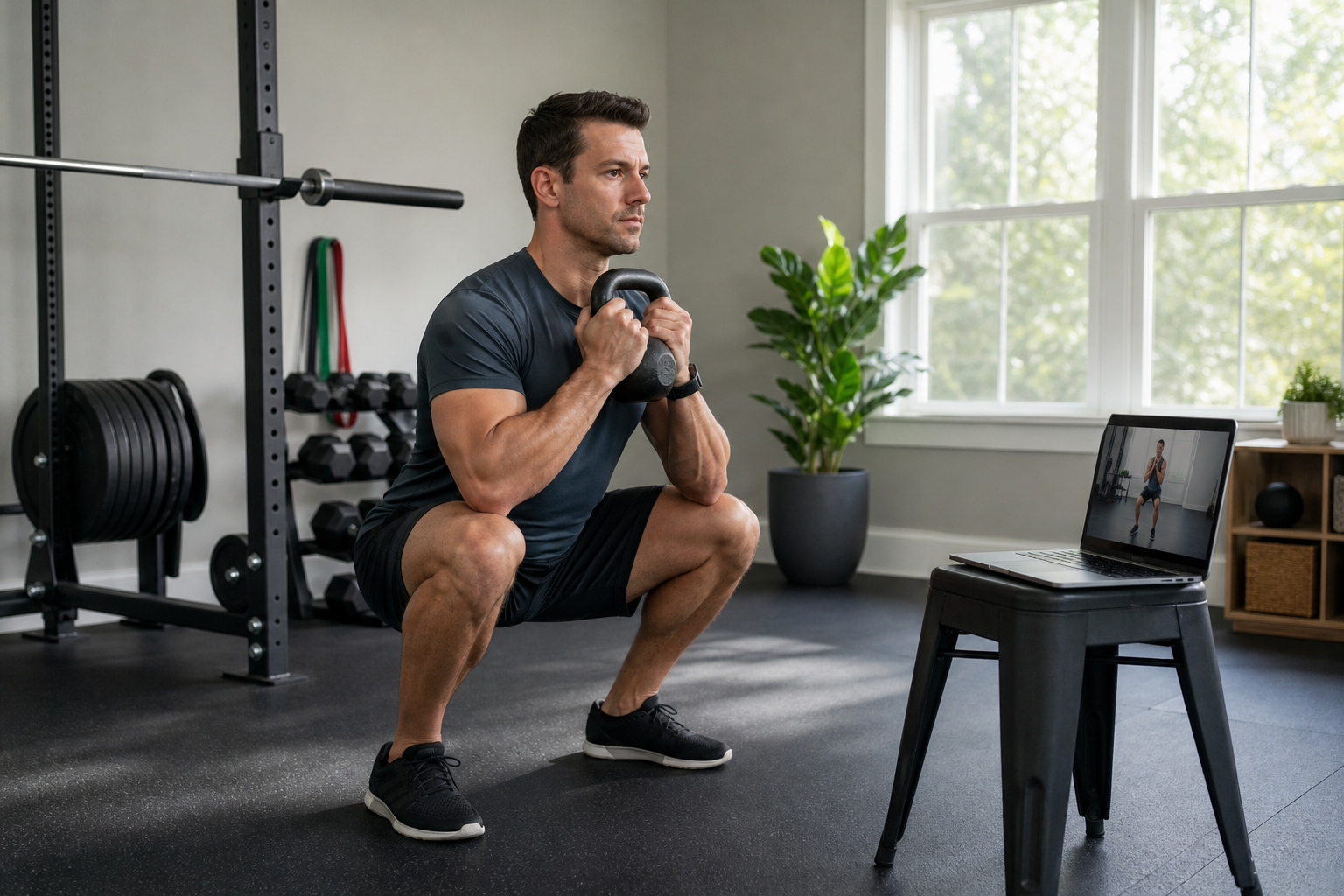
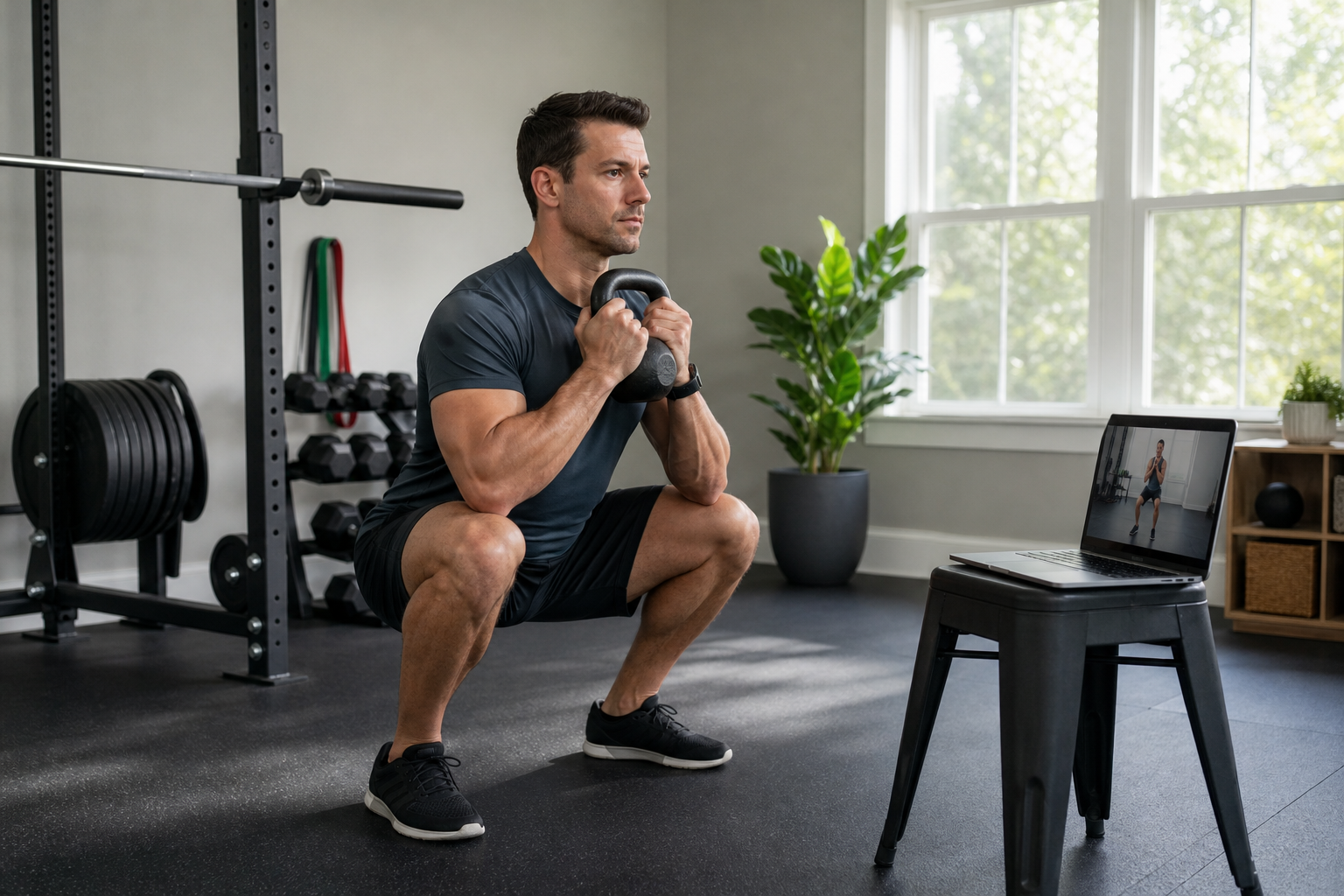
A golfer follows an online program, practicing strength training for golfers online from a home gym.
What Is Strength Training for Golfers Online?
It is a remote program that uses resistance exercise to improve golf performance. Coaches assign lifts, review your video, and adjust loads from afar. As a result, you can train with expert guidance regardless of where you live.
Golf looks gentle, yet the swing is a fast, repeated rotation under load. Therefore, the legs, hips, trunk, and shoulders all need to be strong and well coordinated. Stronger tissue also tolerates practice volume better.
Why Golf Strength Training Improves Performance
Power and clubhead speed
Force starts from the ground and travels through the hips and trunk to the club. Greater lower-body strength can raise the force you produce. However, strength must be paired with sound swing mechanics to show up on the course.
Consistency and injury prevention
Fatigue breaks down mechanics late in a round. A stronger body holds posture longer, which supports repeatable contact. In addition, the Centers for Disease Control and Prevention recommends regular muscle-strengthening activity for adults, which supports general joint and bone health.
Key Exercises for Golf Fitness at Home or in the Gym
| Movement | Example | Golf benefit |
|---|---|---|
| Squat | Goblet squat | Ground force |
| Hinge | Romanian deadlift | Posture and glutes |
| Pull | Band or dumbbell row | Shoulder health |
| Carry | Suitcase carry | Trunk stability |
| Rotation | Medicine ball throw | Rotational speed |
For a deeper look at the broader picture, read this science-backed guide to golf-specific fitness training.
How to Start: A Step-by-Step Process
- Screen your movement. Record a squat, hip hinge, and trunk rotation, and note any stiffness or pain.
- Set a clear goal. Choose one outcome, such as more speed or fewer back aches.
- Build a base. Learn squats, hinges, rows, presses, and carries with clean technique first.
- Add rotational power. Include medicine ball throws and cable rotations once your base is solid.
- Track and adjust. Log sets, reps, and swing speed weekly, then raise loads gradually.

Rotational throws train the speed of the turn that a golf swing relies on.
A Sample Weekly Plan for Competitive Players
Most players need only two to three sessions weekly. Consequently, you can keep practice and play at full quality. The American College of Sports Medicine, at acsm.org, publishes resistance training guidance that supports this kind of progressive approach.
- Day 1: Lower-body strength, rows, and carries.
- Day 2: Mobility, light rotational work, and recovery.
- Day 3: Upper-body push and pull, plus power throws.
During tournament weeks, cut volume but keep intensity moderate. This keeps you fresh without losing the gains you built.
Common Mistakes to Avoid
First, many golfers skip mobility and lose rotation. Second, they train only the core and ignore the legs. Third, they lift heavy too soon, which risks the lower back.
Finally, recovery gets overlooked. Sleep, nutrition, and rest days let strength gains carry into your swing.
Choosing Online Golf Coaching and Fitness Support
Look for a coach who understands both golf mechanics and human movement. yourgolfguru.com offers online instruction led by an LPGA Master Professional who also holds a PhD in kinesiology. The approach centers on swing techniques that build power, accuracy, and consistency while prioritizing injury prevention.
You can also compare options in this guide to online golf fitness programs for elite players. In addition, see how elite golf training online connects fitness to swing changes. College players may prefer this collegiate golf training guide.
Frequently Asked Questions
What is strength training for golfers online?
It is remote, golf-specific resistance training delivered through video, written programs, and feedback. It targets the strength, power, and stability a golf swing demands.
Does strength training increase driving distance?
It can. Stronger legs, hips, and trunk help produce and transfer force, which often raises clubhead speed when paired with good swing mechanics.
How often should golfers lift weights?
Two to three sessions per week suit most competitive golfers. Reduce volume during heavy tournament weeks.
Will lifting hurt my swing?
Not when programmed well. Problems usually come from lost mobility, excessive fatigue, or poor technique rather than lifting itself.
Can I train effectively at home?
Yes. Adjustable dumbbells, resistance bands, a kettlebell, and a medicine ball cover most golf-specific needs.
What exercises are best for golfers?
Squats, deadlift variations, rows, presses, single-leg work, carries, and rotational throws form a strong foundation.
How long until I see results?
Strength gains often appear within six to eight weeks. Changes in swing speed vary by player and depend on consistency and technique.
Is online coaching as good as in-person training?
It can be, if the coach reviews video, adjusts loads, and gives timely feedback. The quality of the professional matters more than the location.
Should I lift before or after playing golf?
Lift after a round or on a separate day when possible. Heavy lifting right before play can leave you fatigued.
What are the most common mistakes?
Common errors include skipping mobility, training only the core, lifting too heavy too soon, and ignoring recovery.
Is strength training different from golf fitness?
Strength training is one part of golf fitness. A full program also includes mobility, stability, speed, and conditioning.
Can strength training prevent golf injuries?
It can lower risk by building tissue capacity in the back, hips, shoulders, and wrists. It does not remove risk entirely.
Conclusion
Strength training for golfers online gives serious players a practical way to add power, hold posture, and reduce injury risk. Start with a movement screen, build a solid base, then add rotational power and track your progress. Pair the work with expert swing coaching, and you can see the gains where they matter most: on the course.