

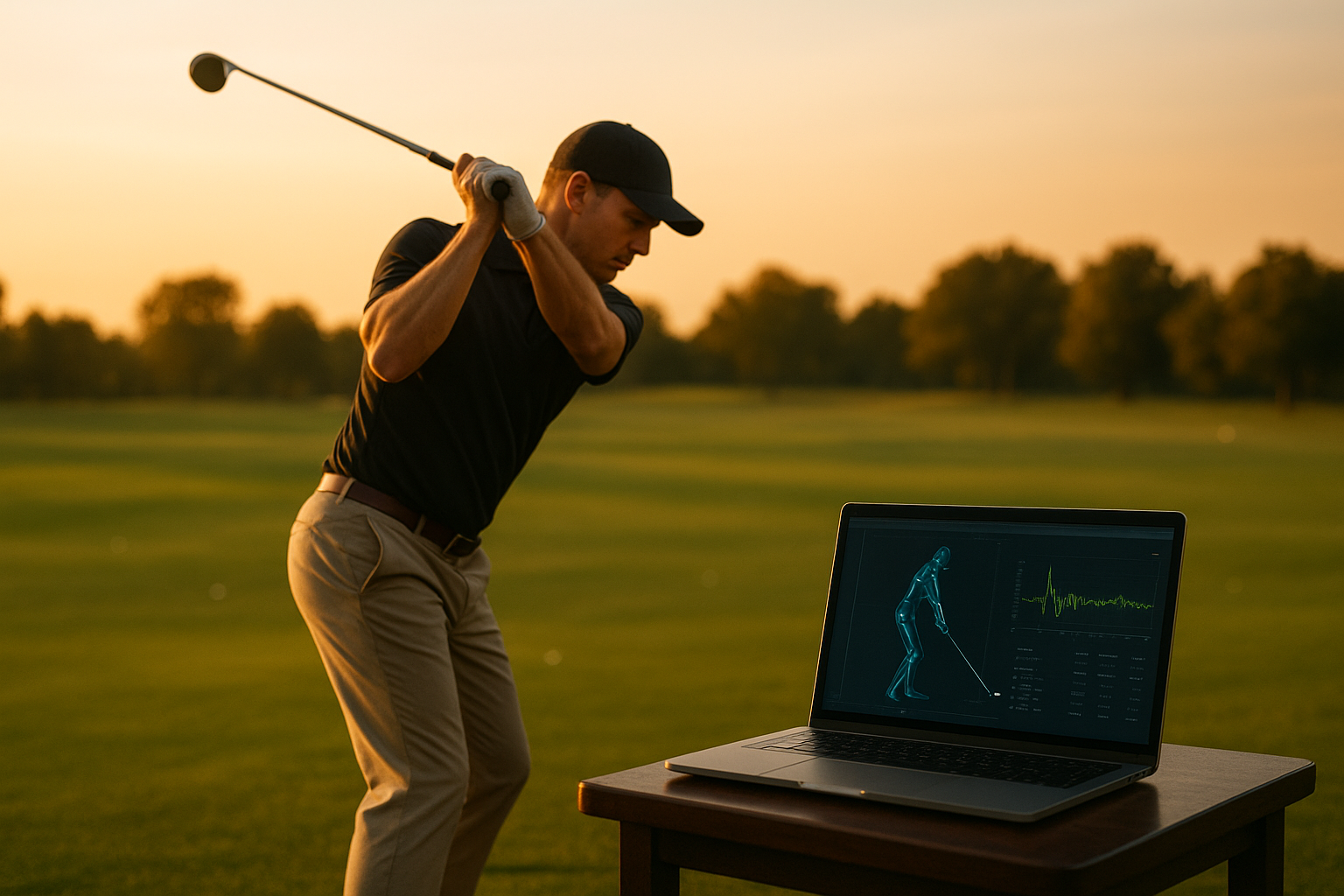
Scientific golf swing coaching combines biomechanics, data analysis, and expert instruction to help golfers build a swing that is more powerful, more accurate, and easier to repeat under pressure. Unlike traditional lessons that rely mostly on a coach’s eye, this approach measures exactly what a golfer’s body is doing throughout the motion. As a result, corrections target the real mechanical cause of a fault rather than just its visible symptom, which matters most for competitive players who need every advantage they can get.
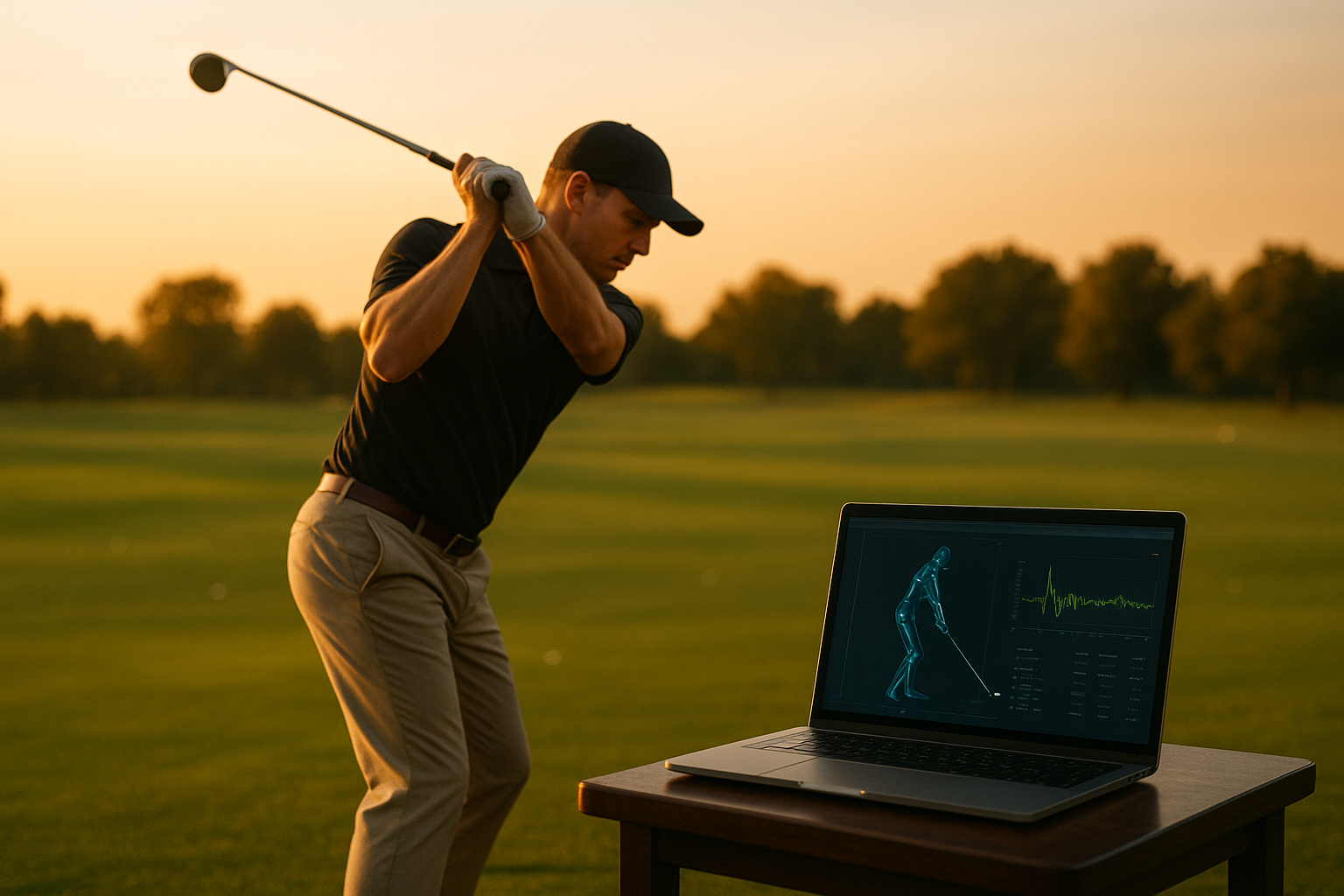
Scientific golf swing coaching pairs on-course practice with measurable biomechanical data.
What Is Scientific Golf Swing Coaching?
In short, scientific golf swing coaching is instruction built on biomechanics and physiology rather than intuition alone. It uses tools such as motion-capture systems, launch monitors, and video overlays to quantify how the body moves during a swing. Because this data is objective, coaches can pinpoint issues that are difficult to see with the naked eye.
Kinesiology, which is the scientific study of human movement, sits at the center of this approach. Coaches trained in kinesiology understand how joints, muscles, and connective tissue work together during a golf swing. Consequently, they can explain not only what a golfer is doing wrong, but also why the body is compensating in that particular way. This depth of understanding is what separates scientific coaching from generic swing tips.
How Science-Backed Swing Analysis Improves Every Part of Your Game
Science-backed swing analysis does more than fix one flaw at a time. Instead, it looks at the entire kinetic chain, which is the sequence of body segments that transfer energy from the ground into the clubhead. Therefore, improvements in one area, such as hip rotation, often produce gains in accuracy and distance elsewhere in the swing.
In addition, this method prioritizes physical safety alongside performance. Because faulty movement patterns are identified early, golfers can adjust their mechanics before those patterns lead to overuse injuries in the back, wrists, or shoulders. For competitive players who train and compete year-round, this preventive focus is just as valuable as the performance gains themselves.
The Role of Biomechanics in Swing Mechanics
Biomechanics, the field that applies mechanical principles to living organisms, explains how force is generated and transferred during a swing. According to the study of biomechanics, small changes in joint angles or timing can significantly alter clubhead speed and shot direction. Sports science research has repeatedly linked poor kinematic sequencing, meaning the order in which the hips, torso, arms, and club rotate, to both reduced clubhead speed and increased injury risk.
Interest in this kind of precision training continues to grow alongside the sport itself. More than 25 million Americans played golf on a course in recent years, according to the National Golf Foundation, and a growing share of serious players now seek coaching that goes beyond generic tips. As a result, demand for coaches who combine teaching credentials with formal movement science, such as a kinesiology background, continues to rise among competitive golfers.
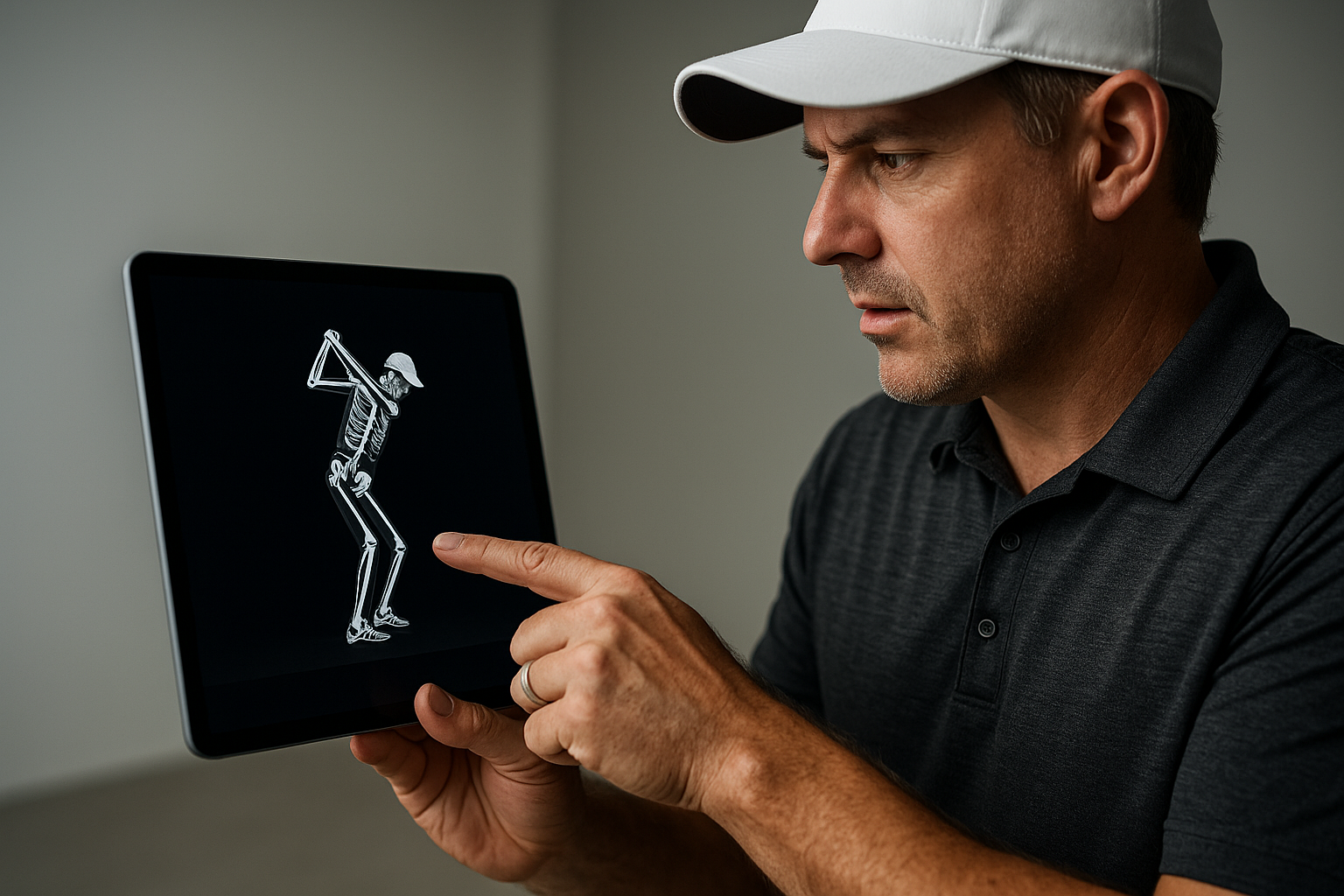
Biomechanical data reveals swing faults that are invisible to the naked eye.
How Scientific Golf Swing Coaching Works: A Step-by-Step Process
Although every coach has a slightly different system, most science-based programs follow a similar sequence. Here is how the process typically unfolds:
- Movement and swing assessment: The coach reviews video footage or motion-capture data of your current swing to identify inefficient movement patterns, joint restrictions, and timing issues throughout your kinematic sequence.
- Biomechanical analysis: Using kinesiology-based principles, the coach analyzes how your body generates and transfers force from the ground up through your hips, torso, arms, and clubhead.
- Personalized training plan: Based on the assessment, you receive a customized swing improvement plan that targets your specific mechanical faults while accounting for flexibility, strength, and injury history.
- Guided practice and remote coaching: You practice targeted drills while receiving ongoing feedback through video review and virtual sessions, allowing adjustments without needing to travel to a facility.
- Progress tracking and refinement: The coach regularly reassesses your swing data to measure improvement in clubhead speed, accuracy, and consistency, refining the plan as your mechanics evolve.
Golfers exploring this process in more depth can review examples of scientific golf swing moves that illustrate how small mechanical adjustments produce measurable results.
Why Competitive and Elite Golfers Choose Data-Driven Swing Training
Competitive amateurs, collegiate players, and aspiring professionals often outgrow what a typical local instructor can offer. Consequently, they turn to data-driven swing training that can quantify progress rather than relying on general impressions. For these athletes, even a one or two percent improvement in efficiency can matter during a tight competitive season.
Remote delivery has also made this level of instruction far more accessible. For example, programs such as elite, science-backed golf swing lessons delivered online remove the need to travel to a physical academy. Similarly, customized online coaching for elite golfers allows athletes in smaller markets to work directly with highly credentialed coaches.
Choosing a Qualified Scientific Golf Swing Coach
Not every instructor who mentions data or technology is qualified to deliver true scientific coaching. Therefore, it helps to look for a combination of recognized teaching credentials, such as LPGA or PGA certification, alongside formal education in a movement science like kinesiology. This pairing signals both practical coaching experience and a genuine understanding of human anatomy and physiology.
At yourgolfguru.com, instruction is developed and delivered by an LPGA Master Professional who also holds a PhD in kinesiology, blending biomechanical science with decades of teaching experience. This background supports a curriculum built around proven swing techniques for power, accuracy, and consistency, while prioritizing physical safety and injury prevention throughout every lesson. Golfers can also review science-backed elite swing training programs or browse exclusive golf tips and swing lessons to see how the curriculum is structured before enrolling.

Consistent, focused practice reinforces the mechanics taught in scientific golf swing coaching.
Frequently Asked Questions About Scientific Golf Swing Coaching
What is scientific golf swing coaching?
Scientific golf swing coaching is instruction that uses biomechanics, motion analysis, and physiology-based methods to diagnose swing faults and build a more efficient, repeatable swing. It relies on measurable data instead of visual guesswork alone.
How does scientific golf swing coaching differ from traditional lessons?
Traditional lessons often rely on a coach’s visual observation and general tips. Scientific coaching instead measures joint angles, sequencing, and force production, so corrections target the actual mechanical cause of a swing fault.
Who benefits most from a science-backed approach to swing training?
Competitive amateurs, collegiate players, and aspiring professionals benefit most because they need precise, incremental gains. That said, any golfer serious about consistent improvement can use biomechanical feedback effectively.
How much does scientific golf swing coaching typically cost?
Pricing varies widely depending on the coach’s credentials, session length, and delivery format. Online programs led by advanced-degree instructors often cost less than comparable in-person elite academies while offering similar depth of analysis.
How long does it take to see results from this type of coaching?
Many golfers notice measurable changes in swing consistency within four to six weeks of focused practice. Full integration of new mechanics into competitive play, though, often takes several months of repetition.
What technology is used in biomechanical swing analysis?
Coaches commonly use high-speed video, launch monitors, and motion-capture software to measure clubhead speed, swing plane, and body sequencing. These tools translate physical movement into data the coach can interpret and act on.
Can scientific golf swing coaching be done entirely online?
Yes, video-based assessment and remote feedback allow a qualified coach to analyze mechanics and deliver personalized drills without an in-person visit. This removes geographic barriers for golfers outside major training hubs.
What credentials should a scientific swing coach have?
Look for recognized teaching certifications, such as LPGA or PGA credentials, combined with formal education in kinesiology or exercise science. This pairing indicates both practical coaching experience and scientific understanding of human movement.
What common swing mistakes does biomechanical analysis reveal?
Analysis frequently uncovers poor kinematic sequencing, early extension, and inconsistent weight transfer. These faults are often invisible to the naked eye but show up clearly in motion data.
How does kinesiology help prevent golf injuries?
Kinesiology helps coaches identify swing patterns that place excessive stress on the spine, hips, or wrists. Correcting these patterns reduces the risk of overuse injuries common in repetitive swinging, according to general physical activity and injury prevention guidance.
Is scientific golf swing coaching suitable for beginners?
It can be, though it is most commonly used by competitive players who need precise, data-driven refinement. Beginners can still benefit from establishing efficient movement patterns early rather than correcting bad habits later.
What should I expect during a first coaching session?
Expect an initial movement assessment using video or motion-capture data to establish a baseline. The coach then explains findings in plain language before outlining a personalized improvement plan.
How often should I train with a scientific swing coach?
Most programs recommend regular check-ins, such as weekly or biweekly reviews, paired with daily practice of assigned drills. Consistent, shorter sessions tend to produce better retention than infrequent long sessions.
Can this coaching approach improve swing speed and distance?
Yes, improving kinematic sequencing and ground force transfer often increases clubhead speed. Because the training targets the root mechanical cause, gains tend to be more sustainable than quick tips aimed only at symptoms.
Why is data-driven feedback more effective than visual cues alone?
Visual cues can be subjective and inconsistent between coaches. Data-driven feedback provides objective measurements, so both coach and golfer can track precise progress over time and confirm whether changes are actually working.
Final Thoughts
In the end, scientific golf swing coaching gives serious players a clearer path to improvement than guesswork ever could. By combining biomechanics, kinesiology, and proven teaching experience, this approach identifies the true cause of a swing fault rather than just its symptoms. As a result, golfers gain more power, better accuracy, and a swing built to hold up under competitive pressure, all while reducing the risk of injury along the way. For competitive amateurs, collegiate players, and aspiring professionals ready to move beyond generic instruction, working with a credentialed, data-driven coach remains one of the most reliable ways to build lasting, sustainable improvement.