


Science-based golf swing analysis gives competitive golfers a way to measure exactly what their body does during the swing, rather than relying on guesswork or generic tips. Instead of a coach simply watching a slice and offering a quick fix, this approach pairs biomechanics — the study of how the body produces movement — with motion tracking, mobility screening, and video overlays. For golfers chasing lower scores, more clubhead speed, or a healthier swing over time, this method turns vague feedback into measurable, repeatable improvement.
Quick Answer: Science-based golf swing analysis is a coaching method that uses biomechanics, kinesiology, and objective motion data to diagnose swing faults and build a more powerful, injury-resistant swing — based on evidence rather than opinion.
What Is Science-Based Golf Swing Analysis?
In short, science-based golf swing analysis is the process of evaluating a golfer’s mechanics using measurable data — such as joint angles, ground reaction force, and clubhead path — instead of relying purely on a coach’s eye. It draws heavily on kinesiology, the scientific study of human movement, and on biomechanics, which examines the mechanical forces acting on the body.
Because every golfer’s body is built differently, a science-based approach avoids forcing a single “ideal” swing model onto every player. Instead, it identifies the specific mobility, strength, and sequencing patterns unique to that golfer, then builds a swing around what their body can safely and efficiently produce. This is particularly valuable for competitive amateurs and collegiate players who need instruction that goes beyond generic local lessons.
How Biomechanical Data Improves Golf Swing Mechanics
Biomechanical data reveals what the naked eye often misses. For example, high-speed video combined with force measurements can show exactly when a golfer’s hips begin rotating relative to their shoulders, a timing relationship known as the kinetic chain. Similarly, motion data can flag excessive spine tilt or early wrist extension long before those patterns show up as a visible slice or hook.
According to research published through the National Library of Medicine, golfers who train with objective feedback on swing kinematics tend to show faster, more durable improvements than those relying solely on subjective coaching cues. Therefore, biomechanical data doesn’t just diagnose problems — it also helps confirm that corrective drills are actually working as intended, session after session.

Motion tracking overlays are a core tool in science-based golf swing analysis.
The Role of Kinesiology in Injury Prevention and Power
Kinesiology-based analysis does more than chase distance; it protects the body that produces that distance. In particular, the golf swing places repetitive, asymmetrical stress on the lower back, lead wrist, and lead knee. Without proper screening, a swing that generates impressive clubhead speed can also be quietly building toward an overuse injury.
A qualified analyst — ideally one with formal training in kinesiology, such as an LPGA Master Professional with a background in the science — can identify which movement patterns generate power efficiently and which ones simply transfer load onto vulnerable joints. As a result, golfers can pursue more speed and consistency while reducing unnecessary physical risk, a balance that purely visual coaching often overlooks.
For a real-world look at how this analysis applies to tour-level swings, the breakdown in this anatomical review of a professional swing shows how even elite players benefit from biomechanical scrutiny.
How to Get Started With a Data-Driven Swing Evaluation
Getting started with a data-driven swing evaluation is more straightforward than most golfers expect, especially through a remote platform. Below is the typical process a golfer follows from first contact to measurable progress.
- Record baseline swing footage: Capture slow-motion video from face-on and down-the-line angles so the analyst can measure joint positions and club path accurately.
- Complete a mobility and movement screen: Perform guided mobility tests so the coach can identify physical limitations shaping your current swing mechanics.
- Review the diagnostic report: Go through a detailed breakdown of your data with the instructor, discussing which biomechanical patterns limit power or safety.
- Implement targeted, science-based drills: Practice corrective exercises matched to your exact movement patterns instead of generic drills that miss the root cause.
- Track progress with follow-up analysis: Submit new video after several weeks so the coach can measure objective improvement and adjust your plan.
Notably, this cycle can repeat every 8 to 12 weeks, which gives the body enough time to adapt to new patterns while still catching compensations early. Golfers preparing for a specific event, such as those discussed in this tournament preparation diary, often compress this timeline closer to their competition date.
Why Competitive Golfers Choose Remote, Science-Backed Coaching
Above all, geography should not limit access to elite-level instruction. A remote, science-backed coaching model allows a collegiate player in one state to work with an LPGA Master Professional and kinesiology PhD located anywhere else, simply by submitting video and data through a digital platform. This matters most for competitive amateurs and aspiring professionals who have already outgrown what typical local instructors can offer.
In addition, remote analysis creates a documented history of a golfer’s swing over time. Instead of starting from scratch with a new coach each season, players can compare current biomechanical data against past sessions, making long-term development far easier to track. Golfers curious about how swing trends evolve at the highest level may find the comparisons in this U.S. Open swing trend analysis useful context.
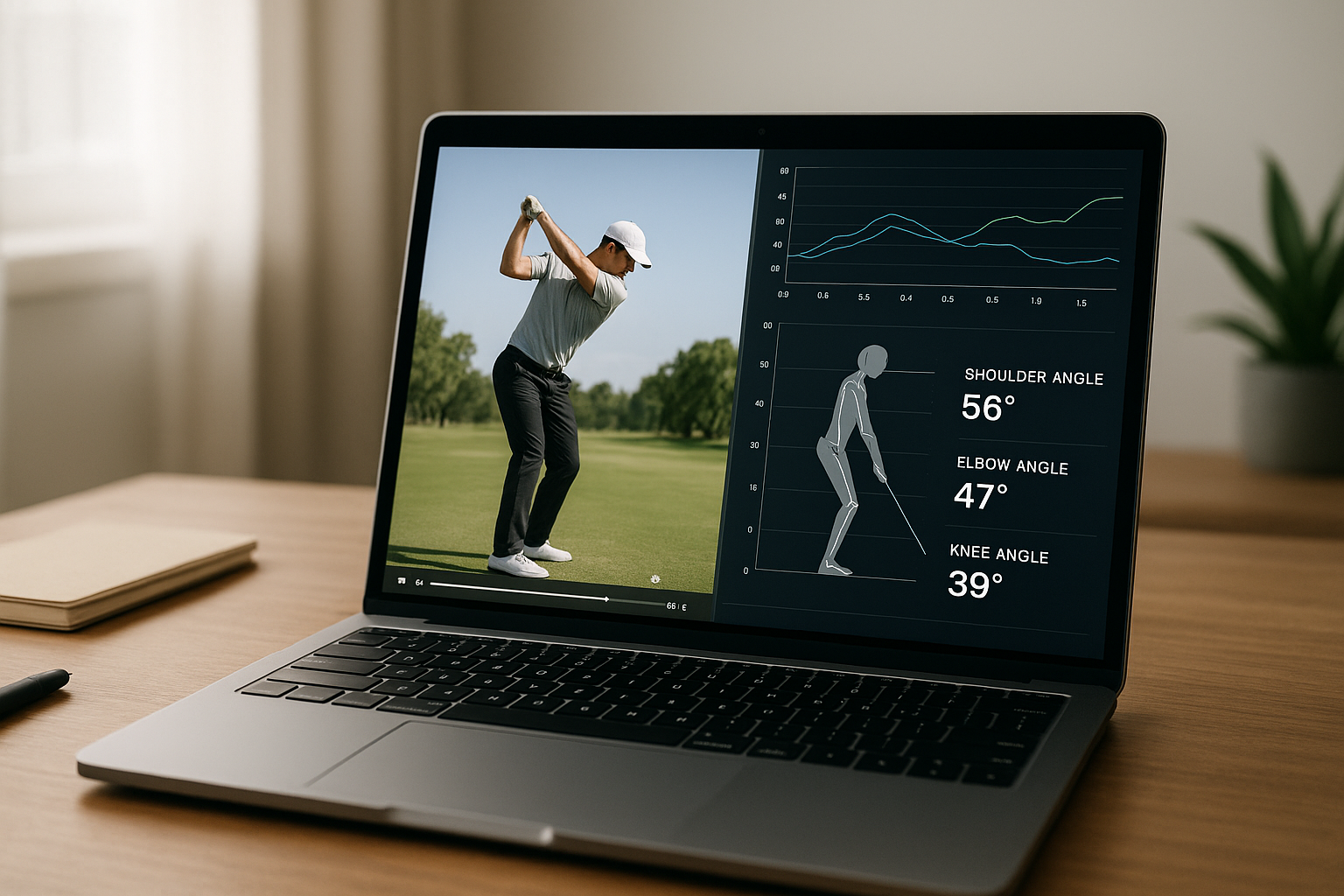
Remote sessions make science-based golf swing analysis accessible from anywhere.
Common Mistakes in Traditional vs Science-Based Swing Coaching
Traditional coaching sometimes falls into the trap of chasing a single visual cue, such as “keep your head still,” without understanding how that cue interacts with the rest of the kinetic chain. Consequently, a golfer might fix one flaw while unintentionally creating another, such as reduced hip rotation that saps power.
By contrast, a science-based method looks at the swing as one connected system. For instance, the biomechanical review featured in this anatomical breakdown demonstrates how small timing shifts in the lower body ripple through the entire swing sequence. Similarly, players recovering from injury, as explored in this return-to-play analysis, benefit from understanding these connected mechanics rather than isolated fixes.
Furthermore, one industry estimate suggests that a large share of recreational and competitive golfers experience at least one swing-related injury over their playing career, underscoring why safety-focused, evidence-based coaching matters as much as performance gains. Golfers interested in a deeper dive into this coaching philosophy can explore more on yourgolfguru.com.
Frequently Asked Questions About Science-Based Golf Swing Analysis
What is science-based golf swing analysis?
Science-based golf swing analysis is a coaching method that uses biomechanics, kinesiology, and motion-capture data to diagnose swing faults and build a repeatable, powerful swing. It replaces guesswork with measurable evidence about how a golfer’s body actually moves.
How does science-based golf swing analysis differ from traditional golf lessons?
Traditional lessons often rely on visual observation and general tips, while science-based analysis uses objective data like joint angles, ground force, and clubhead speed. As a result, feedback is specific to the individual golfer’s body rather than a one-size-fits-all model.
How much does online biomechanical swing analysis cost?
Pricing varies depending on the coach’s credentials and the depth of the evaluation, ranging from single video reviews to comprehensive multi-session packages. Elite, PhD-level or LPGA Master Professional-led programs typically cost more due to the specialized expertise involved.
How long does a full swing analysis take?
A thorough evaluation usually takes between 60 and 90 minutes, covering video capture, mobility screening, and a review of findings. Follow-up sessions to track progress are generally shorter.
Can science-based golf swing analysis be done remotely?
Yes, remote analysis is common and effective when golfers submit multi-angle video and mobility data through a digital platform. This approach removes the need to travel to a physical facility while still delivering expert-level feedback.
What equipment is needed for a data-driven swing evaluation?
At minimum, a smartphone camera capable of slow-motion video is sufficient for most remote evaluations. Advanced programs may also incorporate launch monitors or wearable sensors for deeper biomechanical insight.
What credentials should a swing analyst have?
Look for instructors with recognized teaching credentials, such as LPGA or PGA certification, combined with formal education in kinesiology or sports science. This combination ensures feedback is both technically sound and biomechanically accurate.
What common mistakes do golfers make when interpreting swing data?
Golfers often fixate on a single metric, such as clubhead speed, while ignoring how the whole kinetic chain works together. Consequently, isolated fixes can create new compensations elsewhere in the swing.
Can science-based golf swing analysis help prevent injuries?
Yes, because it identifies excessive joint loading and compensatory movement patterns before they cause pain. Addressing these patterns early can reduce the risk of common golf injuries like lower back strain.
Who benefits most from science-based golf swing analysis?
Competitive amateurs, collegiate players, and aspiring professionals benefit most, since they need precise feedback beyond generic local instruction. However, any golfer serious about long-term improvement can gain value from it.
How often should golfers repeat a swing analysis?
Most competitive golfers benefit from re-analysis every 8 to 12 weeks, or after a significant change in performance. This cadence allows enough time to implement drills while catching new compensations early.
Does science-based golf swing analysis work for beginners as well as elite players?
It works for both, though the application differs; beginners typically focus on foundational movement patterns, while elite players fine-tune efficiency and power. In either case, the underlying biomechanical principles remain the same.
Final Takeaways
In summary, science-based golf swing analysis replaces guesswork with measurable, individualized data drawn from biomechanics and kinesiology. Rather than forcing every golfer into the same swing template, this approach builds a plan around what a specific player’s body can do safely and powerfully. As a result, competitive amateurs, collegiate athletes, and aspiring professionals gain access to the kind of precise, evidence-based coaching once reserved for tour-level players.
Ultimately, whether the goal is more distance, tighter accuracy, or simply a swing that holds up over a long season, science-based golf swing analysis offers a clear, data-backed path forward. Golfers ready to take that step can learn more about remote, expert-led coaching at yourgolfguru.com. Author: [Author Name], [credentials]. Last updated: 2026-08-16.