
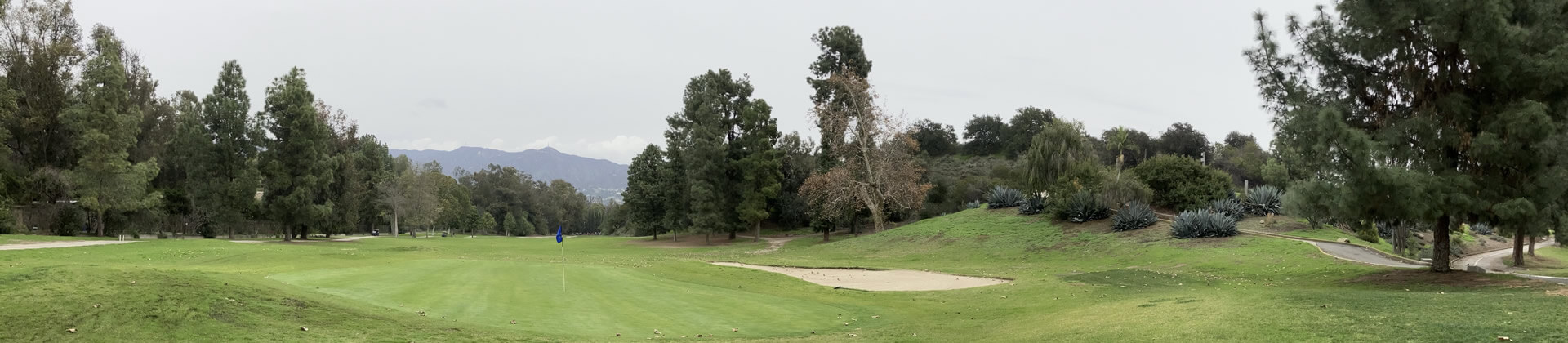
Precision golf instruction is the foundation every competitive player needs when good enough is no longer good enough. Whether you are chasing a lower handicap, prepping for a collegiate tryout, or working toward professional golf, small technical flaws can quietly cap your ceiling. Consequently, that gap between average and elite performance usually comes down to swing mechanics most local coaches never fully diagnose. Add an author byline and a clear "Last updated" date near the top to show credentials and content freshness.
Quick Answer: Precision Golf Instruction for Competitive Golfers is a biomechanics-based coaching method that pinpoints the exact movement flaws limiting a golfer’s power, accuracy, and consistency. It combines detailed swing analysis with expert, credentialed coaching rather than generic visual tips.
In practice, this approach relies on measurable data rather than guesswork. As a result, golfers receive corrections tied to their actual anatomy and movement patterns instead of one-size-fits-all advice pulled from a generic swing model.
What Is Precision Golf Instruction?
Precision golf instruction is a coaching method that uses biomechanical analysis, a scientific study of how the body moves during motion, to identify exact swing faults instead of relying on general observation. In particular, it examines joint angles, sequencing, and weight transfer to isolate the true cause of inconsistency.
Unlike a typical weekend lesson, this style of coaching treats the swing as a connected chain of movements. Therefore, fixing one link, such as hip rotation, often resolves problems that appear elsewhere, like an inconsistent clubface at impact. Golfers who want a deeper look at ball flight fundamentals can explore how to hit the ball further, straighter, and higher through mechanically sound adjustments.
Why Competitive Golfers Need Advanced Swing Coaching
Competitive golfers face a different challenge than recreational players. Above all, they need repeatable mechanics that hold up under tournament pressure, not just a swing that looks good on the range. In addition, small compensations that go unnoticed at a casual level can cost strokes at a competitive one.
Research has linked improper swing mechanics to a meaningful share of golf-related injuries, particularly affecting the lower back, wrists, and shoulders, according to studies indexed by the National Institutes of Health. As a result, coaching that prioritizes both performance and injury prevention offers a real competitive advantage over instruction focused only on aesthetics.
Furthermore, collegiate and aspiring professional golfers often outgrow what a local instructor can offer. Specifically, they need feedback grounded in movement science rather than trial-and-error adjustments, which is exactly where precision golf instruction fills the gap.

Precision golf instruction turns raw swing footage into measurable, correctable data.
The Science Behind Data-Driven Golf Instruction
At its core, data-driven golf instruction borrows heavily from kinesiology and biomechanics, two fields dedicated to understanding human movement. Specifically, kinesiology examines muscle activation and joint mechanics, while biomechanics studies the physics of motion itself, as explained in detail on Wikipedia’s biomechanics overview.
When a coach holds advanced credentials in this science, such as a PhD in kinesiology, the analysis moves beyond visual impressions. Instead, it becomes grounded in how tendons, joints, and rotational forces actually behave during a golf swing. Consequently, corrections target root causes rather than symptoms.
For example, a golfer struggling with early extension might receive drills addressing hip mobility and core sequencing rather than a vague instruction to “stay down.” Similarly, a player losing distance may discover the issue lies in ground force transfer rather than swing speed alone. Those interested in equipment-side adjustments can also review insights on applying modern golf science to putter technique.
How Online Precision Golf Instruction Removes Geographic Barriers
Traditionally, elite coaching meant traveling to a specific academy or regional expert. Today, however, online precision golf instruction eliminates that constraint entirely. As a result, a competitive player in a small town can access the same caliber of feedback as someone training at a major golf hub.
Remote coaching typically works through submitted swing video, structured drill plans, and follow-up review cycles. In turn, this format actually suits detailed biomechanical analysis well, since footage can be paused, measured, and compared frame by frame. Golfers exploring this model can learn more directly through yourgolfguru.com, where remote coaching is built specifically around kinesiology-based analysis.
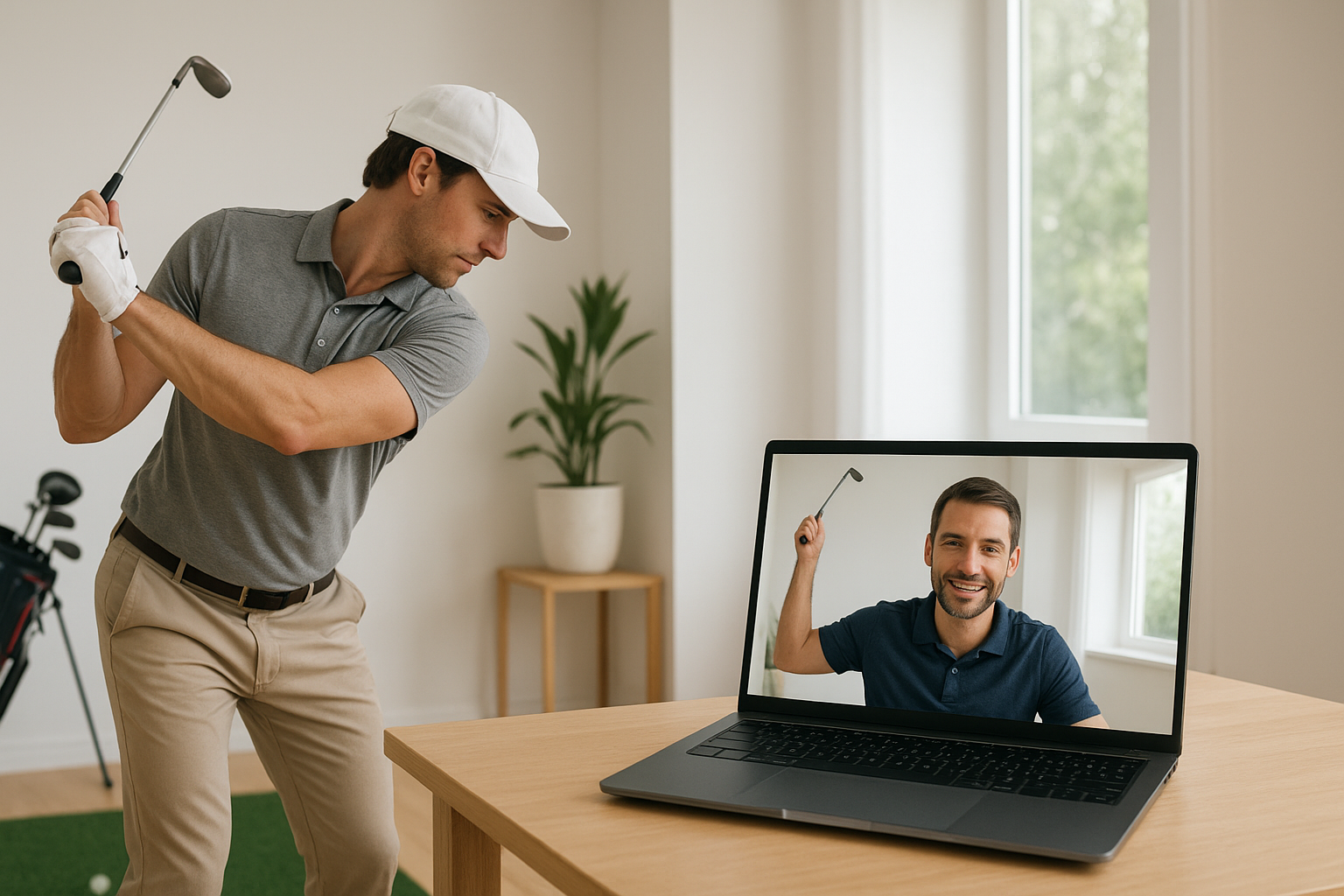
Video-based feedback makes remote coaching a practical alternative to in-person lessons.
What to Expect: A Step-by-Step Breakdown
Understanding the process helps set realistic expectations before starting a program. Below is a typical sequence used in structured, science-based coaching.
- Submit your swing video for analysis. Record footage from face-on and down-the-line angles so the coach can evaluate posture, sequencing, and club path in detail.
- Receive a biomechanical breakdown. The coach reviews movement frame by frame, identifying joint angles, weight transfer issues, and timing faults limiting performance.
- Follow a customized drill plan. You get a structured set of exercises targeting your specific faults, sequenced to build new patterns without overwhelming existing technique.
- Track progress with follow-up reviews. Ongoing check-ins measure improvement and confirm new mechanics hold up under pressure and fatigue.
Notably, consistency between steps two and four matters most. Without regular follow-up, even a strong initial breakdown tends to fade back into old habits within a few weeks.
Choosing the Right Coach for Precision Swing Training
Not every online program offers the same depth. Therefore, credentials matter significantly when selecting a coach for precision swing training. Look specifically for certifications like LPGA Master Professional status, combined with a formal background in movement science.
For instance, a coach holding both an LPGA Master Professional credential and a PhD in kinesiology brings a rare combination: decades of elite teaching experience paired with academic-level understanding of human movement. This blend is precisely what allows a program to prioritize both performance gains and injury prevention simultaneously.
Golfers refining specific pre-shot habits alongside swing mechanics may also find value in reviewing a structured pre-shot routine or a more minimalist pre-shot approach, since consistency off the tee often reinforces mechanical gains made in coaching sessions.
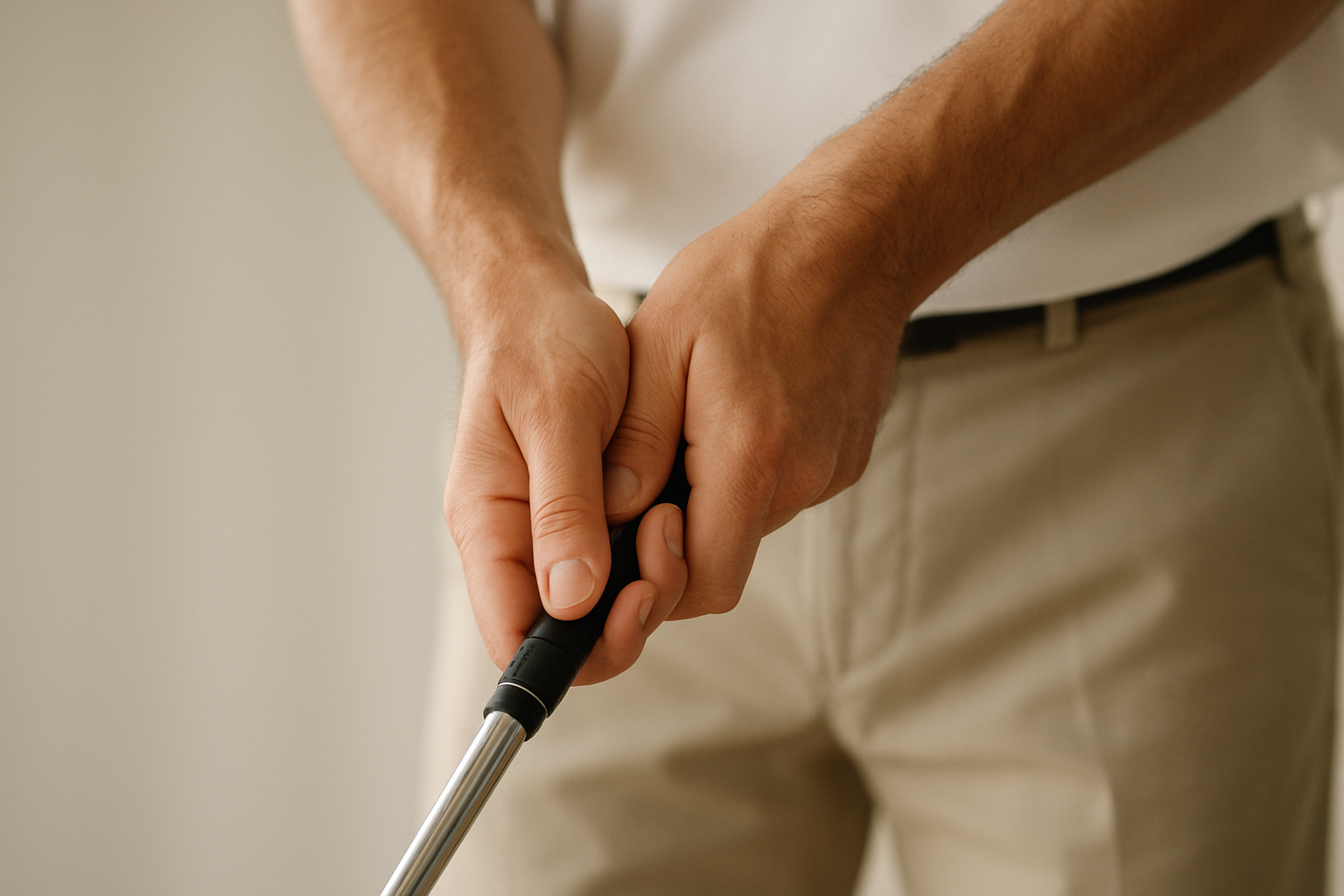
Fundamentals like grip and setup remain central to precision golf instruction at every skill level.
Common Mistakes That Undermine Swing Consistency
Even talented players fall into predictable traps without expert guidance. For example, many golfers compensate for one flaw by creating a second one, such as adjusting grip pressure to mask poor hip rotation. Over time, these compensations become ingrained habits that are far harder to unlearn than the original issue.
In addition, some players chase distance gains without addressing sequencing first, which often increases injury risk rather than performance. Similarly, skipping video documentation makes it nearly impossible to track whether a drill is actually working or simply masking symptoms temporarily. Ultimately, structured, science-based feedback prevents these avoidable setbacks from stalling long-term progress.
Frequently Asked Questions About Precision Golf Instruction
What is precision golf instruction?
Precision golf instruction is a science-based coaching method that uses biomechanical analysis to correct swing flaws with exact, measurable adjustments. It goes beyond general tips by pairing kinesiology-based data with elite-level teaching experience.
How does precision golf instruction differ from a standard lesson?
Standard lessons often rely on visual observation alone, while precision golf instruction incorporates biomechanics, video breakdown, and injury-prevention screening. This produces more targeted, data-driven feedback than a typical local lesson.
Who benefits most from precision golf instruction?
Competitive amateurs, collegiate players, and aspiring professionals benefit most because they need technical refinement beyond generic coaching. Golfers recovering from swing-related injuries also gain from the safety-focused approach.
Can online golf coaching really replace in-person lessons?
Yes, online golf coaching can match or exceed in-person value when it uses detailed video analysis and structured feedback loops. Remote precision golf instruction removes geographic limits, giving athletes access to specialists unavailable locally.
How much does precision golf instruction typically cost?
Costs vary by coach credentials and program depth, but specialized remote coaching is generally more affordable than repeated in-person sessions with a comparable expert. Packages often include ongoing video review rather than single one-off lessons.
How long does it take to see results from swing coaching?
Most golfers notice measurable swing changes within four to eight weeks of consistent drill work. However, deeper mechanical shifts, such as sequencing or rotation patterns, may take a full season to feel automatic under pressure.
What role does kinesiology play in golf instruction?
Kinesiology, the scientific study of human movement, helps coaches identify exactly which joints, muscles, and movement patterns limit a golfer’s power or accuracy. This allows precision golf instruction to target root causes instead of surface symptoms.
What equipment do I need for remote swing analysis?
A smartphone camera, a tripod or stable surface, and a reliable internet connection are typically sufficient. Some programs also recommend swing-speed sensors for additional performance data.
How often should competitive golfers train with a precision coach?
Weekly or biweekly check-ins work well for most competitive players building new mechanics. During active tournament seasons, monthly maintenance reviews are often enough to preserve consistency.
What common mistakes do golfers make without expert guidance?
Golfers often compensate for one flaw by creating a second one, such as adjusting grip to mask poor hip rotation. Without expert eyes, these compensations become ingrained habits that are harder to unlearn later.
Is precision golf instruction suitable for junior or collegiate golfers?
Yes, junior and collegiate golfers often benefit the most because early correction prevents long-term injury and bad habits. Building efficient mechanics early also supports a longer, more durable competitive career.
How do I choose the best online golf coach?
Look for verifiable credentials, such as LPGA or PGA certification, plus a science-based teaching philosophy rather than generic tips. Reviewing sample analyses or case studies can also reveal how thorough the feedback truly is.
What makes an LPGA Master Professional qualified for this kind of coaching?
An LPGA Master Professional has met the association’s highest teaching standard, reflecting years of proven instructional results. When paired with a PhD in kinesiology, that credential combines elite coaching experience with formal movement science, as recognized by the LPGA itself.
Final Takeaway
Ultimately, precision golf instruction gives competitive golfers something generic lessons rarely provide: measurable, science-backed feedback tied directly to their own biomechanics. Instead of guessing which drill might help, players receive corrections based on how their body actually moves, reducing injury risk while sharpening consistency. As a result, athletes serious about long-term improvement gain a coaching relationship built on data rather than trends.
In the end, whether the goal is a lower competitive score, a collegiate roster spot, or a professional career, precision golf instruction offers the structured, expert-guided path most local options simply cannot match. For golfers ready to take that next step, exploring a dedicated remote coaching program is a practical place to begin.