


To play your best golf always, you need more than raw talent. You need a repeatable system built on sound biomechanics, smart practice design, and consistent expert feedback. Many competitive golfers hit brilliant rounds occasionally, yet struggle to reproduce that form week after week, and that gap between potential and consistency is exactly what this guide addresses.
Quick answer: Playing your best golf always requires a repeatable swing built on efficient biomechanics, structured practice with clear feedback loops, and physical conditioning that prevents injury. Golfers who combine these three elements see consistent scores instead of occasional good rounds.
What Does It Mean to Play Your Best Golf Always?
Play your best golf always is the practice of maintaining peak swing mechanics, mental focus, and physical conditioning so strong performance becomes consistent rather than occasional. In other words, it is not about a single great round; it is about a repeatable process that produces reliable results under different conditions.
Consequently, golfers who master this approach rarely rely on hot streaks. Instead, they trust a system that holds up whether they are practicing alone or competing under pressure. According to USGA handicap data, the average golfer’s handicap index hovers near 14, which shows how rare true consistency remains at any level of the game.

Consistent swing mechanics are the foundation for golfers who want to play your best golf always, round after round.
How to Play Your Best Golf Always: A Science-Backed Approach
Playing consistently starts with understanding your body’s movement patterns. Kinesiology, the scientific study of human motion, explains why certain swing sequences generate power efficiently while others create strain or inconsistency. As a result, coaches trained in movement science can pinpoint the exact cause of a swing flaw rather than guessing at a quick fix.
For example, a golfer who loses distance under pressure may not have a timing problem at all; instead, restricted hip mobility could be limiting rotation. Similarly, wrist pain during long practice sessions often traces back to compensations elsewhere in the kinetic chain. Because these root causes are physical, addressing them directly tends to produce longer-lasting improvement than surface-level tips.
Programs like those detailed in advanced swing techniques for serious golfers apply this biomechanical lens directly, pairing video analysis with corrective drills so improvements transfer to real rounds.
Achieving Steady Peak Performance on the Course
Steady peak performance depends on removing variables that cause breakdowns under pressure. Therefore, competitive golfers benefit from rehearsing their pre-shot routine until it becomes automatic, since automatic routines free up mental capacity for course strategy instead of mechanics.
In addition, tracking practice data over time reveals patterns invisible in any single session. Golfers who log ball flight, tempo, and score trends can spot small regressions early, well before they show up as a slump. This is one reason structured coaching resources such as strategies for competitive golfers to improve fast emphasize measurable feedback over generic tips.
Building Swing Mechanics That Last
Durable swing mechanics respect both power and physical safety. A swing that generates distance at the cost of joint stress will eventually break down, often through injury rather than a slow decline in scores. For this reason, injury-conscious training matters just as much as technical improvement.
The National Institutes of Health notes that repetitive rotational movements, similar to a golf swing, can strain the lower back and shoulders when mechanics are inefficient. Consequently, coaches who understand anatomy design drills that build power without overloading vulnerable joints. This balance between performance and safety is central to programs built around kinesiology-based instruction.
Golfers who want a broader view of how consistent mechanics translate into long-term results can review lessons drawn from elite-level performance patterns, which show how small mechanical adjustments compound over a career.
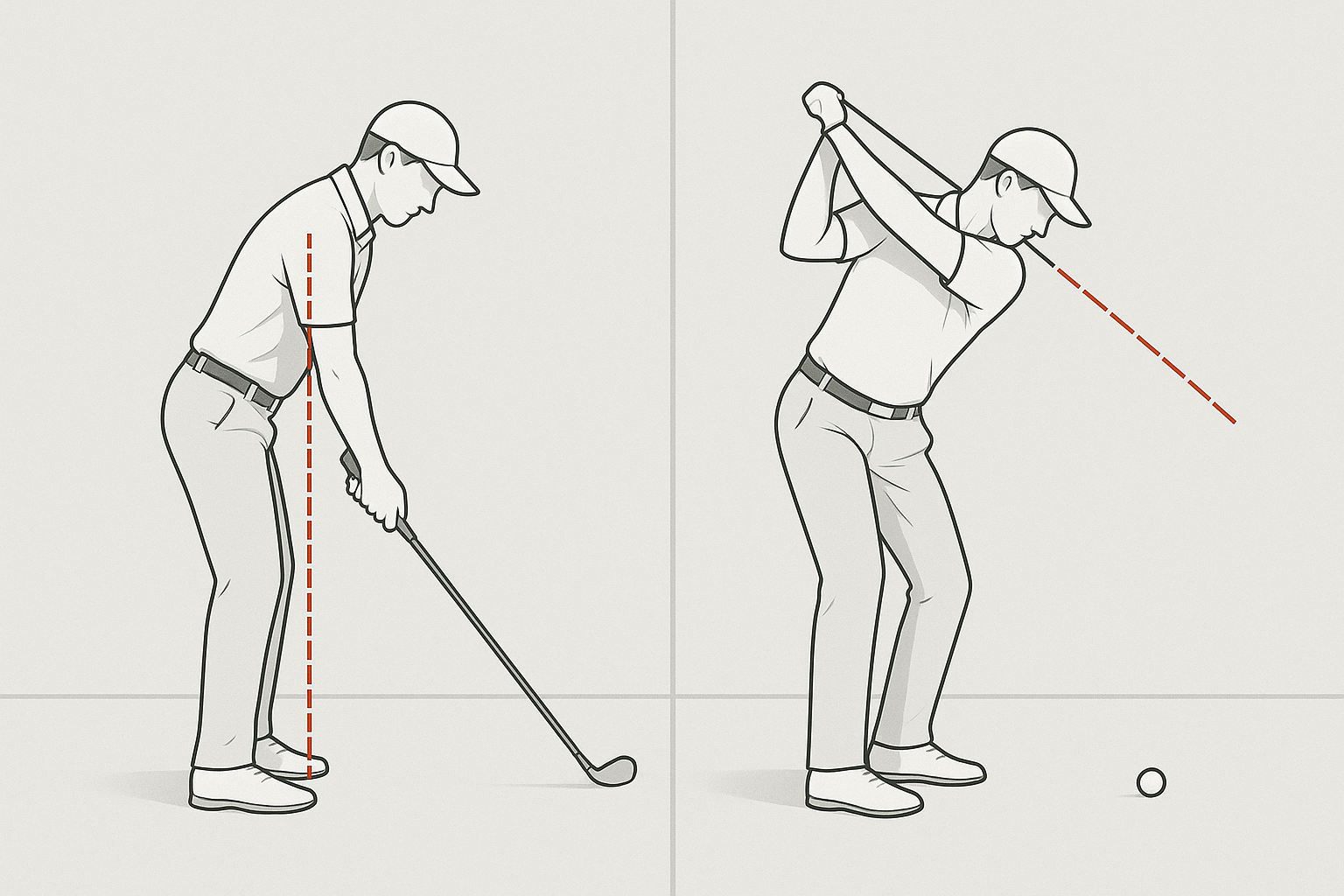
Comparing swing positions helps coaches identify mechanical inefficiencies before they cause inconsistency or injury.
A Step-by-Step Plan to Improve Golf Consistency
Improving consistency is easier when the process is broken into clear stages. The following sequence reflects how science-based coaching programs typically structure long-term improvement.
- Assess your baseline swing mechanics. Record video from multiple angles and compare it against efficient movement benchmarks to find specific inefficiencies.
- Build a data-informed practice plan. Target root causes, such as poor sequencing or restricted mobility, instead of only correcting visible symptoms.
- Train mobility and injury prevention. Strengthen the ranges of motion your swing demands to protect the spine, hips, and shoulders.
- Get remote expert feedback. Share updated swing video regularly so corrections are reinforced before poor habits set in.
- Track performance under pressure. Simulate competitive stress in practice and adjust your routine so consistency holds up in tournaments.
Following this sequence, rather than jumping between random tips, gives golfers a clear path toward reliable improvement. You can explore a full walkthrough of this approach at yourgolfguru.com, where remote coaching sessions apply each of these steps individually.
Common Mistakes That Keep Golfers From Peak Performance
Many golfers unintentionally sabotage their own progress. For instance, practicing without a specific mechanical goal often reinforces existing flaws instead of correcting them. Similarly, ignoring physical limitations, such as tight hips or a limited shoulder turn, can cause players to compensate in ways that hurt both consistency and long-term health.
Above all, skipping structured feedback is the most common barrier to lasting improvement. Without an outside perspective, it is difficult to notice small changes that accumulate into bigger problems. This is precisely why golfers pursuing sustainable growth often turn to resources like career-longevity lessons from professional golf to understand how top players managed setbacks without losing consistency.
Why Remote, Science-Based Coaching Works
Remote coaching removes the geographic limits that once restricted access to elite instruction. Instead of settling for a local instructor’s general knowledge, competitive golfers can now work directly with coaches who combine advanced credentials with specialized movement science.
For example, an LPGA Master Professional with a PhD in kinesiology brings a level of biomechanical insight rarely available at a local facility. Because lessons are delivered through detailed video analysis, players anywhere can receive the same quality of feedback as someone training in person. This model particularly benefits collegiate players and aspiring professionals who need technical depth beyond typical local coaching.
Golfers ready to set specific goals for the season ahead may also find it useful to review planning strategies for your best golf year, which pairs well with the mechanical foundations covered here.
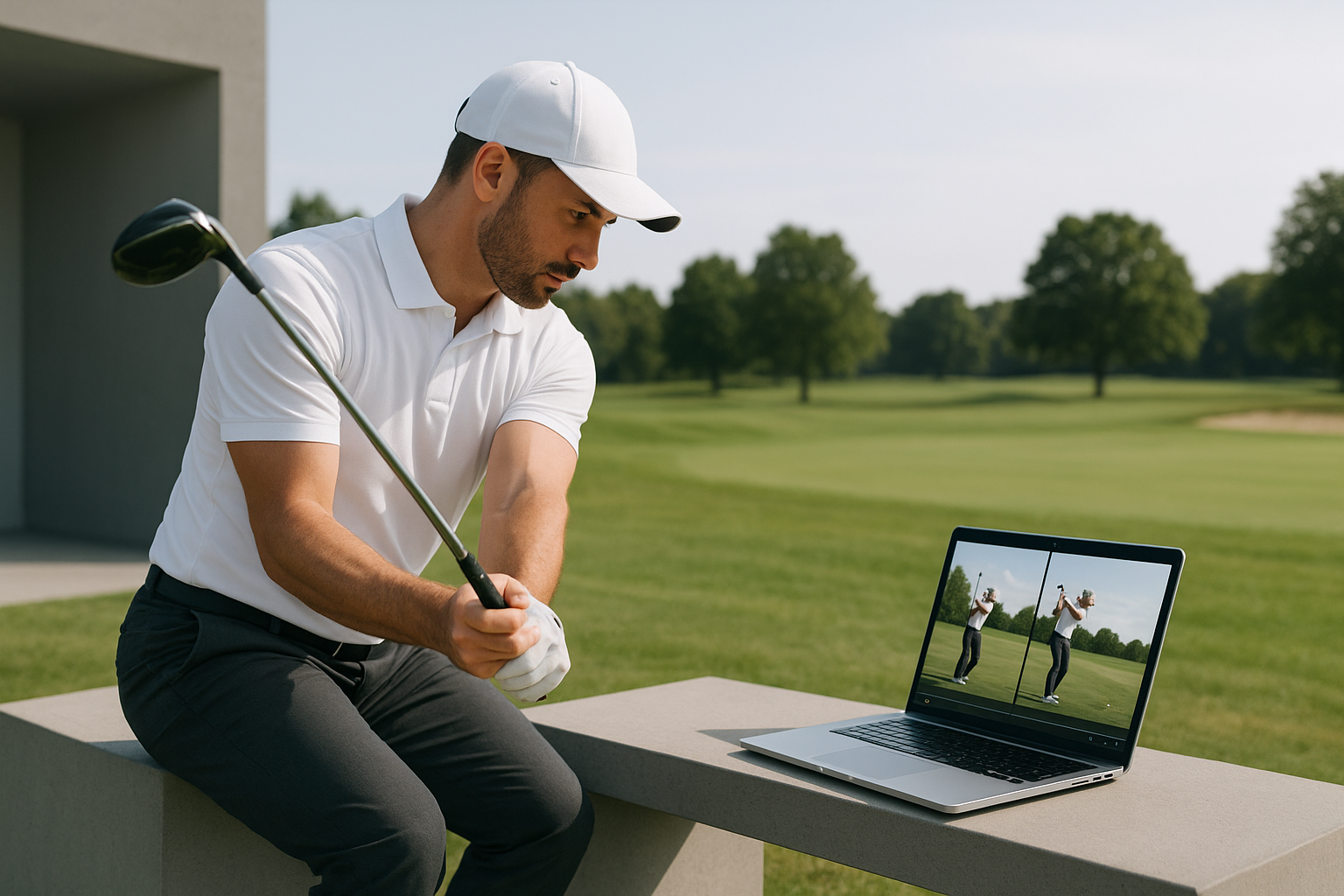
Remote video analysis allows golfers anywhere to access expert-level feedback without traveling to a facility.
Frequently Asked Questions
What does it mean to play your best golf always?
Play your best golf always means maintaining consistent swing mechanics, mental focus, and physical conditioning so strong performance becomes routine rather than occasional. It relies on repeatable fundamentals rather than luck or momentary form.
How can I play your best golf always during tournaments?
Tournament consistency comes from rehearsed pre-shot routines, sound biomechanics, and stress-tested practice. Golfers who train under simulated pressure adapt faster when real competition arrives.
Why do golfers lose consistency under pressure?
Pressure often causes small compensations in tempo, grip, and posture that break down efficient movement patterns. Without biomechanical training, these changes accumulate into inconsistent ball flight.
How long does it take to see swing improvement?
Most competitive golfers notice measurable changes within four to eight weeks of focused, feedback-driven practice. However, deeper motor-pattern changes typically take several months of consistent reinforcement.
What is the difference between local lessons and remote biomechanics coaching?
Local lessons are often limited by an instructor’s availability and general teaching background. Remote biomechanics coaching connects golfers with specialized, science-based expertise regardless of location.
How much does online golf coaching cost?
Pricing varies by program depth, video analysis volume, and coach credentials, so costs range widely across providers. Serious competitive golfers should weigh the coach’s qualifications against the investment.
What common mistakes prevent consistent golf performance?
Common mistakes include practicing without clear mechanical goals, ignoring physical mobility limits, and skipping structured feedback loops. As a result, players plateau instead of progressing.
What role does kinesiology play in golf instruction?
Kinesiology, the scientific study of human movement, helps coaches identify inefficient or risky swing patterns. This allows instruction to target root causes instead of surface symptoms.
How often should competitive golfers practice?
Most competitive players benefit from four to six focused practice sessions per week that combine technical drills with on-course application. Quality and structure matter more than raw volume.
Can remote coaching really replace in-person lessons?
For technical swing analysis, remote coaching using slow-motion video can match or exceed in-person feedback quality. Many elite programs now rely primarily on digital review for this reason.
What is the best way to prevent golf swing injuries?
Injury prevention starts with mobility screening and swing mechanics that respect the body’s natural ranges of motion. Coaches trained in biomechanics can spot compensation patterns before they cause harm.
How do I know if my golf coach is qualified?
Look for verifiable credentials such as LPGA or PGA certification, plus formal education in movement science when possible. A track record with competitive or collegiate players is also a strong indicator.
Is online golf coaching effective for elite juniors and collegiate players?
Yes, elite juniors and collegiate athletes often benefit from specialized remote coaching that local facilities cannot provide. Access to advanced, science-based instruction can accelerate development significantly.
Final Thoughts
Ultimately, the golfers who play your best golf always are the ones who treat consistency as a system rather than a stroke of luck. They pair efficient swing mechanics with structured feedback, respect their body’s physical limits, and rehearse their process until it holds up under pressure. Therefore, whether you are a competitive amateur or an aspiring professional, investing in science-backed, expert-guided coaching gives you the clearest path toward reliable performance every time you step onto the course.