
Online golf swing fault diagnosis is the process of studying your swing on video to find the true cause of a bad shot, not just the symptom. For serious players, this matters because a slice, a pull or a thin strike often starts several moves earlier. A trained coach can spot that chain from two phone clips, wherever you live.
Quick answer: Film your swing from face-on and down-the-line, describe your miss, and share any physical limits. A coach then links your ball flight to body motion and club delivery, and gives a short list of priority fixes.
What Is Online Golf Swing Fault Diagnosis?
It is a remote form of swing analysis. You send video, and the coach reviews posture, rotation, sequencing, club path and face control. Consequently, the result is a cause-and-effect explanation of why the ball does what it does.
At yourgolfguru.com, this work is led by an LPGA Master Professional who also holds a PhD in kinesiology (the science of human movement). The service is built for competitive amateurs, collegiate players and aspiring professionals. You can read more about the approach in this overview of elite golf swing diagnostics.
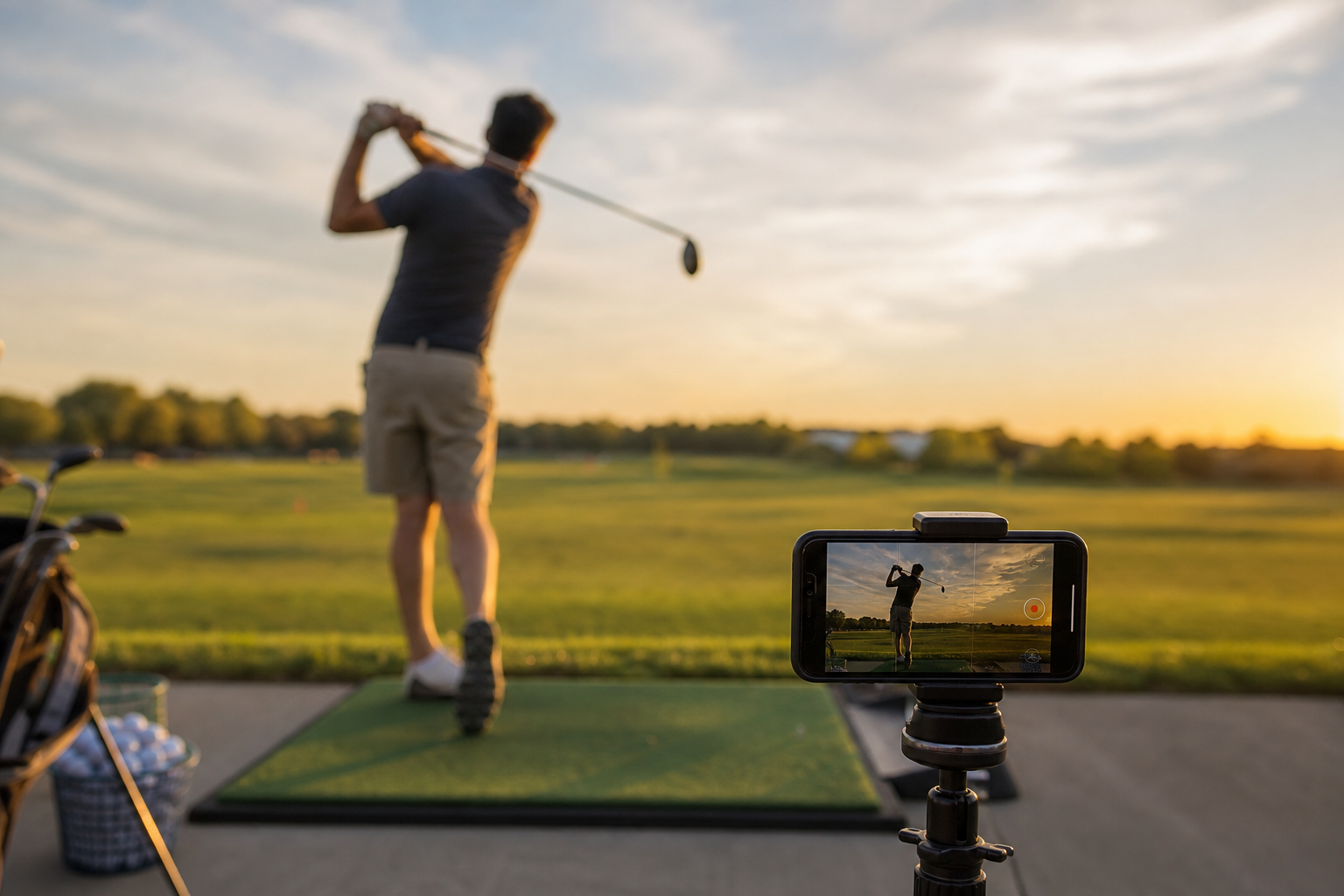
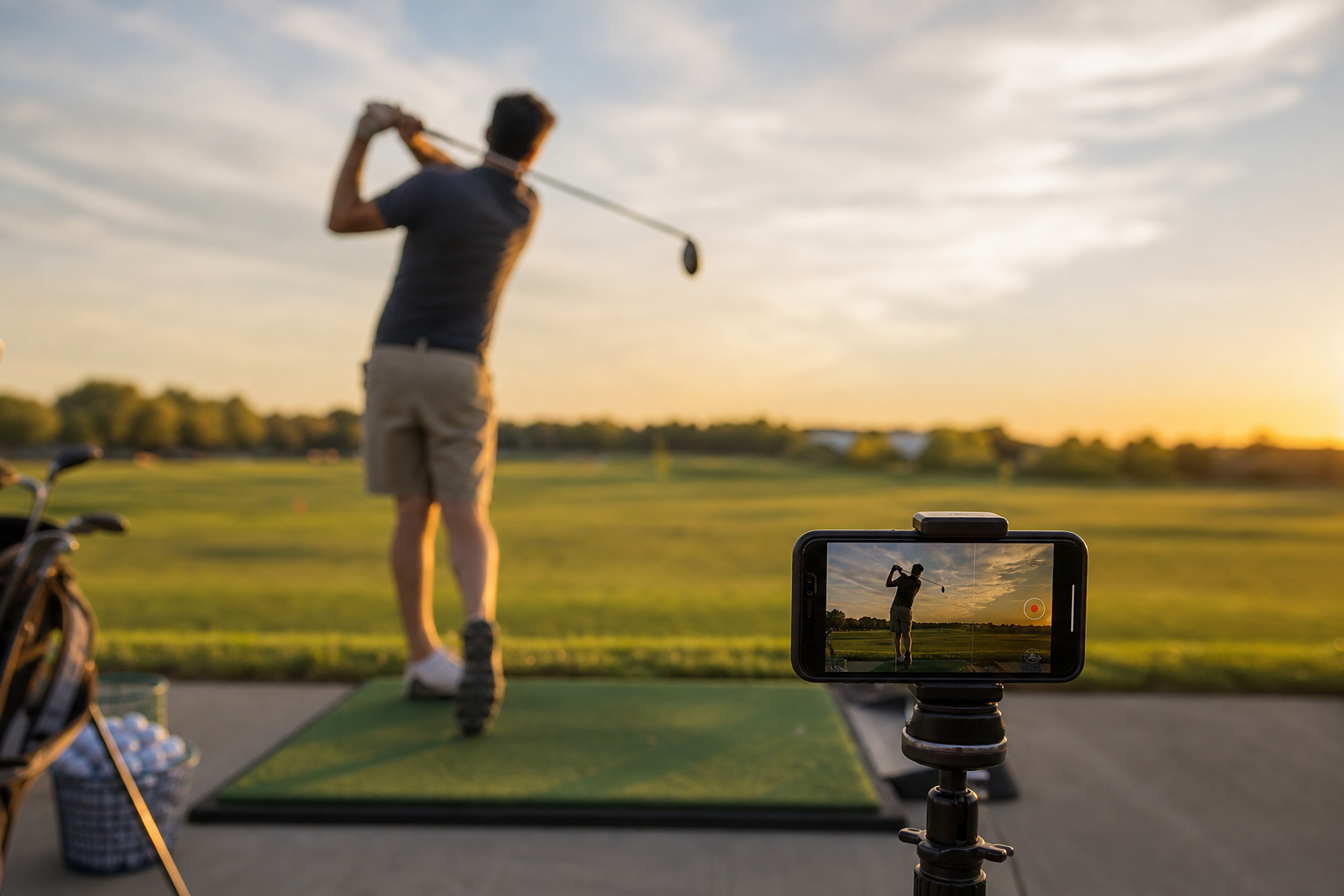
Two steady camera angles give a coach what is needed for online golf swing fault diagnosis.
Why Symptoms Are Not the Same as Faults
A symptom is what you see or feel. A fault is why it happens. For example, an over-the-top downswing is a symptom. The cause may be limited hip turn, a rushed transition or a grip that holds the face open.
Therefore, fixing the symptom alone rarely lasts. Players often change one move, then another problem appears. Tracing the chain back to its start prevents that cycle.
Common Symptom and Possible Root Causes
| Ball flight | Visible symptom | Possible root causes |
|---|---|---|
| Slice | Outside-in path | Weak grip, early shoulder spin, limited hip turn |
| Thin or fat strikes | Rising or dropping body | Poor weight shift, lost posture, mobility limits |
| Hook | Closed face at impact | Strong grip, excessive hand action, steep inside path |
| Loss of distance | Short backswing | Restricted rotation, weak sequencing |
How Remote Swing Analysis Works
A coach reviews your clips frame by frame. Slow motion shows what the eye misses at full speed. In addition, drawing tools mark angles, lines and positions so you can see each issue yourself.
The kinesiology lens adds another layer. Specifically, the coach checks whether a flaw is a habit or a physical limit. That distinction guides which changes are safe. For a deeper walkthrough, see this guide on fixing swing flaws with video analysis.
How to Prepare Your Swing Video Step by Step
Good input leads to a better diagnosis. Follow these steps:
- Describe your typical miss and how often it happens per round.
- Set up two cameras: face-on and down-the-line, at hand height, level and steady.
- Record five to eight full-speed swings with a mid-iron and driver.
- Share injuries, pain or mobility limits that affect your swing.
- Practice the priority changes, then re-record and compare with your first clips.
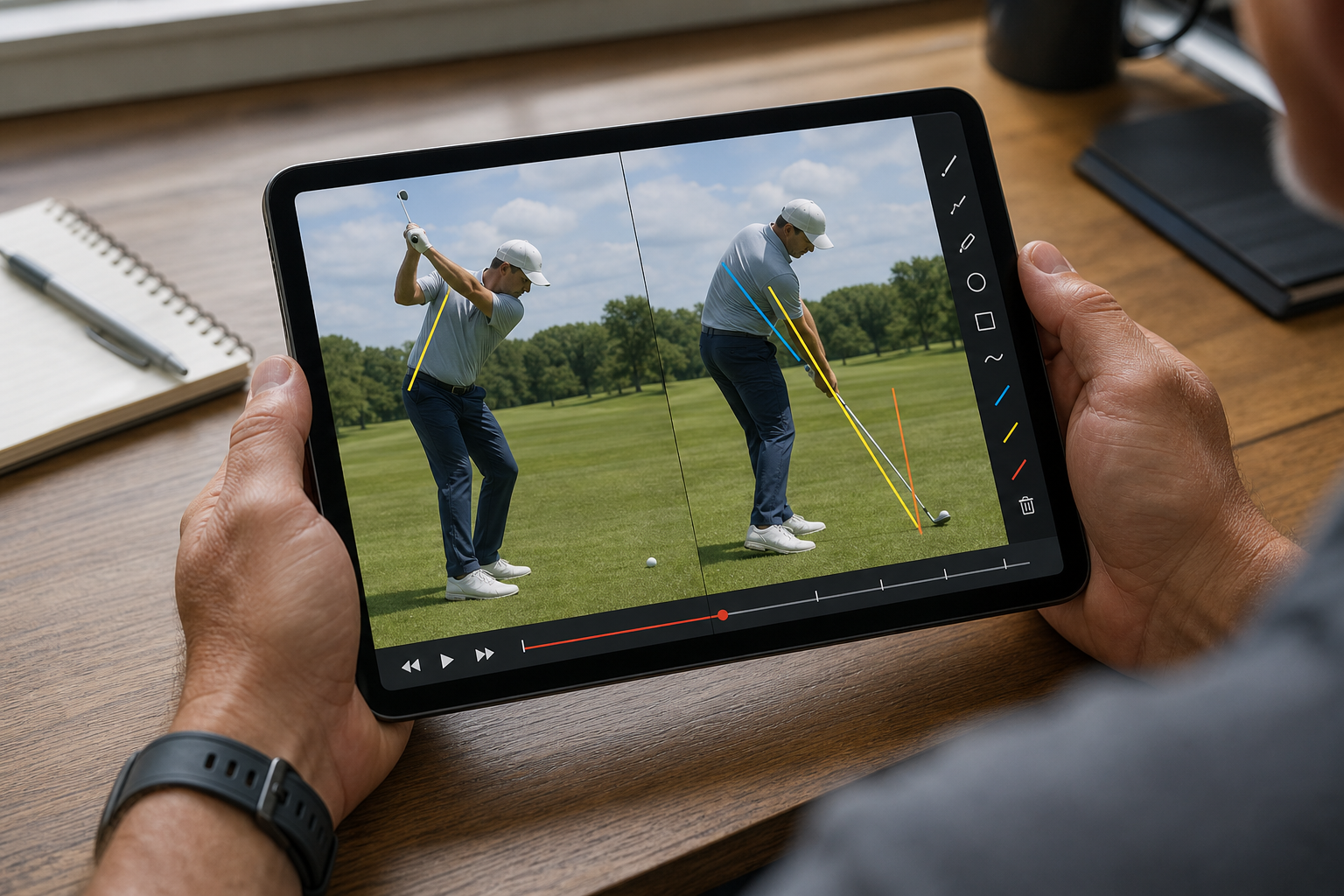
Frame-by-frame review reveals position errors that disappear at full speed.
Common Filming Mistakes That Hide the Fault
Tilted cameras distort angles. Cropped clubheads hide path and face. Poor light blurs the hands. Similarly, filming only slow practice swings hides the real pattern, because pressure changes how you move.
Always film real shots, with your normal routine. Then the coach sees the swing you take to the course.
Does a Remote Swing Check Really Work?
Yes, for technical faults. Video captures body motion and club delivery well. However, it cannot replace hands-on feel for every player, so some golfers add occasional in-person work.
Results vary by player and practice effort. You can review one example in this case study of an experienced senior golfer, and learn how the method is evaluated in this look at swing correction effectiveness. Even a legend can hit a wall, as the story behind this piece on Nicklaus quitting suggests.
Protecting Your Body While You Change Your Swing
Swing changes load the spine, hips and shoulders. Consequently, a safe plan respects your range of motion. The LPGA maintains teaching standards, and general health guidance on exercise is available from the CDC. If you have pain, consult a medical professional before changing your swing.
Frequently Asked Questions
What is online golf swing fault diagnosis?
Online golf swing fault diagnosis is the remote process of reviewing swing video to identify the root cause of a ball-flight problem. A coach then builds a correction plan.
Can a swing fault really be diagnosed from video?
Yes, for most technical faults. Two camera angles show body motion, club path and sequencing clearly. Launch monitor data adds detail but is not required.
What camera angles do I need?
Use a face-on view and a down-the-line view. Keep the camera at hand height and the full body and club in frame.
How many swings should I record?
Record five to eight swings per club. That is enough to show your pattern rather than one outlier.
What is the difference between a swing fault and a symptom?
A symptom is the visible result, like an over-the-top move. The fault is the underlying cause, such as limited hip rotation or poor weight shift.
Is online diagnosis as good as an in-person lesson?
For analysis, it can be equally strong, especially with slow-motion video. In-person lessons offer hands-on feedback, while online coaching offers access to specialized expertise anywhere.
Why does the coach ask about my body and injuries?
Physical limits often cause swing faults. Knowing them helps the coach avoid changes that strain your body.
How long until I see results?
Many golfers notice changes in ball contact within a few practice sessions. Lasting change in a motor pattern usually takes weeks of consistent practice.
What are common mistakes when filming a swing?
Common mistakes include tilted cameras, cropped clubheads, poor lighting and filming only slow practice swings. Each can hide the real fault.
Do I need a launch monitor?
No. A launch monitor adds numbers like face angle and path, but video alone can identify most causes.
Who benefits most from this type of coaching?
Competitive amateurs, collegiate players and aspiring professionals benefit most. They need precise technical feedback beyond general tips.
What should I do after receiving a diagnosis?
Focus on one or two priority changes, practice them with drills, and re-record to check progress.
Conclusion
Online golf swing fault diagnosis connects what the ball does to what your body and club are doing. Good video, an honest description of your miss and attention to physical limits give a coach what is needed to find the root cause. Fix the cause, practice with focus, and re-record to confirm progress. To see how a kinesiology-based approach works, visit yourgolfguru.com.