

Kinesiology in golf instruction is reshaping how competitive players understand their swing, turning guesswork into evidence-based coaching. Rather than relying on generic tips, this approach studies how muscles, joints, and movement patterns work together to produce a repeatable, powerful swing. As a result, serious golfers gain a measurable advantage over players who train with traditional, feel-based lessons alone.
At yourgolfguru.com, this method is delivered by an LPGA Master Professional who also holds a PhD in kinesiology, the scientific study of human movement. That combination of elite playing credentials and academic research means lessons address the why behind every swing flaw, not just the what. Below, this guide breaks down what kinesiology in golf instruction actually involves, how it works, and why it matters for anyone chasing consistent, powerful ball-striking. Author note: add a concise author byline and 2–3 sentence bio (name, credentials, coaching focus).
What Is Kinesiology in Golf Instruction?
Kinesiology in golf instruction is the application of movement science, anatomy, and biomechanics to analyze and improve a golfer’s swing. Instead of describing a swing fault in vague terms, a kinesiology-trained coach identifies the specific muscle groups, joint angles, and sequencing errors causing it. Consequently, corrections can be both more effective and safer for the body long term.
More broadly, kinesiology is the scientific study of human movement, drawing from anatomy, physiology, and physics. When applied to golf, it explains how rotational forces, ground reaction, and joint mobility combine to create clubhead speed. For a deeper technical breakdown, this anatomy of the golf swing guide walks through each moving part in detail.
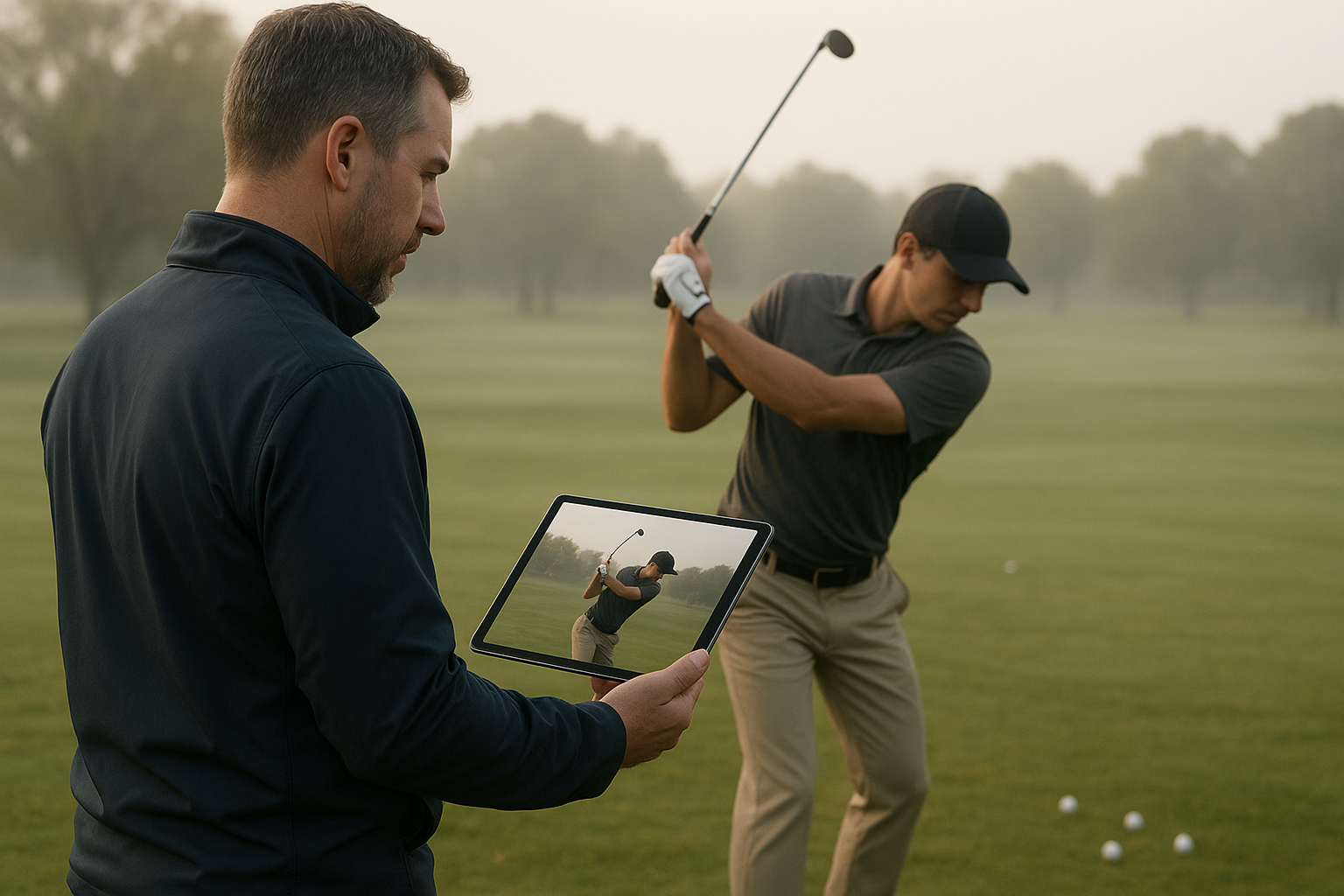
Kinesiology in golf instruction relies on detailed video and movement analysis rather than guesswork.
Why Biomechanics-Based Coaching Matters for Competitive Golfers
Competitive players often plateau not because they lack talent, but because their swing faults are being treated as symptoms rather than root causes. In contrast, biomechanics-based coaching digs into the actual physical limitations, such as restricted hip turn or weak core stability, that create those faults in the first place. This is particularly valuable for collegiate and aspiring professional golfers who need marginal gains at a high level.
For example, two golfers can share an identical-looking slice, yet one may need better sequencing while the other needs improved shoulder mobility. A detailed explanation of these mechanics is available in this golf swing biomechanics resource, which pairs well with a personalized movement assessment.
The Science Behind Swing Mechanics and Injury Prevention
Golf places repetitive, asymmetrical stress on the spine, wrists, and hips, which is one reason overuse injuries are so common among frequent players. Research referenced through the National Institutes of Health has linked structured biomechanical analysis to more efficient force transfer and reduced joint strain during the swing. Some studies note noticeably improved swing consistency once faulty movement patterns are corrected at their source.
Because of this, kinesiology in golf instruction places injury prevention on equal footing with performance. Understanding how the body should move, explained further in this breakdown of the body’s role in the golf swing, helps golfers train smarter rather than simply training harder.
How Kinesiology-Informed Instruction Builds Power and Accuracy
Power in the golf swing comes primarily from an efficient kinetic chain, the sequential transfer of force from the ground, through the hips and torso, into the arms and club. When any link in that chain is weak or mistimed, both distance and accuracy suffer. Kinesiology-based coaching pinpoints exactly where that chain breaks down.
Similarly, accuracy improves when unnecessary compensations are removed from the swing. Instead of manipulating the clubface at impact to fix a symptom, a kinesiology-informed coach corrects the movement pattern causing the miss in the first place, leading to more repeatable ball-striking under pressure.
Step-by-Step: How a Kinesiology-Based Swing Assessment Works
- Movement Screening: The coach evaluates posture, joint mobility, and physical limitations before a club is even involved, ensuring recommendations fit the golfer’s specific movement capabilities and reduce injury risk.
- Swing Video Analysis: High-speed video or motion footage is reviewed frame by frame to map how the joints and muscles sequence force throughout the entire swing.
- Root Cause Identification: Using kinesiology principles, the coach traces surface-level swing faults back to their underlying biomechanical cause, such as limited hip rotation or shoulder tightness.
- Corrective Drills: Targeted drills and mobility exercises are prescribed to retrain movement patterns gradually, reinforcing correct sequencing without forcing unnatural or unsafe positions.
- Progress Tracking: Regular remote check-ins measure swing changes over time, allowing the coach to adjust the plan as strength, mobility, and consistency steadily improve.
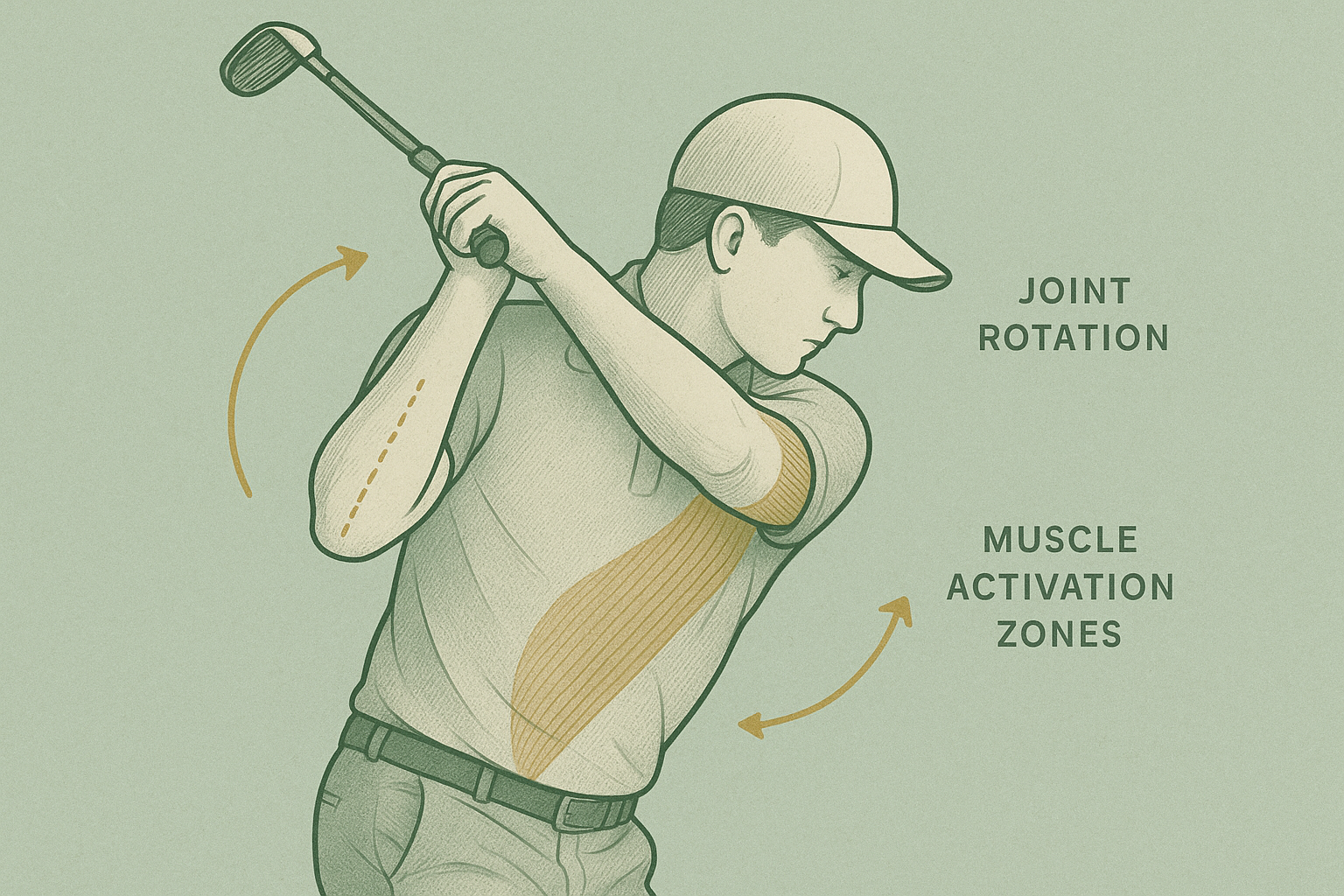
Mapping joint rotation and muscle sequencing is central to biomechanics-based golf coaching.
Choosing a Kinesiology-Focused Golf Instructor
Not every instructor who mentions biomechanics has formal training in movement science. Therefore, it is worth confirming an instructor’s academic background alongside their playing or teaching credentials. At yourgolfguru.com, lessons are led by an LPGA Master Professional with a PhD in kinesiology, a rare pairing of elite coaching experience and rigorous scientific study.
Because instruction is delivered remotely, geography is no longer a barrier to accessing this level of expertise. Golfers curious about the research foundation behind this coaching approach can also review this academic consulting overview for more context on the credentials involved.
Kinesiology in Golf Instruction vs. Traditional Golf Lessons
Traditional lessons often rely heavily on visual feedback and general swing tips that apply broadly but not always precisely. In contrast, kinesiology in golf instruction is built on individual movement assessment, meaning the correction plan is tailored to that specific golfer’s body rather than a generic model swing.
This distinction becomes especially important at higher levels of competition, where small technical inefficiencies can separate a good round from a great one. As an example of how experienced players analyze performance under pressure, this PGA Seniors Championship diary offers useful real-world context.
Frequently Asked Questions About Kinesiology in Golf Instruction
What is kinesiology in golf instruction?
Kinesiology in golf instruction is the use of movement science, anatomy, and physics to analyze and correct a golfer’s swing. It focuses on how muscles, joints, and body segments interact to produce power, accuracy, and consistency.
How does kinesiology improve a golf swing?
Kinesiology improves a golf swing by identifying the exact joint angles, muscle firing patterns, and sequencing issues causing a fault. Correcting the root cause, rather than the surface symptom, leads to more durable improvement.
Why do elite golfers use kinesiology-based coaching?
Elite golfers use kinesiology-based coaching because it provides objective, measurable feedback instead of subjective opinion. This precision helps competitive players refine performance where small technical gains matter most.
How is kinesiology-based coaching different from traditional golf lessons?
Traditional lessons often address what a swing looks like, while kinesiology-based coaching explains why the body moves that way. This scientific approach targets underlying mobility, strength, or sequencing limitations.
How much does kinesiology-based online golf coaching cost?
Pricing varies by instructor credentials and program depth, with specialized kinesiology-based coaching typically priced higher than generic online lessons. Programs are usually structured as packages rather than one-off sessions.
How long does it take to see results from kinesiology-based swing training?
Many golfers notice improved swing sequencing within a few weeks of consistent practice. However, deeper biomechanical changes involving mobility or strength often take several months to fully stabilize.
What are common mistakes golfers make without biomechanical analysis?
Without biomechanical analysis, golfers often chase surface-level fixes that mask deeper mobility or sequencing limitations. This frequently leads to compensations that increase long-term injury risk.
What credentials should a kinesiology-focused golf instructor have?
A strong kinesiology-focused instructor typically holds formal education in movement science, such as a degree in kinesiology, alongside recognized golf teaching credentials like an LPGA or PGA certification.
Can kinesiology in golf instruction help prevent injuries?
Yes, kinesiology in golf instruction can help prevent injuries by identifying movement patterns that place excessive stress on joints like the lower back, wrists, or shoulders. Corrective drills then reduce that strain over time.
Is online kinesiology-based golf coaching effective for collegiate players?
Online kinesiology-based coaching can be highly effective for collegiate players because it offers advanced, individualized analysis regardless of location. This is especially valuable for athletes without access to specialized local instructors.
What tools are used to analyze golf swing biomechanics?
Instructors commonly use high-speed video, motion analysis software, and physical movement screenings to assess swing biomechanics. These tools help pinpoint restrictions in mobility or inefficient sequencing.
How does kinesiology relate to golf swing power and distance?
Kinesiology relates to swing power because it explains how the body generates and transfers force through the kinetic chain. Improving sequencing efficiency, rather than simply swinging harder, is often the key to added distance.
Do beginners benefit from kinesiology-based instruction, or only advanced players?
While kinesiology-based instruction is especially valuable for advanced and competitive players, beginners can also benefit by building efficient movement habits early. This can prevent compensations from forming in the first place.
What is the difference between kinesiology and biomechanics in golf?
Kinesiology is the broader scientific study of human movement, while biomechanics is a specific branch of kinesiology focused on the physical forces involved in motion. In golf instruction, the two terms are often used together.
How can I start kinesiology-based golf instruction remotely?
Golfers can start remote kinesiology-based instruction by submitting swing video for analysis and completing an initial movement assessment. From there, a coach builds a personalized correction and training plan.
Final Thoughts on Kinesiology in Golf Instruction
Ultimately, kinesiology in golf instruction gives competitive players a clearer, science-backed path to lasting improvement rather than temporary fixes. By identifying the true movement causes behind swing faults, this approach builds power, accuracy, and durability at the same time. For golfers ready to move beyond generic tips, working with a coach who blends elite playing credentials with movement science, such as through yourgolfguru.com, offers a practical next step toward more consistent, injury-resistant performance on the course.