

Kinesiology golf performance training is coaching that uses the science of human movement to improve your swing, your power and your durability. For competitive players, it explains why a swing fault happens, not just what it looks like. That difference is often what separates a short-term fix from lasting improvement.
Quick answer: Kinesiology golf performance training pairs swing instruction with biomechanical analysis. It finds the physical limits behind your faults, then builds a plan for more power, accuracy, consistency and safety.
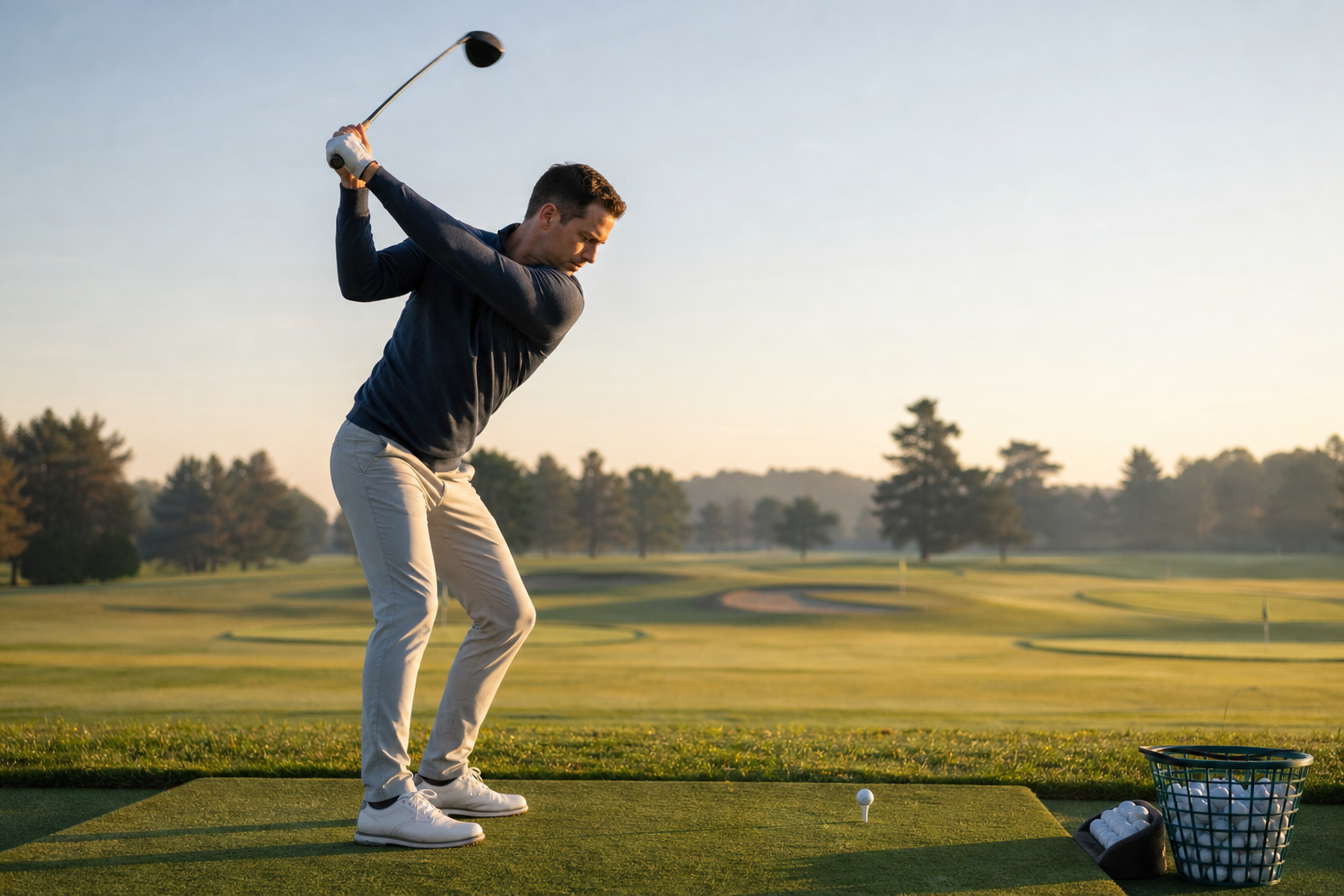
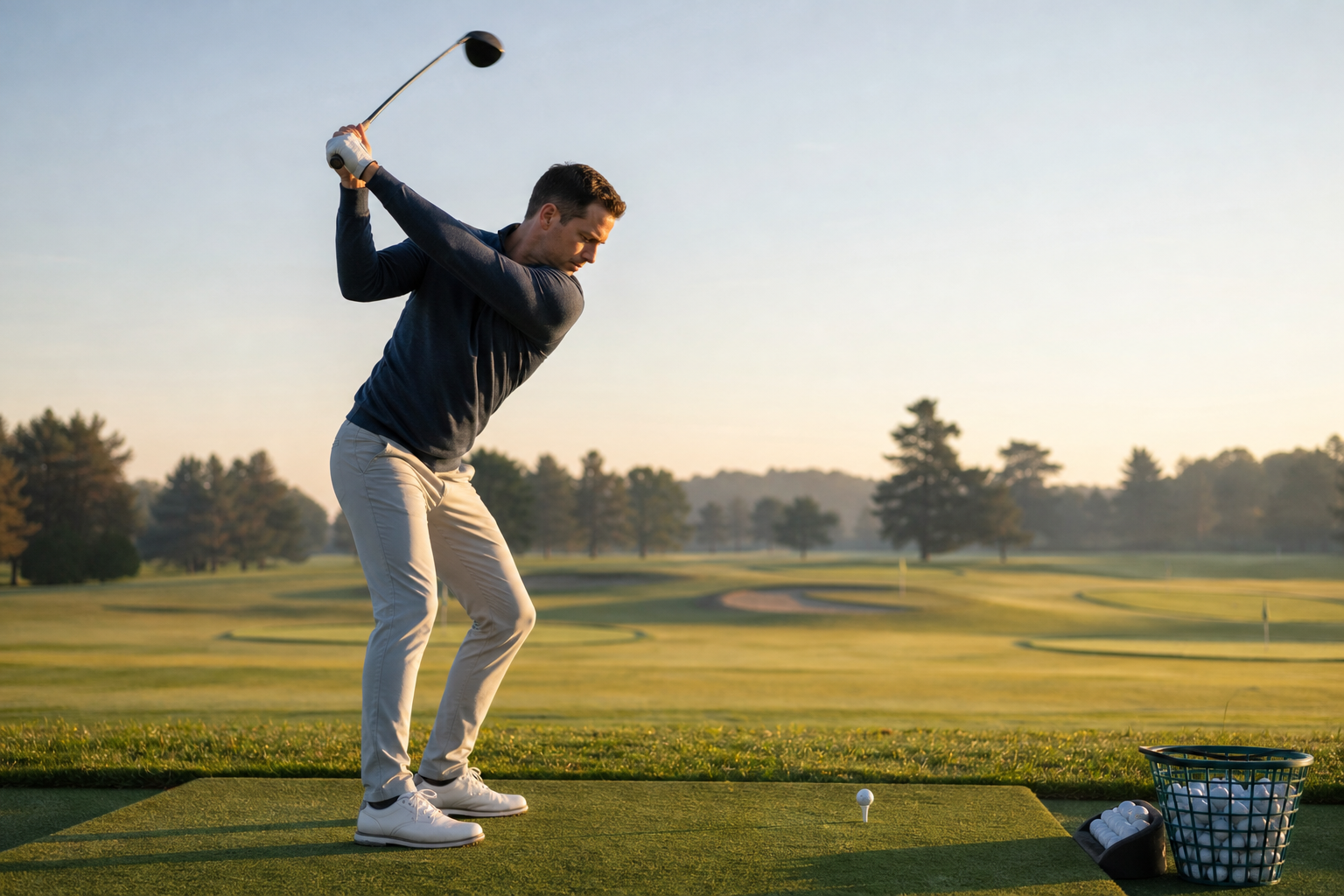
A competitive golfer in the middle of a full swing on the range.
What Is Kinesiology Golf Performance Training?
It is an instruction method grounded in kinesiology, the study of how the body moves. Coaches apply biomechanics, anatomy and motor learning to the golf swing. As a result, every recommendation fits the player’s body rather than a generic model.
For example, two golfers may both lose their posture in the downswing. One may lack hip rotation. The other may lack core stability. The cause differs, so the fix must differ too.
Why Movement Science Matters for Competitive Players
Elite golfers already hit good shots. However, small inefficiencies cost strokes under pressure. Movement science exposes those inefficiencies in a way that ball flight alone cannot.
The swing is a fast, whole-body sequence. Energy moves from the ground through the legs, hips, torso, arms and club. If one link is restricted, the others compensate. Consequently, the swing becomes less repeatable and more stressful on joints.
Power Through Better Sequencing
Clubhead speed depends on efficient energy transfer, not just effort. When mobility and timing improve, the same effort produces more speed. In addition, a stable base helps you deliver that speed on the intended path.
Accuracy and Consistency
Fewer compensations mean fewer variables at impact. Therefore, face and path control become easier to repeat. Players often describe this as the swing feeling simpler.
Golf Biomechanics and Injury Prevention
Golf places repeated rotational load on the lower back, hips, shoulders, elbows and wrists. The Centers for Disease Control and Prevention notes that regular physical activity supports long-term health, but repeated poor mechanics can still overload tissue. Safer movement patterns help you keep practicing at a high level.
Kinesiology-based coaching looks for stress points, such as excessive lateral bend or early extension. It then adjusts technique and mobility together. To go deeper, read this guide to injury prevention in golf coaching. If you already have pain, consult a medical professional before changing your training.
How the Process Works: Five Steps
A sound program follows a clear sequence. Here is a simple version you can use as a checklist.
- Record your swing. Film face-on and down-the-line views at a consistent camera height.
- Screen mobility and stability. Test hip rotation, thoracic rotation, shoulder mobility and single-leg balance.
- Link limits to faults. Match each restriction to the compensation it creates in your swing.
- Build a targeted plan. Choose a few drills and mobility exercises, and practice them in short, frequent sessions.
- Retest and adjust. Repeat the checks every few weeks and update the plan from measurable change.
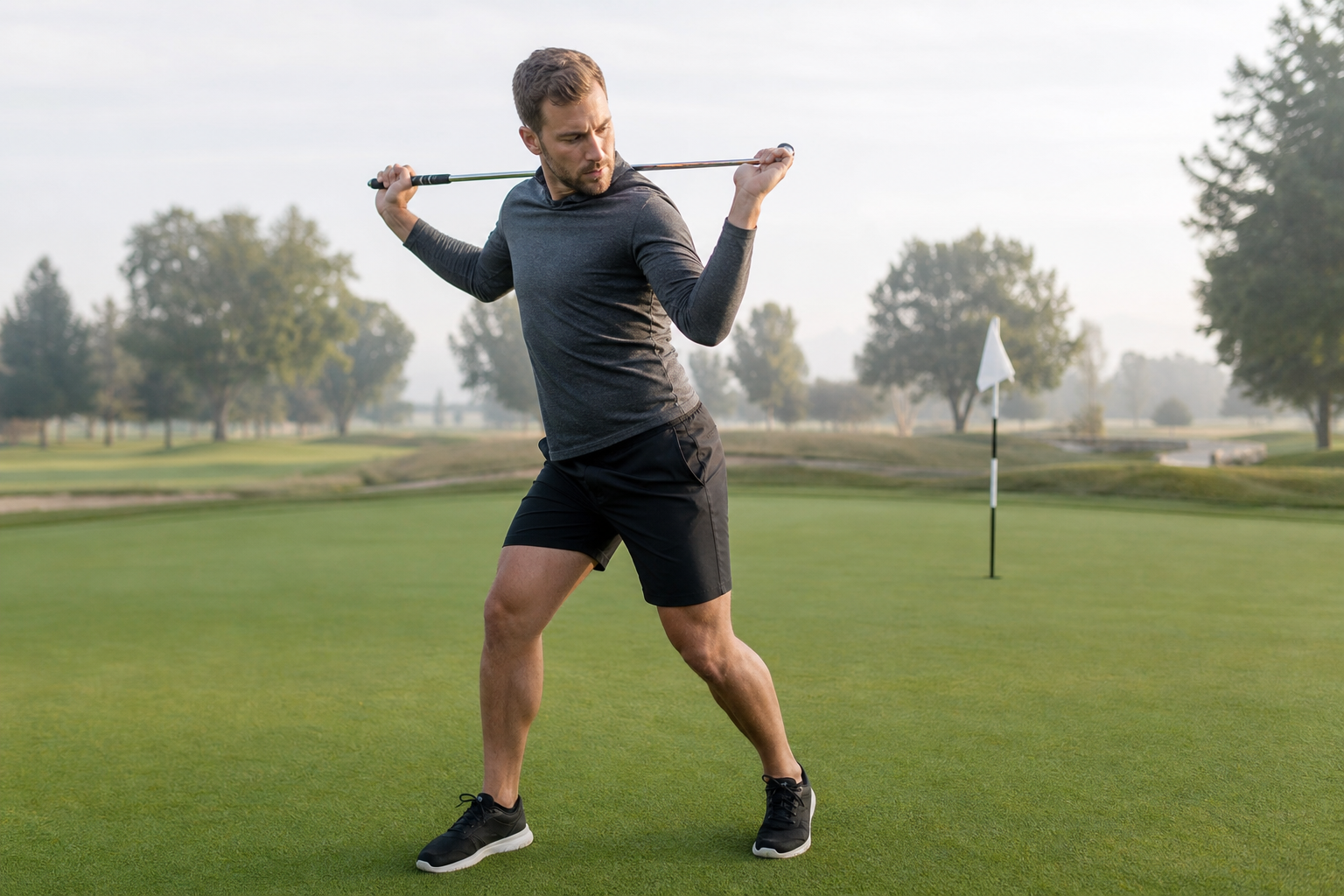
A rotation drill like this can reveal how freely the hips and spine move.
Traditional Lessons vs. Science-Based Coaching
| Focus | Traditional lesson | Kinesiology-based coaching |
|---|---|---|
| Starting point | Ball flight and visible faults | Body movement and root causes |
| Model | Often one ideal swing | Fitted to the individual |
| Injury focus | Limited | Built into the plan |
Learn how a doctoral-level expert fits into this picture in how a PhD in kinesiology can improve your golf swing. For the bigger picture, see the science-backed edge of kinesiology in golf instruction.
Choosing a Coach for Kinesiology Golf Performance Training
Credentials matter because the method needs expertise in two fields. Look for proven golf teaching experience, such as LPGA teaching credentials, alongside formal training in movement science. Also ask how the coach assesses your body and tracks progress.
yourgolfguru.com offers online instruction for competitive amateurs, collegiate players and aspiring professionals. Lessons are led by an LPGA Master Professional who also holds a PhD in kinesiology. Because delivery is remote, you can access this level of coaching from any location. You can compare options in this overview of professional golf training for competitive golfers and learn why choose a PhD-led, kinesiology-based lesson service.
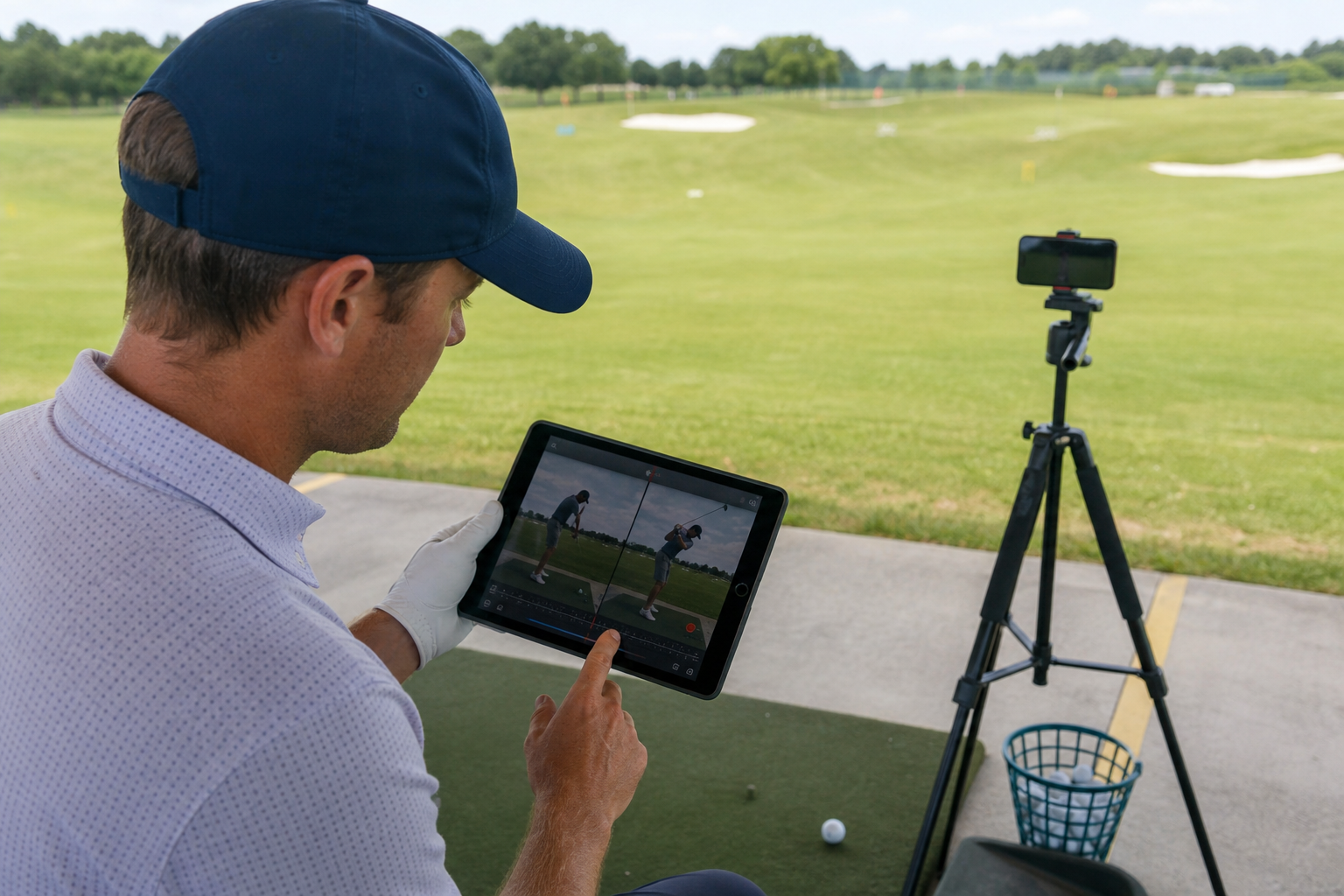
Remote video review lets a coach analyze your swing frame by frame.
Frequently Asked Questions
What is kinesiology golf performance training?
It is golf coaching built on the science of human movement. Instructors use biomechanics and anatomy to shape swing technique around how your body actually moves.
Is kinesiology the same as golf fitness?
No. Golf fitness focuses on strength and conditioning, while kinesiology also explains how your body produces and controls the swing. The two work well together.
Who benefits most from this approach?
Competitive amateurs, collegiate players and aspiring professionals benefit most. They often have the skill but are limited by mechanics or physical restrictions.
Can online lessons really use biomechanics?
Yes. Video analysis, movement screens and follow-up feedback can all be delivered remotely. A coach can review your swing frame by frame from anywhere.
How does it help prevent golf injuries?
It identifies movement patterns that overload the lower back, hips, wrists or shoulders. Coaches then adjust mechanics and mobility to spread load more safely.
Will it increase my clubhead speed?
It often can, because better sequencing and mobility let you transfer energy more efficiently. Results vary by player and starting point.
How long before I see results?
Many players notice better feel within a few weeks. Lasting mechanical change usually takes several months of consistent practice.
What equipment do I need for remote coaching?
A smartphone or camera, a tripod, and space to swing are usually enough. Launch monitor data is a helpful extra but not required.
How is it different from a typical local lesson?
A typical lesson often targets ball flight and visible faults. Kinesiology-based coaching looks at the physical causes behind those faults.
What is the most common mistake golfers make?
Copying a tour player’s positions without having the mobility to reproduce them. This forces compensations that hurt consistency and can cause pain.
Do I need to be in perfect shape to start?
No. A good plan starts from your current ability and builds gradually. If you have pain or an injury, check with a medical professional first.
How do I choose a coach for kinesiology golf performance training?
Look for formal credentials in both golf instruction and movement science, plus a clear assessment process. A coach should explain the reasons behind every recommendation.
Conclusion
Kinesiology golf performance training connects how your body moves with how your swing performs. It targets root causes, so gains in power, accuracy and consistency are easier to keep, and injury risk is easier to manage. If you compete seriously, start with a video and mobility assessment, then build a plan you can measure. To explore expert-led online coaching, visit yourgolfguru.com.