


Injury-free golf training is a systematic approach to improving swing mechanics while minimizing the physical stress that leads to common golf injuries like lower back strain, wrist tendonitis, and hip impingement. For competitive amateurs, collegiate players, and aspiring professionals, this approach matters more than ever, because a single overuse injury can derail months of progress. Therefore, golfers who want lasting performance gains need a training method built on biomechanics, not just repetition. This guide breaks down what injury-free golf training looks like in practice, why it matters, and how to build it into your own game.

Proper hip rotation and spine angle are central to injury-free golf training.
What Is Injury-Free Golf Training?
Injury-free golf training is a coaching methodology that blends biomechanical analysis with proven swing instruction to build power and consistency without overloading vulnerable joints. In short, it works by identifying compensations in the swing, such as early extension or excessive spinal side-bend, and correcting them before they cause pain. According to OrthoInfo from the American Academy of Orthopaedic Surgeons, golf-related injuries affect a significant share of amateur golfers each year, with the lower back cited as the most common site.
Consequently, this style of coaching differs from a standard lesson focused only on ball flight. Instead, it treats the body as part of the equation. A coach trained in kinesiology, the scientific study of human movement, can see exactly where force builds up unsafely during the swing and redirect it through better sequencing.
The Biomechanics Behind Common Golf Swing Injuries
Understanding why golfers get hurt starts with the forces involved. In particular, the golf swing generates rotational torque through the spine and hips at high speed, repeated hundreds of times per practice session. As a result, small mechanical errors compound quickly.
For example, early extension, standing up out of posture during the downswing, shifts load onto the lower back instead of the hips. Similarly, a flat lead wrist at impact can transfer excess strain into the tendons. Above all, these patterns rarely feel painful at first, which is why many golfers dismiss them until an injury forces a break from the game.
A frequently cited figure from sports medicine research estimates that golf injury rates range between 15 and 30 percent among amateur players annually, with the majority tied to repetitive swing mechanics rather than single traumatic events. This statistic underscores why prevention, not just rehabilitation, needs to be built into training from the start.
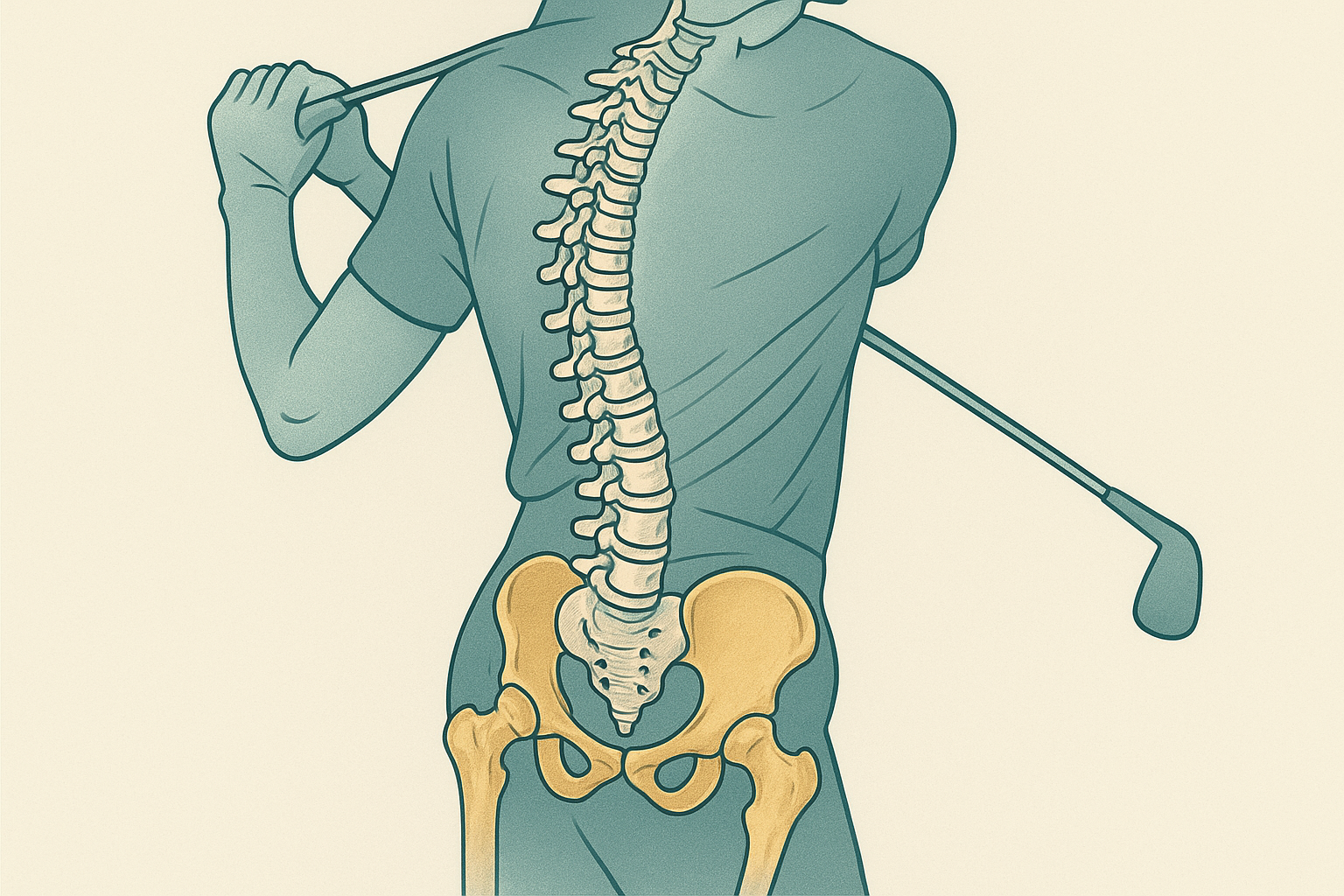
Rotational forces through the spine and hips are a major factor in golf swing injuries.
Core Principles of a Safe Swing Training Program
A well-built safe swing training program rests on a few consistent principles. Specifically, it prioritizes movement efficiency alongside distance and accuracy, rather than chasing clubhead speed at any cost.
- Assessment before correction: changes are based on video and movement screening, not guesswork.
- Sequencing over strength alone: power comes from proper kinematic sequence, which also reduces joint stress.
- Progressive load management: practice volume increases gradually as new patterns become automatic.
- Recovery built into the plan: mobility and rest days are scheduled, not optional extras.
Furthermore, this framework aligns closely with the guidance outlined in a golf injury prevention training program designed specifically for players managing high swing volume.
How to Build an Injury-Free Golf Training Plan: A Step-by-Step Process
Building this kind of plan does not need to be complicated. However, it does need to follow a logical sequence so that corrections stick under pressure and at full speed.
- Get a biomechanical swing assessment. Record your swing from multiple angles, or work with a coach who can analyze joint angles, spine tilt, and hip rotation to flag movements linked to injury risk.
- Identify your specific movement faults. Compare your swing positions against efficient biomechanical benchmarks to pinpoint issues like early extension, excessive lateral bend, or restricted hip turn.
- Build a corrective mobility routine. Add targeted stretching and joint mobility work for the hips, thoracic spine, and shoulders before each practice session to support the new pattern safely.
- Retrain the swing with slow, deliberate reps. Practice the corrected movement at reduced speed for several sessions before returning to full-speed swings, letting the nervous system adapt without strain.
- Add golf-specific strength training. Incorporate rotational core work, glute activation, and wrist stability exercises two to three times weekly to support the muscles absorbing swing forces.
- Reassess and adjust every few weeks. Review new swing video every three to four weeks to confirm the correction holds under fatigue and full swing speed, adjusting the plan as needed.
Notably, players who want a deeper dive into the physical conditioning side of this process can reference this golf-specific fitness training guide for exercise progressions that pair well with swing correction work.
Common Mistakes That Undermine Golf Injury Prevention
Even motivated golfers sabotage their own progress in predictable ways. For instance, many stretch aggressively without ever addressing the swing fault causing the strain in the first place, which only masks the symptom temporarily.
Additionally, players often increase practice volume the moment a new position feels correct, before strength and mobility have caught up to support it. In contrast, a gradual ramp-up protects the gains already made. Likewise, ignoring early warning signs, such as recurring stiffness after rounds, tends to turn a minor issue into a long-term setback.
Finally, some golfers rely solely on generic online drills instead of a personalized plan. As a result, they may correct one fault while unintentionally creating another. This is precisely where structured, individualized coaching becomes valuable, a point explored further in this breakdown of strategies for competitive golfers aiming to improve quickly without sacrificing safety.
Why Remote, Science-Backed Coaching Supports Injury-Free Golf Training
Access to qualified expertise is often the missing piece for serious golfers outside major golf hubs. Indeed, competitive amateurs, collegiate players, and aspiring professionals frequently outgrow what a local instructor can offer in terms of technical depth.
This is where a remote, digital coaching platform changes the equation. Your Golf Guru’s online coaching platform is built around instruction developed by an LPGA Master Professional who also holds a PhD in kinesiology, pairing decades of elite teaching experience with a biomechanical, data-driven analysis of the swing. Because lessons are delivered digitally, golfers anywhere can receive the same level of technical scrutiny typically reserved for players training at major facilities.
For a closer look at how elite mechanics translate to real-world results, the Tiger and You analysis offers useful context on how professional-level swing efficiency and durability connect.

Remote video analysis makes injury-free golf training accessible from anywhere.
Frequently Asked Questions About Injury-Free Golf Training
What is injury-free golf training?
Injury-free golf training is a coaching method that corrects swing faults linked to pain and joint stress while still building power and consistency. It uses biomechanical analysis rather than generic drills to protect the body long-term.
How long does it take to see results from injury-free golf training?
Most golfers notice reduced discomfort and cleaner contact within four to six weeks of consistent, corrective practice. Full swing pattern changes that eliminate injury risk usually take three to six months.
Why do golfers get injured despite regular practice?
Frequent practice without correcting faulty mechanics simply reinforces the same harmful movement patterns. Repeating an unsafe swing thousands of times increases wear on the spine, hips, and wrists over time.
What is the difference between injury-free golf training and traditional swing lessons?
Traditional lessons often focus only on ball flight and score, while injury-free golf training also analyzes joint loading and movement efficiency. The goal is a swing that performs well and holds up physically over a career.
How much does online golf injury prevention coaching cost?
Pricing varies by coach and program length, but remote biomechanics-based coaching often costs less than repeated in-person sessions with a specialist. Many programs offer tiered packages based on video review frequency and support level.
What are the most common golf swing injuries?
Lower back strain, wrist tendonitis, and hip impingement are the most frequently reported golf injuries among competitive players. These typically stem from early extension, excessive lateral bend, or restricted hip rotation during the swing.
Can beginners benefit from injury-free golf training, or is it only for elite players?
Beginners benefit significantly because early correction prevents bad habits from becoming ingrained. However, the approach is especially valuable for competitive amateurs and collegiate players facing high swing volume.
What role does kinesiology play in golf swing safety?
Kinesiology, the study of human movement, helps coaches identify exactly which joints and muscle groups are overloaded during a swing. This scientific lens allows for targeted fixes instead of generic swing tips.
What mistakes do golfers make when trying to prevent injury?
A common mistake is stretching without addressing the underlying swing fault causing the strain. Another is increasing practice volume before mobility and strength can support the new movement pattern.
How often should golfers train to stay injury-free?
Most competitive golfers benefit from three to five focused sessions per week that combine swing work with mobility and strength training. Recovery days are just as important as practice days for long-term joint health.
Is remote online golf coaching as effective as in-person lessons?
Yes, when the coach uses detailed video analysis, remote coaching can be just as effective, and sometimes more consistent, than occasional in-person sessions. It also removes travel barriers for golfers without access to elite local instructors.
What equipment or space do I need for online golf training sessions?
A smartphone or camera capable of recording slow-motion video and enough space to make a full swing are usually sufficient. Some programs also recommend a tripod and reflective markers for more precise motion analysis.
How can I tell if my swing is putting me at risk of injury?
Warning signs include recurring soreness in the same joint after rounds, a loss of hip or shoulder mobility, and inconsistent contact that worsens with fatigue. A biomechanical swing assessment can confirm whether these symptoms trace back to a mechanical fault.
Final Thoughts
Ultimately, injury-free golf training gives serious players a way to chase real performance gains without gambling on their long-term health. By combining biomechanical assessment, gradual correction, and consistent recovery habits, golfers can build swings that hold up under competitive pressure year after year. As a result, the players who commit to this science-backed approach tend to train more consistently, simply because they spend less time sidelined by pain. Whether working with a local coach or a remote specialist, the principles remain the same: assess first, correct deliberately, and never sacrifice durability for a few extra yards.