


How to transition from amateur to professional golf is a question that haunts almost every elite amateur who has run out of local competition to conquer. Moving from weekend trophies to a paid professional career takes far more than raw talent; it requires durable swing mechanics, financial planning, and the mental discipline to handle weekly pressure. Below, you will find the practical steps, common mistakes, and coaching strategies that separate golfers who successfully turn pro from those who stall out short of the goal.
In short, transitioning from amateur to professional golf means meeting a tour’s eligibility requirements, passing Qualifying School or an equivalent mini-tour path, and proving consistent scoring under tournament pressure. Most golfers achieve this by pairing years of competitive experience with biomechanically sound swing training and a realistic financial plan for life on tour.
What Does It Mean to Transition From Amateur to Professional Golf?
Transitioning from amateur to professional golf simply means a player officially gives up amateur status to accept prize money, endorsement income, or paid coaching work. In practice, however, the shift involves much more than paperwork.
Specifically, it means committing to a schedule built around qualifying events, travel, and performance metrics rather than casual club play. As a result, golfers who make this jump successfully usually treat the decision as a career launch, not a single tournament entry.

Consistent, deliberate practice is the foundation for anyone exploring how to transition from amateur to professional golf.
Why Most Amateurs Struggle to Turn Pro
Many strong amateurs struggle to turn pro because their game is built for match play against friendly fields, not for the grinding consistency professional tours demand. In addition, few amateurs have tested their swing under the fatigue of back-to-back tournament rounds.
Furthermore, financial pressure often forces golfers to turn pro before their scoring average is tournament-ready. Consequently, a rushed transition can damage both confidence and long-term swing health, which is why structured preparation matters so much before filing for professional status.
How to Transition From Amateur to Professional Golf: The Core Steps
Learning how to transition from amateur to professional golf comes down to a sequence of deliberate steps rather than a single leap. Below is the process many successful players follow.
- Establish a verified competitive track record. Compete in top amateur events for at least two seasons while tracking scoring averages and rankings to prove you can contend against strong fields.
- Build a biomechanically efficient, repeatable swing. Work with a qualified coach to refine mechanics using movement science so your motion holds up under fatigue and pressure.
- Choose your qualifying pathway. Research Q-School, mini-tours, and university exemption routes, then pick the one matching your current ability and budget.
- Secure coaching, fitness, and financial support. Line up coaching, a conditioning plan, and a realistic travel budget before you officially turn pro.
- File for professional status and enter qualifying events. Submit the required paperwork, then register for events matching your current amateur or world ranking.
Above all, this process works best when steps overlap rather than happen in strict sequence. For example, coaching and fitness planning should continue well after you have entered your first professional event.
Building Tour-Ready Swing Mechanics
Tour-ready swing mechanics refers to a motion that produces power and accuracy consistently, round after round, without breaking down physically. Biomechanics, the science of human movement, plays a central role here because it identifies inefficient patterns that feel fine in casual rounds but fail under tournament volume.
For instance, a swing that relies on excessive lower-back rotation might hold up for nine holes but cause pain or inconsistency across four competitive rounds. Therefore, many serious players work with coaches who combine biomechanical analysis with elite playing experience, such as those referenced in this guide to remote training for tour-level players.
Similarly, players recovering from inconsistent form sometimes find it useful to review structured swing retraining strategies for struggling competitive players before committing fully to a professional schedule.

Precise grip and swing mechanics become even more important once tournament stakes rise.
Mental and Physical Preparation for a Professional Golf Career
Mental and physical readiness often decides who survives their first professional season. In particular, players need routines that manage pressure during the final holes of a cut-line round, not just during practice.
According to USGA guidance on amateur status, golfers must carefully track any compensation received before competing, since even small violations can jeopardize eligibility for certain events (usga.org). In contrast, professional status removes these restrictions but adds new pressure, since performance now directly affects income.
As a result, physical conditioning becomes just as important as swing coaching. Golfers preparing for this shift often benefit from a structured plan, such as the approach outlined in this elite guide to competitive tournament preparation.
Choosing the Right Coaching Path Toward Professional Golf
Choosing a coach is one of the most consequential decisions in this transition. Specifically, golfers should look for instructors who combine elite competitive credentials with a scientific understanding of movement, since this pairing reduces injury risk while improving power and accuracy.
For example, coaching built on kinesiology, the study of human movement (Wikipedia), can identify subtle mechanical flaws that traditional lesson formats often miss. In addition, remote coaching platforms now make this level of expertise accessible without relocating, as described on yourgolfguru.com, and further detailed in this overview of precision instruction for competitive golfers.
Common Mistakes When Moving From Amateur to Pro Golf
Several recurring mistakes derail golfers during this transition. First, many turn pro before their scoring average is tournament-ready, which leads to early missed cuts and financial strain.
Second, golfers frequently underestimate travel and entry costs, which can exceed $50,000 in a first full season depending on the tour level. Third, some neglect structured tournament preparation entirely, a gap addressed directly in this tournament preparation guide for competitive players. Avoiding these pitfalls early can save both money and momentum.
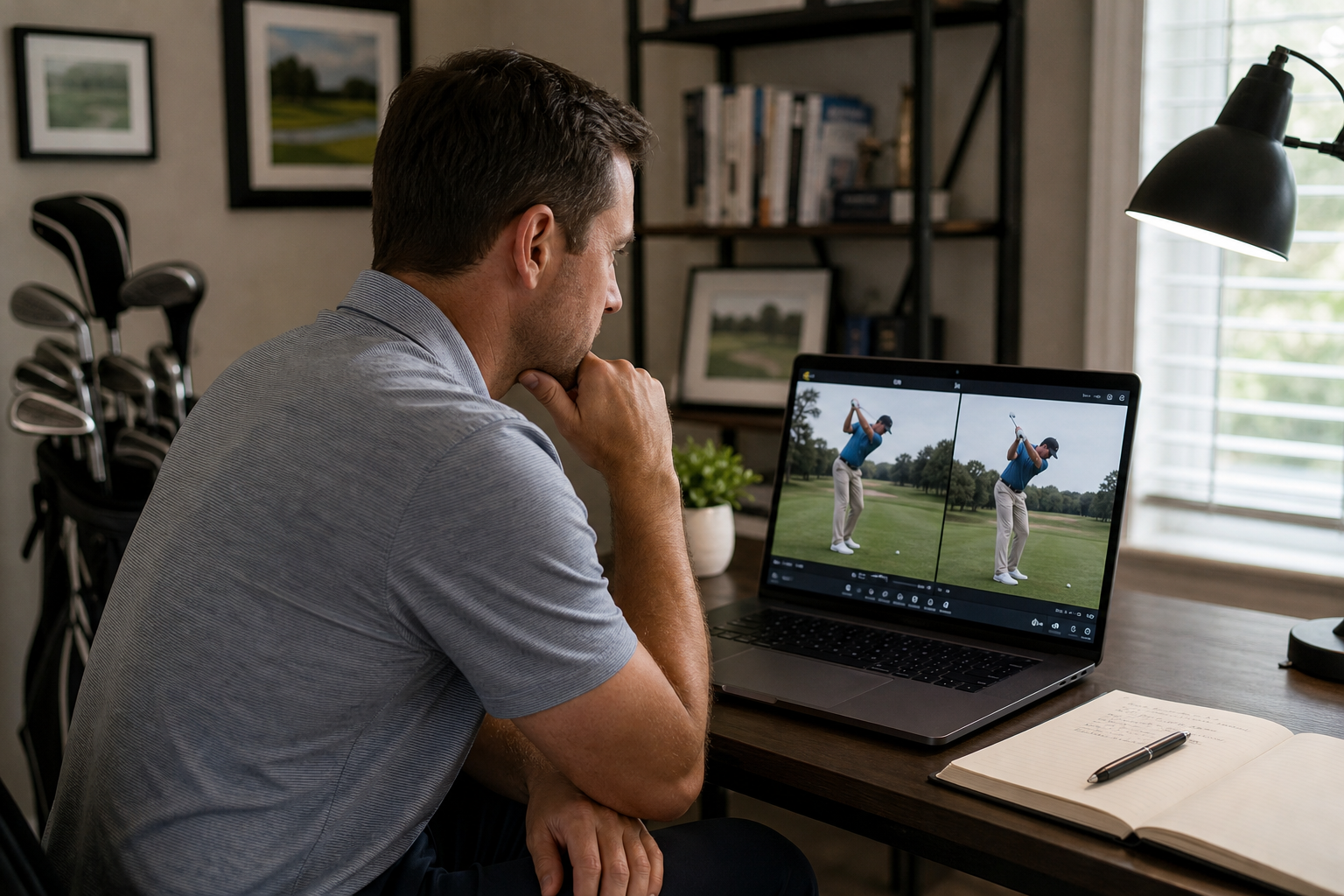
Video-based swing review helps golfers refine mechanics between tournament rounds.
Frequently Asked Questions
What does it mean to turn professional in golf?
Turning professional in golf means giving up amateur status by accepting prize money or compensation for play. This disqualifies a golfer from amateur-only events but opens the door to tour qualifying, sponsorships, and paid coaching work.
How to transition from amateur to professional golf without a big sponsor?
Golfers without major sponsorship can learn how to transition from amateur to professional golf by starting on mini-tours and self-funding entry fees while building a results-based resume. Part-time work and family backing are common funding sources in the early years.
How long does it typically take to turn pro after strong amateur results?
Most elite amateurs spend two to five years refining their game before turning pro, often overlapping with collegiate competition. Timelines vary based on consistency, financial readiness, and qualifying event results.
What is the difference between amateur and professional golf status?
Amateur status restricts players from accepting prize money, while professional status allows income from competition, lessons, and endorsements. Governing bodies strictly define and monitor this distinction.
How much does it cost to pursue a professional golf career?
Early professional seasons often cost between $30,000 and $100,000 annually once travel, entry fees, coaching, and equipment are included. Costs vary depending on the tour level and required travel distance.
What is Q-School and why does it matter for turning pro?
Qualifying School, or Q-School, is a multi-stage tournament series that grants playing status based on scoring performance. Advancing through it is one of the most direct routes to earning a professional playing card.
What are the most common mistakes golfers make when turning pro?
Common mistakes include turning pro too early, underestimating travel costs, and neglecting swing durability under pressure. Many golfers also skip biomechanical coaching, which raises injury risk.
How important is swing biomechanics when moving to professional golf?
Swing biomechanics, the mechanical efficiency of body movement through the swing, is critical because professional schedules demand repeated high-speed swings without breakdown. Poor mechanics often cause injury or inconsistency at the higher competitive level.
Can collegiate golfers skip straight to professional tours?
Some elite collegiate golfers do skip directly to professional tours through exemptions like PGA TOUR University. However, most still benefit from additional mini-tour experience first.
What role does remote coaching play in a professional golf transition?
Remote coaching gives golfers access to expert, data-driven swing analysis regardless of location, which matters for players without elite local instructors. It also enables continuous feedback while traveling between tournaments.
How do golfers mentally prepare for the jump to professional competition?
Golfers mentally prepare by simulating tournament pressure in practice and setting process-based rather than outcome-based goals. Consistent pre-round routines also help manage the added pressure of playing for income.
Is there an age limit for turning professional in golf?
There is no official age limit for turning professional in golf, and players have turned pro as teenagers or later in their twenties and thirties. What matters more is tournament readiness and financial stability.
What qualifications should a coach have to help with a professional golf transition?
A strong coach combines elite playing or teaching credentials with a scientific understanding of swing mechanics, such as a background in kinesiology. This pairing helps golfers build power and consistency while reducing injury risk during the move to professional-level play.
Final Thoughts on Turning Professional
Ultimately, knowing how to transition from amateur to professional golf comes down to preparation, patience, and the right support system. A durable swing, a realistic financial plan, and a clear qualifying pathway matter far more than talent alone. Therefore, golfers who pair competitive experience with science-backed coaching, such as the kinesiology-informed instruction described at yourgolfguru.com, put themselves in the strongest position to turn pro sustainably rather than rushing into a career that ends before it truly begins.