


How to prepare for competitive golf tournaments is a question every serious player faces before stepping onto the first tee of a high-stakes event. Whether you are a collegiate athlete, a competitive amateur, or an aspiring professional, tournament preparation blends technical practice, mental conditioning, and smart logistics. In this guide, we break down a science-backed approach drawn from elite coaching methods, including insights informed by kinesiology, the study of human movement.
In short, how to prepare for competitive golf tournaments involves four pillars: refining swing mechanics under pressure, building mental resilience, conditioning your body to prevent injury, and planning logistics such as course strategy and equipment checks well before tournament day.

Structured swing work is a core part of learning how to prepare for competitive golf tournaments.
What Does It Mean to Prepare for Competitive Golf Tournaments?
Preparing for competitive golf tournaments means aligning your swing mechanics, mental approach, physical conditioning, and course strategy so you can perform consistently under pressure. It is not simply about hitting more balls on the range. Rather, it requires a structured plan that addresses every variable within your control before competition day.
For example, a golfer with a technically strong swing can still underperform if mental routines or course management are weak. Consequently, complete preparation treats the swing, the mind, the body, and the scorecard as interconnected parts of the same system, not separate projects. The USGA, golf’s governing body in the United States, also recommends reviewing current competition rules well ahead of play, since rule misunderstandings can cost strokes unnecessarily.
How to Prepare for Competitive Golf Tournaments: A Step-by-Step Plan
Knowing how to prepare for competitive golf tournaments becomes easier with a sequential plan rather than a scattered approach. The following steps reflect a progression many elite coaches use with competitive and collegiate players.
- Assess your swing mechanics. Work with a qualified coach to identify inconsistencies and establish a biomechanically sound baseline. A structured performance assessment can reveal weaknesses invisible to the naked eye.
- Build a focused practice schedule. Allocate time across full swing, short game, and putting based on your assessment results instead of practicing what already feels comfortable.
- Simulate tournament pressure. Play practice rounds that mirror real competition, including scorekeeping and slower pacing, to train decision-making under stress.
- Fine-tune mental routines. Develop a repeatable pre-shot routine and visualization habit that holds up regardless of score.
- Taper training before the event. Reduce volume three to five days out while keeping light practice to preserve rhythm and confidence.
Tournament Golf Preparation: Building a Reliable Swing Under Pressure
A swing that holds up on the range does not always hold up on the first tee of a tournament. Therefore, tournament golf preparation should include deliberate pressure training, not just repetition. Biomechanical consistency, meaning the repeatable sequencing of body movements through the swing, is what separates players who perform well under stress from those who break down.
In particular, working with a coach who understands both swing science and competitive psychology can accelerate this process. Programs built around detailed training video breakdowns allow players to study their mechanics frame by frame, which is especially useful for remote athletes who cannot access in-person elite instruction. Similarly, reviewing proficiency-focused training paths helps connect swing changes directly to scoring outcomes rather than isolated technical goals.
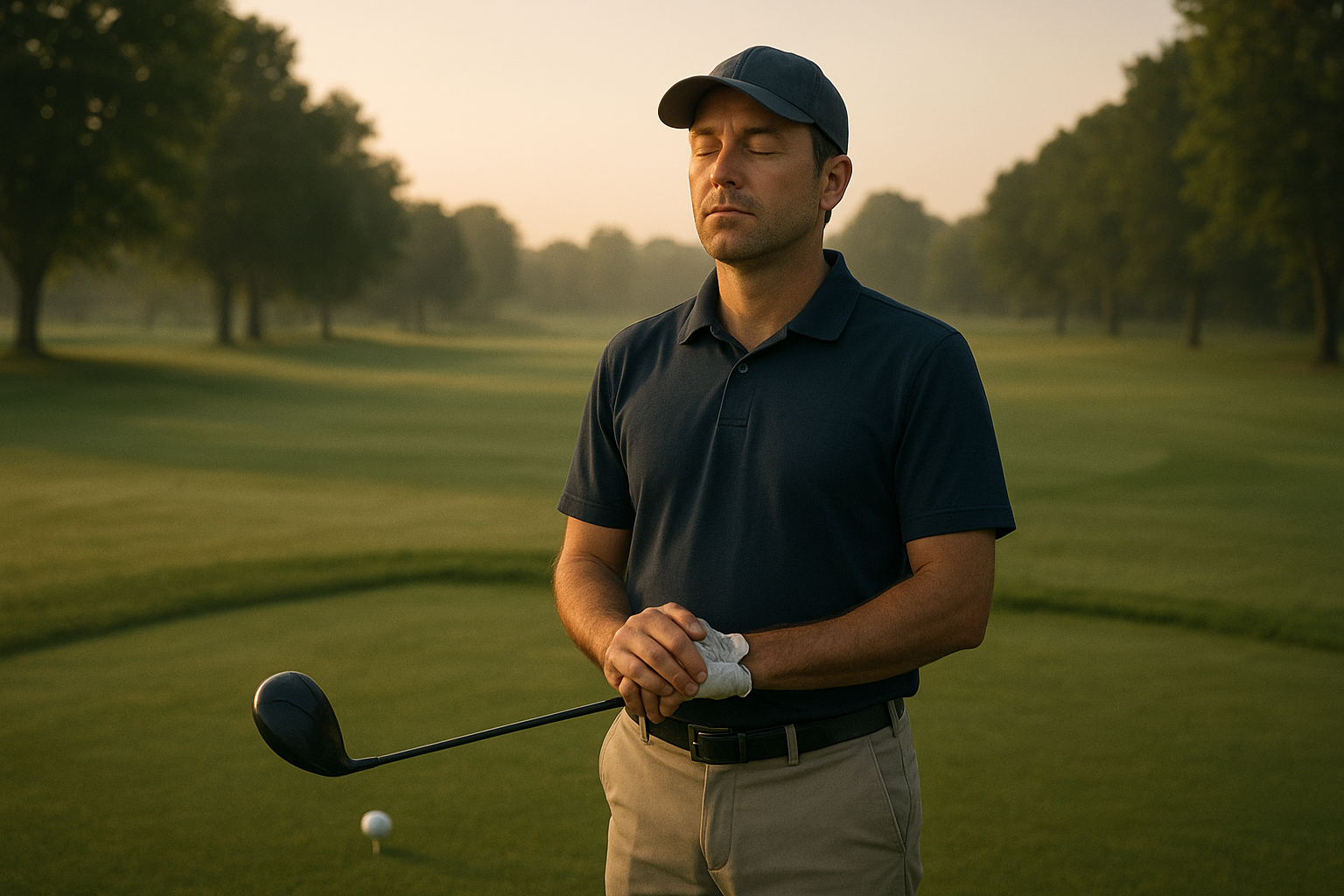
Visualization routines help competitive golfers manage pressure during tournament play.
Mental Readiness for Golf Competition
Mental readiness is often the deciding factor between two golfers with similar skill levels. As a result, competitive players benefit from pre-shot routines, breathing techniques, and visualization practice well before tournament week arrives. Research in sports psychology, a field documented extensively on Wikipedia, suggests that consistent pre-shot routines can reduce performance variability under pressure by a meaningful margin, since they give the mind a familiar anchor during stressful moments.
In addition, many elite instructors incorporate structured mental drills alongside swing work rather than treating them as separate disciplines. For instance, strategies covered in guides on how competitive golfers improve quickly often blend technical cues with mental checkpoints so players can trust their swing without overthinking mid-round.
Physical Training for Competitive Golfers
Physical conditioning is frequently underestimated in golf tournament preparation, yet it directly affects swing durability and injury risk. Specifically, golf places repetitive rotational stress on the spine, hips, and wrists, which can lead to overuse injuries without proper conditioning. According to the CDC’s physical activity guidelines, adults benefit from regular strength and mobility work, which also supports safer, more powerful swing mechanics over a competitive season.
Consequently, a kinesiology-informed approach, meaning one grounded in the science of human movement, emphasizes mobility, rotational strength, and gradual load increases rather than sudden spikes in practice volume. This is particularly relevant for collegiate and aspiring professional players who face back-to-back tournaments and limited recovery time.
Golf Tournament Week Checklist
During tournament week, logistics matter just as much as swing feel. The following checklist covers the essentials competitive golfers often overlook.
- Confirm club conformity and equipment rules with the USGA or relevant governing body.
- Scout the course layout, green speeds, and typical wind patterns if possible.
- Plan nutrition and hydration for full tournament rounds, not just practice sessions.
- Prioritize sleep in the two nights before competition, since fatigue undermines focus.
- Pack backup gloves, extra balls, and a rangefinder with fresh batteries.
Mistakes to Avoid When Prepping for a Golf Tournament
Even well-intentioned preparation can backfire if certain mistakes go unaddressed. However, most of these errors are avoidable with a disciplined plan.
First, avoid making last-minute swing changes close to competition, since new mechanics rarely hold up under pressure. Second, do not neglect the short game in favor of full-swing range sessions, because putting and chipping often decide tournament scores. Third, skipping course management planning leaves players guessing mid-round instead of executing a plan. For a deeper look at structured coaching that addresses these issues, many competitive players review programs such as this elite tournament preparation coaching guide well before their season begins. You can also explore coaching options directly at Your Golf Guru for remote, science-backed instruction.
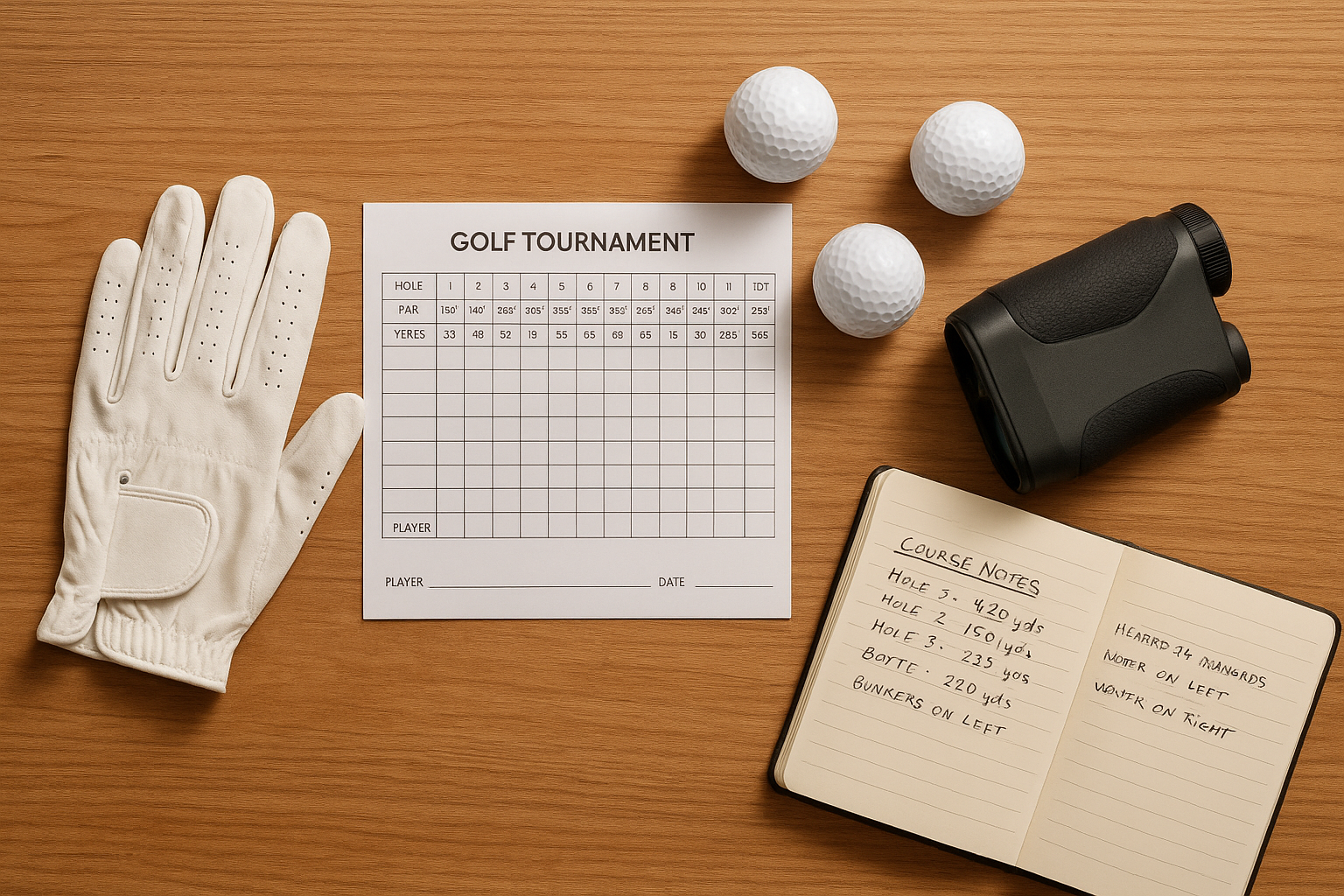
A thorough tournament week checklist supports every golfer’s preparation routine.
Frequently Asked Questions
How to prepare for competitive golf tournaments when you have limited practice time?
Learning how to prepare for competitive golf tournaments with limited time means prioritizing short game practice, mental rehearsal, and one focused full-swing session rather than spreading effort thin. Quality repetitions under realistic pressure matter more than total hours logged.
What is the ideal timeline for golf tournament preparation?
Most competitive golfers benefit from a four to six week preparation window that moves from technical swing work to course-specific strategy and tapering. The final week should focus on sharpening feel rather than making mechanical changes.
How many hours should competitive golfers practice before a tournament?
There is no universal number, but many elite amateurs practice 10 to 15 hours per week during a peak preparation phase. The split should favor short game and on-course simulation over pure range time.
What should be included in a pre-tournament golf warm-up?
A solid warm-up includes dynamic stretching, short wedge shots, putting speed drills, and a handful of full swings with the driver. The goal is to activate muscles and confirm tempo, not to make swing corrections.
How does mental preparation differ from physical preparation in golf?
Physical preparation targets swing mechanics and conditioning, while mental preparation builds focus routines, visualization, and emotional regulation under pressure. Both are necessary, since even a technically sound swing can break down without mental consistency.
What are the most common mistakes golfers make preparing for tournaments?
Common mistakes include making last-minute swing changes, over-practicing the full swing while neglecting putting, and skipping course management planning. As a result, many golfers arrive technically ready but strategically unprepared.
Why is course strategy important for tournament preparation?
Course strategy matters because it reduces unnecessary risk and aligns shot selection with a player’s actual strengths. Without a plan, golfers often attempt shots that do not match their skill set under pressure.
How much does professional tournament coaching typically cost?
Costs vary widely, from local lesson rates to premium remote coaching programs led by credentialed instructors. Online coaching from specialized professionals often costs less than in-person elite instruction while still offering detailed swing analysis.
What equipment checks should be done before a golf tournament?
Players should confirm grip condition, club conformity under current rules, glove supply, and rangefinder battery life before competition day. Checking tournament-specific equipment rules with the governing body in advance prevents avoidable penalties.
How can injury prevention be incorporated into tournament preparation?
Injury prevention should include mobility work, gradual load increases in practice volume, and attention to swing mechanics that reduce joint stress. Ignoring early discomfort during tournament prep often leads to performance-limiting injuries later.
What is the role of a sports psychologist in golf tournament prep?
A sports psychologist helps golfers build pre-shot routines, manage competitive anxiety, and recover mentally from bad shots during a round. This support is especially valuable for collegiate and aspiring professional players facing high-stakes events.
How soon before a tournament should golfers taper their training?
Most competitive golfers taper physical training volume three to five days before a tournament to arrive fresh rather than fatigued. Light practice focused on rhythm and confidence works better than high-volume sessions during this window.
Conclusion
Ultimately, how to prepare for competitive golf tournaments comes down to treating swing mechanics, mental readiness, physical conditioning, and logistics as one connected system rather than separate tasks. A structured timeline, pressure-tested practice, and a disciplined tournament week checklist give competitive golfers the best chance to perform when it matters most. For golfers seeking science-backed, remote coaching from an LPGA Master Professional with a background in kinesiology, resources like Your Golf Guru offer a practical next step toward tournament-ready performance.