

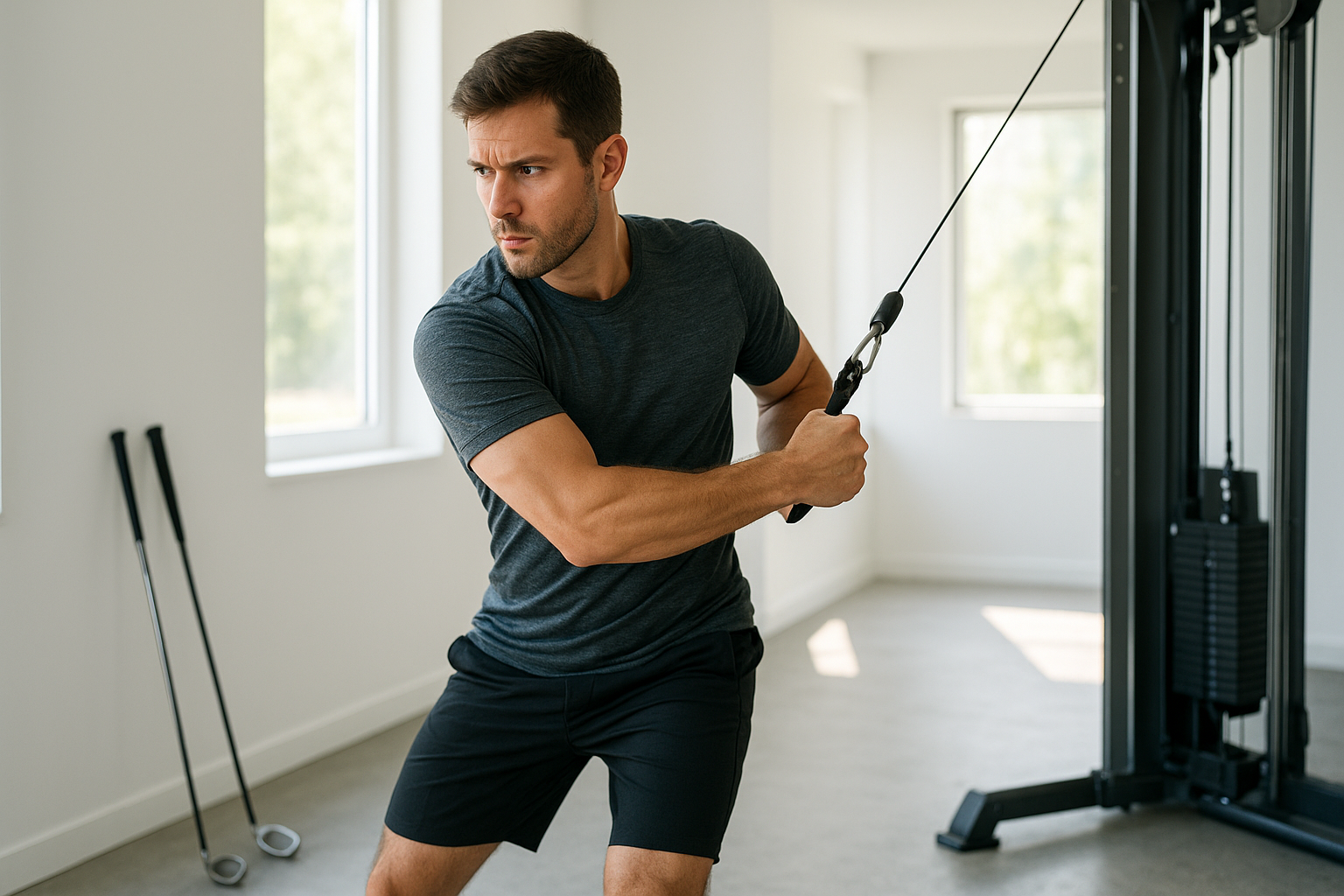
How to integrate fitness with golf swing training is the question most competitive players ask once technique alone stops producing lower scores. Golf swing training sharpens mechanics such as grip, posture, rotation, and tempo, while fitness training builds the strength, mobility, and stability needed to repeat those mechanics under pressure. When the two disciplines work together, golfers typically generate more clubhead speed, hold their positions deeper into a round, and face a lower risk of swing-related injury. This guide from yourgolfguru.com breaks down a practical, science-backed framework used by elite instruction programs to combine physical conditioning with technical swing work.
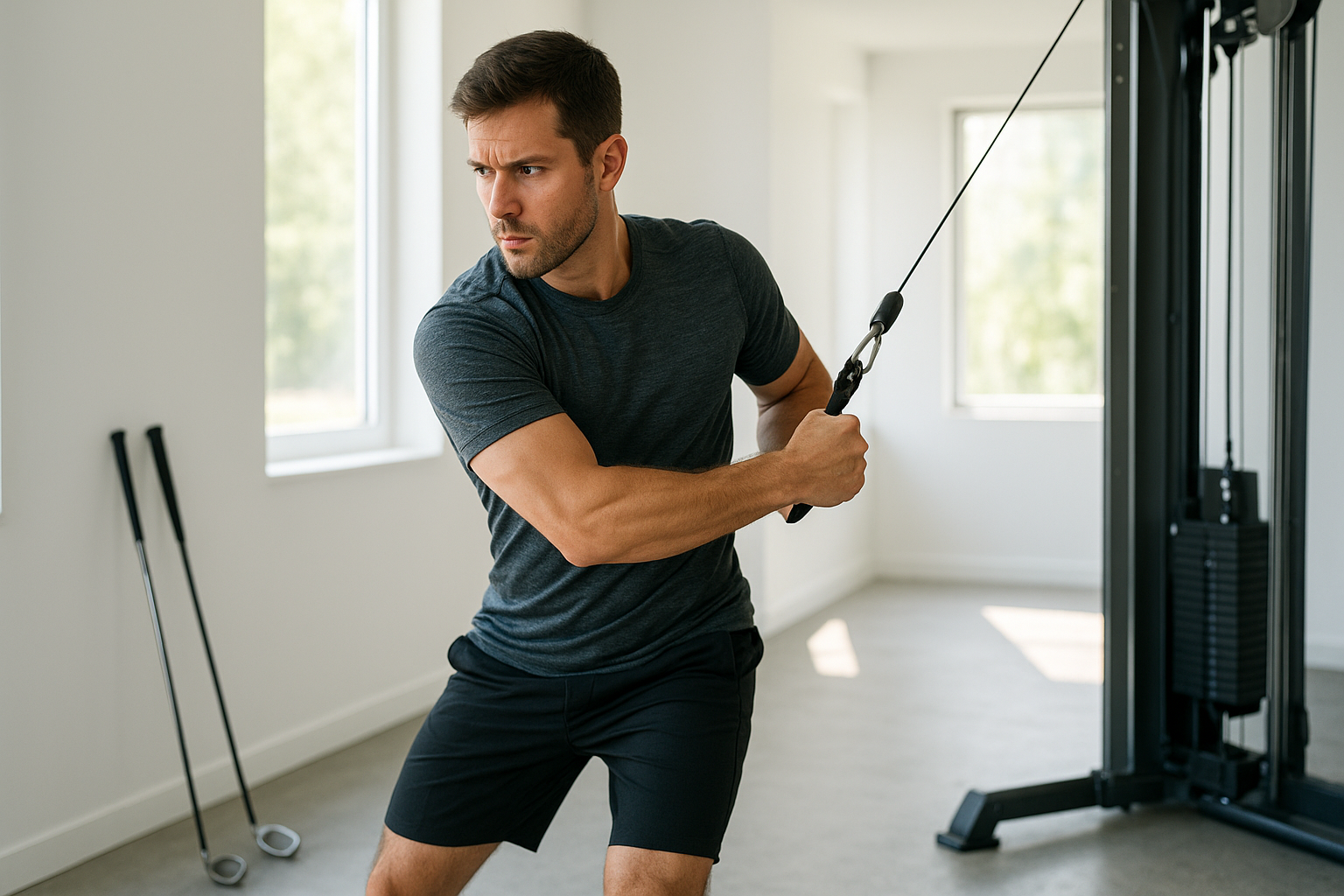
Rotational core training is one of the foundational ways to integrate fitness with golf swing training.
What Is Integrating Fitness With Golf Swing Training?
Integrating fitness with golf swing training means pairing structured strength, mobility, and stability work with range or on-course practice so each discipline reinforces the other. Rather than treating the weight room and the driving range as separate worlds, golfers coordinate both so physical gains translate directly into swing performance. In fact, kinesiology, the scientific study of human movement, shows that greater hip-and-shoulder separation and core strength correlate with faster clubhead speed. That is why many elite coaching programs, including the biomechanics-driven lessons outlined in this breakdown of scientific golf swing moves, now pair swing analysis with physical conditioning from the very first session.
Why Golf-Specific Fitness Training Matters for Competitive Players
Generic gym routines rarely translate into a faster, more repeatable swing because they rarely train rotation, lateral stability, and single-leg balance in the sequence golf demands. Competitive amateurs, collegiate players, and aspiring professionals need conditioning that mirrors the swing’s kinetic chain, not just general cardio or isolated muscle work. According to the Centers for Disease Control and Prevention, adults benefit from at least 150 minutes of moderate aerobic activity plus two days of muscle-strengthening work weekly — a baseline that golf-specific programs build on with rotational and stability-focused training. Consequently, players who follow a structured, science-backed intensive training plan tend to see faster gains than those who train fitness and swing mechanics in isolation.
How to Integrate Fitness With Golf Swing Training
Successfully combining the two disciplines comes down to sequencing, not just adding more workouts. Above all, the goal is to let physical training support swing mechanics instead of leaving a player too fatigued to practice with good form. The step-by-step process below, adapted from strategies competitive golfers use to improve fast, outlines how to structure a week that blends both.
Step-by-Step Process to Combine Strength and Swing Work
- Assess current mobility, strength, and swing mechanics with a screening or video analysis so the plan targets your specific limitations rather than generic weaknesses.
- Build a foundation of rotational core strength and hip mobility for two to three weeks before adding heavy power work, since a stable base protects the lower back and improves sequencing.
- Schedule swing practice on the same days as lighter mobility or activation work, and save heavy strength sessions for days without technical lessons to avoid fatigue-driven swing faults.
- Introduce power-specific movements such as medicine ball rotational throws and resisted swings once strength and mobility baselines are established, bridging gym gains directly to clubhead speed.
- Reassess swing metrics and physical benchmarks every four to six weeks, adjusting the fitness program as mechanics improve and new limitations emerge.
Key Fitness Components for a Powerful Golf Swing
Several physical qualities show up repeatedly in players with efficient, repeatable swings. Specifically, four components tend to matter most for competitive golfers aiming to add distance without sacrificing control.
- Mobility: Thoracic spine and hip rotation allow a full backswing turn without compensations that cause inconsistency.
- Rotational power: The ability to generate force through the core and transfer it into the arms and club drives clubhead speed.
- Stability and balance: A strong base, particularly in the legs and glutes, keeps the swing centered through impact.
- Muscular endurance: Maintaining mechanics over 18 holes, or multiple competitive rounds, depends on stamina as much as raw strength.
Together, these qualities support the kind of consistent, powerful golf swing competitive players need under tournament pressure, and they form the physical backbone behind the technique work covered in this science-based swing guide.
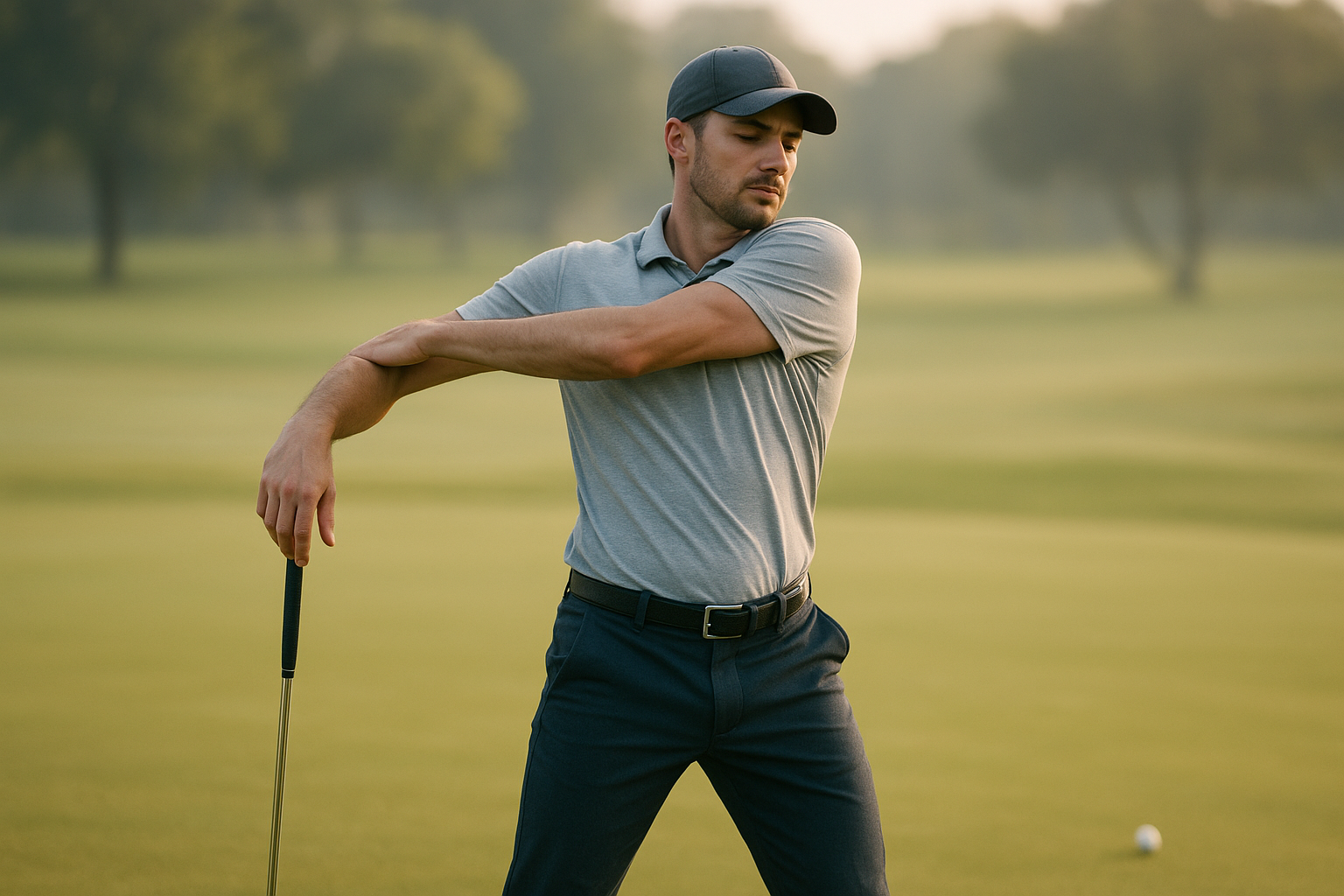
Hip and shoulder mobility work prepares the body before swing-focused practice.
Avoiding Injury When Combining Golf Fitness and Swing Mechanics
Because the golf swing places repetitive, asymmetrical load on the spine, wrists, and hips, poorly sequenced training can increase injury risk rather than reduce it. Research cited on PubMed, the National Library of Medicine’s biomedical literature database, consistently links swing-related lower back pain to limited hip rotation and weak core stabilizers — exactly the areas golf-specific fitness programs are designed to address. Therefore, any integration plan should prioritize movement quality before load, and technical feedback before volume. For a deeper look at building a program that protects the body while improving performance, see this injury-free, science-backed swing training guide, which outlines warning signs that a program is adding load too quickly.
Sample Weekly Training Schedule for Competitive Golfers
A balanced week typically alternates between swing-focused sessions, strength work, and recovery. The table below shows one example structure competitive players can adapt to their schedule and season.
| Day | Focus |
|---|---|
| Monday | Rotational strength and mobility |
| Tuesday | Swing technique and video review |
| Wednesday | Power training (medicine ball, resisted swings) |
| Thursday | On-course play or short game practice |
| Friday | Mobility and light activation |
| Weekend | Competition or recovery |
In the off-season, players often shift the balance toward strength and mobility; this seasonal winter golf plan comparing swing versus fitness improvement explains how to adjust the ratio as tournaments approach.
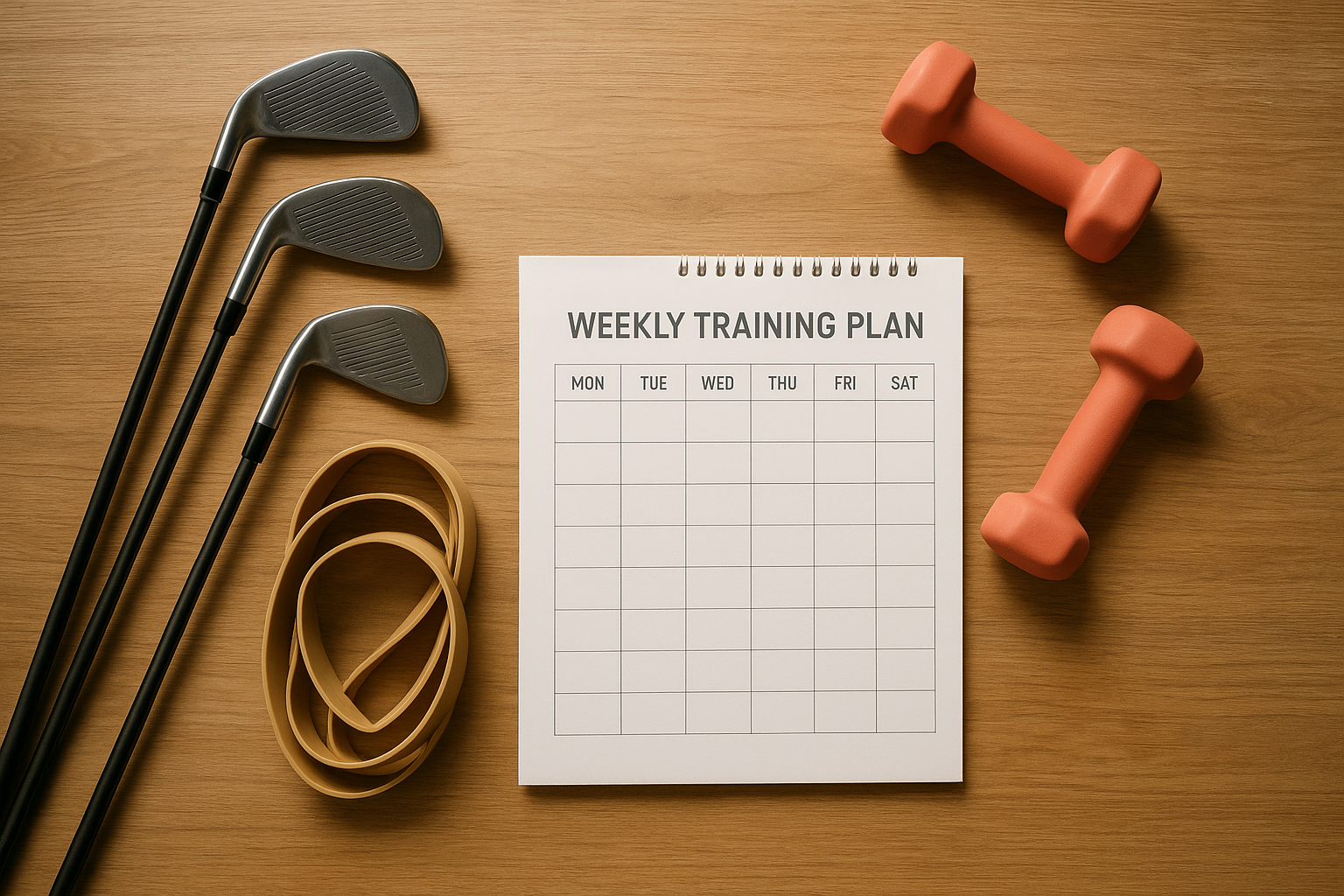
Planning sessions in advance makes it easier to balance strength work with swing practice.
Frequently Asked Questions About How to Integrate Fitness With Golf Swing Training
What does it mean to integrate fitness with golf swing training?
How to integrate fitness with golf swing training comes down to pairing structured strength, mobility, and stability work with on-range technical practice so each discipline supports the other. Rather than training separately, golfers schedule both in the same week with sessions sequenced to avoid fatigue conflicts.
How often should golfers combine gym workouts with swing practice?
Most competitive players benefit from three to four strength or mobility sessions alongside three to five swing-focused sessions per week. The exact split depends on the competitive calendar, with more fitness volume in the off-season and more technical work close to tournaments.
Why is golf-specific fitness training different from general fitness training?
Golf-specific fitness emphasizes rotational power, hip and thoracic mobility, and single-leg stability because these qualities mirror the swing’s kinetic chain. General fitness programs often build strength and endurance without training the rotational patterns a swing actually requires.
What muscles matter most for a powerful golf swing?
The core, glutes, hips, and shoulders contribute most to swing power because they drive rotation and stabilize the body through impact. Strengthening these areas typically has a bigger impact on clubhead speed than isolated arm or wrist training.
How long does it take to see swing improvements from fitness training?
Many golfers notice improved mobility and swing feel within two to four weeks, while measurable gains in clubhead speed and consistency often take six to eight weeks of consistent training. Individual timelines vary based on starting fitness level and training frequency.
Should I lift weights before or after range sessions?
Light mobility or activation work pairs well before swing practice, while heavier strength training is usually better placed on separate days or well after technical sessions. This sequencing helps prevent fatigue from affecting swing mechanics.
How much does working with a golf fitness and swing coach typically cost?
Costs vary widely, from hourly in-person lessons to monthly online coaching subscriptions, and remote programs delivered digitally are often more affordable than traveling to a specialized facility. Many competitive players find online, data-driven coaching a cost-effective way to access expert-level guidance without geographic limits.
What are common mistakes golfers make when mixing fitness and swing work?
A common mistake is adding heavy strength training without addressing mobility first, which can limit range of motion instead of improving it. Another frequent error is practicing swing mechanics while fatigued from a workout, which reinforces poor patterns.
Can golf fitness training help prevent injuries?
Yes, targeted mobility and stability work addresses many of the physical limitations linked to common golf injuries, including lower back pain and wrist strain. Building strength around the hips and core in particular helps protect the spine during repeated rotational loading.
What equipment is needed to start golf-specific strength training at home?
A resistance band, a light medicine ball, and a stability surface such as a balance pad cover most golf-specific mobility and power exercises. As training progresses, adding dumbbells or a cable machine allows for more advanced rotational strength work.
How does mobility training improve golf swing consistency?
Improved hip and thoracic mobility allows a golfer to complete a full turn without compensating elsewhere in the swing, which reduces the small variations that cause mis-hits. Over time, consistent mobility work tends to produce a more repeatable, reliable swing.
Is online golf instruction effective for integrating fitness and swing mechanics remotely?
Online instruction can be highly effective when it combines video swing analysis with a structured fitness plan, since both elements can be reviewed and adjusted remotely. Programs led by credentialed instructors, such as an LPGA Master Professional with a background in kinesiology, allow competitive players anywhere to access advanced, science-backed coaching without traveling to a physical facility.
Key Takeaways
Learning how to integrate fitness with golf swing training is less about adding more hours and more about sequencing strength, mobility, and technical work so each one reinforces the other. In summary, competitive players who screen for limitations, build rotational strength and mobility first, and layer in power work gradually tend to see faster, safer improvements than those who treat fitness and swing mechanics as separate pursuits. For golfers ready to apply a data-driven, kinesiology-based approach to their own training, yourgolfguru.com offers remote coaching built around exactly this kind of integrated, science-backed method.