
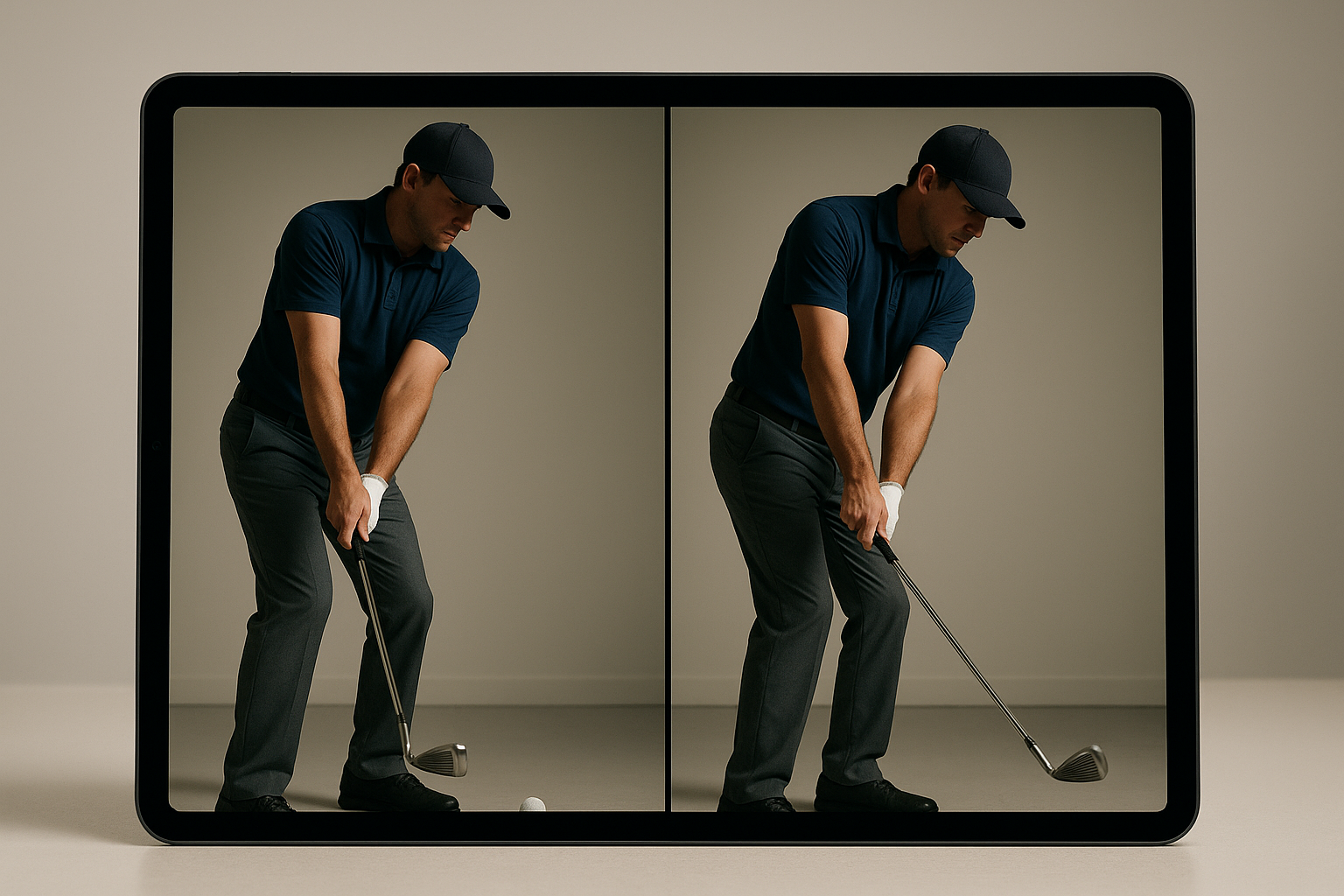
How to fix golf swing flaws with video analysis starts with capturing your swing on camera so problems become visible instead of just felt. In simple terms, how to fix golf swing flaws with video analysis is a structured process of filming your swing, comparing it against efficient movement patterns, and using targeted drills to correct what the footage reveals. Many golfers sense that something feels off, yet they cannot pinpoint the cause without visual proof. Because of this gap between feeling and reality, video analysis has become a standard tool among elite coaches, including biomechanics-based instructors who blend science with technique.
Quick Answer: To fix golf swing flaws with video analysis, film your swing from face-on and down-the-line angles, freeze the frame at impact, compare it to efficient reference positions, then correct one flaw at a time with a focused drill before re-filming to confirm progress.
Frame-by-frame comparison is central to how to fix golf swing flaws with video analysis.
What Is Video Analysis in Golf Swing Training?
Video analysis in golf swing training is the practice of recording a golfer’s motion, typically at 120 frames per second or higher, then reviewing it frame by frame against known efficient positions. It is not simply slow-motion playback for entertainment; instead, it converts invisible mechanical errors into measurable checkpoints, such as club-face angle at impact or hip rotation timing.
Because a full golf swing takes roughly 0.3 seconds from takeaway to impact, the human eye cannot process every position in real time. Specifically, vision science research suggests people typically register only 10 to 12 distinct images per second, while modern swing-analysis software captures 120 frames per second or more — over ten times more visual data than the naked eye absorbs. As a result, coaches and players can pause on the exact moment a flaw occurs rather than guessing where it happened.
Why Golf Swing Flaw Analysis Matters for Competitive Players
Golf swing flaw analysis matters most for competitive players because small mechanical errors compound under tournament pressure. Even legendary champions have rebuilt parts of their technique over a career, a pattern explored further in this look at how major swing changes shaped one legendary career. Similarly, collegiate and aspiring professional golfers often carry inefficiencies that feel comfortable but quietly limit power and consistency.
Furthermore, video-based feedback removes guesswork that verbal coaching alone cannot solve. A coach can describe proper sequencing for years, yet a single paused frame showing early hip slide often teaches the concept faster than words ever could. This connects directly to biomechanics, the science of how the body generates and transfers force through movement. In addition, tracking footage over several weeks creates a visual record of progress, keeping motivated athletes accountable to real, measurable change rather than subjective impressions.
Common Golf Swing Flaws Video Analysis Reveals
Certain flaws hide extremely well in real time but stand out clearly once footage is reviewed frame by frame. In fact, many golfers unknowingly build their entire technique around outdated swing myths that video quickly exposes.
- Over-the-top swing path: the club moves outside the ideal plane on the downswing, often causing a slice.
- Early extension: the hips thrust toward the ball, robbing rotational power and forcing compensations.
- Chicken-winging: the lead arm collapses through impact, reducing consistency and clubface control.
- Reverse spine angle: the upper body tilts backward at the top, adding unnecessary strain on the lower back.
- Early release (casting): wrist angle is lost too soon, draining clubhead speed before impact.
Once identified on video, each of these flaws becomes a specific, trainable target instead of a vague feeling that “something is off.”
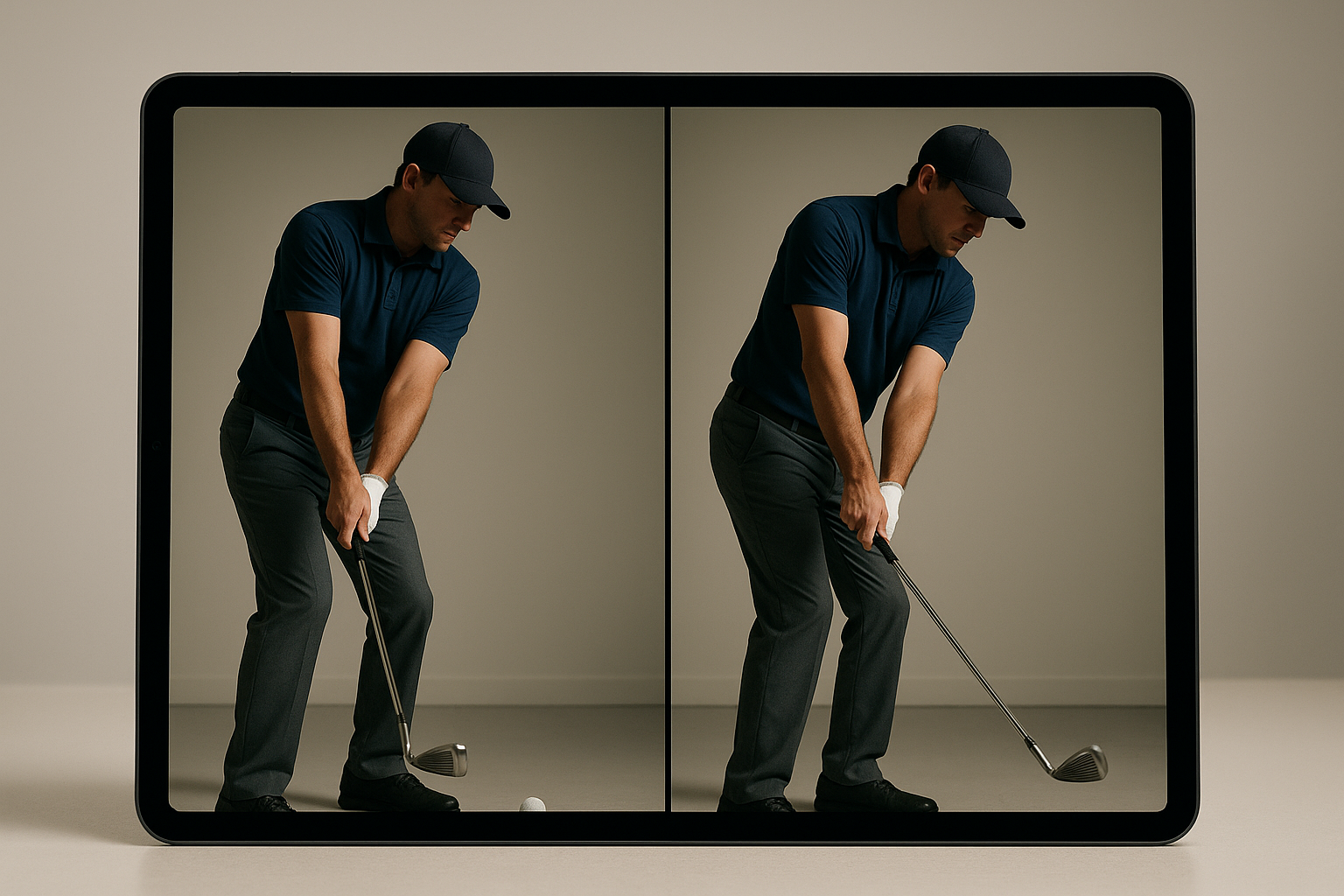
Breaking the swing into checkpoints makes each flaw easier to isolate and correct.
How to Fix Golf Swing Flaws With Video Analysis in 6 Steps
Correcting a swing flaw is rarely about one dramatic change. Instead, it follows a repeatable sequence that pairs footage review with focused practice, similar to the process outlined in this science-based guide to swing correction techniques.
- Film two angles. Set up a tripod or phone stand to capture face-on and down-the-line views, since each angle exposes different flaws that a single camera position would miss entirely.
- Freeze the impact frame first. Impact reveals more about ball flight than any other position, so pause there before scrubbing through the rest of the swing sequence.
- Compare against efficient reference positions. Compare your frozen frames to biomechanically sound checkpoints rather than copying any single tour player’s look.
- Isolate one flaw at a time. Trying to fix five things simultaneously overwhelms the nervous system, so choose the single flaw with the biggest impact on ball flight first.
- Build a focused drill. Select one drill that directly targets the isolated flaw, then repeat it in short, deliberate practice sessions rather than random full-speed swings.
- Re-film weekly to confirm progress. Record new footage every five to seven days to verify the change is holding up, especially once speed and pressure increase.
For golfers who want expert eyes on this process, remote coaching through platforms like yourgolfguru.com pairs kinesiology-based analysis with decades of elite teaching experience, which can shorten the trial-and-error phase considerably.
Tools and Techniques for Effective Swing Video Analysis
Most golfers already own the core tool needed: a smartphone with slow-motion recording. However, a few additions make the process far more reliable. A basic tripod keeps the camera angle consistent between sessions, while alignment sticks placed on the ground help confirm the camera is truly face-on or down-the-line rather than slightly skewed.
In addition, split-screen or overlay apps let players compare two swings side by side, which is especially useful when tracking change over time. Even unconventional swings benefit from this scrutiny, as shown in this breakdown of one of the most analyzed amateur golf swings in recent memory. For golfers who also want to stay current on equipment and rules that affect technique, organizations such as the USGA publish reliable, governing-body guidance.
Common Mistakes When Reviewing Golf Swing Footage
Self-analysis can backfire when it is done carelessly. One frequent error is filming from an inconsistent angle, which makes week-to-week comparisons meaningless. Another is chasing a position that looks impressive but is mechanically unsound, similar to the example broken down in this look at a widely copied but flawed swing position.
Additionally, many golfers try to fix everything they see in one session, which scatters attention and slows real progress. Others skip ball-flight context entirely, focusing only on body positions without checking whether the change actually improved contact or direction. Finally, some players never seek a second opinion, even after months of stalled progress, which is often the point where professional feedback becomes valuable.
When Should You Get Professional Golf Swing Video Analysis?
Professional review becomes worthwhile once self-guided correction stalls or when injury risk enters the picture. If the same flaw keeps returning under pressure, or if a position causes discomfort in the back, wrist, or hip, that is a signal to bring in a trained set of eyes rather than continuing trial and error alone.
Competitive amateurs, collegiate players, and aspiring professionals often benefit most, since their margin for error is smaller and their training time is limited. A kinesiology-based coach, someone trained in the science of human movement, can connect what the video shows to the underlying joint mechanics causing it, which is harder to self-diagnose. This is precisely the gap that specialized remote coaching aims to close for serious players who cannot access this level of expertise locally.
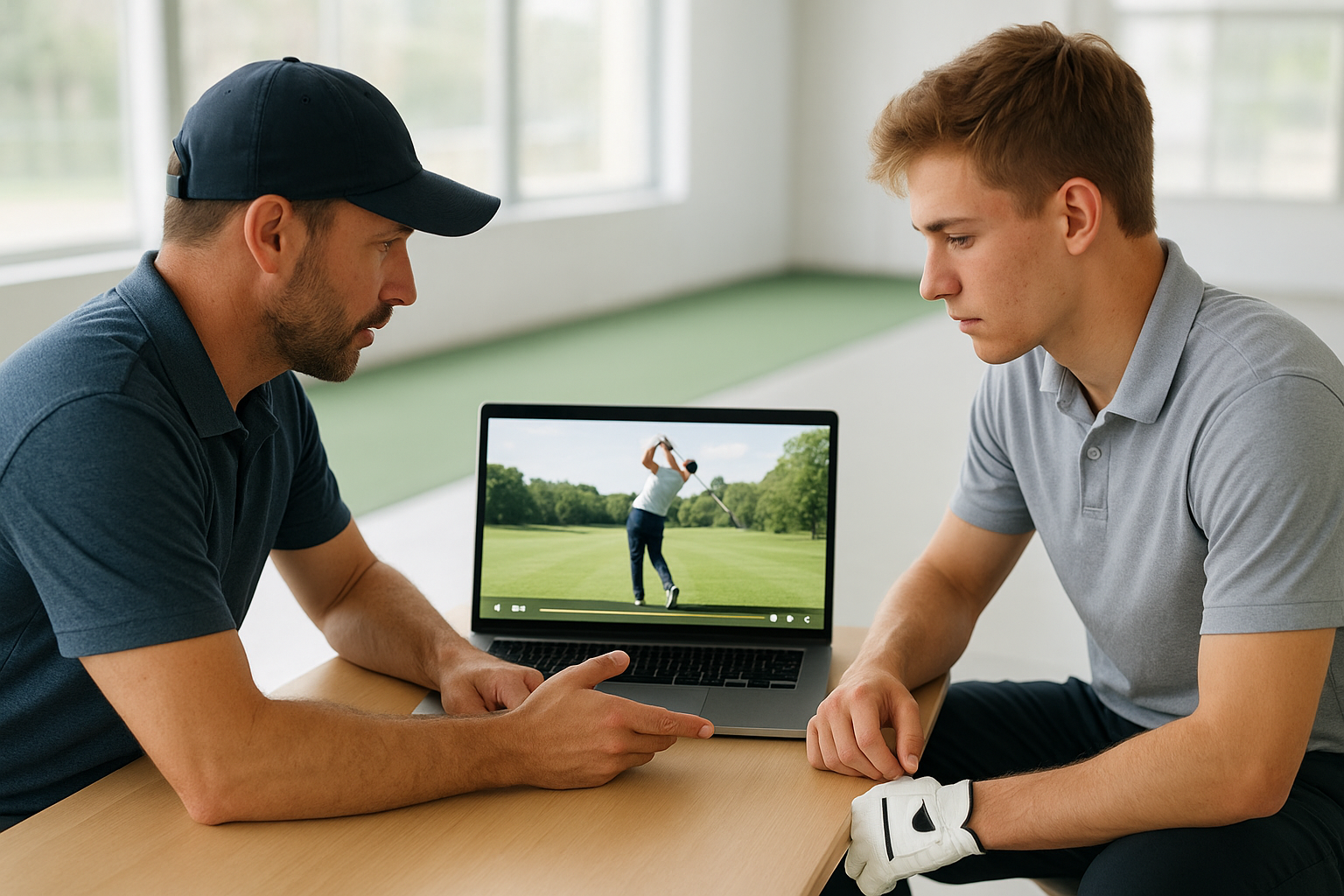
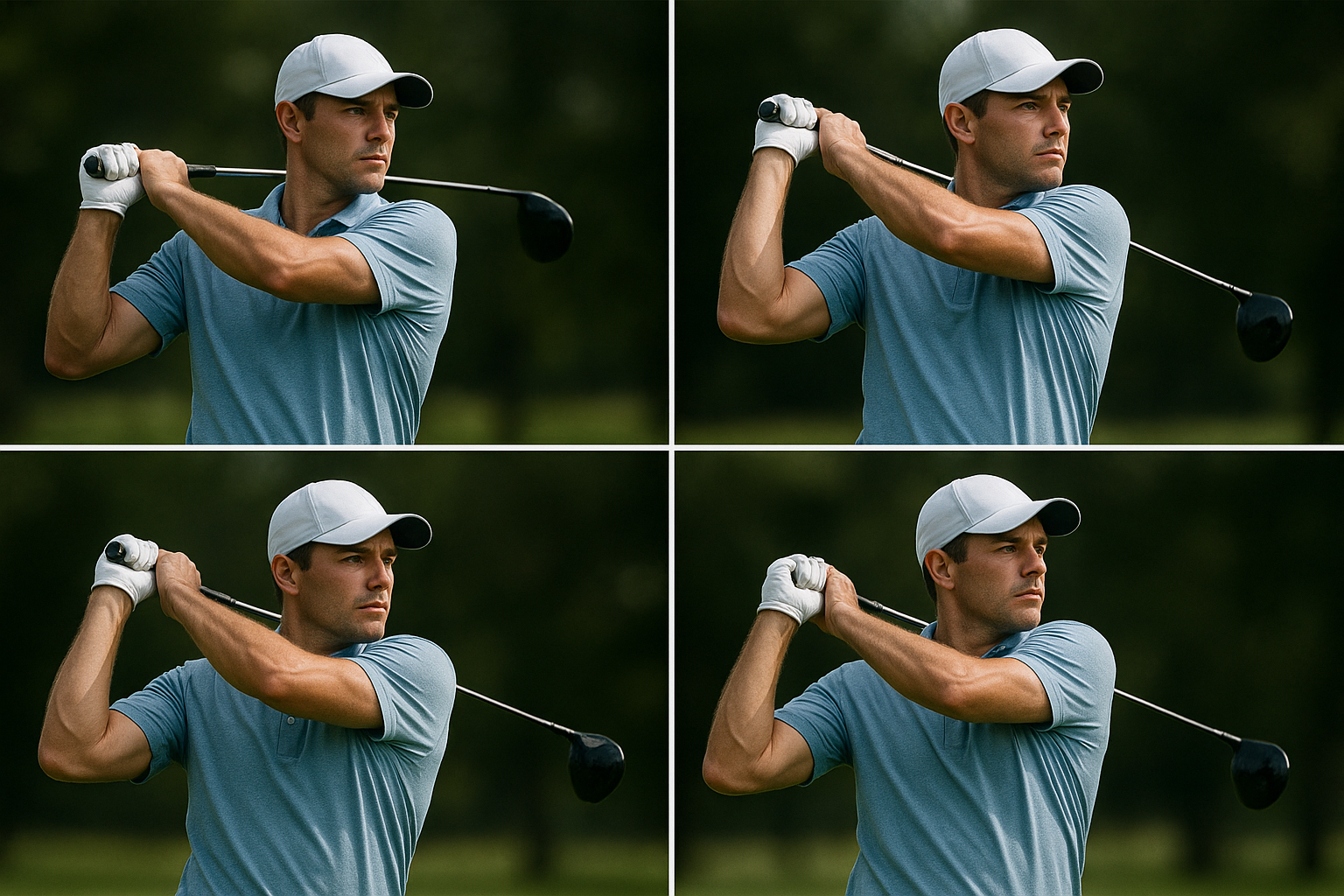
Expert review adds context that self-analysis alone often misses.
Frequently Asked Questions About Fixing Golf Swing Flaws With Video Analysis
What is golf swing video analysis?
Golf swing video analysis is the process of recording a swing on camera, then reviewing it frame by frame to spot mechanical errors that are hard to feel in real time. It turns vague sensations into visible, correctable checkpoints such as club-face angle or hip position.
How do I fix golf swing flaws with video analysis at home?
To fix golf swing flaws with video analysis at home, film two angles, freeze the frame at impact, isolate one flaw, and practice a single corrective drill before re-checking your progress on camera. Repeating this cycle weekly builds steady, measurable improvement.
Why does video analysis work better than relying on feel alone?
Video analysis works better than feel alone because the human eye cannot process a full swing, which takes roughly 0.3 seconds, in real time. Footage exposes exact positions, such as club path or spine angle, that sensation cannot reliably confirm.
How is video analysis different from an in-person coaching lesson?
Video analysis provides objective, reviewable evidence of swing positions, while an in-person lesson adds real-time verbal cues and physical guidance. The two work best together, since footage confirms what verbal feedback describes.
How much does professional golf swing video analysis cost?
Professional golf swing video analysis costs vary widely, ranging from affordable single-session app-based reviews to more comprehensive remote coaching packages with an expert instructor. Pricing generally reflects the depth of feedback and the coach’s credentials.
How long does it take to fix a swing flaw with video analysis?
Most golfers see a visible change in four to eight weeks when they isolate one flaw and practice a focused drill consistently. Deeply ingrained habits, however, may take several months of steady, monitored correction.
What is the most common mistake golfers make when reviewing their own swing footage?
The most common mistake is trying to fix multiple flaws at once, which overwhelms the nervous system and slows progress. Filming from inconsistent angles between sessions is another frequent error that makes comparisons unreliable.
What camera angles work best for analyzing a golf swing?
Face-on and down-the-line angles are the two most useful views for analyzing a golf swing. Face-on reveals tilt and sway, while down-the-line shows swing plane and club path most clearly.
Can video analysis help prevent golf-related injuries?
Yes, video analysis can help prevent golf-related injuries by identifying stressful positions, such as reverse spine angle, before they cause chronic strain. Correcting these patterns early protects the back, hips, and wrists over the long term.
Do I need expensive equipment to start analyzing my swing?
No, a smartphone with slow-motion recording is enough to start analyzing your swing effectively. A simple tripod and alignment sticks improve consistency, but neither requires significant expense.
How often should I re-film my swing during the correction process?
Re-filming every five to seven days is generally enough to confirm whether a corrective drill is working without becoming excessive. More frequent filming rarely adds useful information once a routine is established.
Is video analysis useful for junior or collegiate golfers?
Yes, video analysis is especially useful for junior and collegiate golfers, since catching inefficient patterns early prevents them from becoming ingrained habits. It also gives coaches a clear, shared reference point for tracking development over time.
Final Thoughts
Ultimately, learning how to fix golf swing flaws with video analysis comes down to consistency: film often, compare against sound reference positions, and correct one flaw at a time rather than everything at once. Because small mechanical errors compound under competitive pressure, catching them early through careful video review protects both performance and long-term physical health. For golfers who have hit a plateau despite doing this work alone, pairing video review with kinesiology-based, expert coaching can turn scattered self-analysis into a clear, science-backed plan for lasting improvement.