

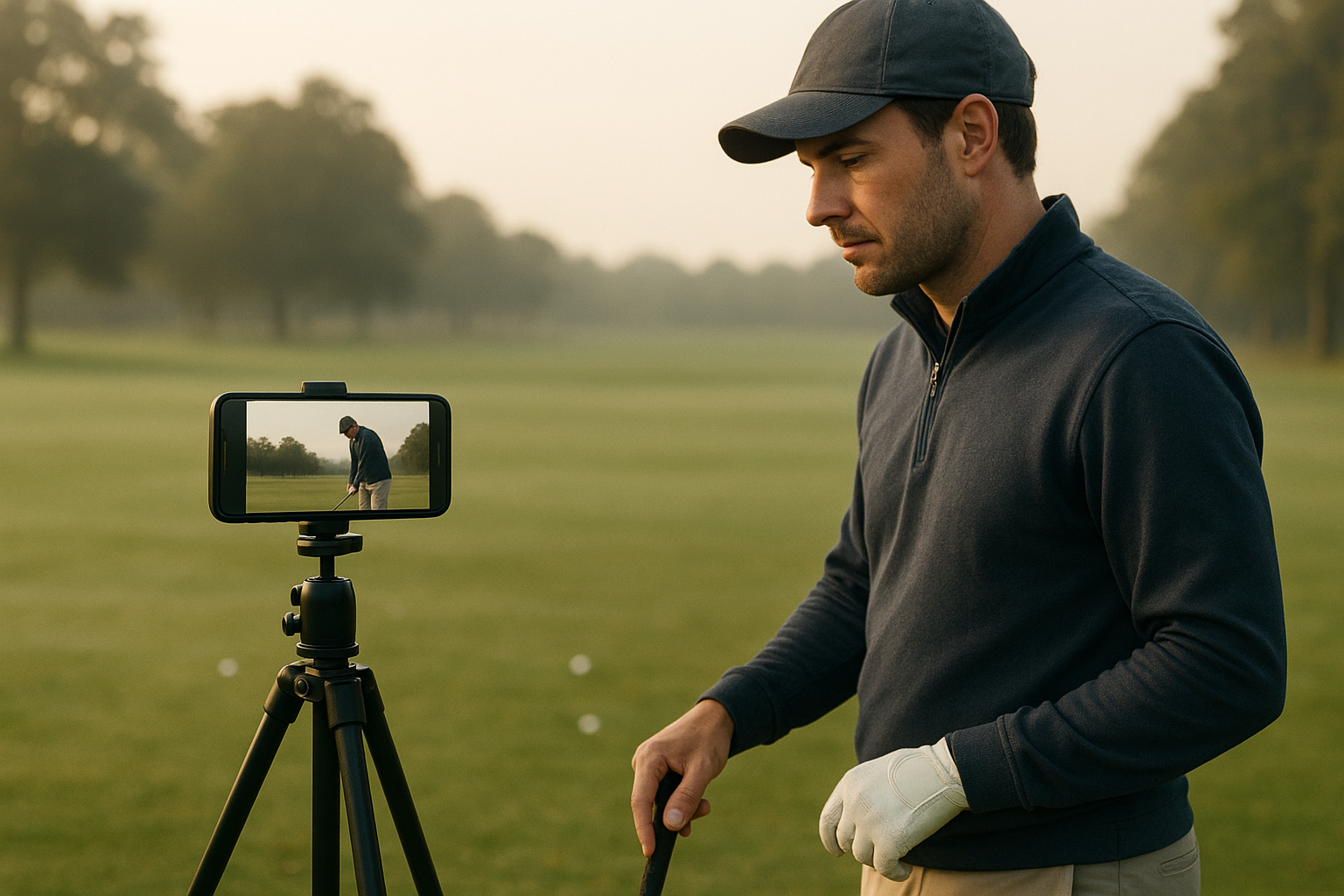
How to document golf swing changes effectively is one of the most overlooked skills in competitive golf, yet it often separates golfers who improve steadily from those who plateau for years. Many players make a swing change, feel something different for a week, and then lose track of exactly what happened. As a result, the same flaws quietly resurface under tournament pressure. Documenting swing changes properly turns vague impressions into measurable, repeatable progress that a coach — or the golfer alone — can analyze with confidence over time.
Direct Answer: How to document golf swing changes effectively means recording video, objective metrics, and context notes every time a technical adjustment is made, then reviewing that log on a consistent schedule against clear checkpoints. This converts subjective feel into trackable data that a golfer or coach can act on with precision.
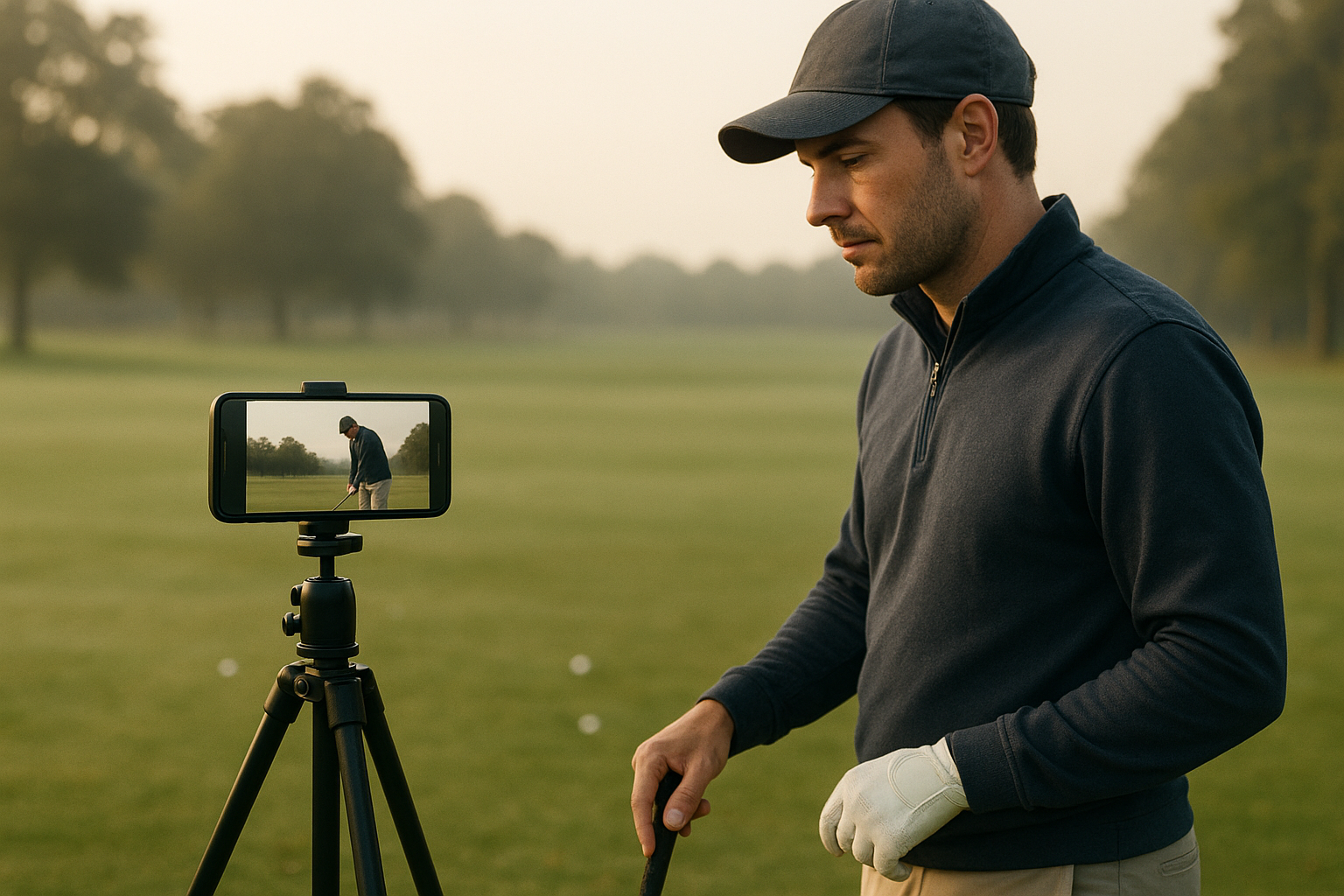
Consistent camera angles and regular review sessions make documenting golf swing changes effectively possible.
What Is Swing Change Documentation in Golf?
Swing change documentation is the structured process of recording video, numbers, and notes every time a golfer works on a specific technical adjustment. Unlike casual filming, it follows a repeatable format so each entry can be compared fairly against the last one.
In particular, a complete entry usually includes the date, the exact change being practiced, camera angle, any launch monitor numbers, and how the swing felt physically. Furthermore, context such as fatigue, equipment, or weather matters because these factors can mimic or mask a real mechanical change. For a deeper look at how swing positions are evaluated, this complete swing analysis guide breaks down the checkpoints worth tracking.
Why Tracking Swing Progress Beats Relying on Feel Alone
Memory is unreliable, especially under the adrenaline of competition. A golfer might feel like a swing change has “stuck” when video shows the old pattern has quietly returned. Consequently, relying only on feel often leads to repeating the same correction over and over without lasting results.
By contrast, a written and visual record removes guesswork. For example, a golfer testing a flatter backswing plane can check footage weekly instead of assuming the change held. Golfers working on consistency issues may also find it useful to run the simple diagnostic described in this backswing consistency test alongside their documentation routine.
How to Document Golf Swing Changes Effectively: A Step-by-Step System
Above all, consistency is what makes documentation useful. The following sequence gives golfers a repeatable framework rather than a random collection of clips and notes.
- Record a baseline. Before changing anything, film your current swing from a fixed face-on and down-the-line angle and log your existing ball flight numbers as a reference point.
- Standardize measurement conditions. Use the same camera position, lighting, club, and practice location every session so later comparisons reflect real swing changes rather than setup differences.
- Log every change with date and context. Write down the exact date, the specific swing element being adjusted, and any physical or environmental factors like fatigue, wind, or equipment used that session.
- Pair video with objective metrics. Combine slow-motion footage with numbers such as clubhead speed, launch angle, or dispersion patterns so subjective feel is checked against measurable data.
- Review footage against biomechanical checkpoints. Compare new video to baseline footage at key positions like setup, top of backswing, and impact to confirm the intended change actually happened consistently.
- Share the log with a coach. Send your organized swing change log to a qualified instructor on a regular schedule so an experienced eye can catch compensations before they become habits.
Understanding how these checkpoints relate to the body’s movement patterns becomes easier with a clear reference, such as this anatomy of the golf swing breakdown.
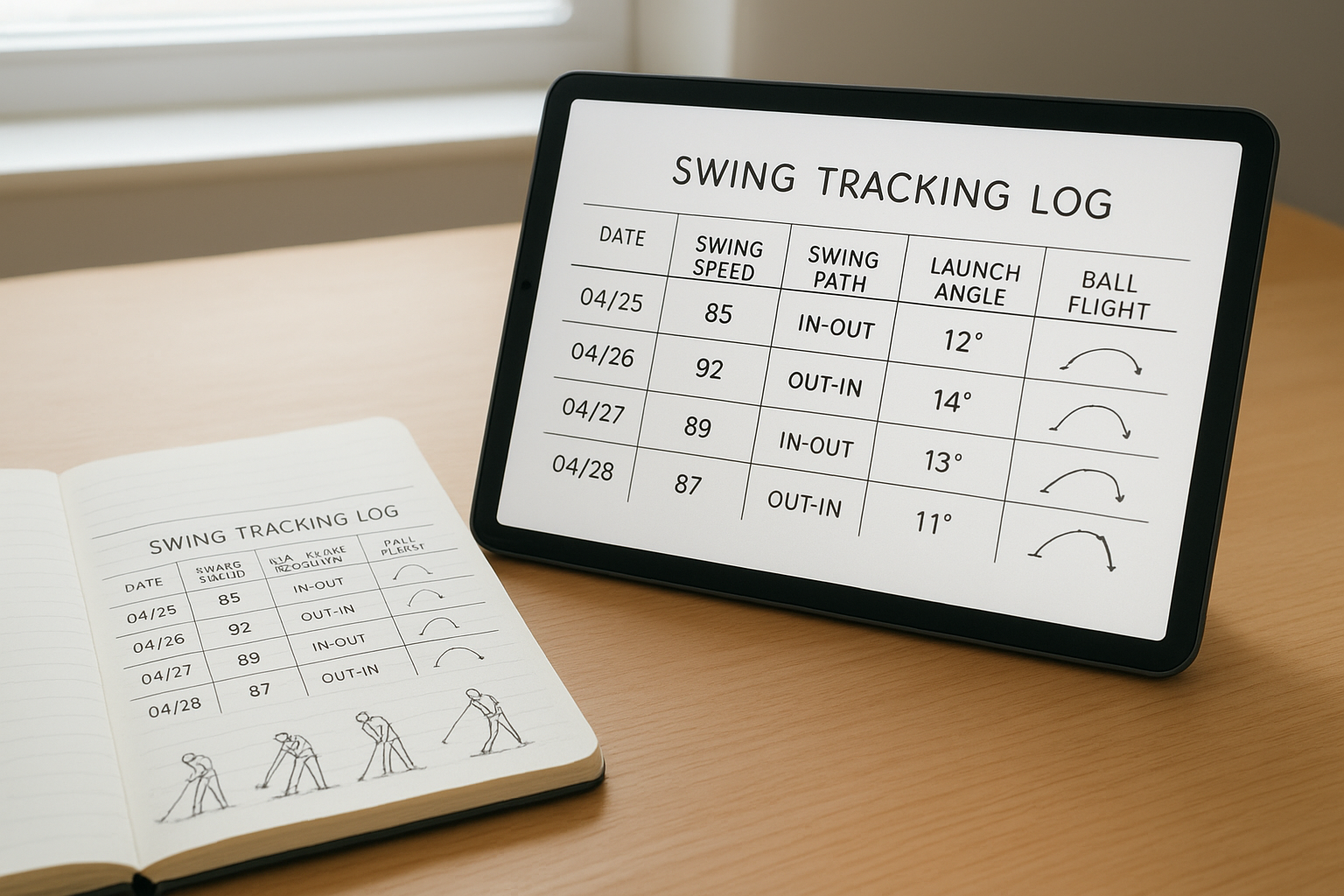
A structured log is central to learning how to document golf swing changes effectively over an entire season.
Tools and Metrics for Tracking Swing Mechanics
A smartphone on a tripod, paired with a free slow-motion app, covers most documentation needs. Meanwhile, golfers with access to a launch monitor can add clubhead speed, spin rate, and launch angle to the record for sharper precision.
According to biomechanics research referenced by the field of biomechanics, visual feedback paired with quantified data improves motor skill retention far more than verbal coaching alone. In fact, studies cited through the National Institutes of Health’s research database suggest structured feedback methods can improve retention of movement changes by more than 30% compared to feel-based correction alone, as summarized on PubMed. For golfers specifically, reviewing swing dynamics through a kinesiology lens, as explained in this elite swing dynamics guide, adds another layer of precision to what gets tracked.
Recording Swing Data Without Overcomplicating Practice
It’s tempting to track everything, but too many variables create noise instead of clarity. Instead, focus on three or four metrics tied directly to the current swing change, and keep a simple notes column for anything unusual that occurred that day.
Common Mistakes When Logging Swing Changes
Even motivated golfers make documentation errors that quietly undermine their progress. Recognizing these early saves months of confusion.
- Changing the camera angle or distance between sessions, which distorts comparisons.
- Skipping a true baseline before starting a new swing change.
- Working on multiple swing elements at once, making it impossible to isolate what worked.
- Forgetting to date entries or note practice conditions.
- Reviewing footage only once instead of on a consistent weekly schedule.
Golfers correcting specific mechanical faults often benefit from pairing their log with a proven framework like this science-based swing correction guide, which helps avoid tracking the wrong variables in the first place.
How Elite Coaches Use Swing Documentation to Guide Training
Competitive and collegiate players often need more than casual observation to refine their mechanics. This is where structured, remote coaching becomes valuable. Yourgolfguru.com, led by an LPGA Master Professional who also holds a PhD in kinesiology, uses biomechanical analysis alongside swing video logs to identify exactly which changes are improving power, accuracy, and consistency while protecting against injury.
Because the coaching is delivered digitally, golfers anywhere can submit their documented swing changes for expert review without traveling to a physical facility. This approach suits serious athletes who need data-driven feedback rather than generalized tips. Golfers interested in this kind of science-backed guidance can explore the programs available at yourgolfguru.com.
For context on how swing mechanics are classified within the sport more broadly, the USGA offers general technical resources that complement personalized coaching feedback.

Side-by-side comparisons make it easier to document golf swing changes effectively across an entire season.
Frequently Asked Questions About How to Document Golf Swing Changes Effectively
What does it mean to document golf swing changes effectively?
Documenting golf swing changes effectively means recording video, measurable metrics, and context notes every time a technical adjustment is made, then reviewing that record on a set schedule. This replaces vague impressions with data a golfer or coach can actually compare over time.
How often should golfers log swing changes?
Most golfers benefit from logging after every practice session where a change was the focus, plus a weekly summary review. Consistent, frequent entries reveal patterns that occasional notes miss.
What is the best way to track golf swing progress over time?
The best approach combines slow-motion video from a fixed camera angle with objective numbers like clubhead speed, launch angle, or ball dispersion. Pairing video with data prevents feel-based bias from distorting real progress.
Why do golfers struggle to document swing changes correctly?
Golfers often struggle because they change camera angles, skip dating entries, or adjust multiple swing elements at once. Without consistency, it becomes impossible to tell which change actually caused an improvement.
How much does swing tracking equipment typically cost?
A basic setup using a smartphone, a tripod, and a free slow-motion app costs nothing beyond equipment already owned. More advanced launch monitors and swing sensors range from roughly $200 to several thousand dollars depending on precision.
How long does it take to see measurable results after a swing change?
Most structural swing changes take four to eight weeks of consistent practice before they show up reliably in both video and on-course performance. Documentation helps confirm whether the change has actually stabilized rather than relying on memory.
What is the difference between documenting swing changes and just filming practice?
Filming practice is passive and often inconsistent, while documentation is a structured system with dates, angles, metrics, and notes tied to specific goals. Documentation turns footage into a searchable, comparable record instead of a random clip library.
What metrics should be included in a swing change log?
A useful log includes the date, the specific change being practiced, camera angle used, any launch monitor numbers, physical sensations, and ball flight results. Including context such as fatigue level or practice location also helps explain inconsistent results.
Can golfers document swing changes effectively without expensive technology?
Yes, a smartphone camera on a consistent tripod setup combined with a simple notes app covers most documentation needs. Expensive tools add precision but are not required to build a reliable swing change record.
What common mistakes ruin swing change documentation?
The most common mistakes are changing the camera angle between sessions, failing to record a baseline before starting, and mixing several swing changes together. Any one of these makes it difficult to isolate what actually worked.
How does video analysis improve swing documentation accuracy?
Video analysis provides an objective record of positions and sequencing that feel alone cannot capture accurately. When footage is compared frame by frame against earlier sessions, it becomes far easier to confirm whether a change actually occurred.
Should golfers document swing changes alone or with a coach?
Self-documentation works for basic tracking, but sharing logs with a qualified coach adds expert interpretation that catches details golfers often miss. A coach can also flag compensations before they become ingrained habits.
What is the best format for a swing change journal?
A simple spreadsheet or notes app with consistent columns for date, change, metrics, and video link works well for most golfers. The format matters less than the consistency of what gets recorded each session.
Final Thoughts on Documenting Swing Changes
Ultimately, learning how to document golf swing changes effectively comes down to consistency: the same camera angle, the same key metrics, and a regular review schedule. Rather than trusting memory alone, a structured log reveals whether a change has truly stuck or simply felt different for a few sessions. Over time, this habit turns scattered practice into a clear, evidence-based path toward better power, accuracy, and long-term swing durability.