

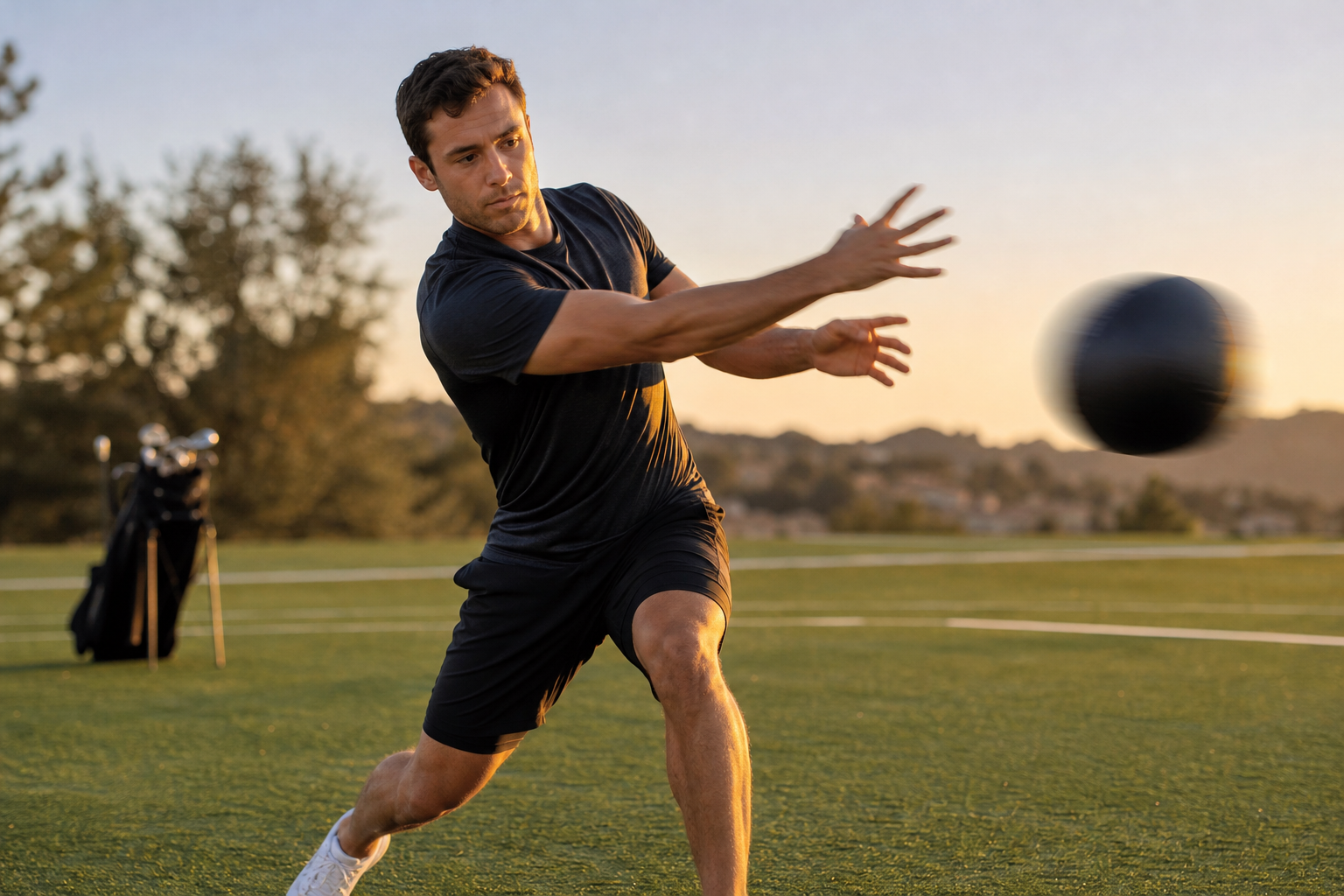
Learning how to design personalized golf fitness plans for better swing mechanics is one of the most important steps a serious golfer can take beyond local lessons. Generic gym workouts rarely translate into clubhead speed, accuracy, or injury resistance. Instead, a plan built around your own mobility, strength, and swing data produces faster, more lasting results.
Direct Answer: A personalized golf fitness plan is designed by assessing your current swing mechanics, identifying specific physical limitations, and building strength, mobility, and recovery work around those findings. The plan should be reviewed and adjusted every four to six weeks based on measurable progress.
What Is a Personalized Golf Fitness Plan?
A personalized golf fitness plan is a structured training program built around an individual golfer’s biomechanics rather than a one-size-fits-all routine. Specifically, it accounts for mobility restrictions, muscle imbalances, and swing faults that affect power and consistency. Kinesiology, the scientific study of human movement, provides the framework many elite coaches use to design these programs (Wikipedia).
Unlike generic workout plans, a golf-specific program prioritizes rotational strength, hip mobility, and the kinetic chain sequence that transfers force from the ground through the clubhead. As a result, golfers who train this way often see improvements in both performance and injury resilience. For a deeper look at how fitness and swing training intersect, this guide on integrating fitness with your golf swing training plan expands on the core principles.
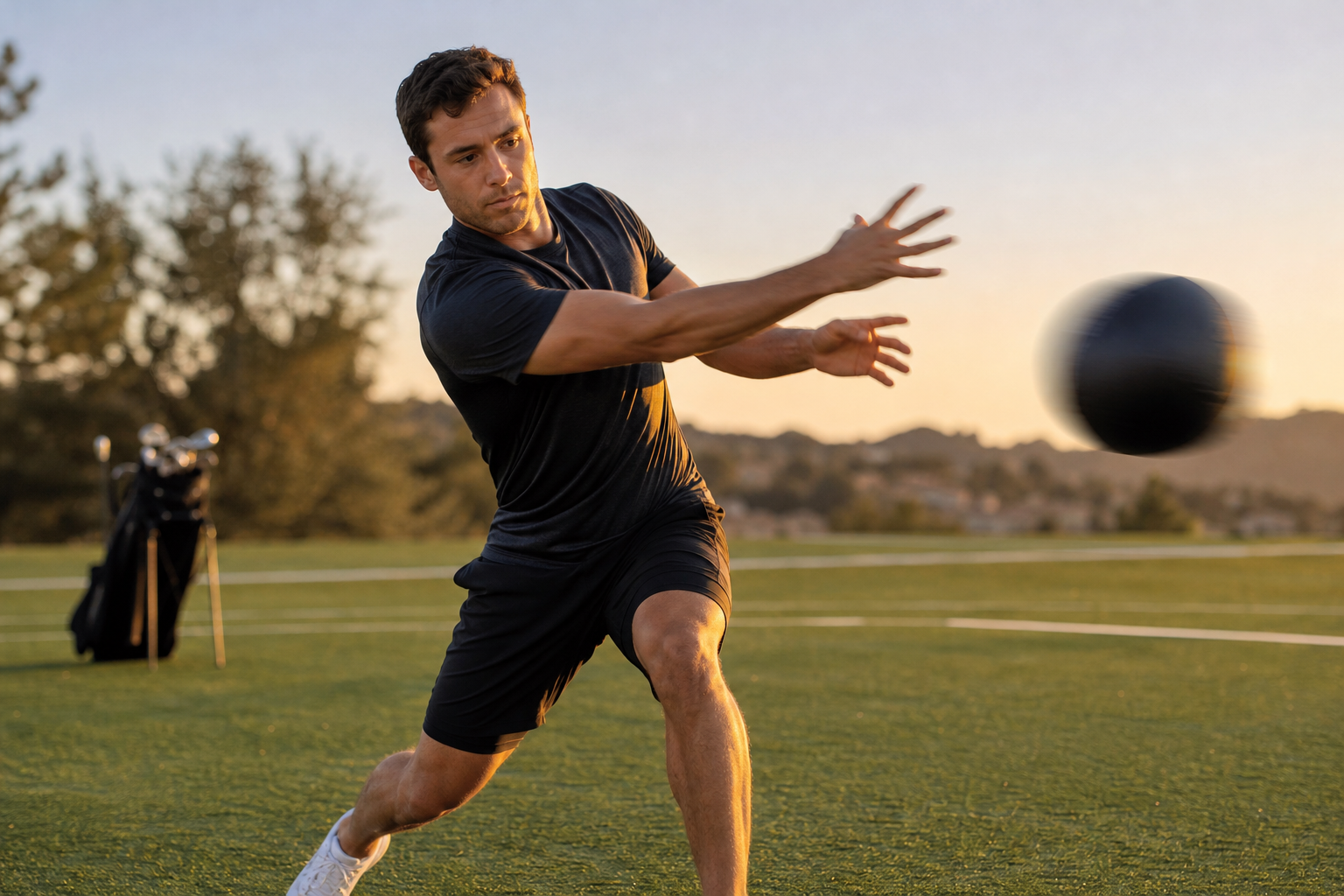
Rotational strength training is a core element when you design personalized golf fitness plans for better swing power.
How to Design Personalized Golf Fitness Plans for Better Swing
Designing an effective plan follows a clear, repeatable sequence. In particular, each step builds on data gathered from the previous one, which keeps the program grounded in measurable progress rather than guesswork.
- Assess swing mechanics and movement patterns. Use video analysis or biomechanical data to identify mobility limitations, strength imbalances, and compensations that affect swing power and consistency.
- Define specific performance goals. Set measurable targets such as increased clubhead speed, improved hip-shoulder separation, or reduced injury risk over a defined training period.
- Build a structured strength and conditioning block. Schedule golf-specific exercises targeting rotational power, core stability, and lower-body strength three to four times per week.
- Integrate mobility and flexibility sessions. Add dedicated stretching, dynamic warm-ups, and joint-mobility drills to maintain the range of motion needed for a full backswing and follow-through.
- Monitor progress and adjust monthly. Track strength gains, flexibility improvements, and swing metrics, then modify the plan based on measurable feedback and coaching input.
Golfers who want a faster starting point can also review this resource on developing a personalized golf swing plan quickly, which pairs well with the fitness sequence above.
Golf-Specific Strength Training for a More Powerful Swing
Strength training for golf differs from general fitness work because it emphasizes rotational force production rather than isolated muscle growth. Consequently, exercises like cable woodchops, single-leg deadlifts, and medicine ball rotational throws tend to transfer directly into swing speed gains. Above all, these movements train the body to generate power from the ground up, which is how most elite swings create distance.
Furthermore, strength work should always be paired with a clear understanding of individual limitations. For example, a golfer with limited hip rotation may need targeted hip strengthening before adding heavy rotational load, otherwise the lower back absorbs excess stress. This is precisely why a science-based approach matters; the science-based coaching guide to tailored swing plans covers this sequencing in more detail.
The CDC recommends that adults get at least 150 minutes of moderate-intensity physical activity each week, a baseline many golf conditioning programs build upon when designing strength blocks (CDC). Meeting or exceeding that baseline supports the stamina required for a full round and a repeatable swing over 18 holes.

Mobility work prepares the hips and spine for the rotational demands of a full golf swing.
Mobility and Flexibility Work for Consistent Swing Mechanics
Flexibility determines how far a golfer can rotate without compensating through the lower back or knees. Therefore, mobility training is not optional; it is foundational to a repeatable swing. The table below outlines a sample weekly structure many golf-specific programs follow.
| Day | Focus | Duration |
|---|---|---|
| Monday | Rotational strength | 40 min |
| Tuesday | Mobility and flexibility | 25 min |
| Thursday | Lower-body strength | 40 min |
| Saturday | Core stability and recovery | 30 min |
In addition, the golf swing itself relies on a well-timed kinetic chain, moving from the ground through the hips, torso, and arms (Wikipedia). Consequently, any mobility restriction along that chain tends to show up as inconsistency at impact.
Common Mistakes When Building a Tailored Swing Fitness Routine
Many golfers copy a popular workout program without first assessing their own movement restrictions. As a result, they often reinforce the very compensations causing inconsistent ball striking. Similarly, some golfers focus exclusively on strength while neglecting mobility, which creates stiffness that limits backswing depth.
Another frequent error is ignoring recovery during tournament weeks. However, reducing training volume before competition helps preserve energy and swing sharpness. For a broader view of how proficiency training supports competitive performance, see this guide on the elite path to lower scores through proficiency training.
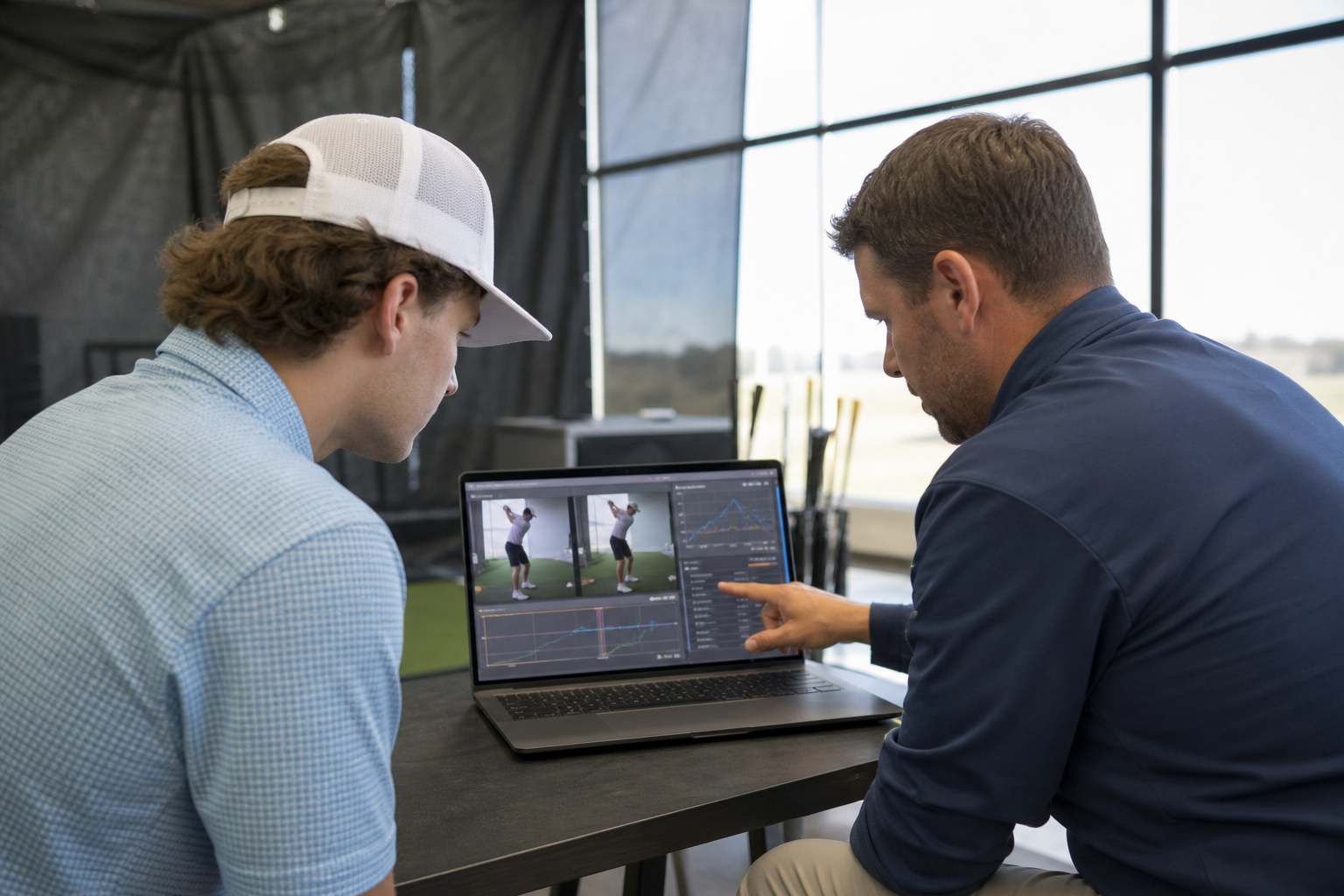
Reviewing swing data regularly helps fine-tune personalized golf fitness plans for better swing outcomes.
Tracking Progress with Biomechanical Data
Biomechanical data, such as hip rotation speed or ground force output, gives coaches objective evidence of what is limiting swing performance. Specifically, this data removes guesswork from program design, allowing adjustments based on measured change rather than assumption. Golfers interested in this approach can explore using biomechanical data to guide golf improvement for a more technical breakdown.
Platforms like yourgolfguru.com combine kinesiology-based assessment with remote coaching, which allows competitive golfers to access this level of analysis without traveling to a physical facility.
Frequently Asked Questions
What is a personalized golf fitness plan?
A personalized golf fitness plan is a training program built around an individual golfer’s strength, mobility, and swing mechanics rather than generic exercises. It typically combines strength work, flexibility training, and movement screening to support a more powerful and repeatable swing.
How do I design a personalized golf fitness plan for better swing performance?
To design personalized golf fitness plans for better swing performance, start with a movement assessment, set measurable goals, then build strength, mobility, and recovery phases around those findings. Adjust the plan monthly using swing data and progress tracking.
Why is golf-specific fitness training different from general gym workouts?
Golf-specific training targets rotational power, hip-shoulder separation, and single-plane stability that general gym programs often ignore. General workouts build overall fitness, but they rarely translate into clubhead speed or swing consistency.
How long does it take to see swing improvements from a fitness plan?
Most golfers notice early mobility and strength gains within four to six weeks, while measurable swing speed changes often take eight to twelve weeks of consistent training. Results vary based on starting fitness level and training frequency.
How much does a personalized golf fitness program typically cost?
Costs vary widely, from free self-guided templates to several hundred dollars per month for one-on-one remote coaching with video analysis. Programs that include biomechanical assessment and ongoing adjustments typically sit at the higher end of that range.
What exercises improve golf swing power the most?
Rotational medicine ball throws, cable woodchops, single-leg deadlifts, and hip mobility drills consistently improve swing power. These exercises train the kinetic chain golfers rely on to transfer force from the ground through the clubhead.
What is the biggest mistake golfers make when starting a fitness routine?
The most common mistake is copying a generic workout plan without first assessing individual mobility restrictions or swing faults. This often reinforces bad patterns instead of correcting them.
Can golf fitness training help prevent injuries?
Yes, structured golf fitness training reduces injury risk by correcting muscle imbalances and improving joint stability around the spine, hips, and shoulders. These areas absorb the most repetitive stress during the golf swing.
How often should golfers train for swing-specific strength?
Most competitive golfers benefit from three to four strength sessions per week, paired with daily mobility work. Frequency should scale down during tournament weeks to prioritize recovery.
What role does mobility play in golf swing consistency?
Mobility allows golfers to reach proper backswing and follow-through positions without compensating through the lower back or knees. Limited mobility is one of the leading causes of inconsistent ball striking.
Do I need a coach to build an effective golf fitness plan?
A coach is not strictly required, but working with one who understands biomechanics typically speeds up progress and reduces injury risk. Self-guided plans can still work if they include regular self-assessment and video review.
How is biomechanical data used in personalized golf training?
Biomechanical data, such as hip rotation speed or weight transfer timing, helps coaches pinpoint exactly which physical limitation is affecting swing efficiency. This data then guides which exercises get prioritized in the fitness plan.
What is the difference between a generic workout and a golf swing fitness plan?
A generic workout builds general strength and endurance, while a golf swing fitness plan targets the specific joints, rotational patterns, and energy transfer sequences used during a swing. The latter is designed around performance outcomes like clubhead speed and accuracy.
How can collegiate or competitive golfers benefit from a tailored fitness plan?
Collegiate and competitive golfers face higher swing volume and physical demands than recreational players, making injury prevention and power development critical. A tailored plan helps them sustain performance across a long competitive season.
Final Takeaways
Ultimately, learning how to design personalized golf fitness plans for better swing performance comes down to assessment, structure, and consistent adjustment. Rather than following a generic routine, golfers get the best results when strength, mobility, and recovery work are built around their own biomechanics. Above all, tracking progress with real data keeps the plan honest and effective over time. Golfers ready to take this further can explore remote, science-backed coaching options to turn these principles into a long-term performance advantage.