


Golf swing injury risk management online is a practical way for serious players to protect their bodies while they chase more power and consistency. It combines video analysis, movement screening, and workload tracking, all guided by a coach from a distance. The goal is simple: keep you swinging hard and healthy for years.
Quick answer: Golf swing injury risk management online means a qualified coach reviews your swing video, mobility, and practice load remotely. Then the coach adjusts your mechanics and training to cut harmful stress on your back, elbows, shoulders, and wrists.

Good swing mechanics spread load across the body, which is the core of golf swing injury risk management online.
What Is Golf Swing Injury Risk Management Online?
Golf swing injury risk management online is the remote process of finding and reducing the mechanical and physical factors that make golf injuries more likely. A coach studies your video, asks about your history, and adjusts your technique and preparation. Therefore, you get expert guidance without traveling to a facility.
At yourgolfguru.com, this approach is led by an LPGA Master Professional who also holds a PhD in kinesiology. The lessons target competitive amateurs, collegiate players, and aspiring professionals who want power and accuracy without sacrificing long-term health.
Why the Golf Swing Stresses the Body
A full swing is a fast, asymmetrical rotation repeated many times per session. In particular, the spine twists and side-bends while the hips and shoulders turn at different speeds. Small flaws become large stresses when repeated.
Common Injury Areas
- Lower back: often linked to limited hip rotation and excess spinal bend.
- Elbow: frequently tied to impact strain and grip tension.
- Shoulder and wrist: commonly related to over-swinging and heavy rough contact.
- Knee and hip: usually connected to rotation forced through a locked lower body.
The U.S. National Library of Medicine hosts PubMed, where peer-reviewed golf injury research is indexed. Consequently, readers who want the evidence can search it directly.
Key Risk Factors Coaches Look For
Coaches focus on patterns that load joints unevenly. For example, early extension pushes the hips toward the ball and can pinch the lower back. Similarly, a “reverse spine” posture at the top can compress one side of the spine.
| Risk factor | Typical area affected | Online check |
|---|---|---|
| Early extension | Lower back | Down-the-line video |
| Limited hip rotation | Back, knees | Mobility screen |
| Excess grip tension | Elbow, wrist | Close-up impact video |
| Sudden practice spikes | Any overloaded tissue | Weekly load log |
To learn how mechanics and forces connect, see the golf swing biomechanics online course guide.
How to Manage Injury Risk Step by Step
This process works well for remote coaching. Follow it in order.
- Record your swing. Film face-on and down-the-line views with your full body in frame.
- Log your history. Note past injuries, current aches, and weekly practice volume.
- Screen your mobility. Test hip, thoracic spine, and shoulder rotation with simple movements.
- Review and prioritize. Rank faults and limits by how much stress they create.
- Apply and monitor. Follow the plan, track soreness, and send new video for review.
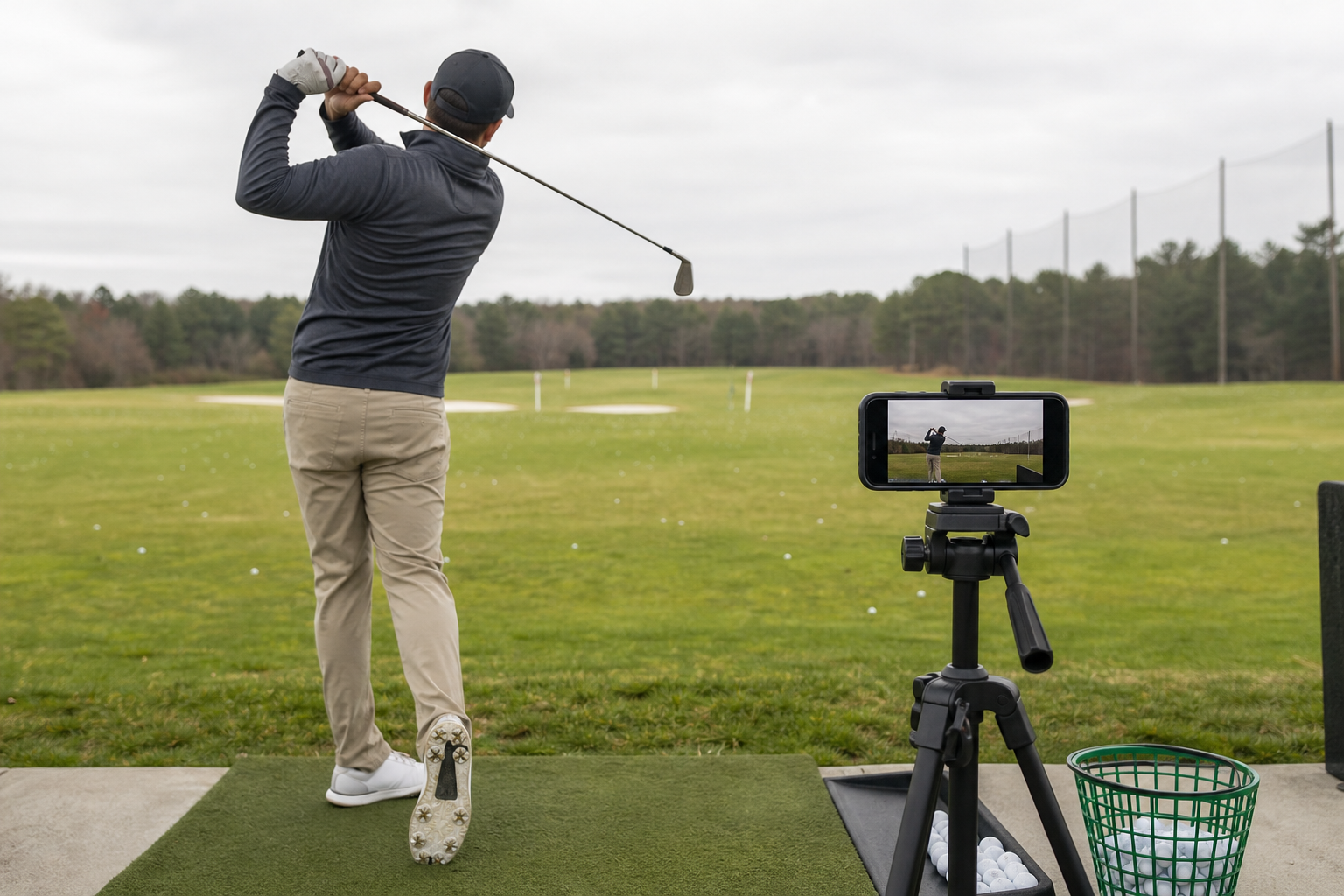
Clear two-angle video is the foundation of any remote swing assessment.
Fitness, Warm-Ups, and Workload
Mechanics are only half the picture. Strength and mobility determine whether your body can perform the motion safely. For this reason, golf-specific fitness training pairs well with technical work.
Warm up with dynamic movement, then build up swing speed gradually. Likewise, increase practice volume slowly instead of jumping from light weeks to marathon sessions.
Personalized Plans That Reduce Strain
Generic tips rarely fit every body. A tailored plan accounts for your flexibility, strength, and swing pattern. You can read how tailored swing plans reduce injury risk, or explore the personalized swing plans and available lessons.
Warning Signs and When to Seek Medical Help
Stop hitting if you feel sharp pain, numbness, or pain that worsens during the swing. In addition, soreness that lasts several days deserves attention. A coach can adjust mechanics, but only a licensed clinician can diagnose and treat an injury.
Frequently Asked Questions
What is golf swing injury risk management online?
It is the remote assessment and correction of swing mechanics, mobility, and workload to lower the chance of golf injuries. A qualified coach reviews your video and movement, then builds a plan to reduce harmful stress.
Can online coaching really spot injury risks?
Yes, many mechanical risks show clearly on video from two angles. Coaches with biomechanics training look for patterns such as excess lateral bend, early extension, and limited rotation.
Which body areas do golfers injure most?
The lower back is the most commonly reported area, followed by the elbow, shoulder, wrist, and knee. Amateurs and professionals tend to differ in which joints suffer most.
Why does swing mechanics affect injury risk?
Poor sequencing forces small joints and the spine to absorb loads that larger muscles should handle. Repeating that stress over hundreds of swings can overload tissue.
How often should I warm up before golf?
Warm up before every round and practice session. Ten minutes of dynamic movement and gradual swings is a sensible baseline.
Is static stretching before a round a good idea?
Dynamic movement generally suits pre-round preparation better than long static holds. Save longer static stretching for after play.
How much practice is too much?
There is no universal number, because tolerance varies by age, fitness, and history. Raise volume gradually and watch for pain that lingers into the next day.
What are warning signs I should not ignore?
Sharp pain, pain that worsens during a swing, numbness, or soreness lasting several days are all warning signs. Stop hitting and seek medical advice.
Does online instruction replace a doctor or physiotherapist?
No. A coach can reduce mechanical risk, but diagnosis and treatment belong to a licensed medical professional.
How does online coaching compare with in-person lessons for safety?
Both can work well. In-person lessons allow hands-on cues, while online lessons give easy access to specialists and repeatable video review.
What equipment do I need for an online swing assessment?
A smartphone, a tripod, and clear space to film face-on and down-the-line views are enough. Good lighting and a full-body frame matter most.
What is the most common mistake golfers make about injury prevention?
Many wait until pain appears before changing anything. Addressing mobility, strength, and mechanics early is far more effective.
Conclusion
Golf swing injury risk management online lets you find the mechanical and physical factors that threaten your body, then fix them with expert remote guidance. Record your swing, log your load, screen your mobility, and monitor results. To see how science-based coaching can fit your game, visit yourgolfguru.com.