

Golf coaching for tournament preparation is a specialized process that sharpens swing mechanics, course strategy, and mental composure so a competitive player performs at their best when the scorecard actually counts. Unlike a casual weekend lesson, this type of coaching is built around a deadline: your next event. As a result, every drill, adjustment, and conversation with your coach should tie back to how it will hold up under pressure.
Quick answer: Golf coaching for tournament preparation combines biomechanical swing analysis, course management strategy, and mental rehearsal into a structured plan, typically over six to eight weeks, so a competitive golfer peaks physically and mentally on the day it matters most.
Because competitive golf rewards consistency above all else, coaching for a tournament looks fundamentally different from general improvement lessons. In particular, it prioritizes repeatable mechanics over quick fixes, since a rushed change can unravel under pressure. This distinction matters most for collegiate players, aspiring professionals, and serious amateurs who already have a foundation and need refinement rather than a rebuild.

Structured golf coaching for tournament preparation focuses on repeatable, pressure-tested mechanics.
What Is Golf Coaching for Tournament Preparation?
Golf coaching for tournament preparation is a short, focused coaching cycle designed to get a competitive player ready for a specific event. It typically involves biomechanical swing review, strategic course planning, and structured mental training. Unlike open-ended lessons, it has a clear finish line: competition day.
This form of coaching draws heavily on kinesiology, the scientific study of human movement, to identify which parts of a swing hold up under fatigue and pressure. For example, a coach might use slow-motion video to spot a subtle hip rotation issue that only appears late in a round. As a result, corrections tend to be small and precise rather than sweeping, which helps protect the timing a player has already built.
Because the goal is peak performance on a fixed date, tournament prep coaching also blends physical readiness with tactical thinking. Coaches often review the specific course layout, likely weather, and scoring demands so practice sessions mirror what a player will actually face. In this way, preparation becomes rehearsal rather than generic drilling. If you want to see how targeted instruction translates into more distance and control, this breakdown on how to improve distance, accuracy, and trajectory shows the same principle in action.
Why Tournament-Ready Coaching Differs From Casual Lessons
Casual lessons often aim at general improvement, such as fixing a slice or adding a few yards. Tournament-ready coaching, however, is built around a deadline and a scorecard. Consequently, coaches working with competitive players tend to prioritize consistency, repeatability, and pressure performance over dramatic swing changes.
The Science Behind Swing Mechanics Under Pressure
Under competitive stress, muscles tighten, tempo speeds up, and small mechanical flaws become magnified. This is why biomechanics, the mechanical analysis of body motion, plays such a central role in elite coaching. A coach trained in kinesiology can pinpoint which movement patterns are efficient and which ones are likely to break down when adrenaline spikes.
Research indexed by the National Library of Medicine suggests that structured biomechanical training can meaningfully improve swing consistency over an eight-week period, particularly when paired with video feedback and repetition drills. This is one reason data-driven coaching has become increasingly popular among serious amateurs and collegiate athletes rather than relying on feel-based instruction alone. You can review related sports science literature through PubMed for further context on movement-based training research.
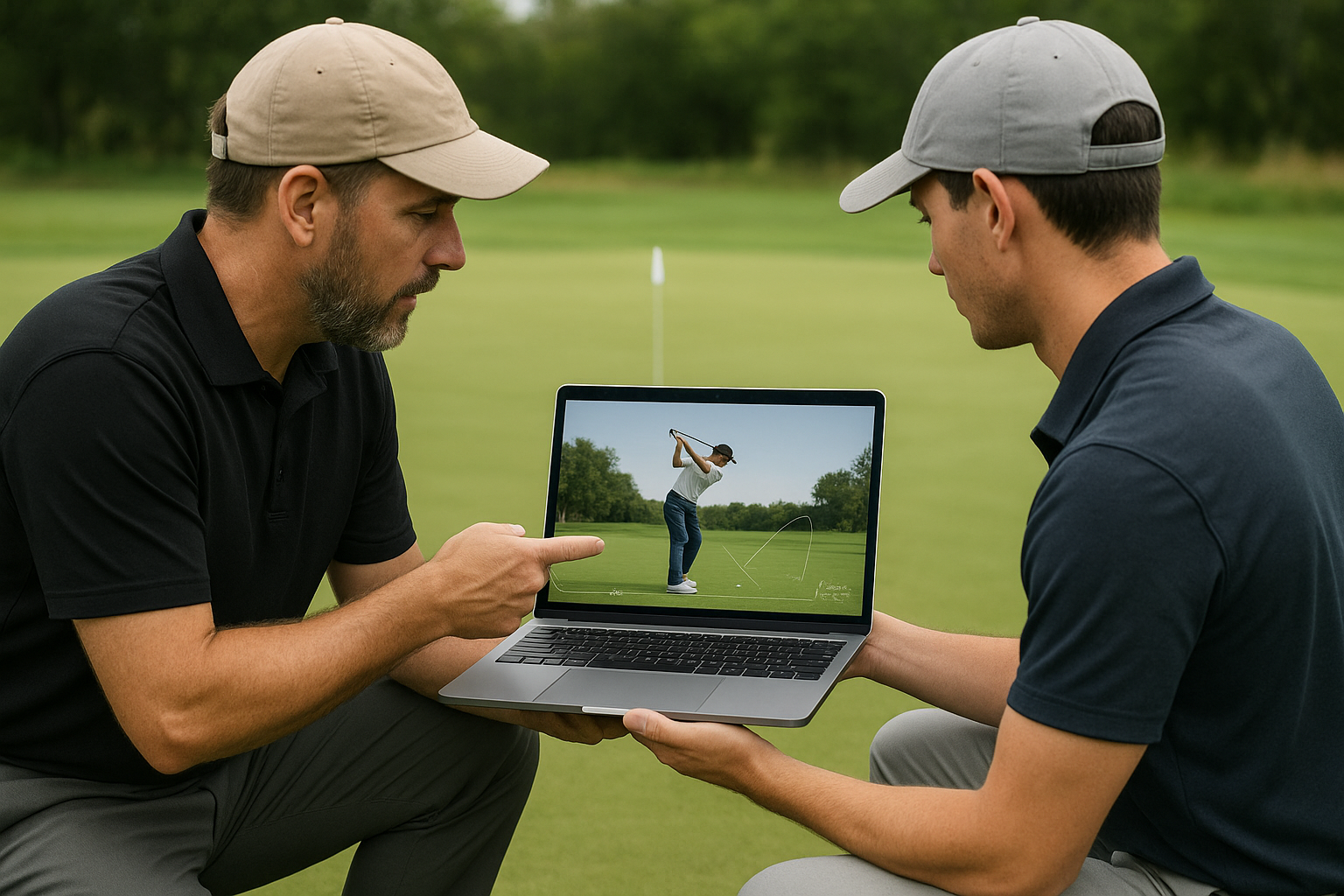
Video-based swing review is a core part of tournament prep coaching.
Key Components of Effective Tournament Prep Coaching
Effective tournament prep coaching typically rests on three pillars: mechanical efficiency, mental readiness, and course-specific strategy. Above all, these pillars need to work together rather than in isolation, since a technically sound swing can still fail under poor mental preparation.
Biomechanical Swing Analysis
First, a coach reviews swing video and, where possible, motion data to identify inefficiencies. Specifically, this includes checking spine angle, sequencing, and clubface control at impact. Because these details directly affect injury risk, a coach trained in kinesiology can also flag movement patterns that may cause long-term physical harm if left uncorrected.
Mental Game and Pre-Shot Routines
Second, mental preparation deserves equal weight. A consistent pre-shot routine helps a player manage nerves and maintain focus between shots. For a closer look at building one, this guide to a simplified pre-shot routine outlines a practical approach many competitive players adopt before tournament rounds.
How to Build a Tournament Preparation Plan With Your Coach
Building a tournament preparation plan works best as a structured, sequential process. Below is a five-step framework many coaches use with competitive players heading into a major event.
- Assess current swing mechanics and performance data. Review video and any available biomechanical data to identify inefficiencies or risky patterns that could break down under pressure.
- Set specific, tournament-focused goals. Define measurable targets, such as fairways hit or scoring average, tied directly to your upcoming competition.
- Build a structured six to eight week practice schedule. Blend swing refinement, short game repetition, and course management drills while gradually increasing simulated pressure.
- Incorporate mental rehearsal and a pre-shot routine. Practice visualization and a consistent routine repeatedly so it becomes automatic during competition.
- Taper intensity in the final week before competition. Reduce physical training volume while keeping light technical check-ins so you peak on tournament day.
Notably, this same tapering principle applies to season-long planning, not just single events. If you are mapping out an entire competitive calendar, the strategies in planning your best competitive season extend naturally from this tournament-specific framework.
Choosing the Right Coach for Competitive Golf Preparation
Choosing a coach for competitive golf preparation requires looking beyond general teaching experience. Instead, prioritize coaches with credentials such as LPGA Master Professional status, advanced kinesiology or sports science training, and a track record with tournament-level players. Together, these qualifications signal an ability to combine scientific precision with real competitive insight.
Furthermore, geography no longer needs to limit your options. Remote coaching platforms now allow golfers to work with elite-level instructors regardless of location, removing the ceiling that many local coaches unintentionally create. According to the USGA, competitive amateur golf continues to grow in participation, which has increased demand for specialized, data-driven coaching beyond what typical local instructors provide. You can review the full coaching approach used at yourgolfguru.com as one example of this remote, science-backed model.
Common Mistakes in Tournament Preparation
Even experienced players make preparation mistakes that undermine otherwise solid coaching. Recognizing these early can prevent unnecessary setbacks close to competition day.
- Attempting major swing overhauls too close to a tournament instead of small, targeted refinements.
- Ignoring mental preparation while over-focusing on mechanics alone.
- Skipping a consistent pre-shot routine during practice rounds.
- Relying on partial fixes rather than addressing root causes, a risk explored further in the risk of partial coaching solutions.
Interestingly, even legendary players have faced turning points tied to preparation and timing decisions, as illustrated in the story behind Jack Nicklaus’s own career crossroads. Consequently, thoughtful preparation matters at every level of competitive golf, not only for amateurs building toward their first major event.

Consistent routines help translate practice-tee improvements into tournament results.
Frequently Asked Questions About Golf Coaching for Tournament Preparation
What is golf coaching for tournament preparation?
Golf coaching for tournament preparation is a structured coaching process that sharpens swing mechanics, course strategy, and mental readiness so a player performs at their peak during competition. It differs from casual lessons because it targets performance under pressure rather than general improvement.
How is tournament preparation different from regular golf lessons?
Regular lessons often focus on general fundamentals, while tournament preparation targets consistency, pressure management, and course-specific strategy. It typically includes biomechanical review, mental rehearsal, and a tapering practice schedule.
How long does it take to prepare for a tournament with a coach?
Most competitive golfers benefit from six to eight weeks of focused coaching before a major event. However, athletes with an established swing may need only two to three weeks of fine-tuning.
How much does golf coaching for tournament preparation typically cost?
Costs vary widely depending on coach credentials, session length, and whether instruction is delivered remotely or in person. Specialized, science-backed coaching from credentialed professionals generally commands a premium over general local lessons.
What should I look for in a tournament prep coach?
Look for a coach with proven competitive coaching experience, biomechanical knowledge, and a track record with tournament-level players. Credentials such as LPGA Master Professional status or advanced kinesiology training are strong indicators of expertise.
Can online golf coaching really prepare me for competitive events?
Yes, online golf coaching can effectively prepare players for competition when it includes detailed video swing analysis, data-driven feedback, and structured practice plans. Many collegiate and elite amateurs now rely on remote coaching to access specialists unavailable locally.
What role does biomechanics play in tournament coaching?
Biomechanics, the study of body movement mechanics, helps coaches identify inefficient or risky swing patterns that break down under pressure. Correcting these patterns improves both consistency and injury prevention during high-stakes play.
What common mistakes do golfers make before tournaments?
Common mistakes include overhauling swing mechanics too close to competition, neglecting mental preparation, and skipping a consistent pre-shot routine. These partial fixes often create more inconsistency rather than less.
How often should I work with a coach before a tournament?
Weekly sessions during the six weeks before a tournament are typical, tapering to lighter check-ins during the final week. This rhythm allows adjustments to become automatic without adding pressure late in preparation.
What is a pre-shot routine and why does it matter for tournaments?
A pre-shot routine is a consistent sequence of physical and mental steps performed before every shot to build focus and reduce anxiety. Under tournament pressure, a reliable routine anchors performance when emotions run high.
Do collegiate and competitive amateurs need different coaching than beginners?
Yes, collegiate and competitive amateurs need coaching focused on marginal gains, biomechanical efficiency, and tournament strategy rather than basic fundamentals. Their training must address performance consistency under scoring pressure.
How can remote coaching match in-person instruction quality?
Remote coaching can match in-person quality when it uses high-resolution video, frame-by-frame swing breakdowns, and direct feedback loops between coach and player. This allows elite instructors to work with athletes regardless of geography.
What should a tournament preparation plan include?
A solid plan should include swing analysis, physical conditioning, mental rehearsal, course management review, and a tapering schedule leading into competition day. Each element should be tracked so a coach can adjust the plan as the tournament approaches.
Final Thoughts on Preparing for Competition
Ultimately, golf coaching for tournament preparation works best when it treats mechanics, strategy, and mindset as one connected system rather than separate problems. A biomechanically sound swing still needs mental composure to hold up under pressure, and a calm mind still needs reliable technique to execute under stress. Therefore, the strongest preparation plans are built well before the first tee shot, with enough time to refine rather than rebuild.
For competitive amateurs, collegiate players, and aspiring professionals, working with a credentialed, science-backed coach removes much of the guesswork from this process. In the end, whether preparation happens in person or remotely, the goal remains the same: walking onto the course with a swing and a mindset you can trust when it matters most. Last updated: 2026-08-16. Author: YourGolfGuru coaching team.