


Competitive golf swing technique training is structured, measured coaching that refines how a serious player moves, so the swing produces more power, tighter dispersion and repeatable contact under pressure. For players who already break 80 or compete in events, the gains come from detail. They also come from protecting the body that has to repeat the motion thousands of times.
Quick answer: Effective training starts with a measured baseline, focuses on one priority change at a time, matches that change to your body, and checks progress with video and data. Done well, it improves consistency and lowers injury risk.
What Is Competitive Golf Swing Technique Training?
It is coaching built for players who compete, not for casual rounds. Instead of patching a slice, the coach studies the whole movement pattern: sequencing, ground use, clubface control and tempo. Then the coach connects those findings to scoring needs.
Furthermore, it treats the golfer as an athlete. Strength, mobility and injury history shape what a good swing looks like for that person.

A balanced finish is one visible result of competitive golf swing technique training.
Why Biomechanics Shapes Elite Swing Mechanics
Biomechanics is the study of how forces act on and inside the body. In golf, it explains how the legs, hips, trunk and arms transfer energy into the club. As a result, a coach can tell whether lost distance comes from poor sequencing or from a physical limit.
Kinesiology adds another layer. It looks at joint range, muscle use and movement habits. Consequently, two players with the same fault may need different fixes.
This is the approach behind yourgolfguru.com, where lessons are led by an LPGA Master Professional who also holds a PhD in kinesiology. You can read more in this guide to science-backed elite swing coaching.
Core Skills to Develop
Power Through Better Sequencing
Speed comes mostly from order, not effort. The lower body starts the downswing, the trunk follows, and the arms and club release last. Therefore, swinging harder with poor order often adds miss-hits rather than distance.
Accuracy Through Face and Path Control
Ball flight depends on clubface angle and club path at impact. Launch monitors report both numbers. In addition, video shows the positions that create them.
Consistency Through Repeatable Patterns
Consistency means a narrow range of misses. Fewer moving parts and a reliable tempo help here. For deeper technical detail, see these advanced golf swing techniques for serious golfers.
Protecting Your Body While You Improve
Golf is repetitive and rotational. The lower back, lead wrist and elbows are common trouble spots, according to the National Center for Biotechnology Information, which hosts many sports-medicine studies on the topic. However, an efficient swing spreads load across larger muscles and joints.
For this reason, good training includes a short physical screen and sensible practice volume. Pain that persists should be checked by a medical professional.
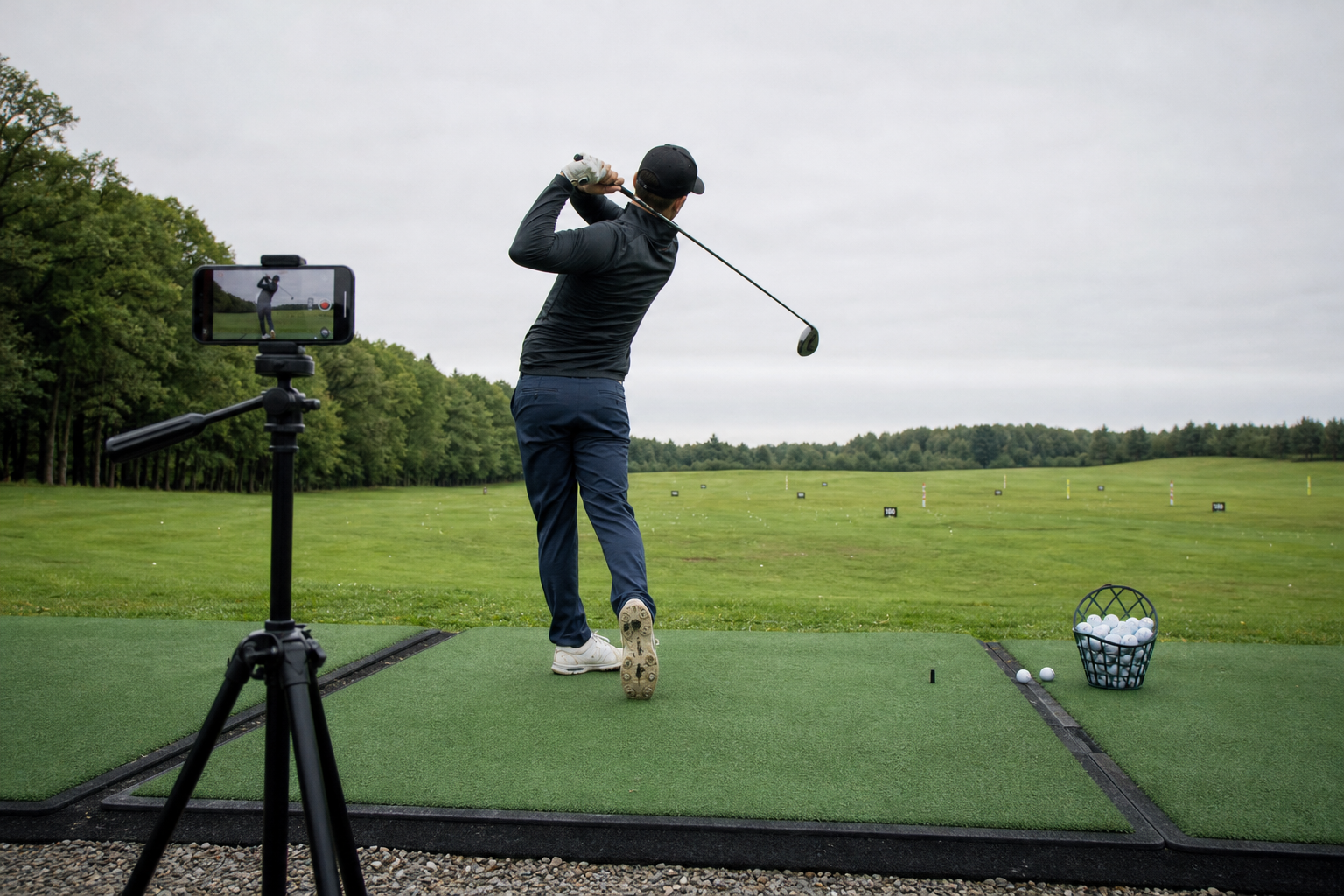
Clear video lets a remote coach analyze swing positions in detail.
How to Build a Swing Training Plan
Follow these steps to turn coaching into measurable progress.
- Record a baseline. Film face-on and down-the-line swings, and log carry distance and dispersion.
- Screen your body. Check hip rotation, shoulder mobility and balance.
- Pick one priority. Choose the pattern that most limits contact, speed or direction.
- Practice with drills. Use slow-motion work first, then build toward full speed.
- Review and adjust. Re-film every week or two and compare with your baseline.
Remote Coaching for Serious Players
Online instruction removes the need to travel to a facility. A player in any location can send video and receive detailed feedback. In particular, competitive players in areas with few advanced teachers gain access to a higher level of coaching.
Explore how it works in this overview of remote golf swing improvement and these remote training programs for elite players. Moreover, the guide to golf swing mechanics and ball striking covers impact fundamentals.
Mistakes That Slow Progress
- Changing several things at once.
- Copying a tour player’s look without matching their physical ability.
- Skipping measurement, so progress is guesswork.
- Making big changes right before a key event.

Video analysis turns swing feel into something you can measure.
Frequently Asked Questions
What is competitive golf swing technique training?
Competitive golf swing technique training is structured coaching that refines swing mechanics for players who compete. It targets power, accuracy and consistency under pressure, and it protects the body from overuse injury.
Who benefits most from this type of training?
Competitive amateurs, collegiate players and aspiring professionals benefit most. These golfers already have solid fundamentals and need finer technical detail.
How is it different from a standard golf lesson?
A standard lesson often fixes one visible fault. Competitive training measures the whole movement pattern, links it to your body, and builds a long-term plan.
Can online coaching really improve a golf swing?
Yes, when video quality and feedback are good. Slow-motion video from set angles lets a coach see swing positions clearly and give precise drills.
How long does it take to see results?
Small changes in contact quality can appear within a few weeks. Lasting mechanical change usually takes several months of deliberate practice.
Why does kinesiology matter in golf instruction?
Kinesiology is the study of human movement. It explains why a swing change works for one body and not another, and it helps reduce injury risk.
Will changing my swing hurt my scores at first?
Scores can dip briefly while a new movement feels unfamiliar. Planning changes in the off-season or between key events limits the cost.
What equipment do I need for remote lessons?
You need a smartphone or camera, a tripod and a place to hit. A launch monitor is helpful but not required.
How often should I practice swing changes?
Short, frequent sessions work better than one long block. Three to five focused sessions a week is a common structure.
What are common mistakes in swing training?
Common mistakes include changing too many things at once, copying a tour player’s look, and ignoring physical limits. Skipping measurement is another frequent error.
Does swing training help prevent injuries?
It can. Efficient sequencing and better load management reduce stress on the lower back, wrists and elbows.
How do I choose a coach for competitive golf swing technique training?
Look for recognized credentials, evidence-based methods and experience with players at your level. Ask how progress is measured.
Conclusion
Competitive golf swing technique training works best when it is measured, focused and matched to your body. Start with a baseline, change one thing at a time, and protect your joints along the way. With expert, science-based guidance, you can build a swing that holds up when scores matter.