

The cosine factor is the hidden physics principle that quietly decides how much of your swing power actually reaches the golf ball — and for most golfers, it is stealing distance and accuracy from nearly every shot they hit. In simple terms, the cosine factor describes what happens when the force you apply isn’t pointed exactly where you want the ball (or any object) to go. As a result, only a fraction of your total effort ends up doing useful work, while the rest leaks away sideways or upward. Understanding this one concept can change how you think about your entire golf swing.
What Is the Cosine Factor in Golf?
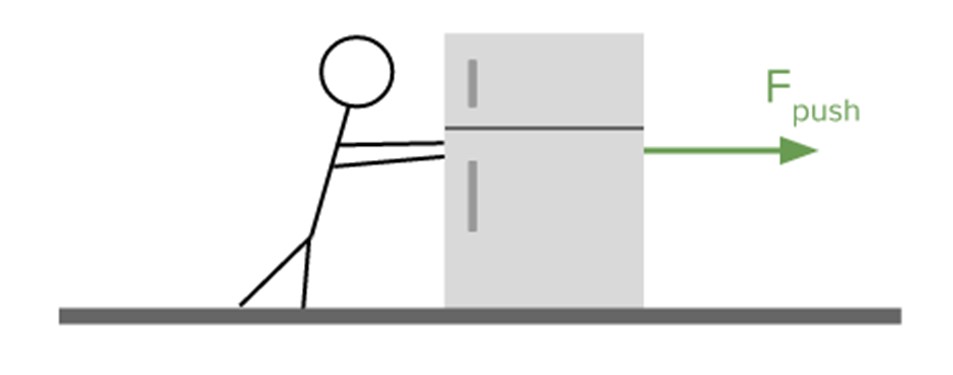
Picture this: you need to push a heavy refrigerator across the kitchen floor. Would you stand directly behind it, or at an awkward angle to the side? Obviously, you’d get directly behind it. Standing at an angle wastes effort, because only the part of your push that lines up with the direction of travel actually moves the fridge. Everything else is wasted motion. That is the cosine factor in action, and it applies just as strongly to a golf swing as it does to furniture.
In other words, the direction of a force matters just as much as its magnitude. A huge amount of effort applied at the wrong angle still produces a disappointingly small result. This is exactly why two golfers can generate the same clubhead speed yet see very different ball flights and distances.
The Science of Force Vectors: Why the Angle of Push Matters More Than Raw Power
If you push the refrigerator while standing at an angle, only part of your intended force actually goes into forward motion. In physics terms, the total force you apply can be split into two components using a vector: a horizontal component that does useful work, and a vertical (or sideways) component that is essentially wasted. That useful, forward-moving component is calculated using the cosine function — hence, the cosine factor.
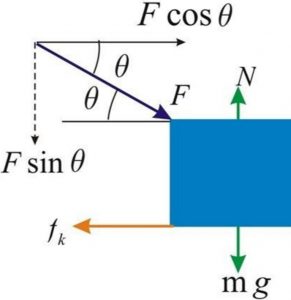
Here’s the key detail that most golfers never learn: multiplying a force by the cosine of the angle it’s applied at scales that force by a number between 0 and 1. Specifically, when the angle between your push and the intended direction of travel is 0°, the cosine equals 1, meaning 100% of your force is useful. However, as that angle grows closer to 90°, the cosine shrinks toward 0, meaning almost none of your effort actually helps. In practice, this means a golfer who swings “across” the intended line, even slightly, is discarding real, measurable power on every single shot.
This same principle shows up everywhere in sports science, including in how golfers generate power from the ground up. For a deeper look at how your lower body contributes usable force to the swing, see our breakdown of ground reaction forces and the golf swing, which explains the other half of the power equation.
How Cosine Loss Shows Up at Impact (And Why Your Ball Still Flies Straight)
Here is where the cosine factor becomes undeniably practical. Every golfer — whether a scratch player or a weekend hacker — swings the club in a way that moves it well inside the target line shortly after impact. This happens regardless of whether the club approached from outside-in or inside-out. Just stand behind anyone at a driving range and watch the clubhead’s path after the ball is struck; you will see it curve inward every time.
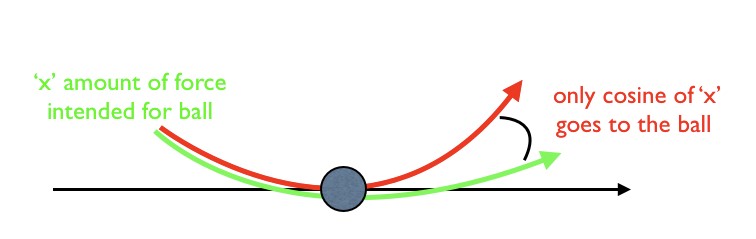
When the clubhead peels inside the target line right after contact, the golfer is only transferring a portion of the intended force into the ball. The rest bleeds off into the ground or the surrounding air — which is exactly why the old golf joke works: the safest place for an ant to stand during a golfer’s swing is right on top of the ball, because so much energy misses it entirely.
You might reasonably ask: if my ball still flies straight, why should I care? That’s a fair question. If your current distance and trajectory already satisfy you, neither sideways clubhead drift nor a steep, thin-shot-producing upward path will matter much. In contrast, if you are like most golfers and want maximum distance along with the higher launch angle that supports it, your swing needs to change at a fundamental level — not just cosmetically.
The Minimalist Golf Swing Fix for Wasted Swing Force
In a typical, inefficient swing, the hips rotate too early, and the torso follows almost immediately, dragging the shoulders and arms “in” well before impact. The Minimalist Golf Swing approach solves this differently: the golfer begins with a pre-swing rotation of the pelvis and torso away from the target. As a result, during the downswing, the hips travel from a deeply closed position toward square, rather than starting square and overshooting into “open” territory too soon.
Because the shoulders always lag behind the hips in any efficient kinetic chain (the sequential, joint-by-joint transfer of energy through the body), this pre-rotation means the shoulders are only just reaching square at impact — and so, consequently, are the arms and the club. This allows the clubhead to travel along the target line for a fraction of a second longer before the torso’s inevitable rotation eventually pulls it back inside.

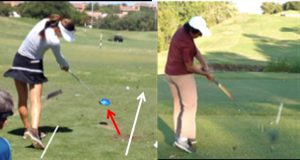
Compare the impact positions above: the highly athletic golfer on the left has both hips and shoulders already open to the target. In contrast, the golfer on the right has shoulders that have just reached square, while the hips sit only slightly open. Notice that, because of the pre-swing torso rotation away from the target, the hips have still rotated a long way — simply in a more useful direction and sequence.
As soon as the downswing begins, the strongly stretched core muscles unwind much like a coiled spring releasing. The trick, above all, is arranging your setup so that this powerful rotation helps rather than hinders impact. The only reliable solution is positioning the body so the rotating pelvis and torso are just slightly open while the lagging shoulders remain square or closed — allowing the club to track the target line a little longer instead of swinging drastically inside it.
How to Minimize Cosine Factor Loss in Your Downswing
Because this process unfolds in a specific, sequential order, it helps to break it into clear steps. Follow these in sequence to start recovering the swing force the cosine factor would otherwise waste:
- Set a pre-swing rotation away from target. Before you start the downswing, rotate your pelvis and torso slightly away from the target at address so your body isn’t starting from a neutral or already-open position.
- Lead the downswing with your hips, not your shoulders. Allow your hips to rotate from closed toward square first, while consciously keeping your shoulders and arms passive during this initial transition move.
- Keep your shoulders square or closed through impact. Resist the urge to “clear” your shoulders early; letting them lag behind the hips keeps the clubhead traveling along the target line longer instead of cutting inside.
- Extend the clubhead down the target line after contact. Focus on feeling the clubhead chase the target for a brief moment after striking the ball, rather than immediately pulling it around your body.
- Review your impact position on video. Record yourself from down-the-line and compare your hip-and-shoulder relationship at impact to elite golfers, checking whether your hips are open while your shoulders remain closer to square.
The Cosine Principle and Spinal Injury Risk
The body positions tied to the cosine factor don’t just affect distance — they matter for your long-term health, too. Specifically, peer-reviewed biomechanics research shows that slight spinal compression from forward bending, when combined with side-bending and rotation, can produce a wide variety of spinal injuries. In other words, the same early-rotation swing fault that wastes your cosine factor is often the very same fault that places excess shear and compressive load on the lower back.
Consequently, correcting your sequencing to reduce cosine-related power loss frequently produces a secondary benefit: a smoother, less injurious loading pattern on your spine. This is one more reason the fix is worth the practice time it takes to learn.
Cosine Factor vs. X-Factor, Ground Reaction Force, and the Baseball Pitch
The cosine factor is often confused with other power-generation concepts in golf instruction, so it’s worth drawing clear distinctions. For example, the so-called “X-Factor” describes the separation angle between the hips and shoulders at the top of the backswing, which is a different (and, as we explain in our article debunking the X-Factor myth, often overstated) idea entirely.
Similarly, ground reaction force describes how pressure against the ground through your feet gets converted into rotational power — a related but separate topic covered in detail in our piece on ground reaction forces in the golf swing. In contrast, the cosine factor is strictly about what happens to force after it has been generated — specifically, how much of it actually points where you need it to go.
Interestingly, throwing and pitching motions deal with the same directional-efficiency challenge. If you’d like to see how this plays out in another sport, our comparison of the baseball pitch versus the golf swing explores how both motions rely on sequential rotation to direct force efficiently toward a target.
Frequently Asked Questions About the Cosine Factor
What is the cosine factor in golf?
The cosine factor is the physics principle explaining how much of your applied force actually moves the golf ball toward your target, based on the angle between your swing path and your target line. The closer that angle is to zero, the more useful force reaches the ball; the larger the angle, the more force is wasted.
Why does my ball still go straight if I’m losing force to the cosine factor?
Direction and distance are separate outcomes. A swing can produce a straight ball flight while still losing significant power to the cosine factor, because the wasted force typically bleeds off vertically or into the ground rather than curving the ball sideways. However, that lost power still shows up as reduced carry distance and a lower, flatter trajectory.
How much distance can the cosine factor cost a golfer?
Because even a modest angle between swing direction and target line meaningfully reduces the cosine value, golfers with excessive early rotation routinely lose both ball speed and the steeper, more efficient launch angle that maximizes carry. In practical terms, correcting this sequencing fault is one of the few “free” distance gains available without adding any extra physical effort.
Does the cosine factor affect short game shots like putting and chipping?
Yes, though to a smaller degree, since shorter swings generate far less overall force to lose in the first place. Even so, the same directional-efficiency principle applies to short shots, which is why solid face-to-path alignment still matters around the greens. For a full breakdown of improving contact and control on the shortest shots, see our guide on how to putt better.
Can fixing the cosine factor reduce my risk of back injury?
Potentially, yes. Since the early hip-and-torso rotation that wastes cosine-related force often involves combined spinal bending and twisting, correcting that sequencing can also reduce the compressive and rotational load placed on your lower back during the swing.
What’s the difference between the cosine factor and the X-Factor in golf?
The X-Factor refers to the angular separation between hips and shoulders at the top of the backswing, while the cosine factor refers to how efficiently the force generated during the downswing is actually directed at the ball. They are related to swing mechanics but measure completely different things.
Conclusion: Mastering the Cosine Factor for Longer, Straighter Drives
Ultimately, the cosine factor explains a problem almost every golfer has but few ever hear named: force applied at the wrong angle is force wasted, no matter how much effort goes into the swing. As we’ve seen, correcting your sequencing — starting with a pre-swing rotation away from the target, leading with the hips, and keeping the shoulders square through impact — allows the clubhead to track the target line longer and convert more of your effort into useful ball speed. In addition, this same fix tends to reduce harmful spinal loading, making it a rare case where more distance and better health point in the same direction. Above all, remember that the cosine factor rewards precision of direction, not just quantity of effort — master that distinction, and longer, straighter drives follow naturally.