

Biomechanically optimized golf swing training is a coaching approach that shapes your swing around how your body actually moves, using motion analysis, physics and anatomy. As a result, you can build power, accuracy and consistency without forcing your body into positions it cannot handle. This guide explains how it works, what it involves and how to start.
Quick answer: Biomechanically optimized training measures your movement, finds where energy is lost or stress builds up, and then redesigns the swing for efficiency and safety. It suits serious golfers who want lasting gains rather than quick fixes.
What Is Biomechanically Optimized Golf Swing Training?
It is instruction built on biomechanics, the study of how forces act on and through the body. Instead of copying a tour player’s look, the coach asks what your joints, muscles and timing can do best. Then the swing is tuned to those answers.
Traditional lessons often start with positions and ball flight. In contrast, this method also studies the cause behind each flaw. For example, a slice may come from limited hip rotation rather than a poor grip.

A golfer at the top of the backswing, the point where good sequencing begins.
Why Movement Science Matters for Competitive Players
At a high level, small inefficiencies decide scores. Therefore, a swing that wastes energy or strains the back will cost distance and reliability over time. Movement science removes guesswork from that problem.
The Kinematic Sequence
The kinematic sequence is the order in which body segments reach peak speed. In an efficient downswing, the pelvis peaks first, then the torso, then the lead arm, then the club. When the order breaks, speed leaks out and contact becomes less predictable.
Ground Forces and Rotation
Skilled golfers push against the ground to create rotation and speed. Consequently, coaches look at weight shift, balance and how the lower body starts the downswing. These details often explain why two golfers with similar strength hit the ball different distances.
Injury Prevention
Golf places repeated rotational stress on the lower back, hips and shoulders. Research summarized by sources such as the National Center for Biotechnology Information links the lower back to the most common golf injuries. A swing that spreads load across the body helps lower that risk.
How a Science-Based Swing Program Works
Most programs follow a clear process. Here is a simple version you can use to get started.
- Record your baseline swing. Film from face-on and down-the-line angles with a steady camera.
- Screen your physical capacity. Check hip rotation, thoracic mobility, balance and stability.
- Analyze sequencing and loading. Review how the body and club accelerate and where stress builds.
- Prioritize one or two changes. Practice them slowly before adding speed.
- Retest and refine. Film again every few weeks and compare with your baseline.
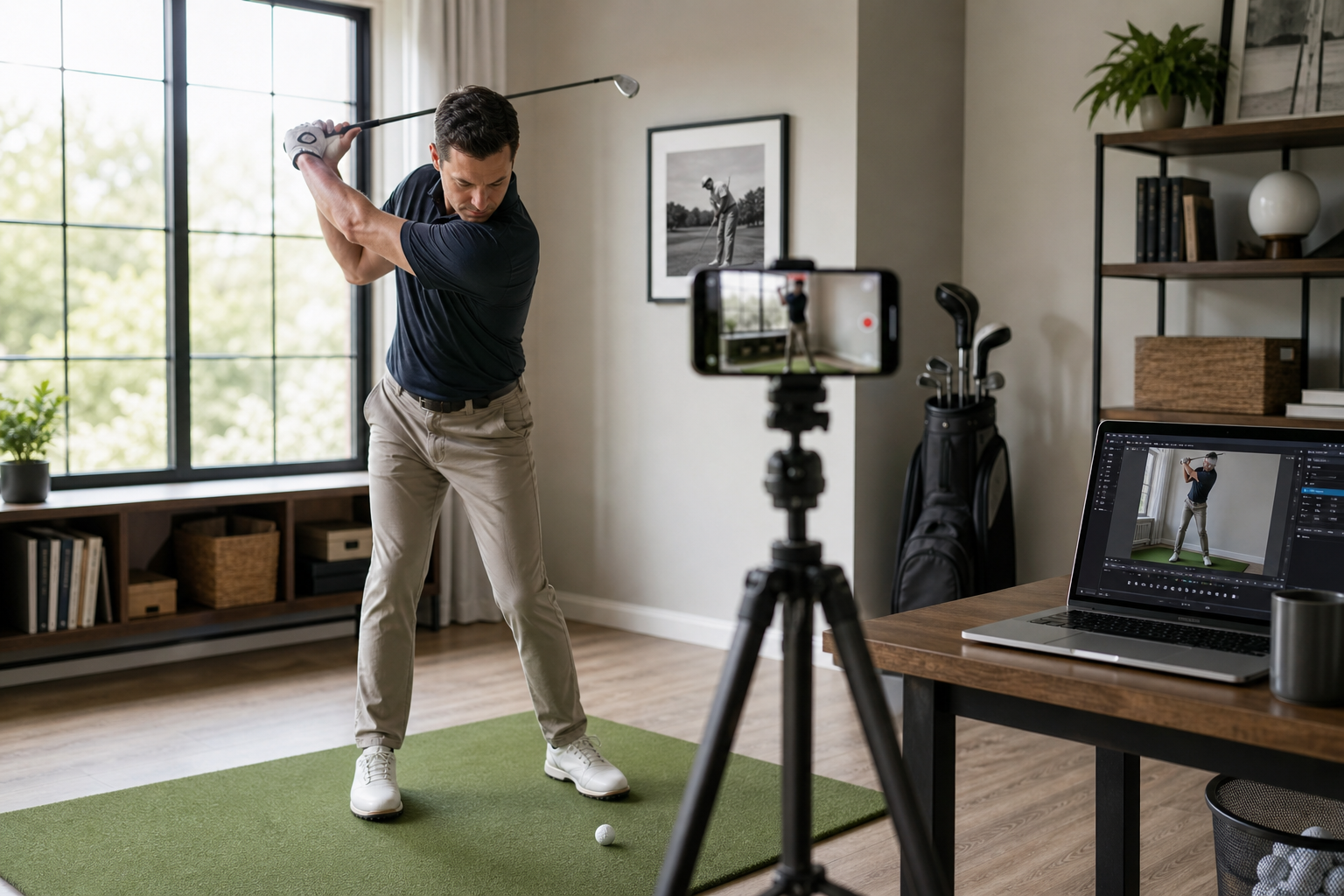
Simple video setups make remote swing analysis practical from anywhere.
Traditional Lessons vs. a Kinesiology-Based Approach
| Factor | Traditional lesson | Biomechanical training |
|---|---|---|
| Starting point | Ball flight and positions | Body capacity and movement data |
| Focus | Fixing visible flaws | Fixing root causes |
| Injury awareness | Often secondary | Built into the plan |
| Progress tracking | Feel and results | Repeated measurements |
Can You Learn Science-Backed Swing Mechanics Online?
Yes. Video, shared data and live feedback allow a specialist to analyze your motion from anywhere. In addition, you avoid travel and can work with a coach who is not nearby.
yourgolfguru.com offers online instruction for elite and competitive players. Lessons are developed and delivered by an LPGA Master Professional who also holds a PhD in kinesiology. The curriculum focuses on power, accuracy and consistency while prioritizing injury prevention.
To go deeper, see these related resources on science-backed golf swing coaching, advanced swing mechanics coaching, and scientific coaching for elite golfers online. If you prefer a concentrated format, read about intensive golf training or review advanced golf swing techniques.
Choosing a Qualified Golf Biomechanics Coach
Credentials matter because movement analysis is easy to oversimplify. Look for recognized teaching certification, such as that offered through the LPGA, along with formal education in movement science. Furthermore, ask how the coach measures progress and adapts plans to your body.
Avoid common mistakes. These include copying a tour pro, changing too many things at once, and ignoring physical limits.
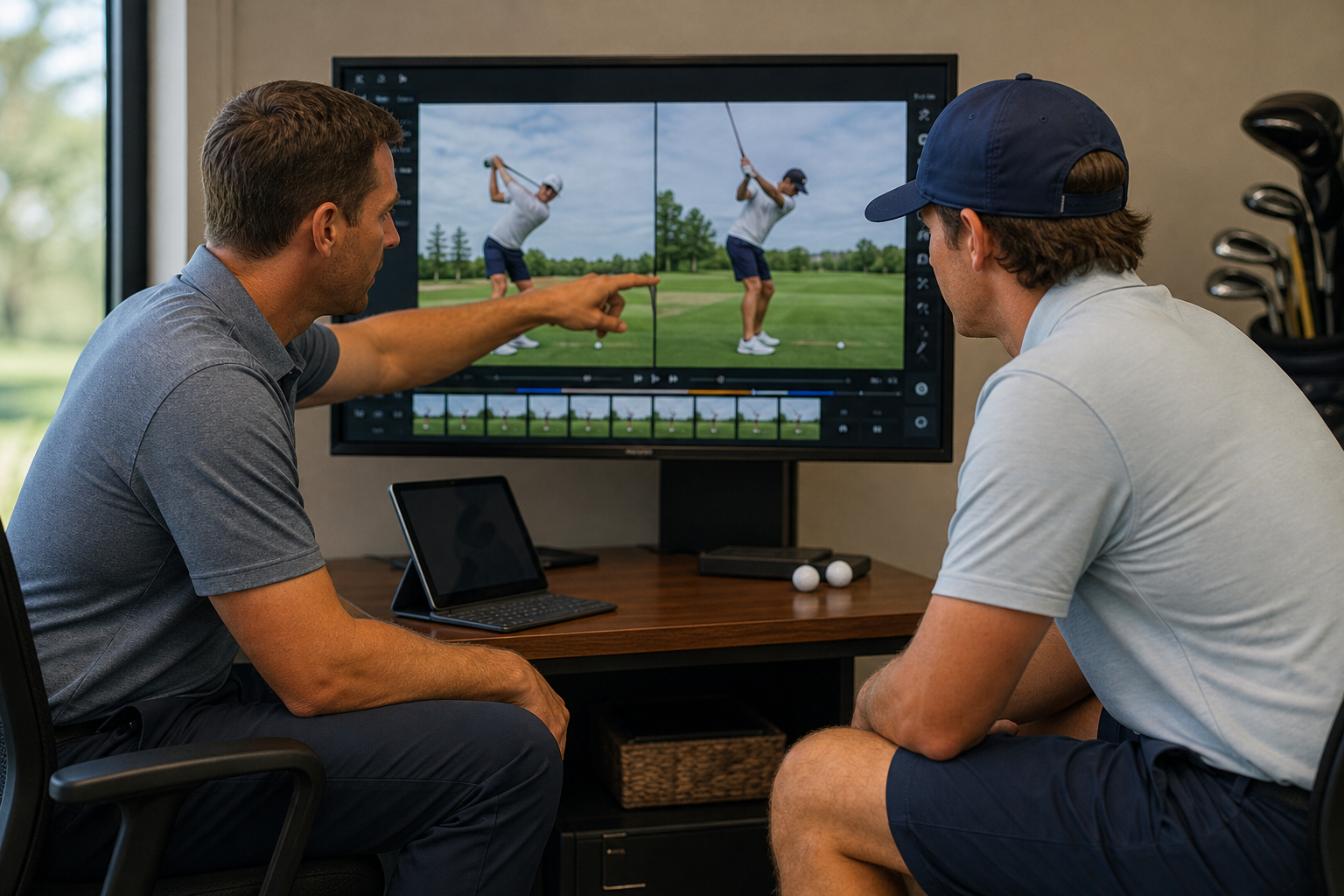
Reviewing frames side by side helps connect movement data to better shots.
Frequently Asked Questions
What does biomechanically optimized mean in golf?
It means your swing is built around how your body actually moves, using anatomy, physics and motion analysis. The goal is efficient power with less strain on joints and muscles.
Who benefits most from biomechanically optimized golf swing training?
Competitive amateurs, collegiate players and aspiring professionals benefit most. Golfers dealing with recurring aches also gain from a safer movement pattern.
Can biomechanically optimized golf swing training be done online?
Yes. Video analysis, shared data and live feedback let a coach assess your motion remotely. Online delivery also removes travel and gives access to specialists outside your area.
How is this different from traditional golf lessons?
Traditional lessons often focus on positions and ball flight. Biomechanical training also examines how forces, sequencing and your physical capacities create those positions.
What is the kinematic sequence?
It is the order in which body segments reach peak speed during the downswing. An efficient order runs from hips to torso to arms to club.
Will it reduce my risk of golf injuries?
It can lower risk by reducing harmful loading patterns, especially in the lower back. No program can eliminate injury entirely, so pair it with sound conditioning and medical advice when needed.
How long does it take to see results?
Many golfers notice better contact within a few weeks. Lasting changes to movement patterns usually take several months of consistent practice.
Do I need expensive equipment?
No. A smartphone video, a clear camera angle and your usual clubs are enough to start. Launch monitors add useful data but are not required.
Will my swing look different afterward?
It may, but only where your body or results call for it. Good coaching keeps what already works and changes what limits you.
How much does biomechanically optimized golf swing training cost?
Prices vary by coach, format and program length. Ask any provider what is included, such as video review, follow-ups and practice plans, before you compare.
What are common mistakes when starting?
Common mistakes include copying a tour player’s look, changing too much at once and ignoring physical limits. Another is skipping regular video checks.
How do I choose a qualified coach?
Look for recognized teaching credentials, formal education in movement science and clear evidence of how they measure progress. Ask how they adapt plans to your body.
Conclusion
Biomechanically optimized golf swing training replaces guesswork with measurement. It studies your movement, finds the root cause of faults and builds a swing that is powerful, repeatable and kinder to your body. If you are a serious player, start with a baseline video and a qualified coach, then track progress over time.