

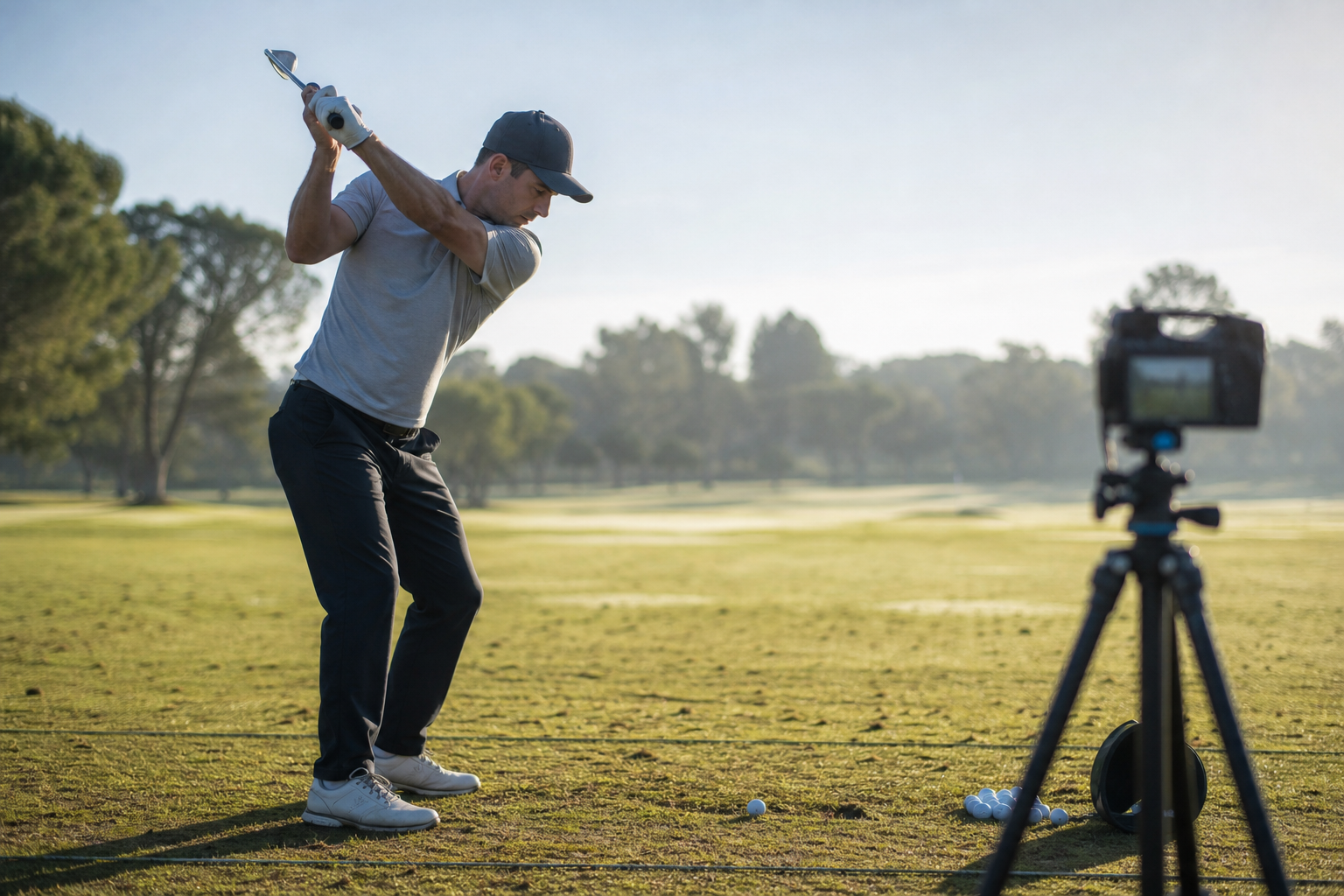
Science backed golf swing optimization is the practice of improving your swing with measured data, biomechanics and movement science instead of trial and error. For serious players, it turns vague feelings into specific changes that can be tested. This guide explains how it works, what to measure and how to begin.
Quick answer: Science backed golf swing optimization measures how your body and club move, finds the biggest energy leaks or injury risks, and fixes them one at a time. As a result, you gain power, accuracy and consistency while protecting your body.
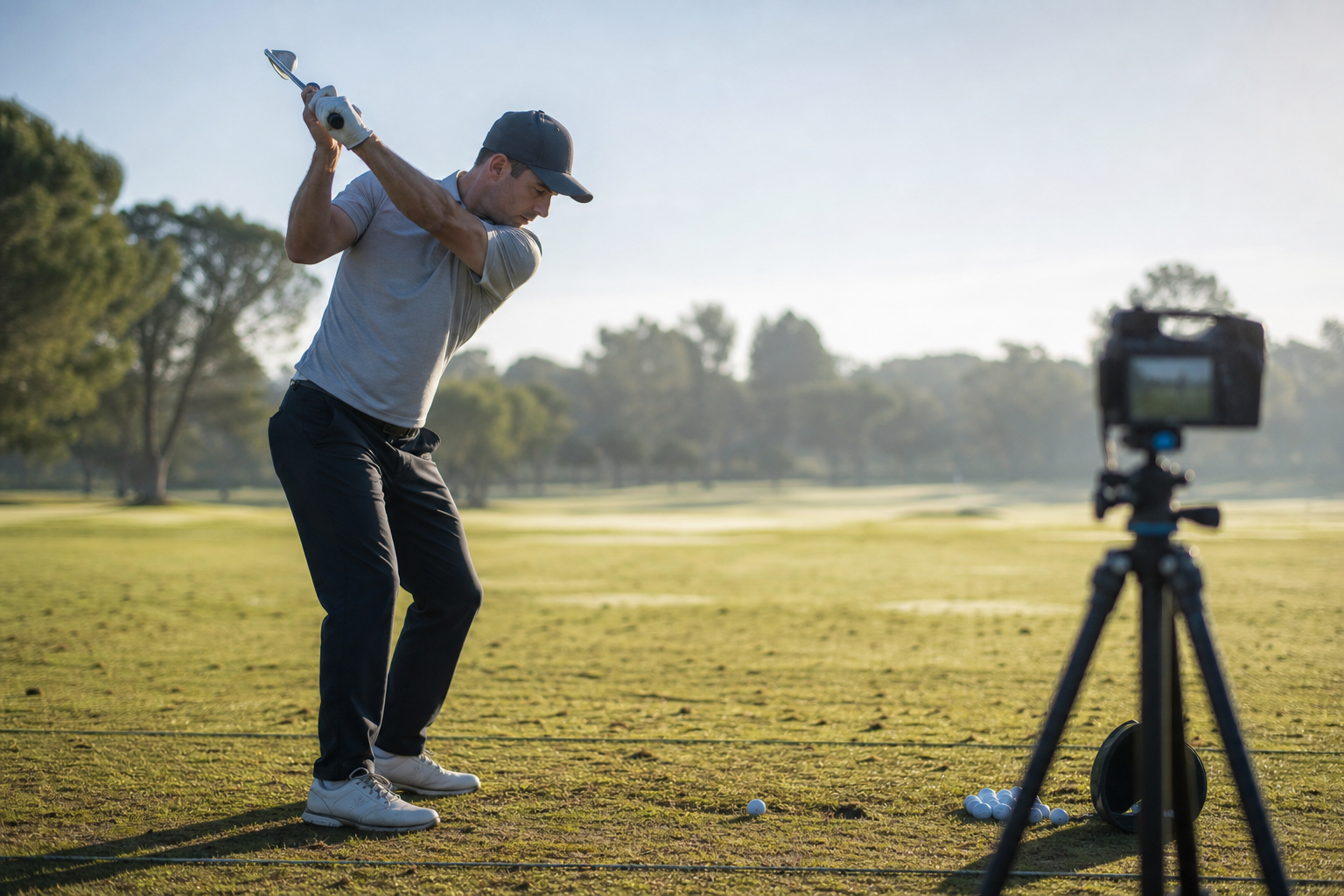
Video capture from set angles is the first step in science backed golf swing optimization.
What Is Science Backed Golf Swing Optimization?
It is a coaching method that uses biomechanics, the study of how forces act on the body, to shape your swing. Kinesiology, the science of human movement, adds knowledge about muscles, joints and injury risk. Together, they explain why a swing works or fails.
In contrast, traditional tips often target the visible fault. A science-based coach asks what causes it. For example, a loss of posture may come from limited hip rotation, not poor habits.
The Biomechanics Behind a Better Swing
Kinematic Sequence and Energy Transfer
The kinematic sequence is the order in which your pelvis, torso, arms and club reach peak rotational speed. Efficient swings move from the ground up. Each segment speeds up, then slows, passing energy to the next one.
When the order breaks, power leaks. Furthermore, compensations appear, such as flipping the hands to save the strike.
Ground Force and Rotation
Skilled players push into the ground and rotate against a stable lower body. This creates speed without extra arm effort. Likewise, good rotation spreads load across the body instead of stressing the lower back.
Physical Limits Shape the Ideal Swing
No single model fits every body. A player with limited shoulder mobility needs a different solution than a highly flexible one. Therefore, screening matters as much as video.
What Data Should You Measure?
Start with a few reliable numbers. Too much data creates noise.
| Measure | What it reveals |
|---|---|
| Swing video (two angles) | Posture, sequence, club path |
| Ball speed and carry | Strike quality and power |
| Face angle and path | Cause of curve and misses |
| Mobility screen | Physical limits and injury risk |
Organizations such as the Titleist Performance Institute popularized linking physical screening to swing faults. The LPGA also maintains teaching standards for its professionals.
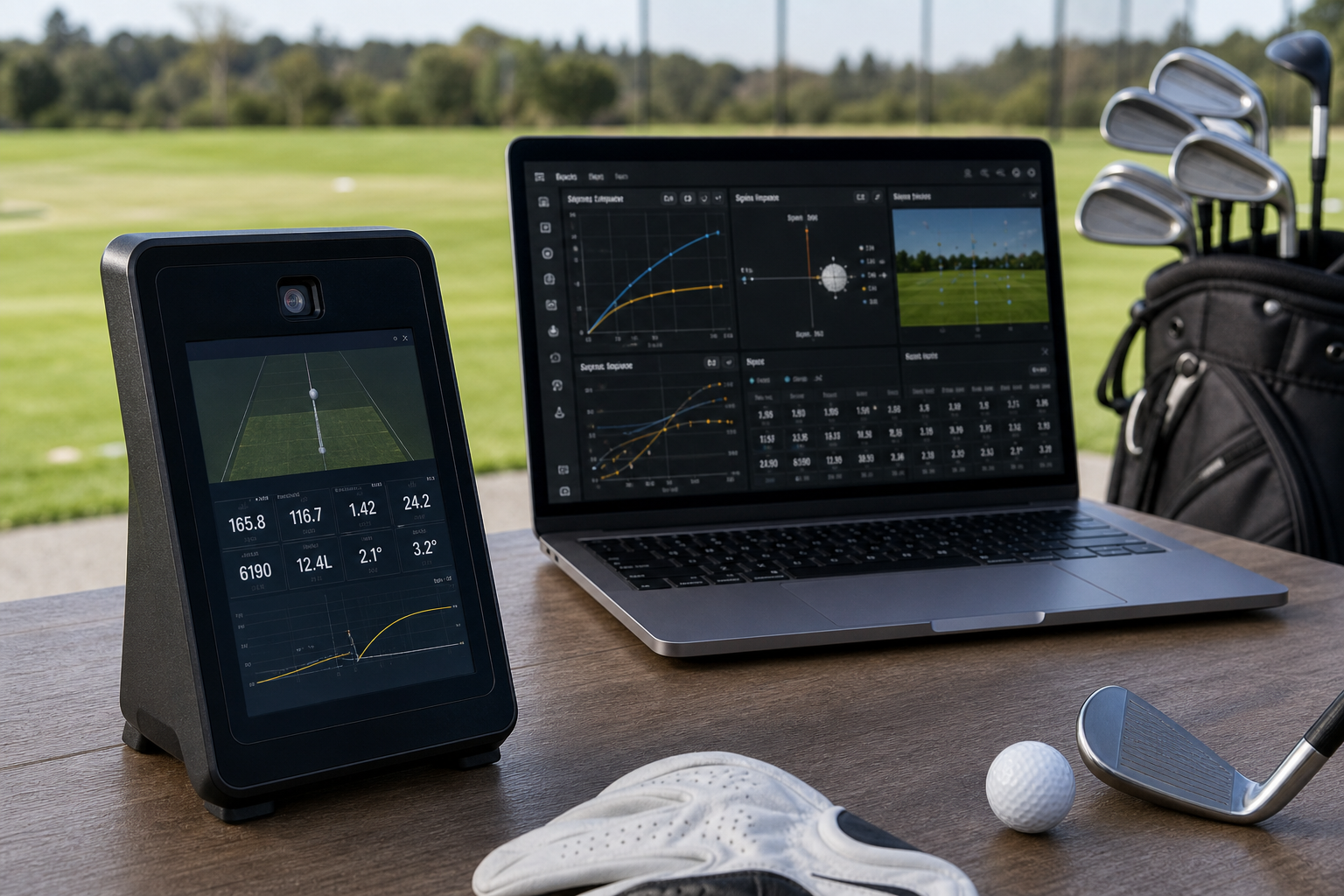
Ball flight numbers help confirm whether a swing change is working.
How to Start: A Step-by-Step Process
- Record baseline video. Film face-on and down-the-line views with a stable tripod and the same club.
- Capture ball data. Log at least ten shots to see your true pattern.
- Screen your mobility. Test hip, spine and shoulder rotation.
- Choose one priority change. Pick the fix with the largest effect on power or accuracy.
- Retest and adjust. Repeat the capture after several weeks and compare.
Injury Prevention Is Part of Performance
The lower back is a common problem area for golfers. Poor sequencing and limited rotation can overload it. Consequently, an optimized swing should reduce harmful stress while it adds speed.
Healthy players practice more, and more quality practice leads to better results. Learn more in this science-based guide to golf performance.
Why Online Coaching Works for Elite Players
Remote lessons remove travel limits. Video, launch data and screening results can all be reviewed digitally. In addition, players can send practice clips between sessions and get feedback quickly.
yourgolfguru.com offers online instruction for competitive amateurs, collegiate players and aspiring professionals. Lessons come from an LPGA Master Professional who also holds a PhD in kinesiology. You can explore the approach through its science-backed elite swing coaching and advanced swing mechanics coaching.

Clear feedback on footage keeps each swing change focused and measurable.
Common Mistakes to Avoid
- Changing several things at once, which hides what worked.
- Copying a tour player’s look without matching their body.
- Ignoring mobility limits that cap your swing.
- Judging progress by one good round instead of trends.
For more on technique, see these biomechanics tips for pro golfers and this elite guide to ball striking.
Frequently Asked Questions
What does science backed golf swing optimization mean?
It means improving your swing using measured data and biomechanical principles instead of guesswork. Coaches use motion analysis, ball flight data and movement screening to guide each change.
Who benefits most from this approach?
Competitive amateurs, collegiate players and aspiring professionals benefit most. These players already have solid fundamentals and need precise, individual refinements.
What is the kinematic sequence?
The kinematic sequence is the order in which the pelvis, torso, arms and club reach peak rotational speed. An efficient sequence moves from the ground up and transfers energy to the clubhead.
Can online lessons really deliver biomechanical coaching?
Yes. Video from two camera angles, launch monitor numbers and movement screens can be reviewed remotely. A qualified coach can then build a plan and track progress over time.
How is this different from a standard golf lesson?
A standard lesson often targets a visible fault. A science-based lesson looks at why the fault happens, including mobility, strength and timing, and fixes the cause.
How long does it take to see results?
Many players notice better contact within a few weeks. Lasting changes to movement patterns usually take several months of consistent practice.
Does swing optimization help prevent injuries?
It can. Reducing harmful loads on the lower back, hips and shoulders lowers injury risk, especially for players who practice often.
What equipment do I need?
A smartphone or camera and a tripod are enough to start. A launch monitor adds useful data but is not required.
What are common mistakes when changing a swing?
Common mistakes include changing too many things at once and copying a tour player’s look. Ignoring physical limits is another frequent error.
Do I need to be physically fit first?
No, but your physical limits shape what swing is realistic. A screening shows which mobility or strength gaps to address alongside technique.
How much does a science-based program cost?
Cost varies by coach and format, so no single figure applies. Compare what is included, such as analysis depth, follow-up and credentials.
How do I choose a qualified coach?
Look for recognized credentials, relevant education and a clear method for measuring progress. Coaches with kinesiology training bring added depth to science backed golf swing optimization.
Conclusion
Science backed golf swing optimization replaces guesswork with measurement. Capture your baseline, respect your physical limits, change one thing at a time and retest. Done well, it builds power, accuracy and consistency while protecting your body. To see how this works in practice, visit yourgolfguru.com.