

Golf swing power and accuracy coaching is instruction that raises clubhead speed and tightens shot dispersion at the same time, using the mechanics of how your body moves. For serious players, distance without control rarely lowers scores. This guide explains how the coaching works, what to look for, and how to start.
Quick answer: Power comes from efficient sequencing of the legs, hips, torso, and arms. Accuracy comes from consistent clubface and path at impact. A good coach improves both by fixing the movement patterns that limit them, while protecting your body.
What Is Golf Swing Power and Accuracy Coaching?
It is a structured approach that treats distance and control as one problem. Instead of chasing speed alone, the coach measures how you create speed and how well you deliver the face to the ball. Then the plan targets the biggest limiter first.
At yourgolfguru.com, lessons are delivered online by an LPGA Master Professional who also holds a PhD in kinesiology. That pairing blends teaching experience with the science of biomechanics.

A competitive golfer rehearses a full backswing during golf swing power and accuracy coaching.
How Swing Biomechanics Builds Distance
Speed is not just arm strength. It is created through the kinematic sequence, in which the hips start the downswing, then the torso, arms, and club follow in order. Each segment adds speed to the next.
When that order breaks, energy leaks. For example, starting the downswing with the shoulders often costs speed and pushes the club outside the ideal path. As a result, many players swing harder yet gain little distance.
Ground force and rotation
Good players push against the ground to create rotation. Therefore, coaching often addresses weight shift, pelvis turn, and trunk stability before touching the hands.
Why Accuracy Depends on Delivery, Not Effort
Direction is mostly set by the clubface angle at impact, with path adding the curve. Strike location also matters, since off-center contact lowers speed and spreads shots. Consequently, accuracy work focuses on repeatable low-point control and face control.
In addition, tension is a hidden accuracy killer. A tight grip and rigid arms change timing from swing to swing. Coaches therefore teach rhythm and pressure checks alongside mechanics.
Injury Prevention Within Performance Coaching
Faster swings load the lower back, hips, and wrists. However, a kinesiology-based coach can spot compensations, such as limited hip rotation forcing the spine to twist too far. Fixing these patterns protects your body and supports long-term gains.
For general guidance on physical activity and safe training, see the CDC’s physical activity basics.
How Online Elite Golf Instruction Works
Remote coaching removes the need to travel. You send video and any launch data, and the coach returns analysis and drills. This format suits competitive amateurs, collegiate players, and aspiring professionals who need more advanced input than a local instructor may offer.
You can explore the approach in science-backed elite swing coaching and the broader golf performance optimization guide.
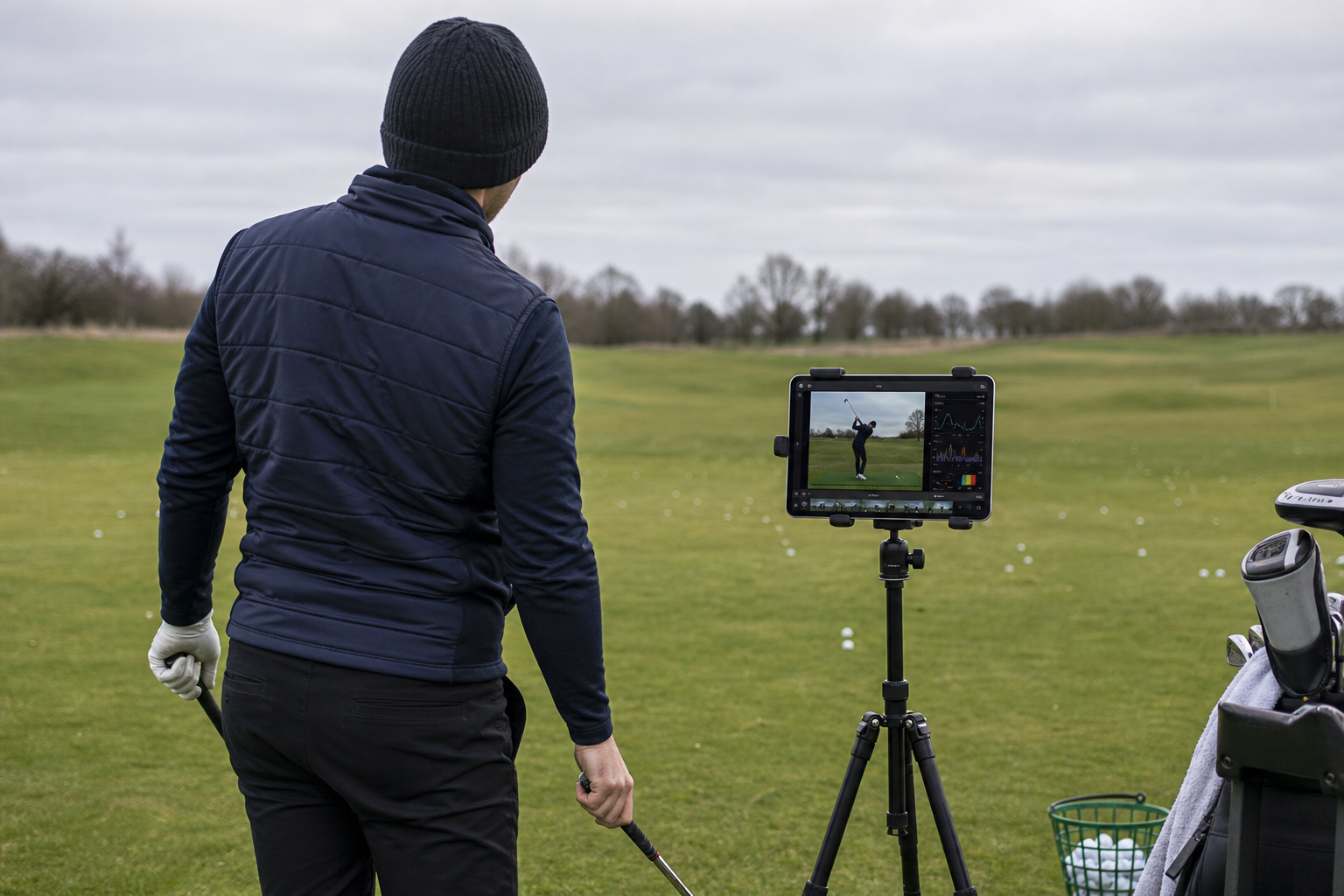
Video review lets a remote coach analyze mechanics from any location.
Steps to Build Your Power and Accuracy Plan
- Record your baseline: film face-on and down-the-line views, and note carry distance and dispersion.
- Identify the main limiter with your coach, whether mechanical or physical.
- Practice one targeted drill in short, focused sessions.
- Add mobility and strength work that supports the new movement.
- Retest after a few weeks and adjust the plan.
For drill ideas, try these elite swing drills for power and accuracy. Players aiming higher can also read about high-level training for competitive golfers.
What to Look for in a Performance Coach
| Criterion | Why it matters |
|---|---|
| Verifiable credentials | Confirms training in teaching and movement science |
| Measured progress | Shows gains in speed, strike, and dispersion |
| Injury awareness | Protects your body while speed increases |
| Clear feedback | Gives you specific drills, not vague tips |
Credentials from organizations such as the LPGA are one way to verify teaching standards.
Frequently Asked Questions
What is golf swing power and accuracy coaching?
Golf swing power and accuracy coaching is instruction that improves clubhead speed and shot dispersion together. It uses movement science to fix the mechanics that limit both.
Can online lessons really improve my swing?
Yes, when the coach reviews video of your swing and gives specific, measurable feedback. Remote lessons work best for players who can film regularly and practice with intent.
Who benefits most from this type of coaching?
Competitive amateurs, collegiate players, and aspiring professionals benefit most. These players already have solid fundamentals and need precise refinement.
How long does it take to see results?
Small changes in contact and start line can appear within a few sessions. Lasting changes to speed and consistency usually take several weeks of deliberate practice.
Does more power hurt accuracy?
Not necessarily. Power gained through better sequencing and efficient contact often improves accuracy, while power forced through tension usually hurts it.
What role does kinesiology play in a golf swing?
Kinesiology is the study of human movement. It explains how your joints, muscles, and body segments should work together to produce speed without excess strain.
How does coaching reduce golf injuries?
A coach can spot movement patterns that overload the lower back, hips, elbows, or wrists. Correcting them lowers repeated stress on those areas.
What equipment do I need for a remote lesson?
You need a smartphone or camera, a tripod, and a place to hit shots. A launch monitor is useful but not required.
How is elite coaching different from a standard lesson?
Elite coaching goes deeper into mechanics, data, and physical capacity. It targets small, measurable gains instead of general fixes.
What are common mistakes when chasing distance?
Common mistakes include swinging harder with tension, ignoring sequencing, and skipping mobility work. These often cost accuracy and raise injury risk.
How often should I practice between lessons?
Short, focused sessions several times per week usually work better than one long session. Practice the specific drill your coach assigned.
How do I choose a golf coach for performance gains?
Look for verifiable credentials, a clear method, and proof that the coach measures progress. Education in biomechanics is a strong plus.
Conclusion
Golf swing power and accuracy coaching works because it treats speed and control as linked outcomes of sound movement. Better sequencing adds distance, a repeatable delivery tightens dispersion, and smart physical preparation keeps you healthy. If you are ready to refine your game with kinesiology-based instruction, visit yourgolfguru.com to learn more. You can also read the story behind this related feature.