Why does the same swing advice work for one golfer and not another?
A self-paced online course on the science beneath the golf swing, for any golf professional (swing coach, fitness expert, serious player or other golf-science enthusiast) who wants to make better-informed teaching decisions.
This course will help you answer them, with science rather than habit or hearsay.
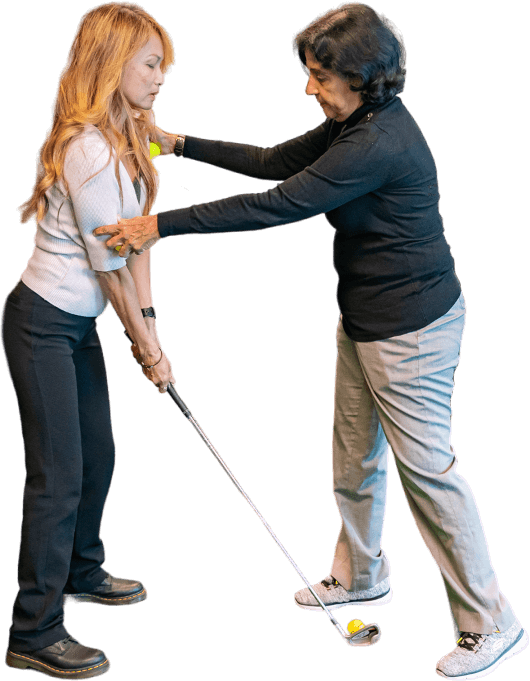
This course teaches you to test that assumption before you pass it on to a student. Consider three commonly taught concepts:
What does the science say?
Is there any published research on the topic?
What actually makes scientific sense?
These are 8–9 short excursions into the science that supports each ‘hole’, including:
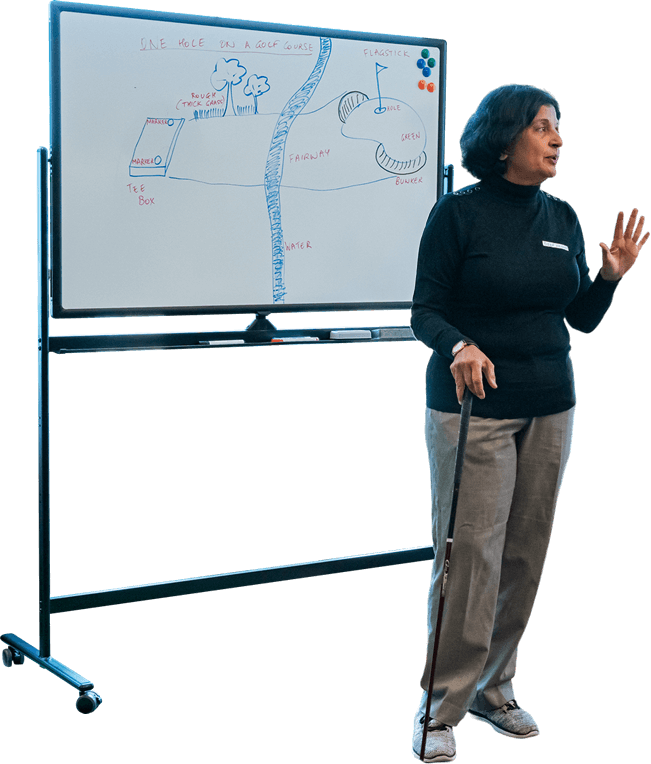
Each gopher hole sits at the point in the course where it is most useful, so you learn the science at the moment you need it.
…and for anyone curious about why the swing works the way it does.
Who make movement decisions every day.
Whose performance is their livelihood.
And anyone curious about the science of the golf swing.
You do not need a background in anatomy, biomechanics or research. Everything you need is taught inside the course, starting from the basics and building step by step through the Gopher Holes. If you can watch a golfer swing and ask “why?”, you are ready to begin.
Other courses cover biomechanics, fitness or mental performance, and they have real value. This one focuses on the actual positions and movements of the golfer. Three ideas run through it.
The course stays with the question every instructor faces on the lesson tee: what should this golfer’s body be doing, and why?
You begin to ask whether a suggested position, movement or swing thought makes scientific sense, instead of simply accepting it because it is widely taught.
A golfer’s joints have to be positioned and moved in ways that are consistent with what they are actually designed to do. When they are not, the body may not work together effectively, which contributes to inconsistency and, occasionally, injury.
Everything else in the swing must follow from this most important aspect of human movement.
The volume of published research on the body and the golf swing is enough to leave anyone confused. I have identified the most relevant research for the golf swing, so you do not have to sort through it alone. Because golf-swing research on its own is often inadequate, the material comes from four places:
Just as important, you will learn to examine research for yourself, so that you are never simply accepting anyone’s conclusions, including mine.
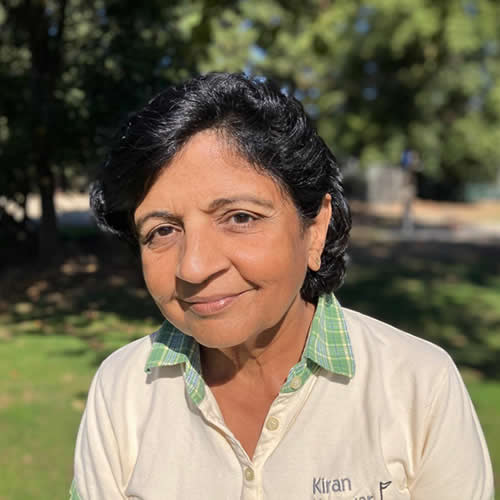
Dr. Kiran Kanwar is one of the game’s foremost experts in science-based instruction. A former winner of the National Championship (the All India Ladies Open Amateur Golf Championship) and India’s first female golf instructor, she is the only person known to have both developed, and academically researched, a golf swing system.
Dr. Kanwar holds an M.S. in Sports Science and Nutrition from a chiropractic school and a Ph.D. in Kinesiology (Biomechanics, Anatomy, Motor Control) that includes a minor in Anatomy from a medical school. She served as Project Manager and Chief Biomechanist for the R&A-funded “Golf for Healthy Aging” study at the University of Southern California’s Division of Biokinesiology and Physical Therapy. She has written a “Golf Science” column for Avid Golfer Magazine for over 10 years, and she currently chairs the Golf Program at Stanton University in Anaheim, California, where she also designed the university’s entire golf curriculum and course content.
Following the webinar, participants said:
The course offered fresh perspectives on fundamental areas such as grip, alignment, and weight transfer; the specific techniques for correcting the movements of older players were particularly enlightening. Reflecting on our daily instruction, we realized that coaches sometimes fixate on the mechanics—such as the ‘correct’ form of spinal rotation—while overlooking crucial factors like individual perspectives, body flexibility, natural twisting ranges, and the student’s own proprioceptive sense of generating power. We had a tendency to impose a standardized set of movements on everyone.
MemberChina LPGAAs the academy’s founder, I shared the concepts and content I learned with our coaching team yesterday, and everyone found it highly inspiring. Moving forward, we plan to adjust our teaching approach: we will learn to assess each student’s physical condition and prioritize guiding them to sense how their body generates force and tension. By tailoring instruction to individual flexibility rather than rigidly replicating fixed poses, we aim to address current shortcomings and further elevate the overall quality of our teaching.
Academy FounderChina LPGAWork through the course around your teaching schedule.
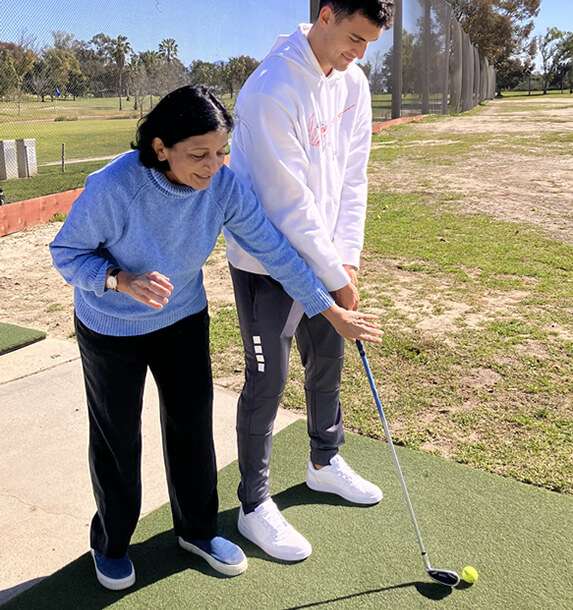
Available early 2027. Register your interest today.
Register your interest