
Golf swing injury rehab exercises are targeted movements that rebuild mobility, strength and control after a golf-related injury, so you can return to full swings safely. Done well, they restore the body’s ability to rotate and absorb force. Done poorly, they can aggravate the problem. This guide explains the stages, the key movements and the warning signs.
Quick answer: Start with a diagnosis. Then calm the pain, restore rotation, add strength, and return to swinging in small steps. Progress only while pain stays stable.
What Are Golf Swing Injury Rehab Exercises?
They are graded exercises that help injured tissue heal and adapt. The goal is not just less pain. It is a body that can handle the rotation, speed and repetition of a golf swing again.
These exercises supplement medical care. They do not replace it. A physician or physical therapist should confirm what is injured first.
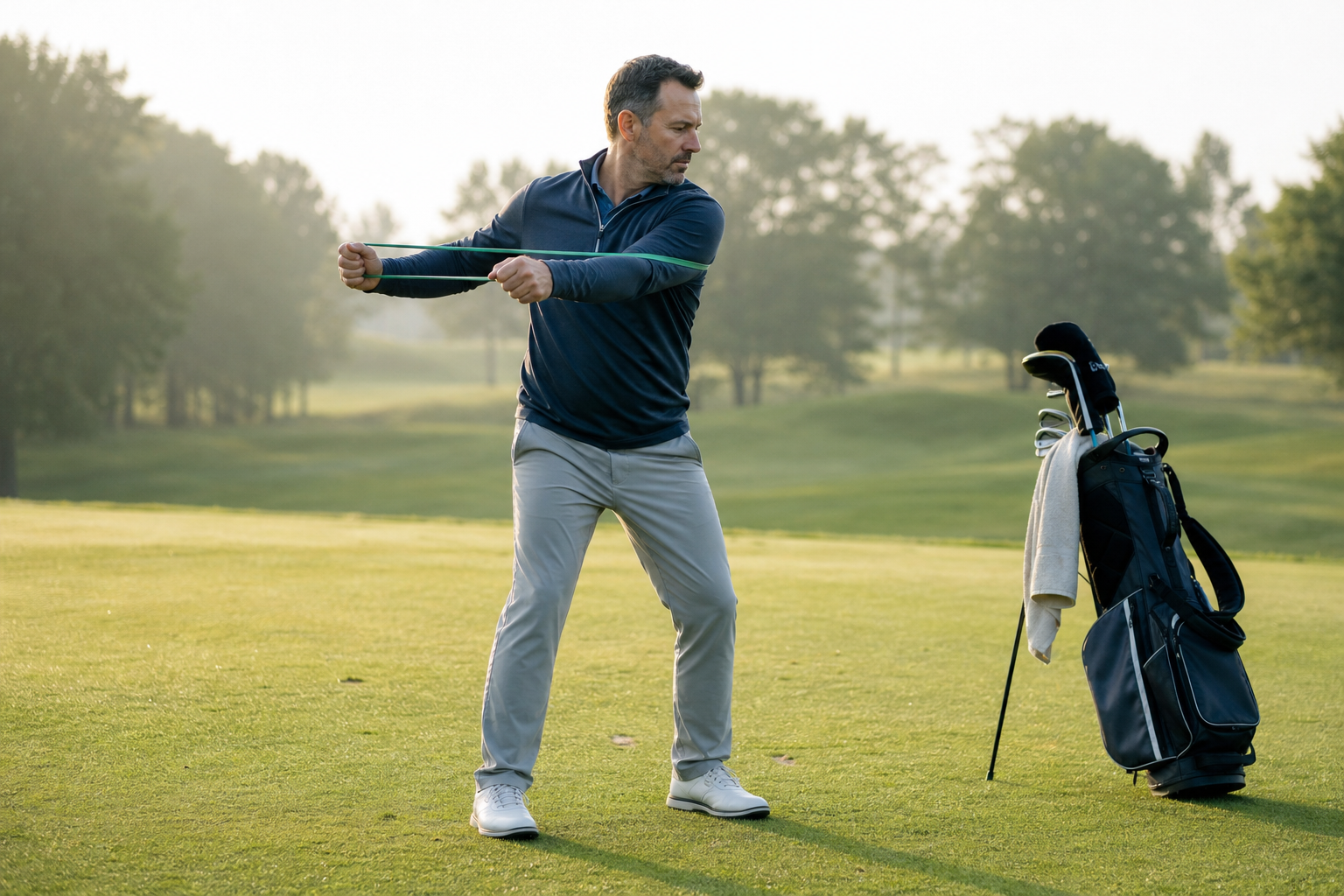
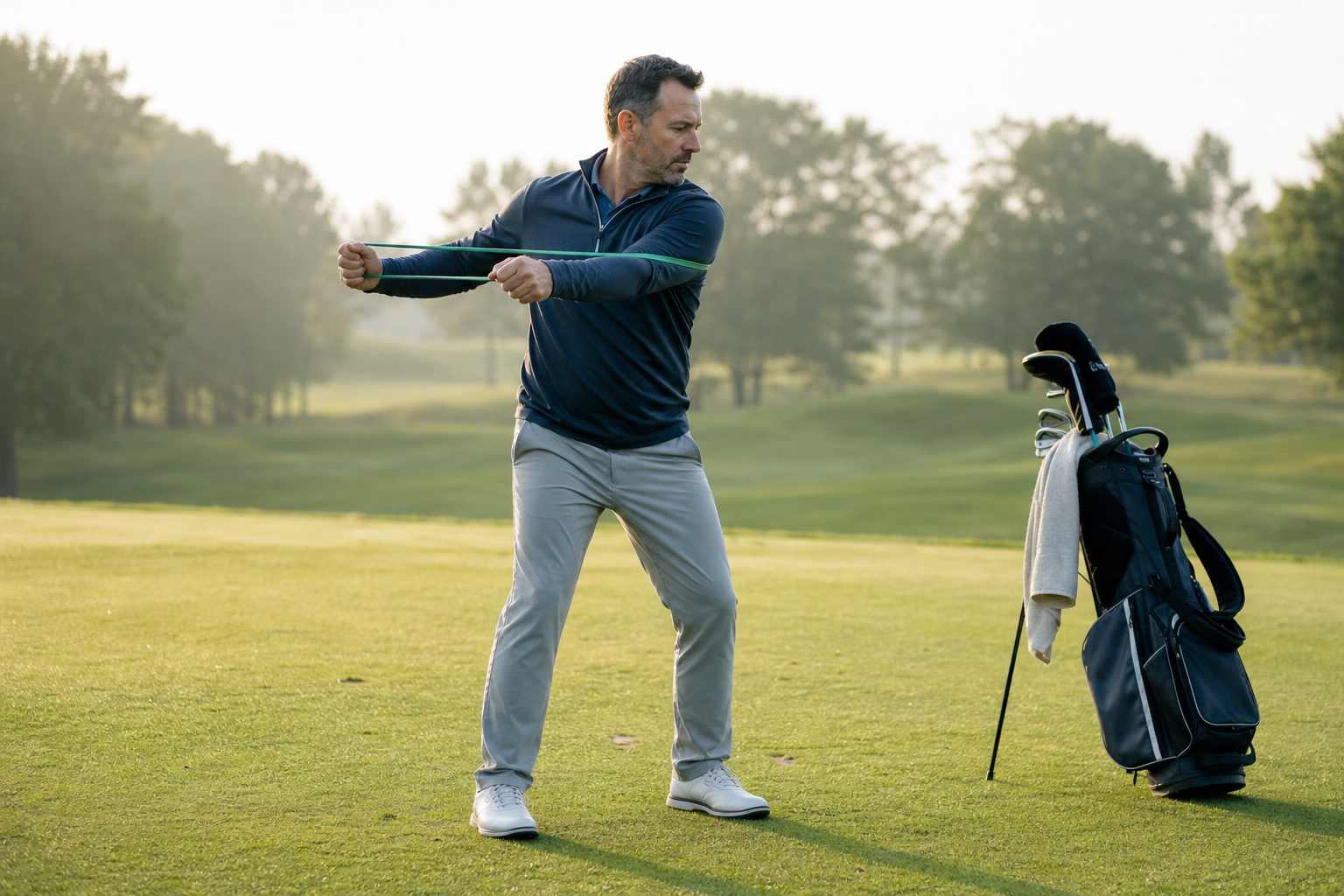
A controlled band rotation is a common step in golf swing injury rehab exercises.
Why Golfers Get Injured
The swing is a fast, repeated rotation. Therefore, small restrictions in the hips or upper back often push extra load into the lower back, elbows or wrists. The Centers for Disease Control and Prevention also notes that physical activity carries injury risk when conditioning is poor.
Technique matters too. For example, forced rotation or early extension can overload the spine. Our article on the anatomy of the golf swing shows how the body moves through each phase.
Step-by-Step Recovery Process
- Get a diagnosis. See a clinician to identify the injured tissue and which movements are safe.
- Calm the pain. Use relative rest and gentle, pain-free motion such as pelvic tilts.
- Restore mobility. Rebuild thoracic and hip rotation with slow, controlled drills.
- Build strength. Add glute, core and forearm work two or three times weekly.
- Return to swinging. Begin with chips and half swings, then build to full swings.
Core Rehab Exercises by Body Area
The table below lists common movements. Your clinician may change them to fit your injury.
| Area | Example exercises | Purpose |
|---|---|---|
| Lower back | Bird dog, dead bug, side plank | Core stability |
| Hips | Glute bridge, clamshell, 90/90 rotation | Rotation and power base |
| Upper back | Open book, thoracic extension | Spine rotation |
| Shoulder | External rotation with band, scapular rows | Joint control |
| Elbow and wrist | Wrist curls, slow eccentric forearm work | Tendon tolerance |
Lower Back Pain
Lower back pain is the most frequent golf complaint. Focus on trunk stability first. Then add hip mobility so the spine does not do the hips’ job.
Elbow and Wrist Pain
Tendon problems respond to gradual loading. In addition, check grip pressure and impact mechanics, since a tight grip can raise forearm strain.
Returning to Full Swings Safely
Treat the return as a ramp. Begin with putting and short chips, then move to half swings. Next, add a few full swings per session. If pain rises the next day, step back a level.
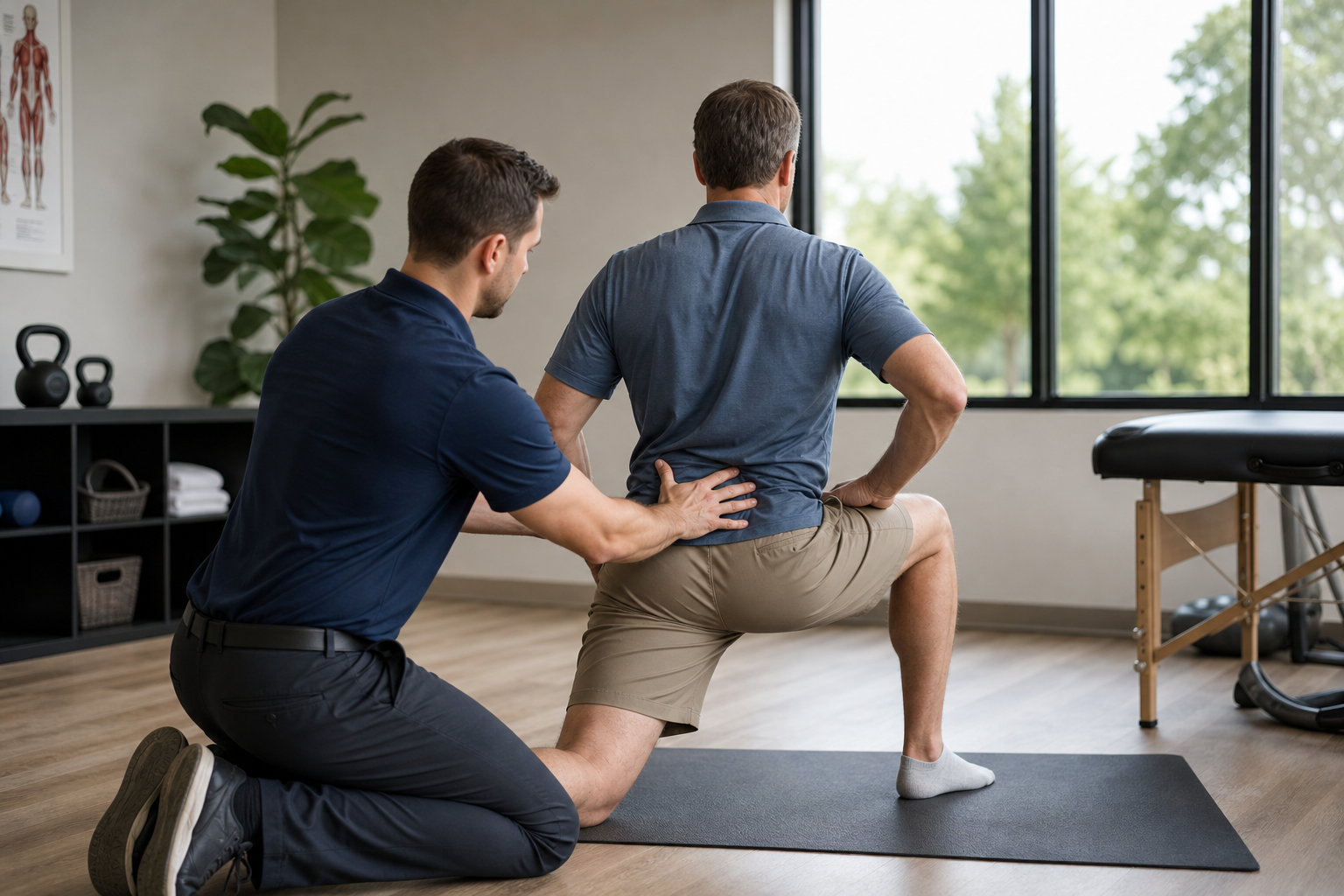
Hip mobility work often supports a safe return to the course.
Fixing the Swing That Caused the Injury
Rehab fixes the body, but a flawed pattern can bring the injury back. For that reason, biomechanical coaching is a useful partner. yourgolfguru.com offers online instruction from an LPGA Master Professional with a PhD in kinesiology, built around power, accuracy and injury prevention for competitive players.
To go further, read about biomechanical coaching for injury prevention, these injury prevention exercises for a safer swing, and how to train your swing without injury. You can also explore injury prevention golf coaching.
Warning Signs to Stop and Seek Care
- Sharp pain that worsens during an exercise
- Numbness, tingling or weakness in an arm or leg
- Night pain or swelling that does not settle
- Pain that grows week after week instead of easing
For general background on how therapists approach recovery, see physical therapy on Wikipedia.
Frequently Asked Questions
What are golf swing injury rehab exercises?
Golf swing injury rehab exercises are targeted movements that restore mobility, strength and control after a golf-related injury. They are used alongside professional medical guidance.
When can I start rehab exercises after a golf injury?
Gentle, pain-free movement often begins within days, but timing depends on the injury. Ask a clinician before you start.
Which golf injuries are most common?
Lower back pain is the most common, followed by elbow, shoulder, wrist and knee problems. Repetitive swinging and limited mobility are frequent contributors.
How long does golf injury rehab take?
Mild strains may settle in a few weeks, while tendon or joint problems can take months. Your clinician can give a realistic timeline for your injury.
Can I keep playing while I rehab?
Sometimes, with modified practice such as putting or short chipping. Full swings should wait until your clinician approves them.
Is rehab different from injury prevention exercises?
Yes. Rehab treats an existing problem with graded loading, while prevention builds resilience in healthy tissue. Many movements overlap, however.
Do I need equipment for golf rehab exercises?
Most programs need only a resistance band, a light dumbbell and a mat. Many early drills use body weight alone.
How often should I do rehab exercises?
Mobility work is often done daily, and strength work two to three times per week. Follow the schedule your clinician sets.
Should rehab exercises hurt?
Mild, short-lived discomfort can be acceptable, but sharp or worsening pain is a signal to stop. Report persistent pain to your clinician.
Can swing mechanics cause injuries?
Yes. Excess lateral bend, early extension or forced rotation can overload the spine and joints. Biomechanical coaching can reduce that stress.
What mistakes slow golf injury recovery?
Common mistakes include returning to full swings too soon, skipping strength work and ignoring pain trends. Skipping a proper diagnosis is another.
How does a swing coach help after injury?
A coach trained in biomechanics can adjust your technique to lower stress on the injured area. This complements, but does not replace, medical care.
Conclusion
Golf swing injury rehab exercises work best as a staged plan: diagnose, calm pain, restore mobility, build strength, then return gradually to swinging. Pair that plan with swing mechanics that reduce stress on the injured area, and monitor your pain trend at every step. Patience now protects your long-term game.