


Golf swing power training online is a remote coaching approach that builds clubhead speed through better mechanics, targeted strength and mobility work, and measured speed practice. For competitive players, it offers expert feedback without travel. Done well, it adds distance while protecting the body.
Quick answer: To gain power safely, fix your swing sequence first, then add mobility, strength, and short speed sessions. Track your numbers weekly and adjust with a qualified coach.
What Is Golf Swing Power Training Online?
It is structured instruction delivered through video, data, and regular feedback. Instead of meeting at a range, you send swing footage and speed numbers to your coach. The coach then builds a plan around your body and your game.
This format suits serious players. Competitive amateurs, collegiate golfers, and aspiring professionals often need more detail than a quick local lesson provides. Online coaching also allows frequent check-ins, which keeps progress on track.

A golfer works on rotation and sequencing, the foundation of golf swing power training online.
How Swing Power Is Actually Created
Power does not come from the arms alone. Instead, it travels up from the ground through the legs, hips, torso, arms, and finally the club. Biomechanists call this the kinematic sequence, which simply means the order in which body segments speed up.
When the order is efficient, the club gains speed with less strain. When it breaks down, players compensate with the hands or lower back. As a result, they lose both consistency and health.
Ground Force and Rotation
Skilled golfers push into the ground to help rotate the body. Therefore, footwork and pressure shifts are central to speed. Online video can show these patterns clearly when the camera angle is right.
Mobility and Strength Limits
Your body sets the ceiling for your swing. For example, limited hip or upper-back rotation forces compensations that cost speed. A kinesiology-informed coach looks for these limits before prescribing drills. You can read more about the discipline in this overview of kinesiology.
Remote Coaching for Clubhead Speed: Step by Step
A good online plan follows a clear process. Here is a typical path.
- Record a baseline. Film face-on and down-the-line views. Note your current driver speed with a launch monitor or radar.
- Screen mobility and strength. Test hip rotation, thoracic (upper-back) rotation, and single-leg balance.
- Fix the sequence. Work on ground pressure and the order of hips, torso, arms, and club.
- Add speed work. Use short sets with full rest, keeping quality high and fatigue low.
- Review and adjust. Send new video and numbers weekly, then update drills and load.
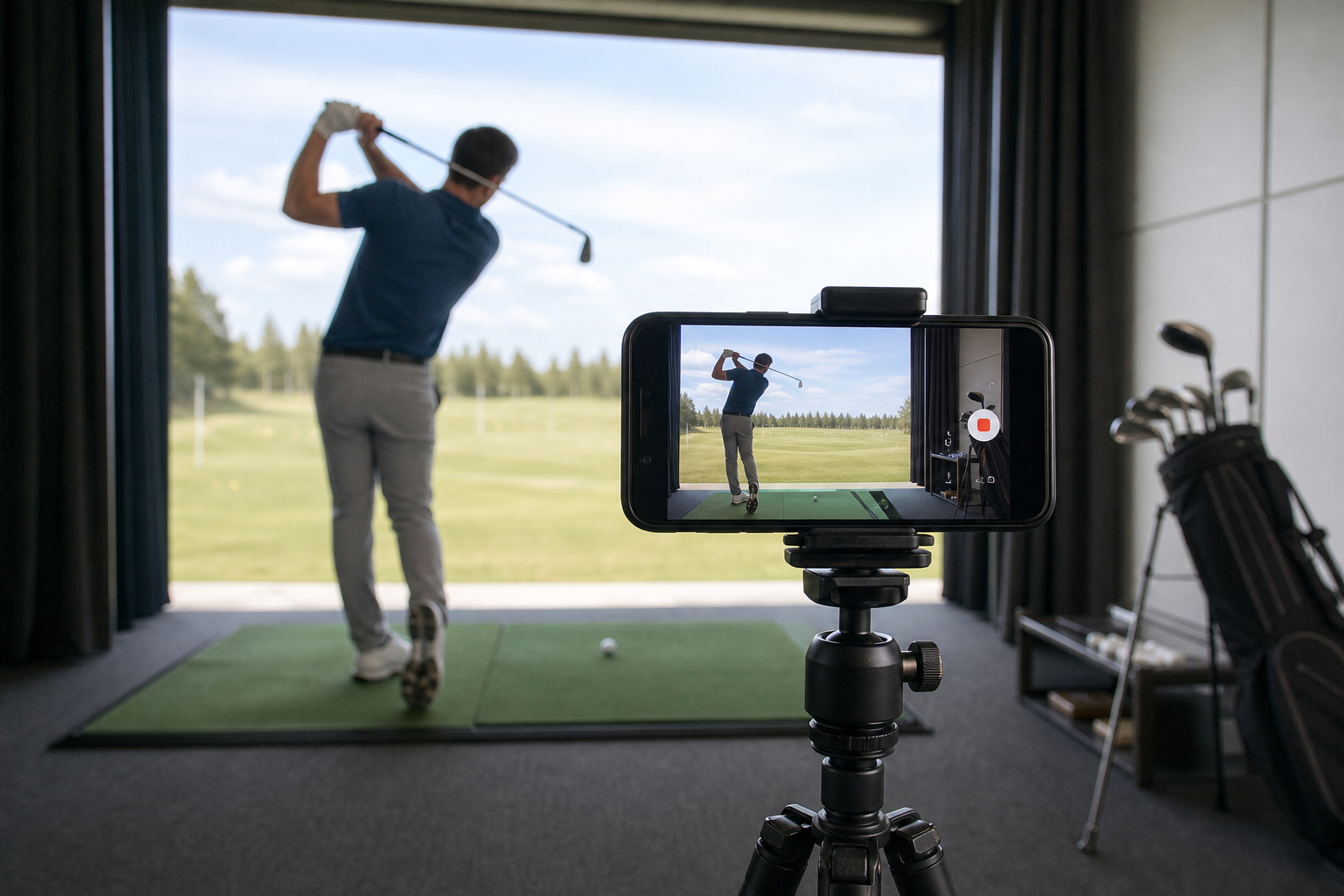
Clear video from two angles gives a remote coach what is needed to analyze your sequence.
Building Distance Without Getting Hurt
Speed gains mean little if you miss weeks with an injury. In particular, the lower back, lead hip, and wrists take heavy load in a fast swing. Gradual progression is therefore essential.
Warm up before every session. Increase effort in small steps, and stop sets when quality drops. Moreover, schedule rest days around tournaments. For general physical activity guidance, see the World Health Organization.
Common Power Training Mistakes
- Swinging harder before the sequence is sound.
- Skipping mobility work.
- Training speed when tired.
- Chasing distance while ignoring accuracy.
Choosing an Online Golf Coach for Speed Gains
Look for credentials, a clear method, and a feedback routine. Ask how the coach reads your data and how the plan changes over time. Experience with advanced players matters too.
yourgolfguru.com offers online instruction for elite and competitive players. Lessons come from an LPGA Master Professional who also holds a PhD in kinesiology. The focus is on swing techniques that improve power, accuracy, and consistency while prioritizing injury prevention.
To go deeper, explore advanced swing mechanics coaching, a set of online swing drills for advanced players, or the guide to customized swing coaching. You can also see how remote swing improvement works and review swing lessons for maximum improvement.
For the standards behind professional teaching, visit the LPGA.
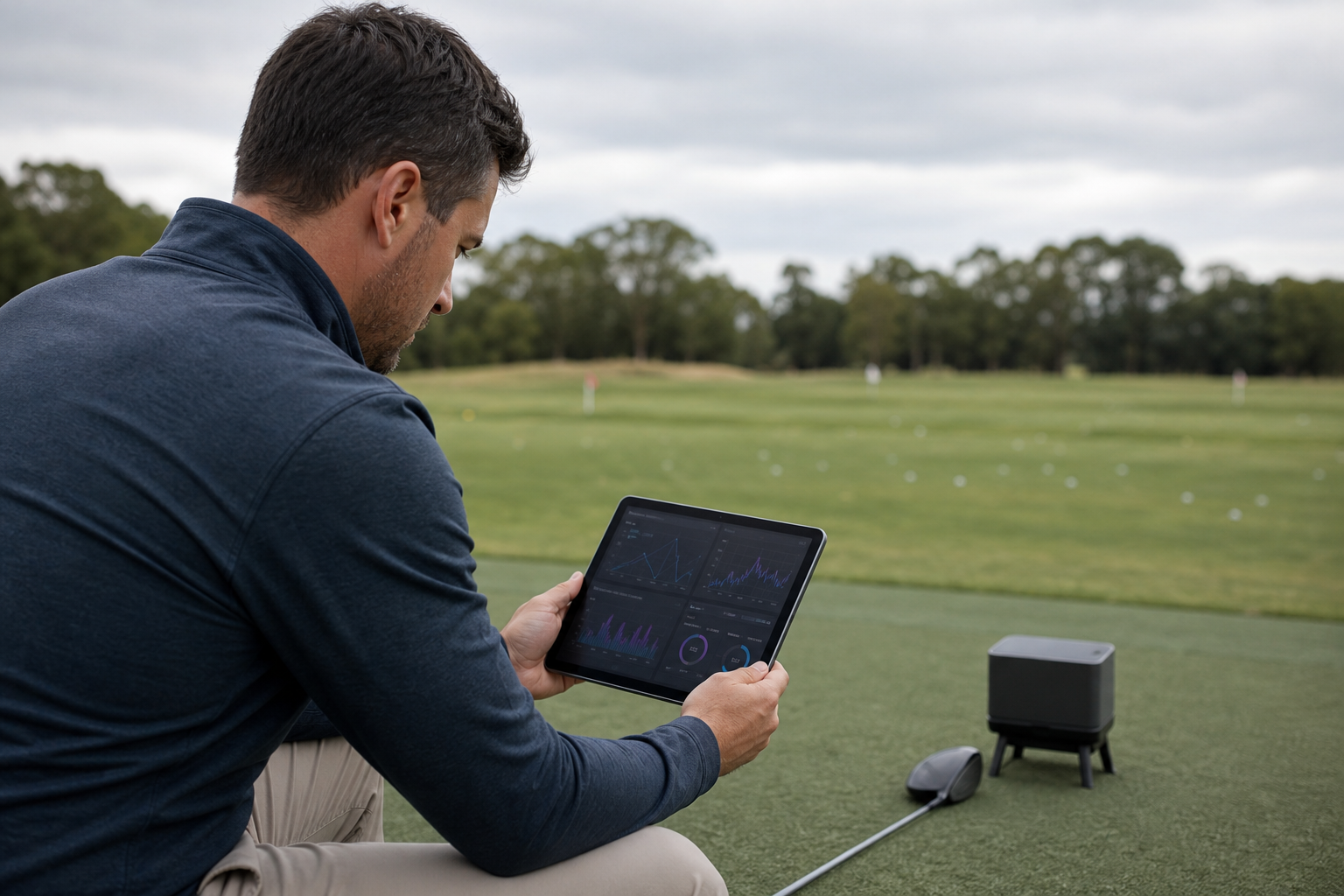
Tracking speed and strike data shows whether your training plan is working.
Frequently Asked Questions
What is golf swing power training online?
Golf swing power training online is remote coaching that builds clubhead speed through swing mechanics, strength, mobility, and speed work. The coach reviews your video and data, then adjusts your plan.
Can you really gain distance through online lessons?
Yes, when the plan is specific and you follow it consistently. Video review and measured speed data let a coach guide changes without being on the range with you.
How long does it take to add clubhead speed?
Many players see early changes within several weeks, but lasting gains usually take months. Results depend on your starting point, training age, and consistency.
Is power training safe for the lower back?
It can be safe when load builds gradually and mobility limits are respected. Poor sequencing and sudden increases in effort are common causes of golf-related back strain.
What equipment do I need?
A smartphone or camera, a tripod, and a place to swing are the basics. A launch monitor or radar is helpful for tracking speed, and light resistance bands or a medicine ball can add variety.
Are overspeed training aids worth using?
They can help some players when used in short, controlled sessions. Without sound mechanics and recovery, however, they may add stress without improving results.
How is swing power different from swing speed?
Swing speed is how fast the club moves, while power also depends on how efficiently you transfer energy to the ball. Strike quality and face control matter as much as raw speed.
How often should I train for power each week?
Two to three short speed sessions per week suit many competitive players, with rest in between. Your coach should adjust this based on your schedule, tournaments, and recovery.
What are the most common mistakes?
Swinging hard without a sound sequence, skipping mobility work, and training when fatigued are the biggest errors. Chasing speed while ignoring accuracy also hurts scoring.
Should I train in the gym and on the range?
Combining both is usually best. Gym work builds the physical capacity, and range work teaches you to use it inside your swing.
Is online instruction a good fit for competitive players?
Yes, particularly for players who want advanced technical feedback beyond what local options offer. Remote coaching also removes travel time and allows frequent video check-ins.
How do I measure whether my training is working?
Track clubhead speed, ball speed, smash factor, and dispersion over time. Compare averages across several sessions rather than a single best swing.
Conclusion
Lasting distance comes from efficient sequencing, a body that can move well, and speed work that respects recovery. Golf swing power training online delivers all three when a qualified coach reviews your video and data regularly. Start with a baseline, build gradually, and measure your results. With that approach, more speed and fewer injuries can go hand in hand.