

Remote golf swing training programs give serious players a way to work with a top-tier coach without traveling to a facility. For competitive golfers, that means expert analysis, structured drills, and steady feedback from anywhere in the world. This guide explains how these programs work, what to look for, and how to get real results.
Quick answer: Remote golf swing training programs are online coaching plans in which you send swing video and data, and a coach returns analysis and a practice plan. They work best when the coach is credentialed, your video is clear, and you practice consistently.
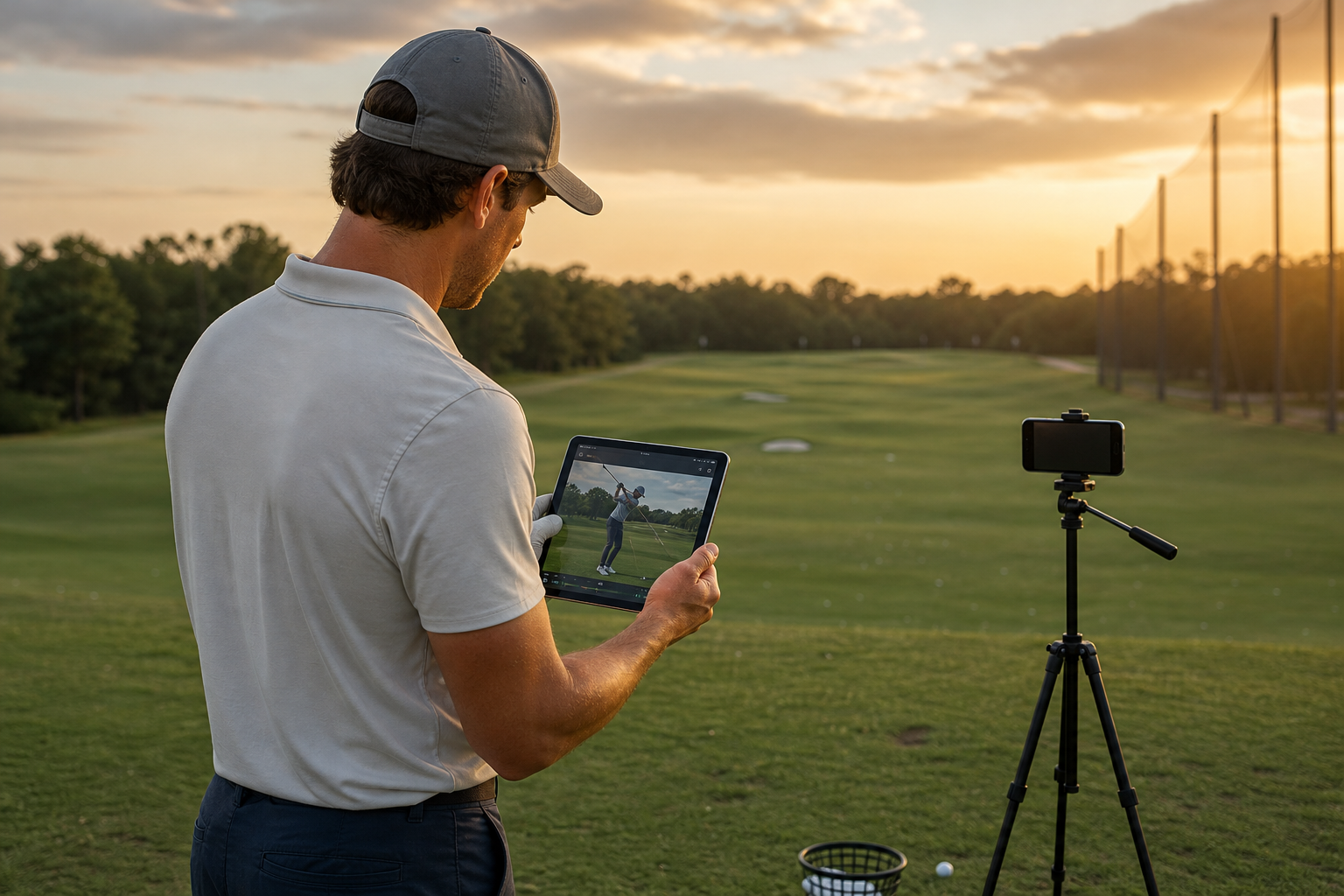
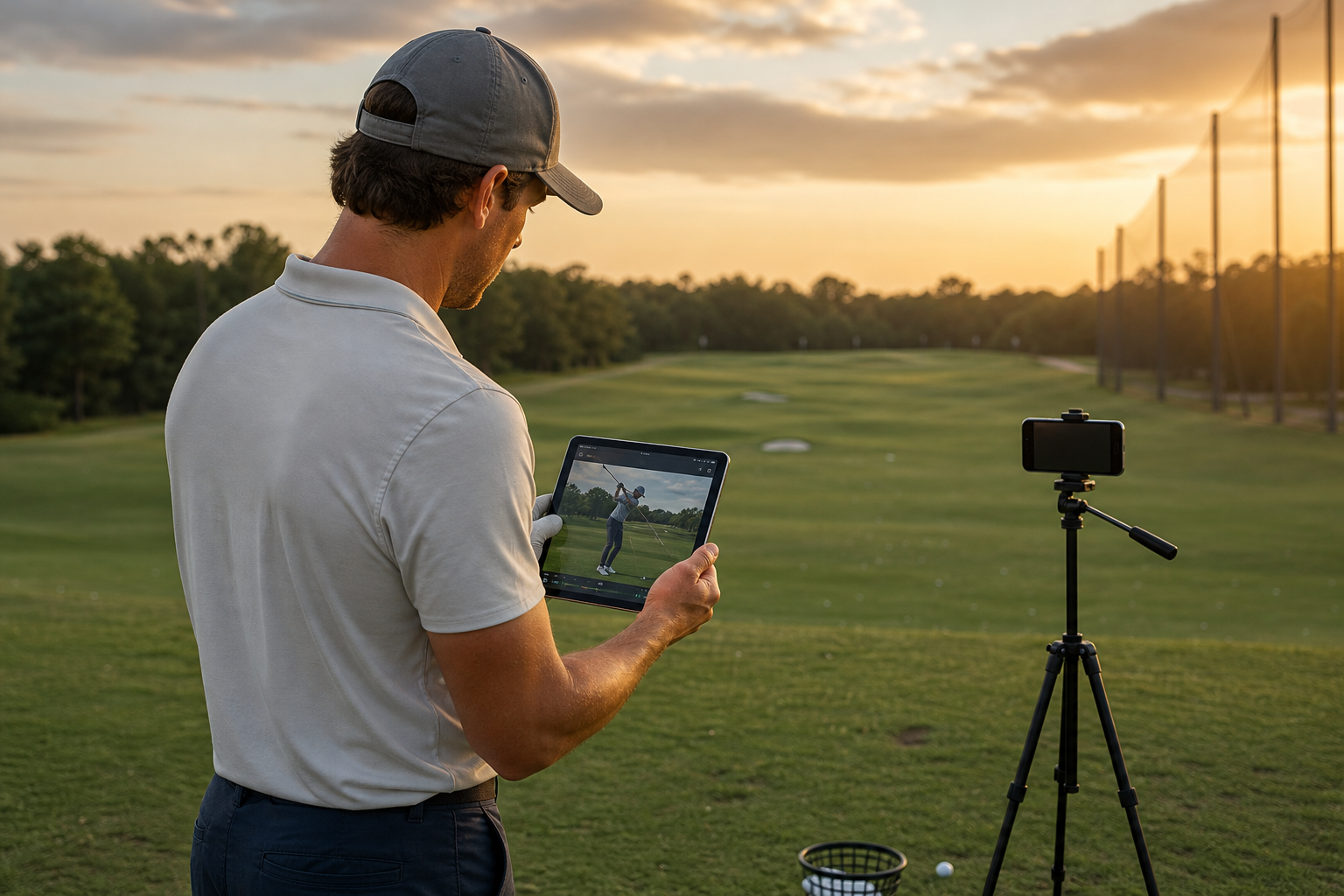
A golfer checks swing video on the range as part of remote golf swing training programs.
What are remote golf swing training programs?
Remote golf swing training programs are structured coaching plans delivered online. You record your swing, upload it, and receive a detailed review. The coach then assigns drills and sets priorities for your next practice block.
Unlike a one-off video tip, a program follows a plan over weeks or months. As a result, changes build on each other instead of competing.
Why Competitive Golfers Choose Online Swing Coaching
Advanced players often outgrow what a local range pro can offer. Specialists may be hundreds of miles away. Online coaching removes that barrier.
- Access: You can work with a specialist regardless of location.
- Flexibility: You train around tournaments, school, or work.
- Record keeping: Every submission becomes a baseline you can compare later.
- Focus: You can review feedback repeatedly at your own pace.
For a deeper look at this approach, see this guide on how competitive golfers improve swing mechanics remotely.
The Science Behind Biomechanics-Based Coaching
Kinesiology is the study of human movement. Applied to golf, it explains how the body creates speed, how forces travel through the swing, and where stress builds up. A coach who understands this can improve power and accuracy while protecting the body.
This matters because the golf swing is repetitive and demanding. Poor patterns can load the lower back, hips, and wrists. Therefore, injury prevention should sit beside performance in any serious plan.
At yourgolfguru.com, lessons are developed and delivered by an LPGA Master Professional who also holds a PhD in kinesiology. The curriculum focuses on proven techniques that improve power, accuracy, and consistency, with physical safety built in.

Clear camera angles make swing analysis more precise and more useful.
How to Start Online Swing Coaching Step by Step
- Define your goals. Note your scoring target, common misses, and any pain or injury history.
- Verify the coach. Confirm teaching certifications and relevant education in biomechanics.
- Record clear video. Film face-on and down-the-line at hip height with a steady camera.
- Review feedback and drills. Understand each priority, then practice at a pace your body can handle.
- Resubmit and track. Send new video after a practice block and compare ball flight, dispersion, and scores.
Players who want practice ideas can also explore online golf swing drills for advanced players.
Choosing the Best Online Golf Instruction
Not every program suits every player. Use the criteria below to compare options.
| Criterion | What to look for |
|---|---|
| Credentials | Recognized certification plus biomechanics education |
| Player fit | Experience with competitive and collegiate players |
| Personalization | Feedback built on your swing, not a generic template |
| Safety focus | Attention to injury risk and sustainable mechanics |
| Follow-up | Clear process for resubmitting and tracking progress |
Credential checks are easy. The LPGA publishes information on its teaching and coaching professionals. For related reading, see customized swing coaching for elite golfers and where serious golfers find the best online swing lessons.
Getting the Most From Virtual Golf Coaching
Good habits make a large difference. First, change one thing at a time. Next, practice with a purpose rather than hitting balls without a plan. Finally, keep your filming setup the same each time so comparisons are fair.
Also listen to your body. If a drill causes pain, stop and tell your coach. Sustainable progress beats a quick fix that leads to injury. Players who feel stuck may find encouragement in this article on swing training for pros who are close to quitting.
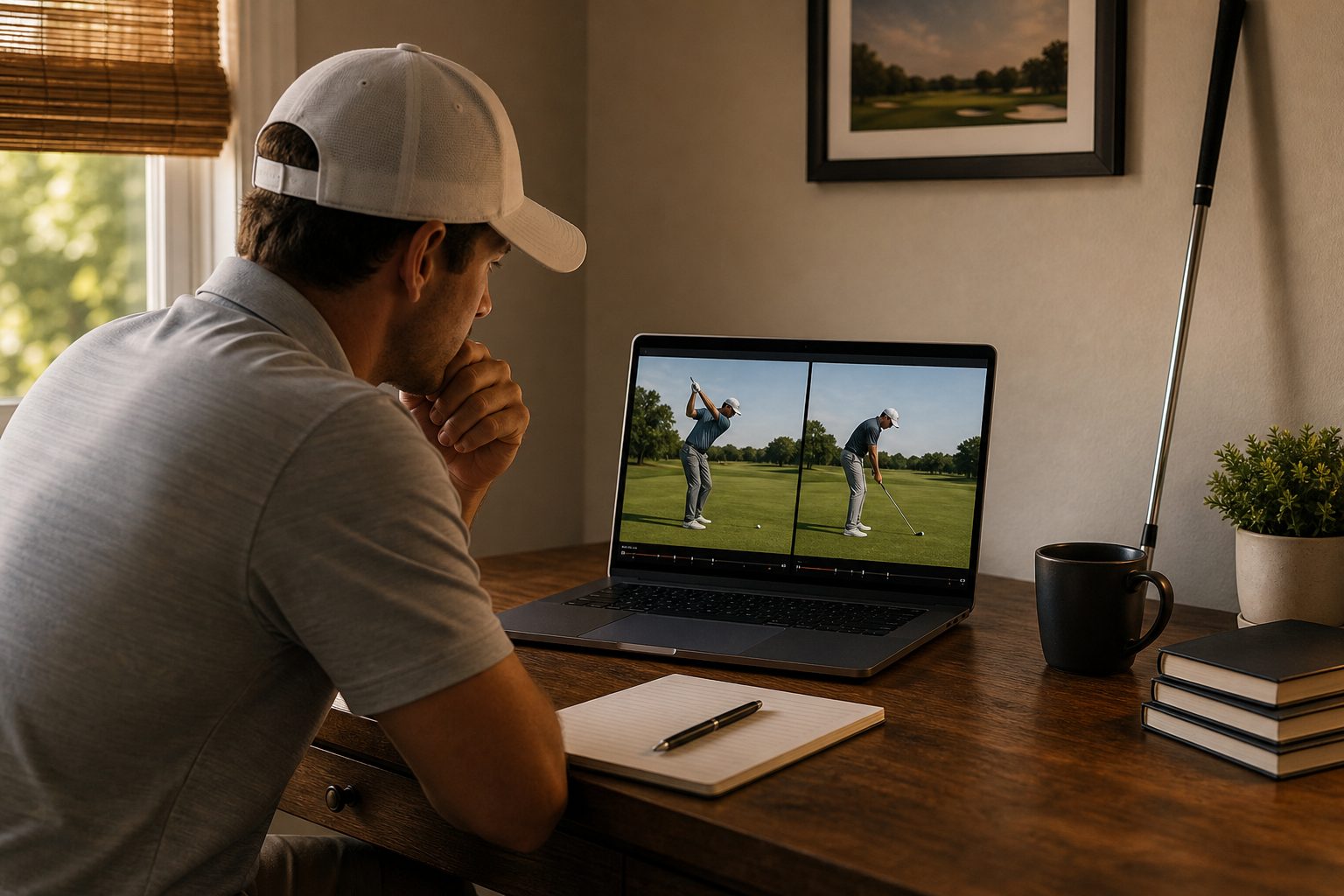
Reviewing coach feedback at home helps turn analysis into practice.
Frequently Asked Questions
What are remote golf swing training programs?
Remote golf swing training programs are structured coaching plans delivered online. Golfers submit video and data, and a coach returns analysis, drills, and a practice plan.
Do remote golf swing training programs really work?
They can work well for motivated players who practice consistently. Results depend on coach quality, clear video, and how closely you follow the plan.
Who benefits most from online swing coaching?
Competitive amateurs, collegiate players, and aspiring pros benefit most. They often need advanced technical guidance that local instructors may not provide.
How is remote coaching different from in-person lessons?
Remote coaching relies on video, data, and written or recorded feedback instead of live, hands-on correction. It offers more flexibility and access to specialists anywhere.
What equipment do I need?
You need a smartphone or camera, a tripod, and a place to swing. A launch monitor is helpful but not required.
How should I film my swing for a coach?
Record face-on and down-the-line views at hip height with the camera steady. Capture the full swing, including follow-through, in good light.
How long until I see results?
Many golfers notice better contact within a few weeks. Lasting mechanical changes usually take several months of deliberate practice.
What credentials should a remote golf coach have?
Look for recognized teaching certification, such as LPGA or PGA, and a track record with players at your level. Education in biomechanics is a strong plus.
Can online coaching help prevent golf injuries?
Yes, if the coach understands body mechanics. A kinesiology-informed coach can adjust movement patterns to reduce stress on the back, hips, and wrists.
What are common mistakes when starting online coaching?
Common mistakes include poor video angles, changing too many things at once, and skipping follow-up submissions. Vague goals also slow progress.
How much do remote golf swing training programs cost?
Prices vary widely by coach, format, and length. Ask for a clear breakdown of what is included before you buy.
How often should I submit swing video?
Every one to three weeks works for most players. This gives you time to practice each change before the next review.
Conclusion
Remote golf swing training programs bring expert, science-based coaching to competitive players wherever they live. The best choice combines verified credentials, personalized feedback, and a strong focus on safe, repeatable mechanics. Start with clear goals and clean video, practice with purpose, and track your progress. To explore coaching built on biomechanics and elite teaching experience, visit yourgolfguru.com.