
Biomechanics golf swing correction is the practice of studying a golfer’s movement patterns through scientific measurement to find and fix the exact mechanical faults limiting power, accuracy, or safety. Rather than guessing which tip might help, a coach measures how the body actually moves and then prescribes a fix based on that data. For competitive players, this science-based approach often closes gaps that years of trial-and-error lessons never could.
Quick Answer
Biomechanics golf swing correction uses video, sensors, or motion analysis to identify the root cause of a swing fault, then applies targeted drills to retrain that specific movement pattern. It works by treating the actual cause of a miss, not just the visible symptom.
What Is Biomechanics Golf Swing Correction?
Biomechanics golf swing correction is a coaching method that applies the study of human movement, known as biomechanics, to golf-specific motions. Specifically, it examines how joints rotate, how force transfers through the kinetic chain, and how timing between body segments affects the clubhead at impact. As a result, a coach can see past the ball flight to the physical cause behind it.
This differs from a purely visual teaching style. Instead of telling a player to simply “turn more,” a biomechanics-based coach can show, for example, that the hips are rotating too early relative to the shoulders, robbing power and creating compensations further down the chain. According to the field of biomechanics, every efficient human movement follows measurable mechanical principles, and the golf swing is no exception.
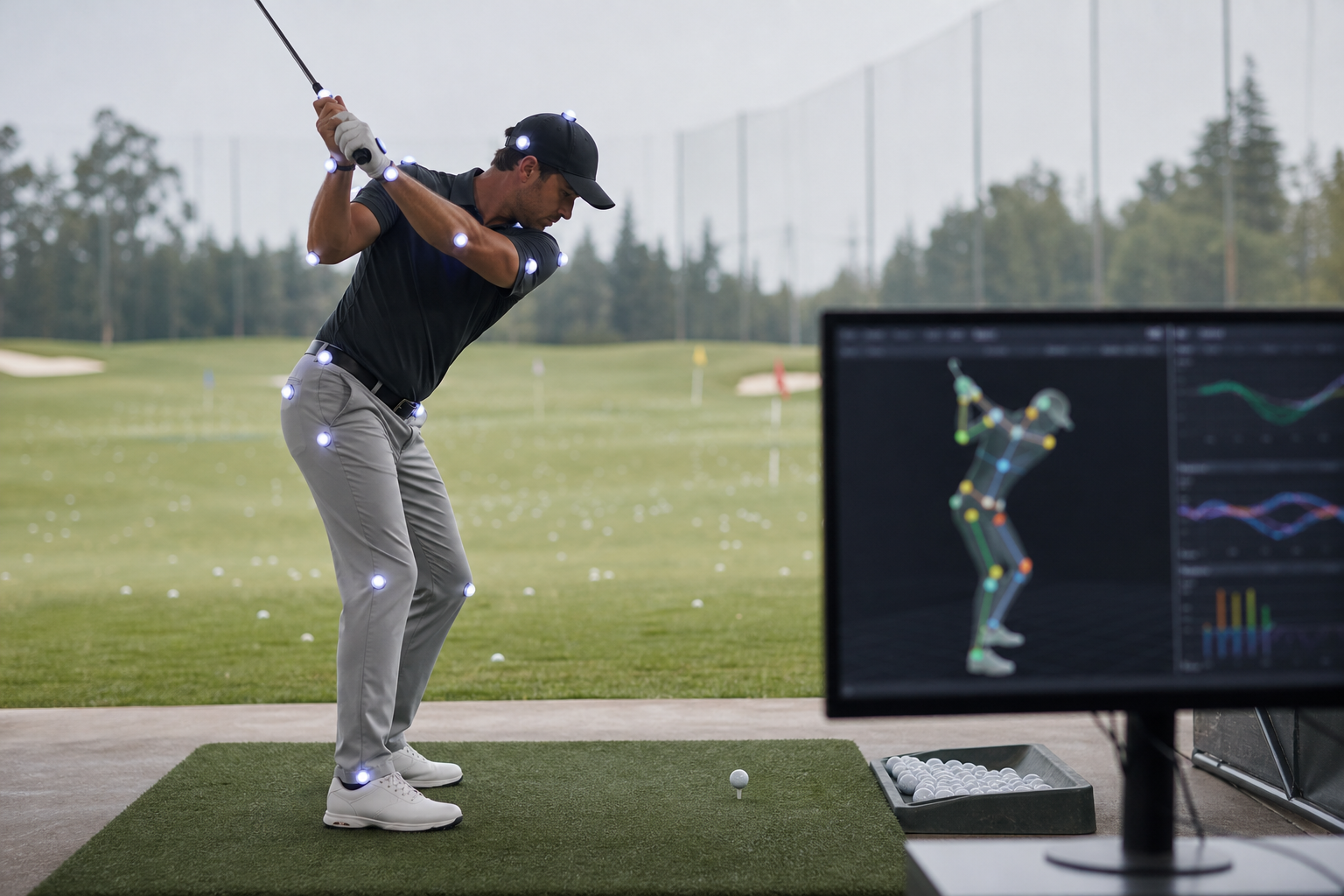
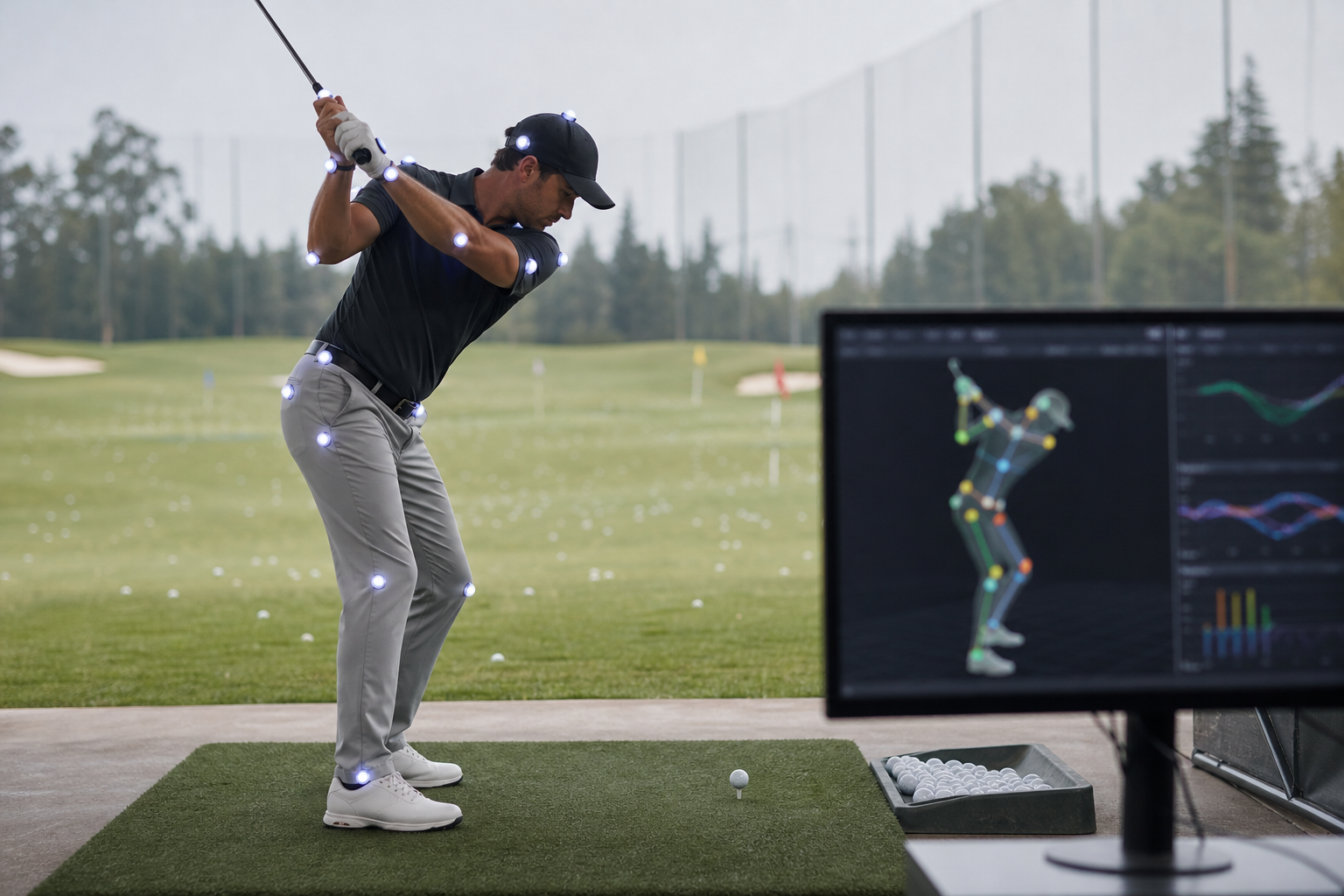
A motion-tracked practice swing used during a biomechanics golf swing correction session.
Why Swing Biomechanics Matter for Competitive Golfers
For recreational players, a few extra yards may not matter much. However, for competitive amateurs, collegiate athletes, and aspiring professionals, small inefficiencies in swing biomechanics translate directly into lost strokes. In addition, repeated faulty loading patterns raise injury risk over a long competitive season.
Research published through the National Library of Medicine’s PubMed database has linked specific swing faults, such as excessive lateral spine bending, to higher rates of lower back injury among competitive golfers. Consequently, correcting these patterns early protects both performance and long-term health. Golfers who understand how to correct golf swing path errors often discover the underlying cause is biomechanical, not just a timing issue.
Common Swing Faults Biomechanical Analysis Can Fix
Biomechanical analysis is particularly good at catching faults that are invisible to the naked eye but obvious once measured. Below are some of the patterns most frequently uncovered.
- Early hip-to-shoulder separation loss, which reduces clubhead speed at impact.
- Excessive lateral spine flexion, a known contributor to lower back strain.
- Inconsistent weight transfer timing between backswing and downswing.
- Restricted thoracic rotation, often mistaken for a flexibility problem rather than a sequencing fault.
For a deeper breakdown of which issues respond best to this approach, see which swing flaws can be corrected through science-based coaching.
How Kinesiology-Based Coaching Corrects Swing Mechanics
Kinesiology, the scientific study of human movement, provides the framework behind modern swing mechanics correction. A kinesiology-trained coach does not simply watch a swing; they measure it against known efficient movement models, often using slow-motion video or wearable sensors.
Furthermore, this approach allows a coach to separate symptoms from causes. A slice, for instance, might be caused by an open clubface, an out-to-in path, or both, but the biomechanical root could be a hip that stalls too early. Similarly, a program like swing modeling for performance builds a personalized map of a golfer’s movement before prescribing any drill.
Step-by-Step Process for Correcting Your Golf Swing With Biomechanics
Although every golfer’s situation is different, a biomechanics golf swing correction program generally follows the same four-step process.
- Capture baseline swing data. Record multiple swings from face-on and down-the-line angles, or use wearable sensors, to establish an objective starting point for joint angles, sequencing, and timing.
- Identify mechanical faults. Compare the recorded movement against efficient biomechanical models to pinpoint the specific segment or timing error causing the visible miss pattern.
- Apply targeted drills. Practice drills chosen specifically to retrain the faulty pattern, prioritizing quality repetitions over total ball-striking volume.
- Retest and refine. Record new swing video after several weeks of practice, compare it against the baseline, and adjust the plan based on measurable progress.
This cycle repeats throughout a season. Golfers who want a closer look at the measurement side of this process can review how to analyze golf swing mechanics in more detail.
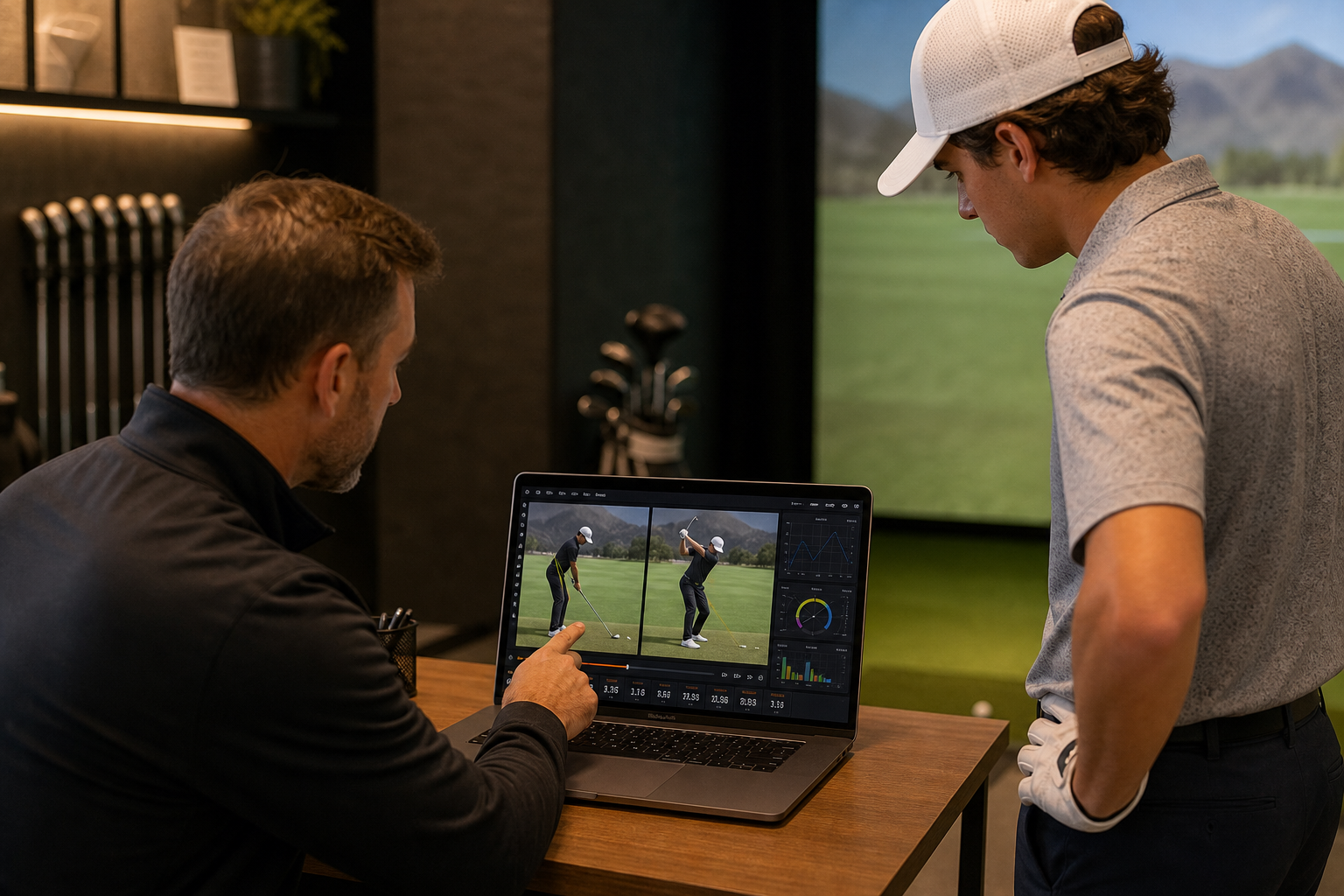
Reviewing recorded footage is a core part of any biomechanics golf swing correction plan.
Choosing an Online Biomechanics Golf Swing Correction Coach
Not every instructor is equipped to deliver true biomechanics golf swing correction. Above all, look for a coach who combines formal movement science education with high-level teaching credentials. For example, yourgolfguru.com is built around exactly this combination: instruction developed and delivered by an LPGA Master Professional who also holds a PhD in kinesiology.
This pairing matters because it blends decades of elite teaching experience with the ability to explain, in measurable terms, why a drill works. In addition, delivering coaching through a digital platform removes geographic barriers, so competitive amateurs, collegiate players, and aspiring professionals can access advanced technical guidance without traveling to a physical facility. Golfers aiming at the highest competitive levels may also want to review advanced swing mechanics coaching for elite golfers to see how a structured, long-term program is built. You can also explore yourgolfguru.com directly to see how a science-based remote program is structured.
Frequently Asked Questions
What is biomechanics golf swing correction?
Biomechanics golf swing correction is a method of analyzing the body’s movement patterns during the swing using scientific measurement to find and fix mechanical faults. It replaces guesswork with data on joint angles, force, and timing.
How does biomechanics golf swing correction work?
A coach records the swing with video or sensors, measures specific movement patterns against efficient models, and then prescribes targeted drills. Progress is retested to confirm the fault has actually been resolved.
Why is swing biomechanics important for competitive golfers?
Competitive golfers need every available advantage, and swing biomechanics reveals small inefficiencies that cost distance or accuracy under pressure. It also flags movement patterns linked to overuse injuries before they sideline a season.
How is biomechanics golf swing correction different from traditional golf lessons?
Traditional lessons often rely on visual feedback and general tips, while biomechanics-based coaching uses measurable data on the body’s kinematics. This allows a coach to pinpoint the root cause of a fault instead of just treating its symptoms.
How much does biomechanics golf swing correction cost?
Costs vary widely depending on whether sessions are in person with lab-grade equipment or delivered remotely through video analysis. Online coaching from credentialed specialists typically costs less than in-person biomechanics labs while still offering detailed, science-based feedback.
How long does it take to see results from biomechanics golf swing correction?
Many golfers notice measurable changes in swing patterns within three to six weeks of consistent, targeted practice. Full integration of a new motor pattern into competitive play can take a full season of reinforcement.
What are common mistakes golfers make when trying to fix their swing without biomechanical analysis?
Golfers often chase the symptom they can see, such as a slice, instead of the underlying cause, such as hip rotation timing. Without objective measurement, they may also practice a drill that reinforces the wrong compensation pattern.
What equipment is needed for biomechanics golf swing correction?
At minimum, a smartphone camera capable of slow-motion video is enough for a qualified coach to assess swing mechanics remotely. More advanced setups may add wearable sensors or 3D motion capture, though these are not required for effective correction.
Can biomechanics golf swing correction help prevent injuries?
Yes, because many common golf injuries stem from repetitive, inefficient loading patterns in the spine, hips, or shoulders. Correcting these patterns through biomechanics-based coaching reduces strain while often improving performance at the same time.
Is online biomechanics golf swing correction as effective as in-person coaching?
When delivered by a qualified coach using detailed video review, online biomechanics coaching can be just as effective as many in-person sessions. The key factor is the coach’s expertise in movement analysis, not simply physical proximity.
What credentials should a biomechanics golf swing correction coach have?
Look for recognized teaching credentials, such as an LPGA or PGA professional designation, combined with formal education in kinesiology or sports science. This pairing shows the coach can both teach technique and explain the physics behind it.
How often should golfers do biomechanics swing analysis?
A baseline assessment followed by a check-in every four to eight weeks is a reasonable schedule for most competitive players. Golfers recovering from injury or making major swing changes may benefit from more frequent reviews.

Consistent, balanced follow-through is one measurable sign of successful swing correction.
Final Thoughts
Biomechanics golf swing correction gives competitive golfers a measurable, repeatable way to fix the faults that limit their game. Rather than relying on generic tips, this approach pinpoints the exact movement pattern causing a miss and tracks progress with real data. As a result, players build power, accuracy, and consistency while reducing injury risk along the way.
Ultimately, choosing a coach who blends elite teaching experience with kinesiology-based science, such as the approach described at yourgolfguru.com, gives serious golfers access to the same level of analysis once reserved for professional training facilities. For further reading on the science behind efficient movement, the USGA offers additional context on how swing mechanics influence performance at every level.