

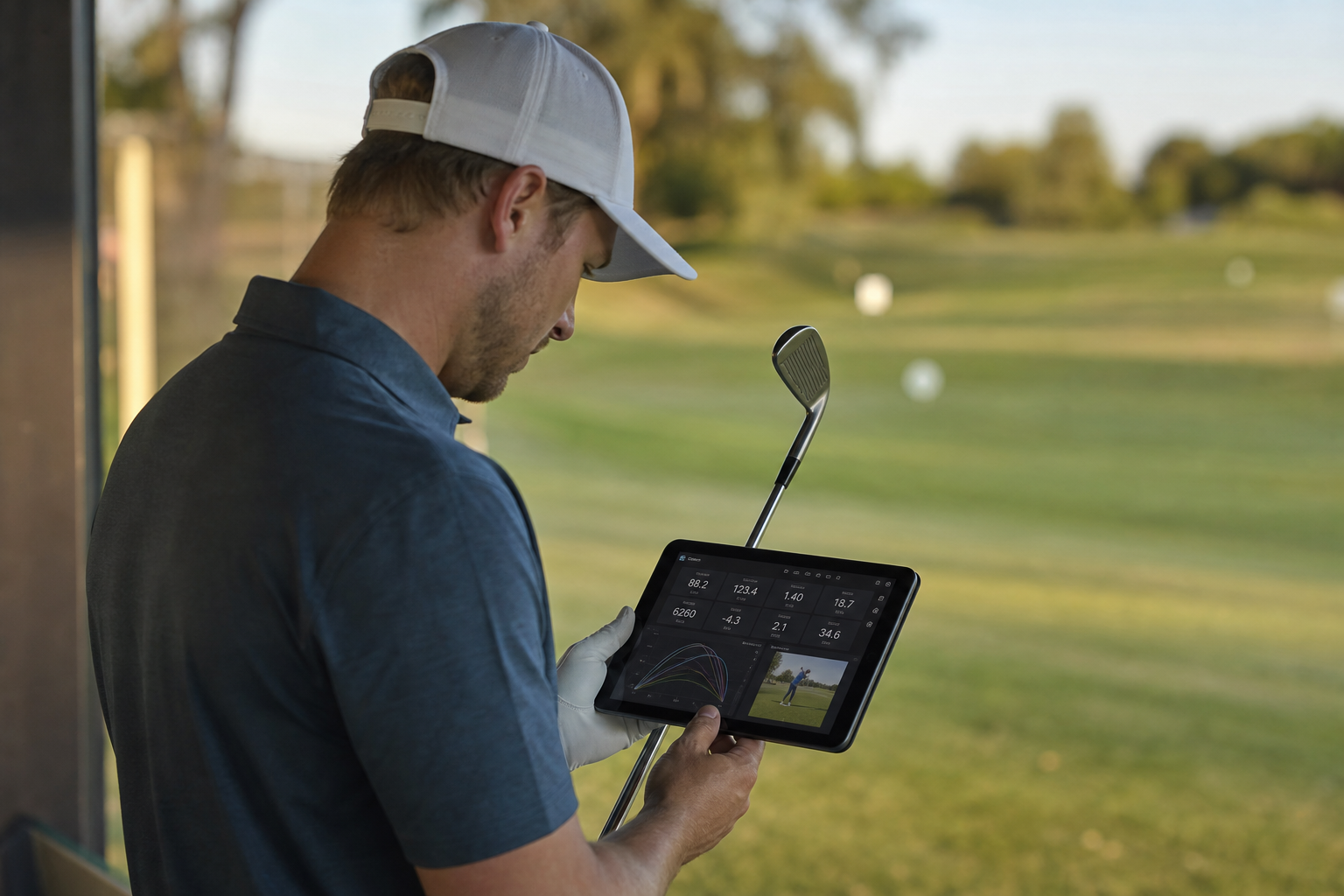
Digital golf swing feedback tools give competitive golfers immediate, measurable insight into their mechanics, replacing guesswork with hard data. For elite players chasing small, repeatable gains, this technology has become as essential as a quality golf club. In addition, these tools now make it possible to combine precise measurement with expert, remote coaching, so a serious golfer in a small town can train under the same quality of guidance as someone at a major facility.
Quick answer: Digital golf swing feedback tools are sensors, cameras, and software that measure swing mechanics, such as clubhead speed and body sequencing, then turn that data into reports a player or coach can use to make targeted changes.
What Are Digital Golf Swing Feedback Tools?
Digital golf swing feedback tools are a category of technology, including wearable sensors, high-speed cameras, and launch monitors, built to measure what the human eye cannot reliably track. Specifically, they capture data such as swing path, face angle, and tempo in fractions of a second. As a result, a golfer gets objective numbers instead of a subjective guess about what happened during the swing.
For elite and competitive players, this distinction matters because tiny inefficiencies can cost strokes under tournament pressure. Therefore, many serious golfers now treat swing data the way athletes in other sports treat biomechanics, which is the scientific study of movement and the forces that produce it, as a Wikipedia summary of biomechanics explains. Consequently, feedback tools act as a bridge between raw athletic talent and refined, repeatable technique.
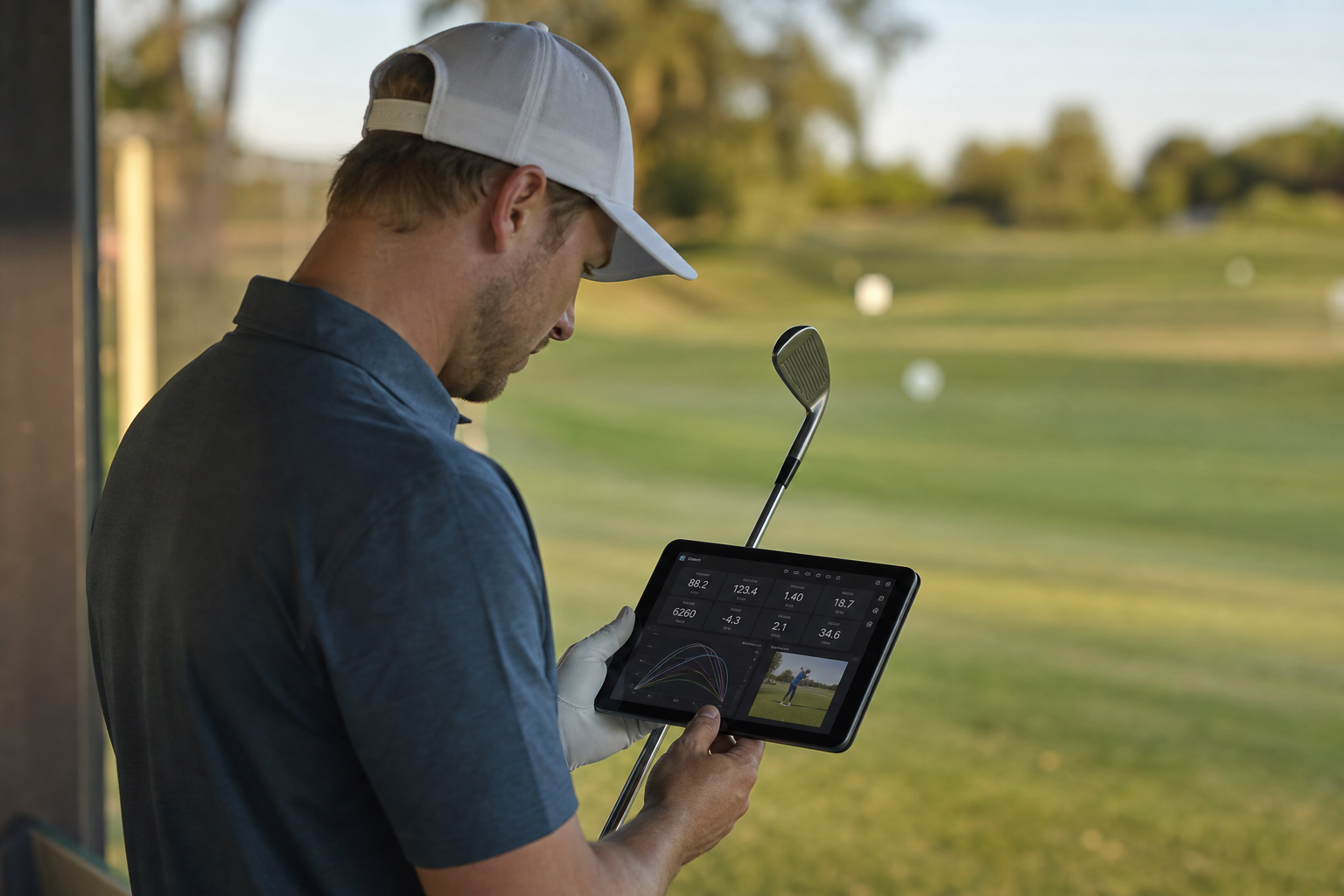
Reviewing digital golf swing feedback tools between range sessions helps golfers spot small mechanical changes quickly.
Why Golf Swing Analysis Technology Matters for Competitive Players
Golf swing analysis technology matters because competitive golf rewards consistency far more than occasional brilliance. A player who shaves one degree off a face angle or gains two miles per hour of clubhead speed can turn near misses into fairways and greens. Industry research on swing mechanics commonly notes that each additional 1 mph of clubhead speed can add roughly two to three yards of carry distance, which explains why precise speed and path data carries so much weight for serious players.
Furthermore, collegiate and aspiring professional golfers often face limited access to instructors who understand both elite mechanics and injury prevention. In contrast, data-driven platforms can connect them with highly credentialed coaches regardless of location. For a deeper look at how numbers translate into on-course gains, see this guide on using biomechanical data for golf improvement.
Types of Swing Feedback Systems Elite Golfers Use
Not every system measures the same thing, so understanding the main categories helps golfers choose wisely rather than buying whatever is trending. Above all, the right combination depends on a player’s specific goals, such as adding power, fixing a slice, or protecting the body from repetitive strain.
Motion Capture and Biomechanical Sensors
Motion capture systems use wearable sensors or camera arrays to track joint angles, rotation speed, and sequencing throughout the entire swing. Specifically, this technology can reveal whether the hips and shoulders are rotating in the correct order, which is critical for both power and joint safety. The concept builds directly on kinesiology, the study of human movement, as outlined on the Wikipedia page for kinesiology.
Video Analysis Software for Swing Mechanics
Video analysis software overlays lines and angles onto recorded swings, letting a coach compare positions frame by frame. Similarly, slow-motion playback helps players see subtle timing issues that are invisible at full speed. However, video alone cannot measure internal forces, which is why it works best alongside sensor-based data.
Launch Monitors and Data-Driven Platforms
Launch monitors use radar or cameras to measure ball flight outcomes such as spin rate, launch angle, and carry distance. Consequently, they answer the question every competitive golfer eventually asks: did that swing change actually produce better results? The table below summarizes how these three categories typically compare.
| Tool Type | Primary Measurement | Best For |
| Motion capture sensors | Body sequencing and rotation speed | Fixing power and injury-risk issues |
| Video analysis software | Position and timing at key points | Visual coaching and comparison |
| Launch monitors | Ball flight and distance outcomes | Confirming real on-course results |
How to Choose the Right Digital Golf Swing Feedback Tool
Choosing wisely prevents wasted money on gadgets that never get used. The following process works well for competitive golfers evaluating their options.
- Identify your top swing priorities, such as clubface control, tempo, or ground force, before comparing any technology so you choose tools matched to your actual weaknesses.
- Evaluate the measurement accuracy and sensor placement of each system, since research-grade motion capture typically outperforms basic phone-based apps for serious competitive training.
- Check how the data integrates with a qualified coach’s review process, because raw numbers without expert interpretation rarely translate into lasting swing changes.
- Test the tool’s reporting format across multiple practice sessions to confirm it tracks trends over time rather than offering only a single isolated snapshot.
- Confirm the platform supports remote collaboration, allowing a kinesiology-trained coach to review your data and video from any location and deliver structured feedback.
For a more detailed walkthrough of this evaluation process, this guide on evaluating golf swing performance remotely breaks each step down further.
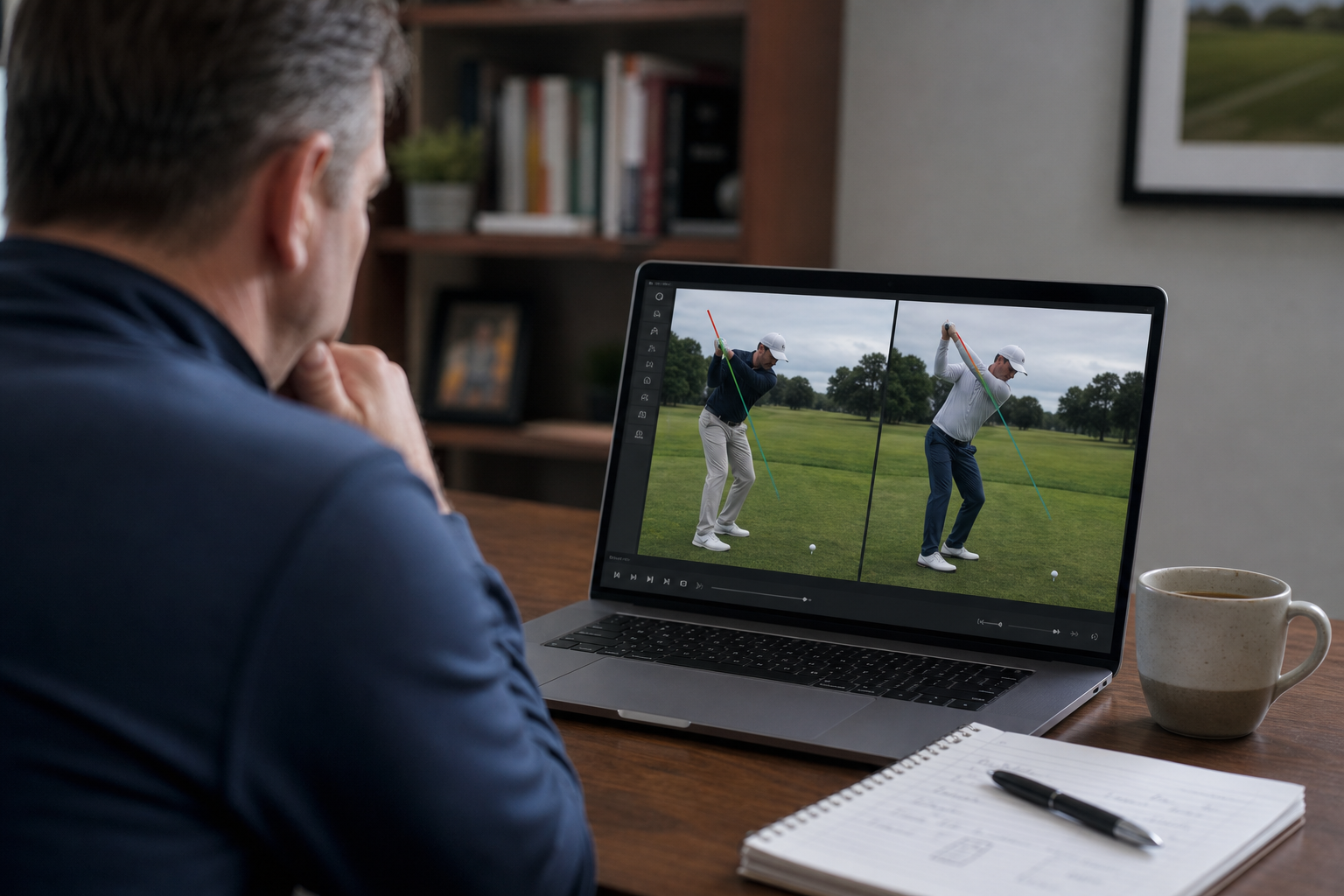
Remote coaches pair digital golf swing feedback tools with expert review to turn raw data into clear instruction.
Pairing Golf Swing Feedback Tools With Expert Remote Coaching
Data alone rarely fixes a swing. In particular, numbers need context from someone trained to interpret them safely and effectively. This is why many competitive programs now combine digital golf swing feedback tools with coaching delivered through a digital platform rather than relying on hardware in isolation.
For example, a coach with an LPGA Master Professional credential and a PhD in kinesiology can review sensor data and video together, then explain not just what happened in the swing but why it happened biomechanically. As a result, players avoid common pitfalls such as chasing speed at the expense of joint health. Programs like the customized online swing coaching built for elite golfers and the broader advanced swing mechanics coaching for elite players reflect this science-backed, remote-first approach. Similarly, golfers interested in structured score improvement can explore elite proficiency training aimed at lower scores as a complementary resource.
Common Mistakes When Using Swing Feedback Technology
Even excellent technology can produce poor results when used incorrectly. Therefore, it helps to recognize the most frequent errors before they become habits.
- Focusing only on clubhead speed while ignoring sequencing, which can increase injury risk over time.
- Changing multiple variables at once, making it impossible to know which adjustment actually helped.
- Skipping expert review and trying to self-diagnose complex biomechanical data without training.
- Comparing personal numbers directly to tour-level benchmarks instead of tracking individual progress over time.
Understanding golf swing mechanics in general, as described on the Wikipedia overview of the golf swing, also helps players interpret feedback data in proper context rather than treating every number as an isolated verdict.
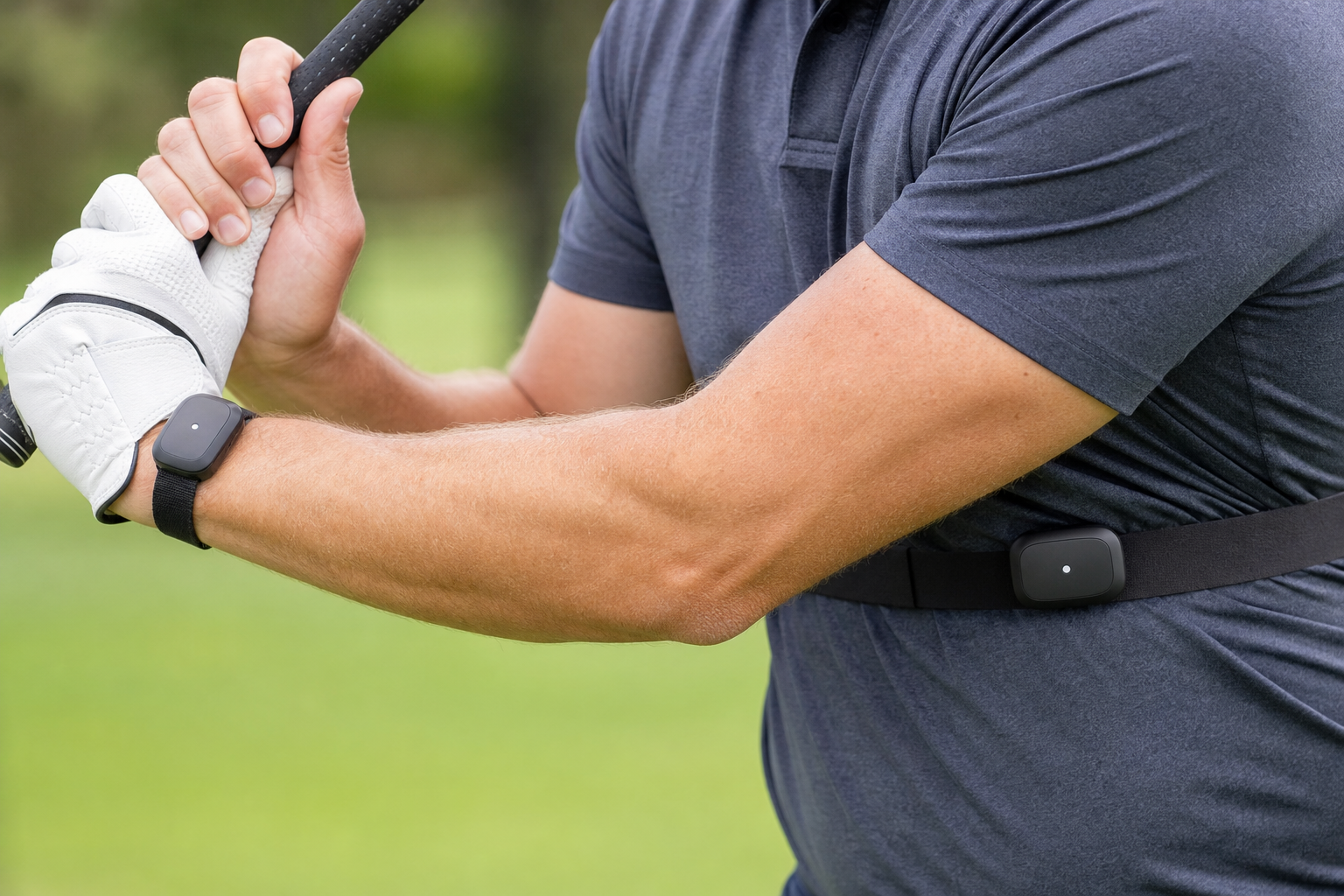
Wearable sensors are among the most precise digital golf swing feedback tools for tracking body sequencing.
Frequently Asked Questions About Digital Golf Swing Feedback Tools
What are digital golf swing feedback tools?
Digital golf swing feedback tools are devices and software, such as motion sensors, launch monitors, and video analysis apps, that measure swing mechanics and translate the data into actionable feedback. They allow golfers and coaches to see objective numbers instead of relying only on visual impressions.
How do digital golf swing feedback tools work?
Most systems use sensors, cameras, or radar to capture data points like clubhead speed, swing path, and body rotation during the swing. That data is then processed into reports or overlays that a player or coach can review session after session.
Why do elite golfers rely on swing analysis technology instead of just a mirror or video?
A mirror or basic video only shows positions, not forces, speeds, or sequencing. Swing analysis technology quantifies those hidden variables, which matters for competitive players chasing small, measurable gains.
What is the difference between a launch monitor and a motion capture system?
A launch monitor mainly measures ball flight data, such as spin rate and carry distance, while a motion capture system tracks body and club movement throughout the swing. Many serious training programs use both together for a complete picture.
How much do digital golf swing feedback tools cost?
Prices range from affordable smartphone apps to professional-grade systems costing several thousand dollars. Competitive players typically invest in mid-tier sensors or launch monitors paired with expert coaching rather than the most expensive hardware alone.
How long does it take to see improvement using swing feedback data?
Many golfers notice measurable changes within four to eight weeks of consistent, guided practice using feedback data. However, lasting swing changes usually take a full season of deliberate repetition under qualified review.
Can beginners use digital golf swing feedback tools, or are they only for advanced players?
Beginners can use simplified versions of these tools, but the most advanced biomechanical systems are built for competitive and elite players refining fine details. Without coaching context, beginners may misinterpret complex data.
What is the biggest mistake golfers make when interpreting swing data?
The most common mistake is chasing a single metric, like clubhead speed, while ignoring how it interacts with sequencing and injury risk. Isolated numbers rarely tell the full story of a swing.
Are digital golf swing feedback tools as effective as in-person coaching?
They are most effective when paired with expert coaching rather than used alone, since raw data still needs skilled interpretation. A kinesiology-trained coach can turn numbers into a specific, safe training plan.
What metrics matter most for competitive golfers reviewing swing feedback?
Clubhead speed, swing path, face angle at impact, and kinematic sequencing are among the most valuable metrics for competitive players. These factors directly influence power, accuracy, and consistency on the course.
How does online coaching pair with digital golf swing feedback tools?
Online coaching allows a remote instructor to review swing data and video submitted through a digital platform, then deliver structured feedback without requiring travel. This pairing is especially useful for players without access to elite local instruction.
What should I look for when choosing a swing feedback system?
Look for measurement accuracy, clear reporting, and compatibility with coach review rather than flashy features alone. The best system is the one that fits seamlessly into a consistent, long-term practice and coaching routine.
In summary, digital golf swing feedback tools give competitive golfers the measurable edge needed to refine power, accuracy, and consistency safely. However, the technology performs best when paired with a coach who can translate data into a clear, biomechanically sound plan. Golfers ready to combine precise feedback with expert, remote-delivered instruction can explore options directly through yourgolfguru.com, where science-backed coaching meets modern swing analysis technology. Ultimately, the right mix of data and expertise turns raw numbers into real, lasting improvement on the course.