

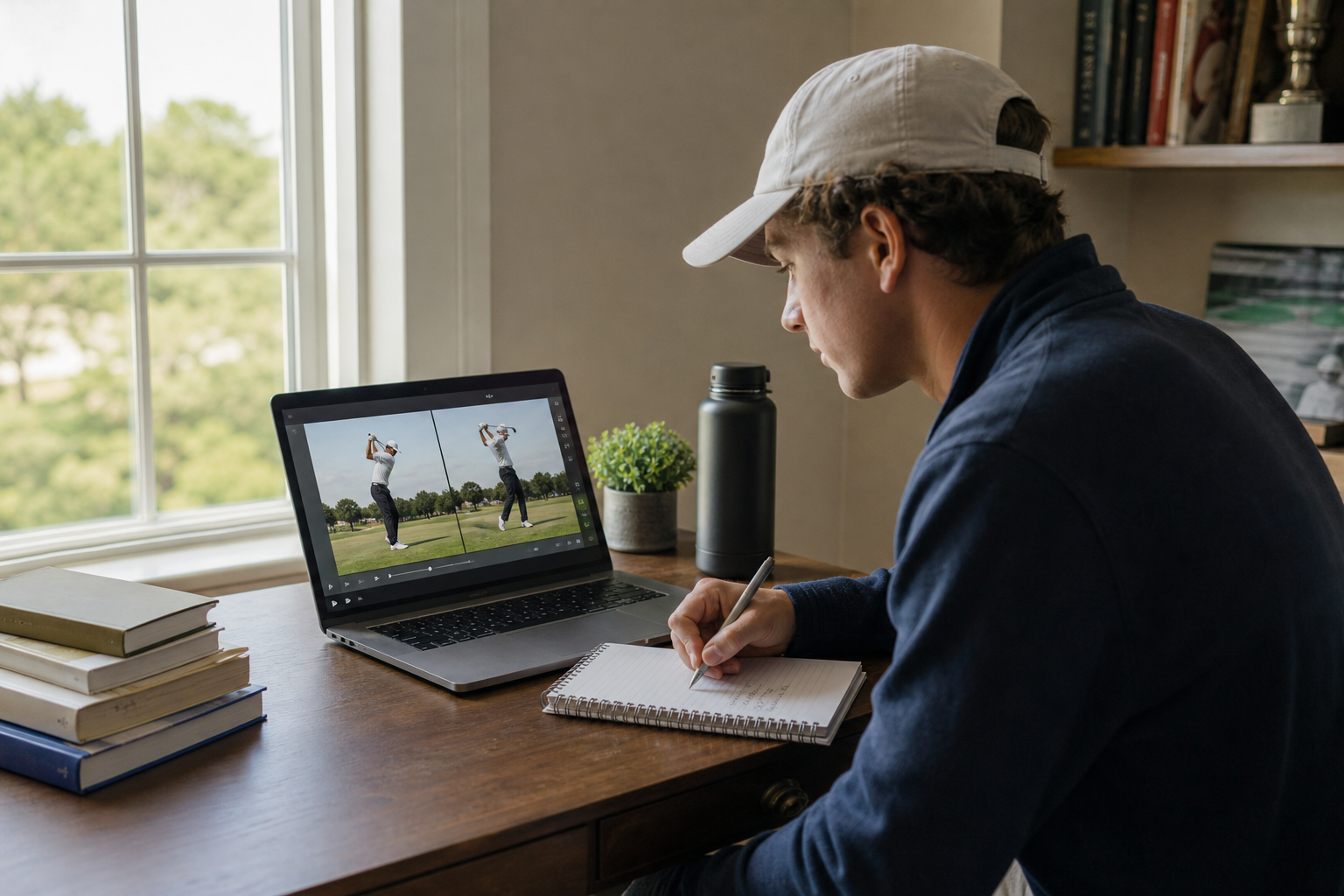
Online golf training for collegiate golfers has become one of the fastest-growing ways to refine swing mechanics without leaving campus or sacrificing practice time. Instead of relying solely on a local instructor, college athletes can now access biomechanics-based coaching from specialists anywhere in the country. This shift matters because competitive golf demands precision, and even small mechanical flaws can cost strokes in high-pressure tournaments. As a result, more programs and individual players are turning to remote, data-driven instruction to close the gap between good and great.
Furthermore, collegiate schedules rarely allow time for weekly in-person lessons with a specialized coach. In contrast, a digital platform removes that barrier entirely, letting an athlete in one state work with an expert based anywhere else. This guide explains what online golf training for collegiate golfers actually involves, how it works day to day, and how to choose a program built on real sports science rather than generic tips.
What Is Online Golf Training for Collegiate Golfers?
Online golf training for collegiate golfers is a remote coaching model that uses recorded swing video, biomechanical assessment, and personalized drills to help NCAA-level athletes improve technique without in-person lessons. It typically includes ongoing feedback, structured drill plans, and progress tracking across a full competitive season.
In practice, this means an athlete records their swing, submits it to a coach through a secure platform, and receives detailed analysis in return. Specifically, a qualified coach breaks down posture, sequencing, and clubface control, then explains the findings in plain language. Because the feedback is grounded in kinesiology, the science of human movement, it goes beyond surface-level tips and addresses the actual mechanics producing a result on the course.
Programs built for serious competitors, such as those outlined in this science-backed elite training guide, combine this analysis with structured practice plans. Consequently, athletes are not left guessing what to work on between sessions.
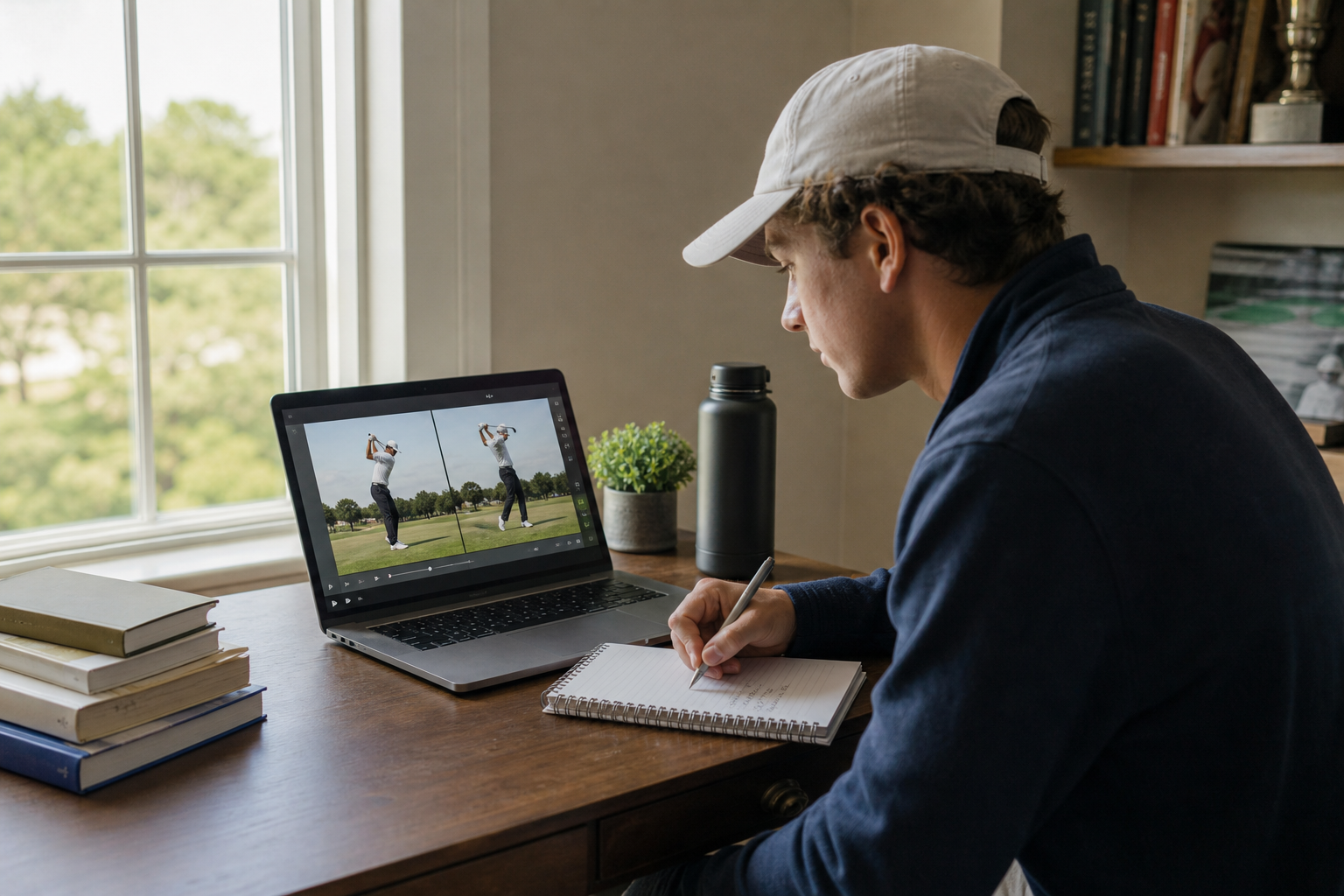
Reviewing recorded swing footage is a core part of online golf training for collegiate golfers.
Why Collegiate Golfers Need Specialized Remote Coaching
Collegiate golfers face a unique problem: they need advanced, highly technical coaching, yet their team schedule leaves little room for travel or lengthy in-person sessions. Therefore, remote coaching solves a logistical challenge while still delivering elite-level instruction. Many local instructors are excellent for beginners, but they may not have the depth of experience required to fine-tune a swing for someone already competing at a high level.
In addition, a specialist who works exclusively with competitive players understands the pressure of tournament golf. For example, a coach familiar with NCAA competition formats, which are governed by the National Collegiate Athletic Association, can tailor feedback around how a swing performs under scoring pressure, not just on a quiet range. As a result, athletes get guidance that is directly relevant to their actual competitive environment.
For players evaluating their options, this guide to choosing competitive online coaching breaks down what separates a qualified specialist from a generalist instructor.
The Science Behind Swing Mechanics and Injury Prevention
At the center of effective remote coaching is kinesiology, the scientific study of human movement and how muscles, joints, and the nervous system work together during activity. Understanding this field allows a coach to see why a swing produces a certain result instead of simply describing what it looks like. Consequently, corrections are based on cause rather than symptom.
This matters because faulty mechanics are not just a performance issue; they are also a safety issue. Research referenced through the National Institutes of Health has linked repetitive, inefficient swing patterns to a meaningful share of overuse injuries among golfers, particularly in the lower back and lead wrist. Specifically, some clinical reviews report that more than half of amateur golfers experience lower back discomfort connected to swing faults over time. Because collegiate athletes practice and compete far more frequently than casual players, correcting these patterns early is especially important for long-term health.
Players wanting a deeper technical breakdown can review this swing improvement guide built specifically for collegiate players.

Consistent practice between sessions reinforces lessons learned in biomechanics-based coaching.
How to Start Online Golf Training: A Step-by-Step Process
Getting started with a remote coaching program follows a fairly consistent sequence. Below is the typical process most programs, including science-based platforms, use to move an athlete from first video submission to measurable improvement.
- Record baseline swing videos from down-the-line and face-on angles using a smartphone tripod to establish an accurate starting point for biomechanical assessment.
- Submit footage along with performance goals and any injury history so the coach can tailor a kinesiology-based improvement plan to your specific needs.
- Review personalized feedback and drill assignments, then practice the recommended corrections consistently for two to three weeks before reassessment.
- Schedule a live video consultation to discuss progress, ask technical questions, and adjust the training plan based on measurable swing data.
- Repeat the submit-review-adjust cycle throughout the season, tracking metrics like clubhead speed and consistency to confirm steady improvement over time.
For athletes who want structured footage libraries to practice alongside live coaching, these training videos for competitive play can reinforce what a coach assigns between review cycles.
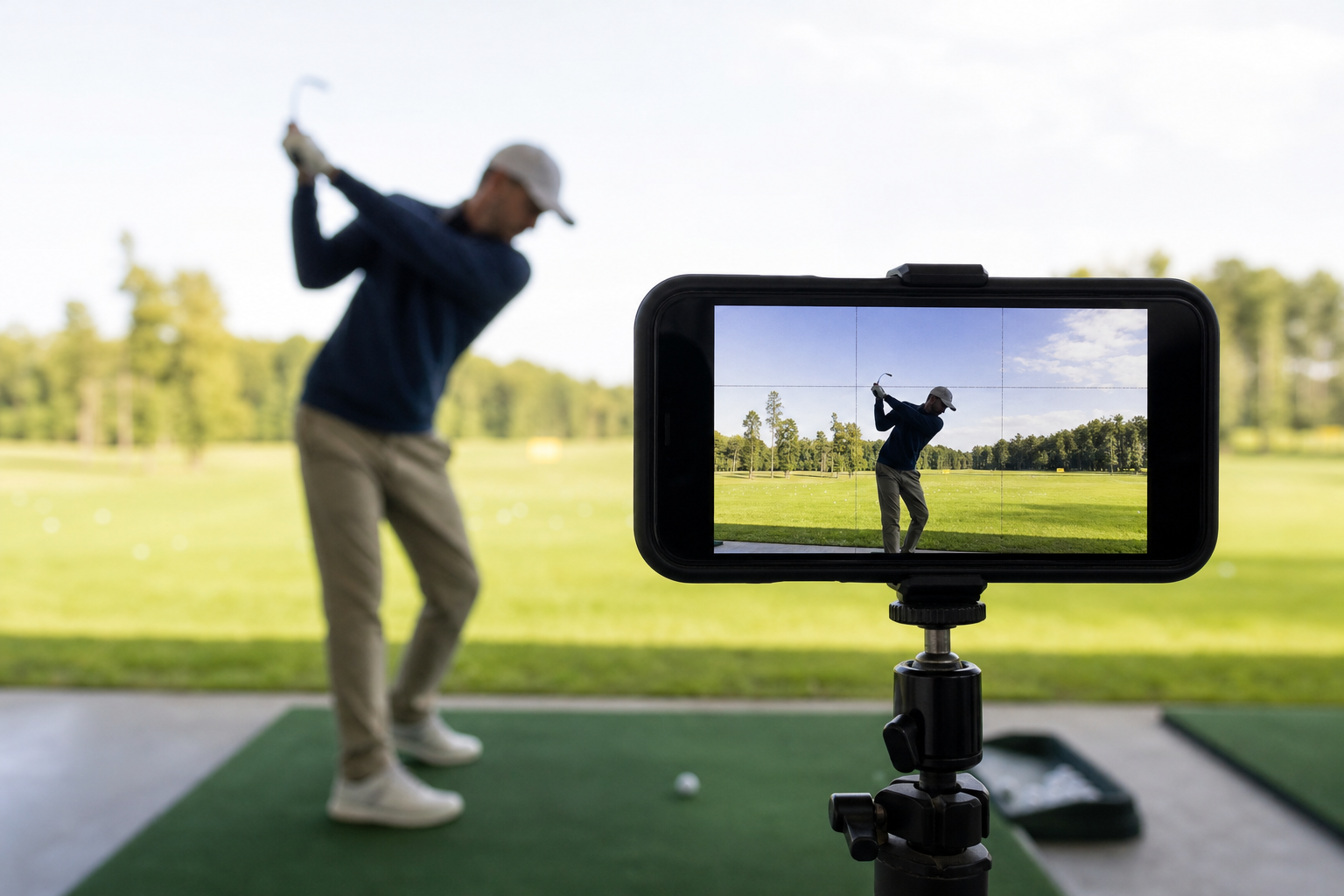
A simple tripod setup is often all that is needed to begin online golf training for collegiate golfers.
Choosing the Right Online Coach for Competitive Players
Not every online coaching program is built for serious athletes. Therefore, it helps to look closely at a coach’s credentials before committing. Specifically, certifications from major teaching bodies, advanced education in sports science, and documented experience with competitive or collegiate players are strong signals of quality.
Above all, transparency matters. A credible coach should be able to explain their assessment process clearly, show how progress will be measured, and describe what a typical review cycle looks like. In contrast, vague promises of quick fixes are usually a red flag. Reviewing a detailed comparison, such as this list of swing lessons built for serious competitive golfers, can help narrow down realistic options before making a decision.
Players can also explore yourgolfguru.com directly to see how a kinesiology-based coaching model is applied specifically to elite and competitive golfers.
Common Mistakes in Remote Swing Training
Even strong programs can fall short if athletes skip key steps. For instance, filming from inconsistent angles makes it harder for a coach to track real progress over time. Similarly, trying to overhaul multiple parts of a swing at once often leads to confusion rather than improvement.
Finally, skipping the reassessment step is a frequent mistake. Without a follow-up video, neither the athlete nor the coach can confirm whether a drill actually produced the intended change. As a result, patience and consistency matter just as much as the quality of the coaching itself.
Frequently Asked Questions About Online Golf Training for Collegiate Golfers
What is online golf training for collegiate golfers?
Online golf training for collegiate golfers is a remote coaching model that uses recorded swing video, biomechanical assessment, and personalized drills to help NCAA-level athletes improve technique without traveling to an instructor. It typically includes ongoing feedback and progress tracking over a season.
How does remote golf coaching differ from in-person lessons?
Remote coaching relies on video submissions, written feedback, and scheduled virtual calls instead of face-to-face sessions at a range. This allows athletes to work with highly specialized coaches regardless of location, though it does require consistent self-recorded footage.
Why do collegiate golfers benefit from biomechanics-based instruction?
Biomechanics-based instruction examines how the body moves through the swing to identify inefficiencies that cost distance, accuracy, or safety. For athletes competing at a high level, small mechanical corrections can translate into meaningful score improvements.
How much does online golf coaching typically cost?
Pricing varies widely depending on coach credentials and program depth, ranging from affordable monthly video-review packages to premium one-on-one coaching with elite-level professionals. Most programs offer tiered plans based on budget and goals.
How long does it take to see results from remote swing training?
Many golfers notice measurable changes in swing consistency within two to four weeks of focused practice on assigned drills. However, deeper mechanical changes, especially those tied to injury prevention, often take a full season to fully integrate.
What equipment do I need for online golf lessons?
A smartphone, a tripod or stable surface, and a quiet space to film from face-on and down-the-line angles are usually sufficient to begin. Some programs also recommend launch monitors for more detailed data.
Can online training help prevent golf-related injuries?
Yes, coaches trained in kinesiology can spot swing patterns linked to back, wrist, and hip strain before they cause injury. Correcting these patterns early is especially valuable for athletes playing dozens of competitive rounds each season.
Is online coaching effective for NCAA Division I athletes?
Online coaching can be highly effective for Division I athletes because it supplements team practice with individualized technical attention a single team coach may not have time to provide. Many programs now encourage outside expert input for this reason.
What is the difference between online golf training and generic swing apps?
Generic swing apps typically offer automated feedback based on general templates, while true online golf training involves a credentialed human coach tailoring advice to the individual athlete. The latter accounts for body type, injury history, and competitive goals.
How often should collegiate golfers submit swing videos for review?
Weekly or biweekly submissions are common during active training periods, allowing coaches to track progress and adjust drills promptly. During tournament-heavy stretches, athletes may shift to shorter check-ins focused on maintenance.
What mistakes should golfers avoid when starting remote training?
Common mistakes include filming from inconsistent angles, trying to fix too many swing faults at once, and skipping the reassessment step after practicing new drills. Staying patient and following the coach’s sequence typically produces better results.
How do I know if an online golf coach is qualified?
Look for verifiable credentials such as LPGA or PGA certification, advanced education in kinesiology or sports science, and a track record working with competitive or collegiate athletes. Clear communication and transparent assessment methods are also strong indicators of quality.
Final Thoughts
In summary, online golf training for collegiate golfers offers a practical way to access elite, science-backed coaching without the limitations of geography or scheduling. By combining recorded swing analysis, kinesiology-based feedback, and a clear step-by-step process, athletes can work steadily toward better power, accuracy, and long-term durability. Ultimately, choosing a qualified coach and staying consistent with the review cycle are the two factors that matter most for turning remote instruction into real, measurable progress on the course.