


How to train golf swing without injury is a question every serious player eventually has to answer, especially once practice volume increases. Building more clubhead speed and consistency feels great, but doing so carelessly can leave competitive golfers sidelined with back, wrist, or shoulder problems. The good news is that safe swing training is a learnable skill, not a matter of luck. This guide walks through the biomechanics, exercises, and coaching strategies that let golfers train hard while protecting their bodies for the long game.

A proper warm-up is the foundation of training a golf swing without injury.
What Is Safe Golf Swing Training?
Safe golf swing training is a method of practicing and refining your swing that builds power and consistency while respecting the body’s physical limits. In short, it balances performance gains with recovery, mobility, and correct mechanics so that progress does not come at the cost of your joints.
Unlike generic practice routines, safe training accounts for how the spine, hips, and shoulders rotate together during the swing. According to orthopedic sports medicine resources from the American Academy of Orthopaedic Surgeons, repetitive rotational stress is a primary driver of golf-related injuries, which is why sequencing and recovery matter as much as raw repetitions.
Why Golf Swing Injuries Happen
Golf swing injuries rarely come from a single bad shot. Instead, they build gradually from repeated stress on tissues that aren’t prepared for the forces involved. Research published through the National Institutes of Health indicates that lower back injuries account for roughly 18 to 55 percent of all reported golf injuries, depending on the study population, making it the most commonly affected area in the sport.
Several factors contribute to this risk. For instance, limited hip or thoracic spine rotation forces the lower back to compensate during the downswing. Similarly, fatigue late in a long practice session often causes subtle breakdowns in form that go unnoticed until pain appears. In addition, many golfers skip structured warm-ups entirely, moving straight from the parking lot to full-speed swings.
As a result, injury prevention has to start before the first ball is struck, not after discomfort shows up. Understanding these root causes is the first step toward training smarter rather than simply training harder.

Video analysis helps identify mechanical faults before they cause injury.
How to Train Golf Swing Without Injury
Learning how to train golf swing without injury comes down to three connected principles: proper preparation, efficient mechanics, and structured recovery. Above all, these elements need to work together rather than being treated as separate checkboxes.
First, preparation means warming up the specific joints involved in rotation, particularly the hips and thoracic spine. Next, efficient mechanics means sequencing the swing so that the lower body initiates the downswing before the arms and club catch up, which reduces unnecessary strain on the spine. Finally, recovery means respecting rest days and listening to early warning signs like stiffness or minor soreness before they escalate into real injuries.
Step-by-Step Swing Training Process
The following sequence reflects a practical approach used by many evidence-based coaching programs:
- Warm up with dynamic mobility work. Spend about 10 minutes loosening the hips, thoracic spine, and shoulders before taking a single swing.
- Start with slow-motion swing reps. Rehearse correct sequencing at roughly half speed for 10 to 15 repetitions.
- Progress gradually into full-speed swings. Increase intensity in small steps across multiple sets instead of jumping straight to maximum effort.
- Monitor fatigue and stop before form breaks down. End the session once compensatory movement patterns appear.
- Cool down and prioritize recovery. Finish with light stretching and schedule at least one rest day between intense sessions.
Golfers who want a deeper breakdown of these mechanics can review expert prevention tips for reducing golf swing injuries, which expand on each stage in more detail.
Best Exercises to Prevent Golf Swing Injuries
Strength and mobility work outside of regular swing practice plays a major role in injury prevention in golf. Specifically, exercises that build rotational stability tend to offer the most protection for the lower back and shoulders.
| Exercise | Primary Benefit |
|---|---|
| Cable or band rotational chops | Trains controlled core rotation |
| Hip 90/90 mobility drill | Improves hip rotation range |
| Thoracic spine rotations | Reduces compensatory low back stress |
| Single-leg glute bridges | Builds posterior chain stability |
Golfers looking for a complete routine can explore these injury prevention exercises designed for a safer swing as a starting point for structured training.
Common Mistakes When Training Your Golf Swing
Even motivated golfers fall into predictable traps. Often, the biggest mistake is prioritizing swing speed over technique, which places excessive load on unprepared joints. Furthermore, many players ignore minor discomfort, assuming it will simply fade with more practice.
In contrast, players who track their swing volume, build in recovery days, and address mobility limitations tend to train far more consistently over a full season. Those committed to a lower-impact approach may also benefit from a minimalist swing approach designed for golfers managing injury.
When to Get Professional Injury Prevention Training
Self-guided practice works for a while, but competitive golfers often reach a point where expert feedback becomes essential. In particular, swing faults that aren’t visible to the golfer themselves are often the ones causing the most physical strain.
Working with a coach who understands both swing mechanics and the underlying biomechanics of the body offers a significant advantage. Yourgolfguru.com provides remote coaching developed by an LPGA Master Professional with a PhD in kinesiology, combining data-driven swing analysis with injury-conscious technique correction for competitive amateurs, collegiate players, and aspiring professionals. Golfers can also review training methods for swinging safely and strongly or explore strategies competitive golfers use to improve quickly without compromising long-term health. For more background on biomechanics terminology used throughout coaching programs, see this overview of the golf swing on Wikipedia.
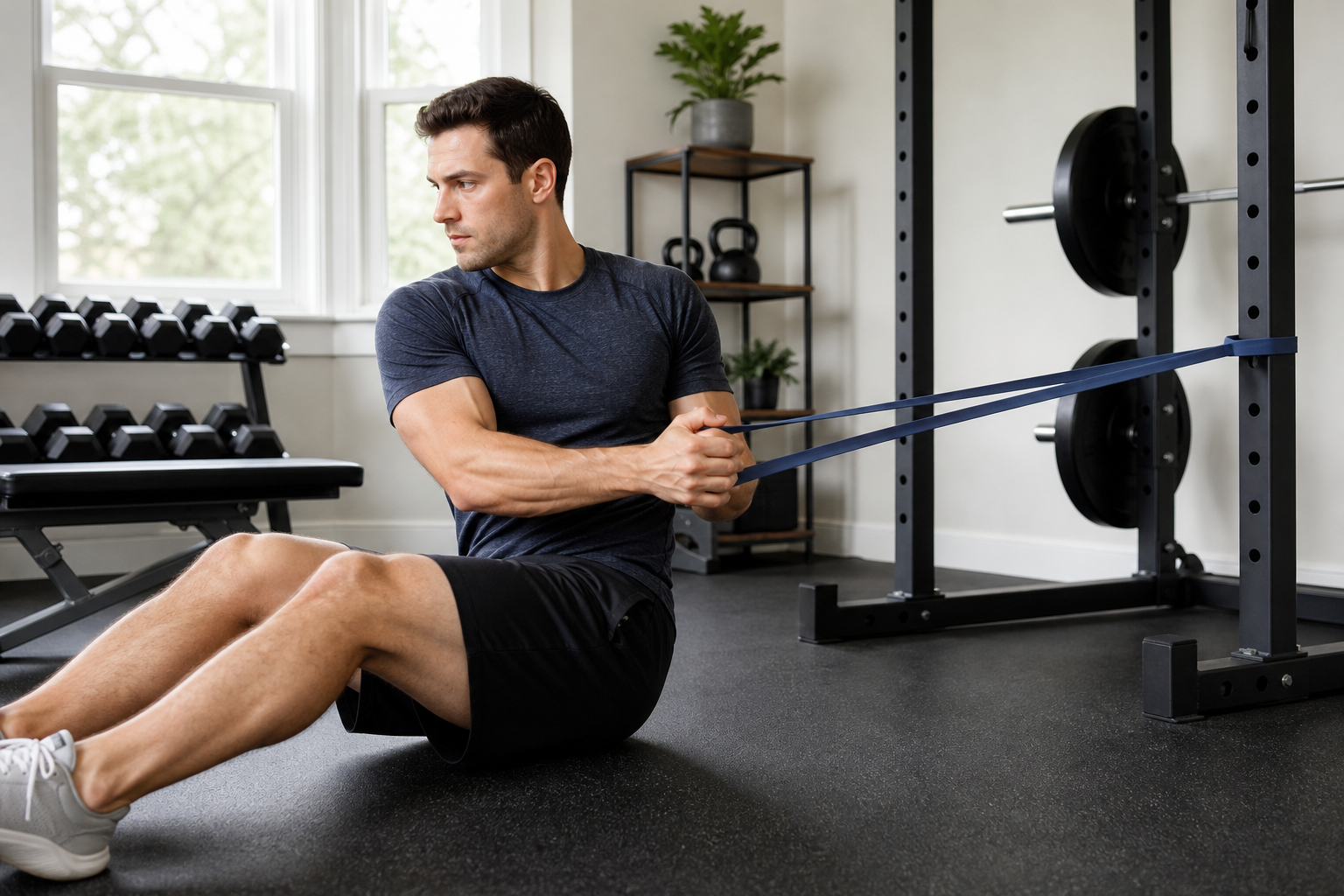
Targeted strength work supports the body through repeated swing practice.
Frequently Asked Questions
What does it mean to train golf swing without injury?
Training your golf swing without injury means building swing speed, power, and consistency while protecting your spine, hips, and joints from overuse damage. It relies on proper warm-up, biomechanically sound technique, and gradual load progression.
How long does it take to see results from safe swing training?
Most golfers notice improved mobility and swing control within four to six weeks of consistent, injury-conscious training. Full biomechanical adaptations, such as increased rotational power, often take eight to twelve weeks.
Why do golfers get hurt during swing practice?
Most golf swing injuries stem from repetitive strain, poor warm-up habits, and compensatory movement patterns caused by limited hip or thoracic mobility. Hitting hundreds of balls with faulty mechanics multiplies stress on the lower back and wrists.
What is the difference between swing training and strength training for golf?
Swing training focuses on repeating and refining the golf motion itself, while strength training builds the muscular foundation that supports that motion safely. Both are necessary, but strength training should typically come first to prepare the body.
How much does online golf injury prevention coaching cost?
Online golf coaching focused on biomechanics and injury prevention typically costs less than in-person sessions with a sports medicine specialist, since there is no facility overhead. Pricing varies by program length and the level of personalized video analysis included.
What are the most common golf swing training mistakes?
The most common mistakes include skipping a dynamic warm-up, overtraining swing volume without recovery, and ignoring early pain signals in the lower back or wrists. Many golfers also rely on power alone instead of efficient, repeatable mechanics.
Can beginners use the same injury prevention methods as competitive golfers?
Yes, beginners benefit from the same core principles, though the intensity and swing volume should be lower. Gradual progression matters even more for new golfers whose joints and tissues have not yet adapted to repetitive rotational stress.
What muscles are most important for a safe golf swing?
The core, glutes, and rotator cuff muscles play the biggest role in stabilizing the spine and shoulders during the swing. Strengthening these areas reduces compensatory strain on the lower back, which is the most commonly injured region in golf.
Is it normal to feel sore after golf swing training?
Mild muscle soreness after a new training routine is normal and usually fades within 48 hours. However, sharp or persistent joint pain is not normal and signals that technique or training load needs to be adjusted.
How often should competitive golfers practice swing mechanics?
Competitive golfers can safely practice swing mechanics four to six days per week when sessions are balanced with mobility work and rest days. Quality and recovery matter more than sheer repetition volume.
What role does a warm-up play in golf injury prevention?
A proper warm-up raises tissue temperature and activates the muscles used during the swing, reducing injury risk significantly before high-speed movements begin. Skipping it is one of the leading causes of preventable golf injuries.
Should I stop training if I feel pain during my swing?
Yes, any sharp or worsening pain during the swing is a signal to stop immediately and assess the cause rather than pushing through it. Continuing to train through pain often turns a minor issue into a long-term injury.
How does online coaching help golfers train without injury?
Online coaching allows a qualified instructor to analyze swing video for mechanical faults that contribute to injury risk, regardless of the golfer’s location. This remote feedback loop, available through platforms like yourgolfguru.com, makes expert-level, biomechanics-based correction accessible to golfers everywhere.
Conclusion
Ultimately, learning how to train golf swing without injury is about patience, preparation, and listening to your body rather than chasing speed at any cost. By warming up properly, progressing swing intensity gradually, strengthening supporting muscle groups, and recognizing early warning signs, competitive golfers can build lasting power without sacrificing long-term health. Consequently, the players who train smartest, not just hardest, are usually the ones still competing injury-free years down the road. For golfers ready to take a science-backed approach to the next level, professional, biomechanics-informed coaching remains one of the most reliable paths to sustainable improvement.