

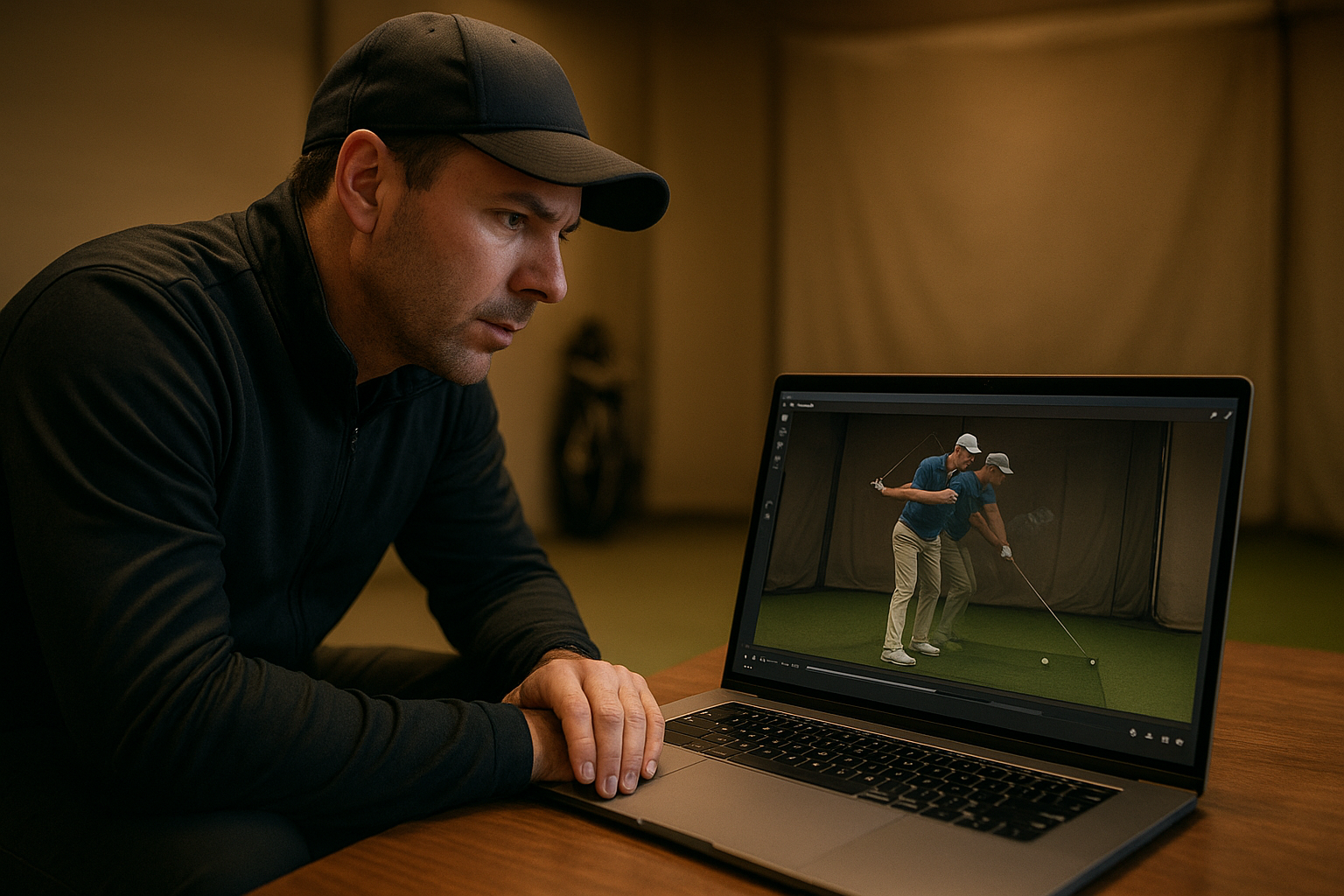
How to analyze golf swing mechanics is one of the most valuable skills a competitive golfer can develop, because it turns guesswork into a data-driven path toward a faster, more repeatable swing. Instead of chasing vague feelings on the range, you learn to break the motion into phases, measure each one, and fix the exact fault holding your game back. This approach matters most for serious players who need results that hold up under tournament pressure.
In short, analyzing golf swing mechanics means breaking your swing into measurable phases, setup, backswing, transition, downswing, impact, and follow-through, then comparing each one against proven biomechanical benchmarks. Video, sensors, or expert coaching reveal which specific fault is limiting your speed, accuracy, or consistency. From there, targeted drills close the gap.
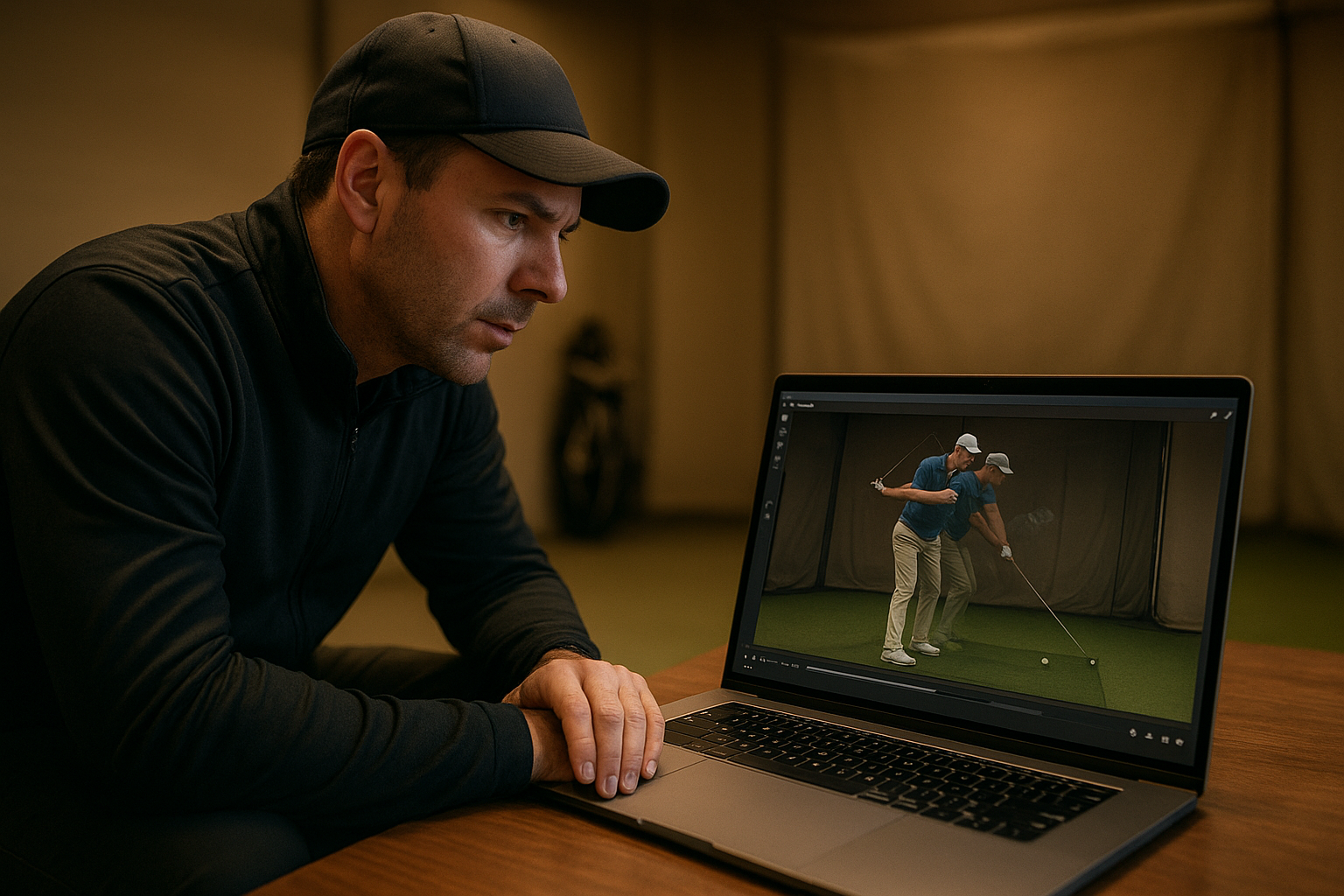
Frame-by-frame review is a core method for learning how to analyze golf swing mechanics accurately.
What Is Golf Swing Mechanics Analysis?
Golf swing mechanics analysis is the process of studying a golfer’s motion in distinct phases to identify inefficiencies that reduce distance, accuracy, or safety. Specifically, it looks at body rotation, weight transfer, club position, and timing rather than relying on how the swing “feels” to the player.
Unlike casual tips found online, a genuine analysis relies on biomechanics, the scientific study of movement in living bodies. As a result, conclusions are grounded in measurable positions rather than opinion. This is why many competitive players eventually move beyond generic local lessons toward coaches who combine playing experience with a scientific background, as outlined in this science-backed training approach.
How to Analyze Golf Swing Mechanics: The Core Framework
Learning how to analyze golf swing mechanics starts with isolating the swing into checkpoints rather than viewing it as one continuous blur. In particular, each checkpoint has known biomechanical ranges that correlate with speed, control, and injury risk. Comparing your position at each checkpoint against those ranges is the foundation of every credible analysis method.
Setup and Address Position
Everything begins at setup, because posture errors here compound through the entire swing. Spine tilt, grip pressure, and stance width should all be checked first, since a flawed base makes every later position harder to diagnose accurately.
Backswing and Transition
During the backswing, hip and shoulder separation determines how much stored power is available. Meanwhile, the transition moment, where the swing changes direction, is often where amateurs lose sequencing. Therefore, this brief window deserves close frame-by-frame attention.
Downswing, Impact, and Follow-Through
The downswing should show the lower body leading the upper body, which is a hallmark of efficient power transfer. At impact, club path and face angle decide ball flight. Finally, the follow-through confirms whether the prior positions were actually sustainable or simply a one-time result.
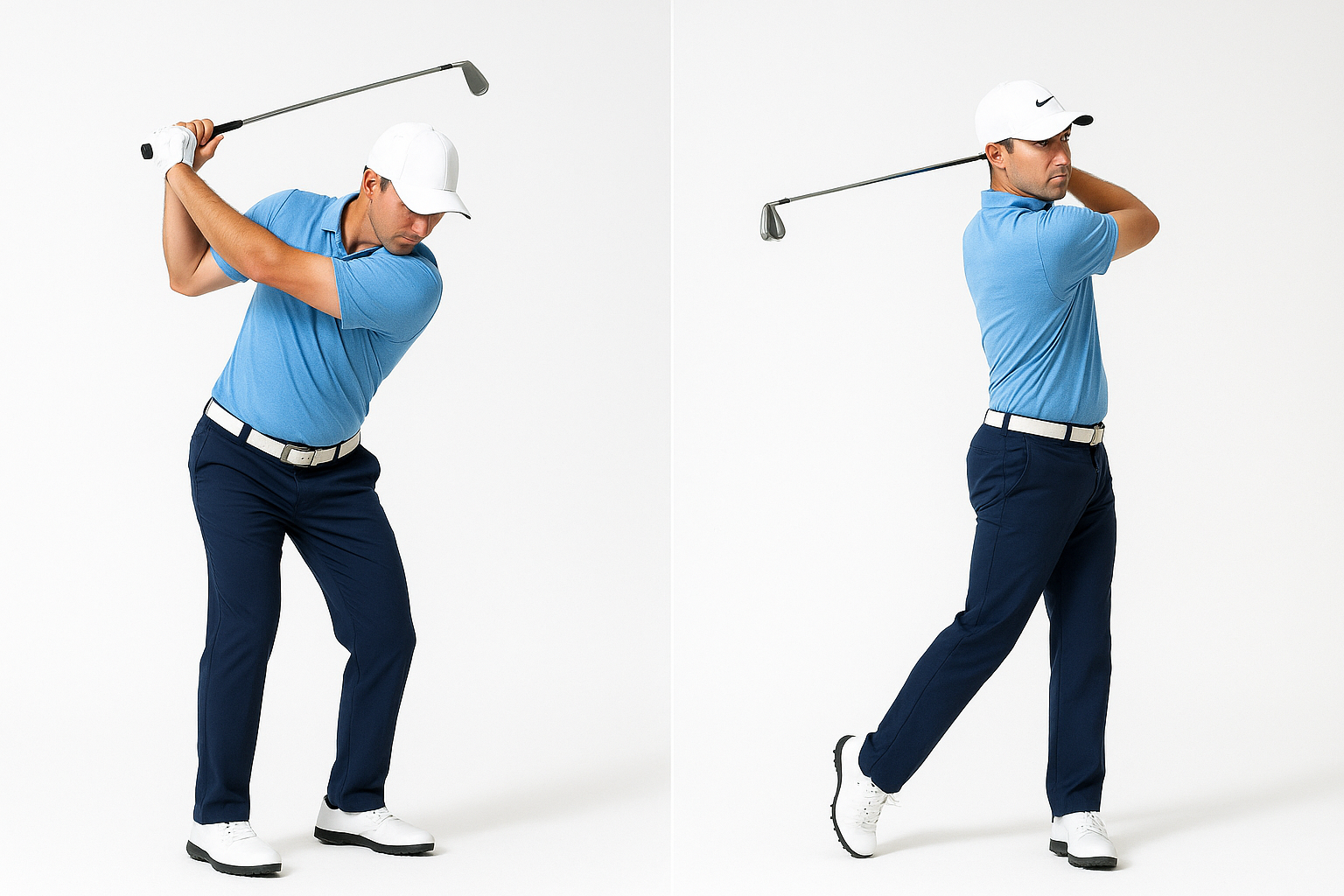
Comparing key phases side by side supports a thorough swing mechanics breakdown.
Step-by-Step Process to Evaluate Your Swing Mechanics
Once the framework is clear, a repeatable process keeps the evaluation objective instead of random. Consequently, following the same steps every time makes progress easy to track across months of training.
- Record your swing from face-on and down-the-line angles using slow motion so every phase of the motion can be reviewed frame by frame later.
- Separate the footage into setup, backswing, transition, downswing, impact, and follow-through so each phase can be judged on its own merits.
- Check spine angle, hip rotation, and wrist position against established biomechanical ranges used by trained coaches and kinesiology-based instructors.
- Use a launch monitor or wearable sensor to capture clubhead speed, path, and face angle data that confirms or challenges what the video shows.
- List every deviation found, then rank them by how much each one limits power, accuracy, or safety so practice time targets the biggest gains first.
- Apply specific corrective drills for two to four weeks, then film and measure again to confirm the mechanical change has actually taken hold.
Tools and Technology Used to Break Down Swing Mechanics
Modern swing analysis relies on more than a trained eye. For example, high-speed cameras, 3D motion capture, and portable launch monitors now give coaches precise numbers instead of estimates. In addition, pressure plates measure weight transfer, while wearable sensors track rotational speed in real time.
However, technology alone does not replace expertise. A sensor can report that hip rotation is ten degrees below average, but only a coach trained in movement science can explain why that matters and how to fix it safely. This is precisely where a background grounded in human movement, often described through the lens of kinesiology, becomes essential for serious athletes.
Avoiding Common Swing Evaluation Errors
Even motivated golfers make predictable mistakes during self-analysis. Above all, comparing your swing to a tour professional’s exact positions without accounting for body type or flexibility leads to the wrong conclusions. Similarly, focusing only on impact while ignoring setup often hides the real root cause of a fault.
Lower back pain is a frequent, and often overlooked, signal that mechanics need review. Research on amateur golfers has repeatedly linked repetitive swing faults, such as early extension, to a meaningful share of golf-related injuries, which is one reason governing bodies like the USGA continue to support biomechanics education for players and coaches alike.
Why Elite Coaching and Kinesiology Matter in Swing Analysis
Competitive amateurs, collegiate players, and aspiring professionals often outgrow what a local instructor can offer. Consequently, many turn to coaches who combine elite playing credentials with formal training in movement science. This pairing allows a coach to translate raw video or sensor data into specific, safe corrections rather than generic tips.
For instance, remote coaching built around this exact approach removes the need to travel for expert-level feedback. Details on this method are available through this intensive, science-backed training path, and the full coaching platform can be explored at yourgolfguru.com for golfers ready to start a structured swing review.
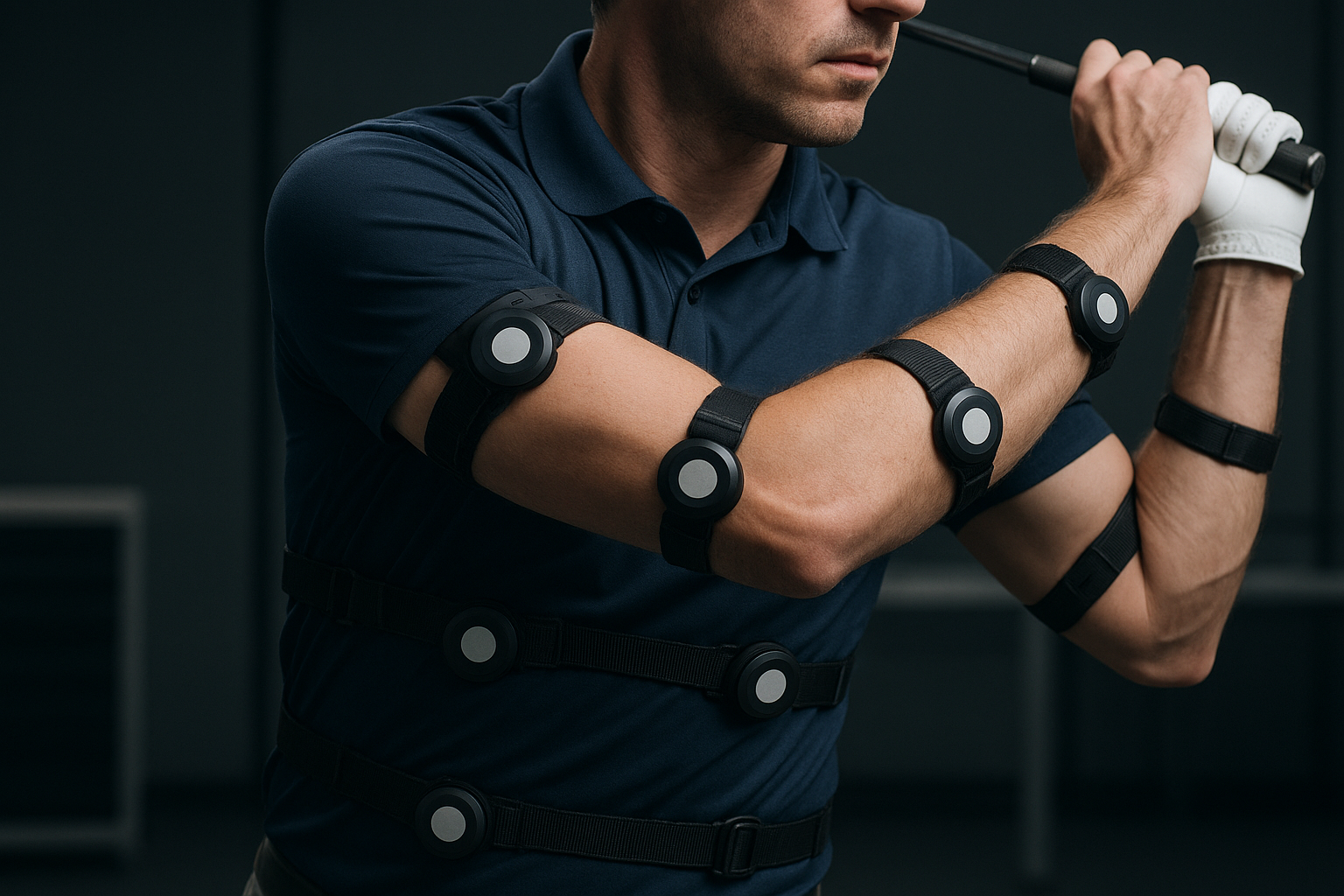
Sensor-based data adds objective detail to a biomechanics-driven swing analysis.
Real-World Swing Breakdowns From Tour Players
Studying elite swings is one of the fastest ways to understand sound mechanics in context. For example, a detailed look at Tiger Woods’s 2018 swing anatomy shows how sequencing changes affected both power and joint stress over time. Similarly, this anatomical and biomechanical breakdown illustrates how small positional shifts show up in measurable data.
On the LPGA side, the minimalist swing used at the Solheim Cup demonstrates that efficient mechanics do not require excessive movement. In addition, lessons drawn from this PGA Seniors Championship diary reinforce how consistency, not just raw speed, separates good swings from great ones over a full competitive season.
Frequently Asked Questions About How to Analyze Golf Swing Mechanics
What does it mean to analyze golf swing mechanics?
How to analyze golf swing mechanics simply means breaking the swing into measurable phases and checking each one against proven biomechanical standards. This reveals exactly where power, accuracy, or consistency is being lost.
How often should competitive golfers review their swing mechanics?
Most competitive players benefit from a formal review every four to six weeks, or sooner if performance drops. Frequent small checks catch faults before they become ingrained habits.
What is the difference between swing analysis and swing coaching?
Swing analysis is the diagnostic step that identifies specific mechanical faults using video or sensor data. Coaching then builds the drills and feedback loops needed to correct those faults over time.
Why do golfers need video analysis instead of just feel?
Feel is often inaccurate because the brain processes a golf swing in under two seconds. Video slows positions down frame by frame, exposing details that are impossible to sense in real time.
What equipment do I need to analyze my golf swing at home?
A smartphone with slow-motion video, a tripod, and free analysis apps are enough to start. Serious players later add launch monitors or motion sensors for deeper biomechanical detail.
How long does it take to see improvement after a swing mechanics breakdown?
Minor positional fixes can show up on the course within two to three weeks of focused practice. Deeper mechanical changes, such as sequencing or rotation patterns, often take six to twelve weeks.
What are the most common swing faults found during analysis?
Early extension, over-the-top transitions, and poor weight transfer are among the most frequent faults coaches identify. Each one reduces clubhead speed and increases strain on the lower back.
How much does professional golf swing analysis cost?
In-person biomechanical sessions can range from 150 to over 500 dollars depending on the facility and technology used. Remote, expert-led online coaching often delivers similar depth at a lower cost.
Can online golf instruction really replace in-person lessons?
Yes, when the instructor uses detailed video review and biomechanical principles, online coaching can match or exceed local lessons. This is especially true for competitive players who need specialized expertise unavailable nearby.
What role does kinesiology play in golf swing analysis?
Kinesiology is the study of human movement, and it explains why certain positions generate power while others cause injury. Coaches with this background can connect swing faults to the underlying joint and muscle mechanics.
How do I know if my swing mechanics are causing injury risk?
Recurring lower back, wrist, or hip pain after practice often signals a mechanical issue rather than simple fatigue. A biomechanical review can pinpoint the movement pattern responsible before it causes lasting damage.
Bringing It All Together: Next Steps for Your Swing
Ultimately, knowing how to analyze golf swing mechanics gives every serious golfer a clear advantage over players who rely on guesswork. By breaking the swing into checkpoints, using objective tools, and applying biomechanical benchmarks, faults become easy to find and fix rather than frustrating mysteries. Therefore, the players who commit to this process consistently outpace those who do not.
In the end, pairing this framework with expert, science-based coaching speeds up every stage of improvement. Golfers ready to apply these principles with guided, kinesiology-informed feedback can learn more through yourgolfguru.com, where remote instruction connects players everywhere to elite-level swing analysis.