
How to evaluate golf swing performance remotely is one of the most pressing questions for competitive golfers who no longer live near an elite instructor. Thanks to better cameras, cloud storage, and coaches trained in biomechanics, this is now easier than ever. In fact, serious players from collegiate teams to aspiring professionals are turning to remote swing review instead of waiting weeks for an in-person slot.
Specifically, remote evaluation works by pairing video or sensor data with a coach’s trained eye. As a result, golfers can get expert feedback from anywhere, without needing to travel to a physical facility. Below, you’ll find a complete breakdown of how this process works, what to expect, and how to get the most accurate results.
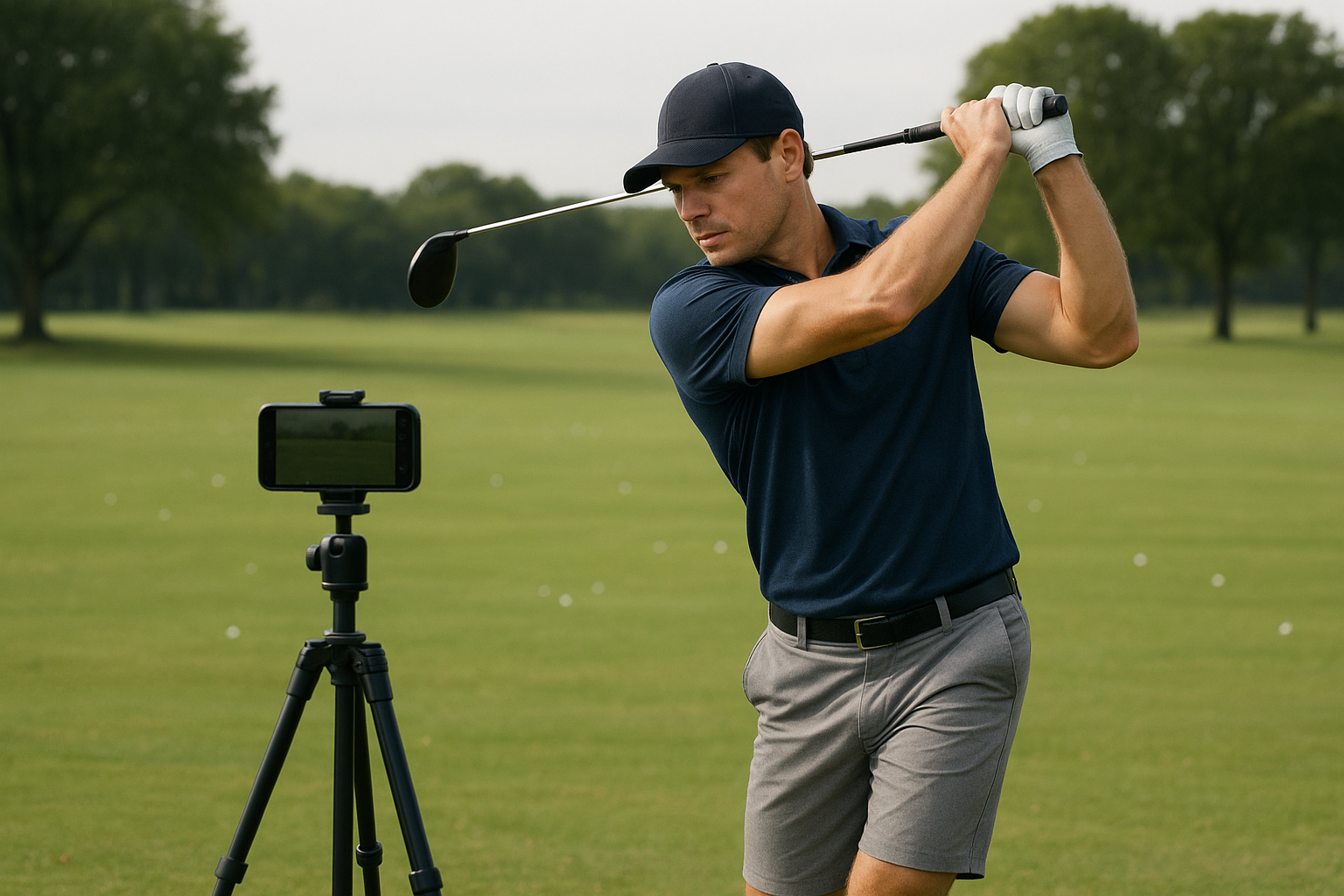
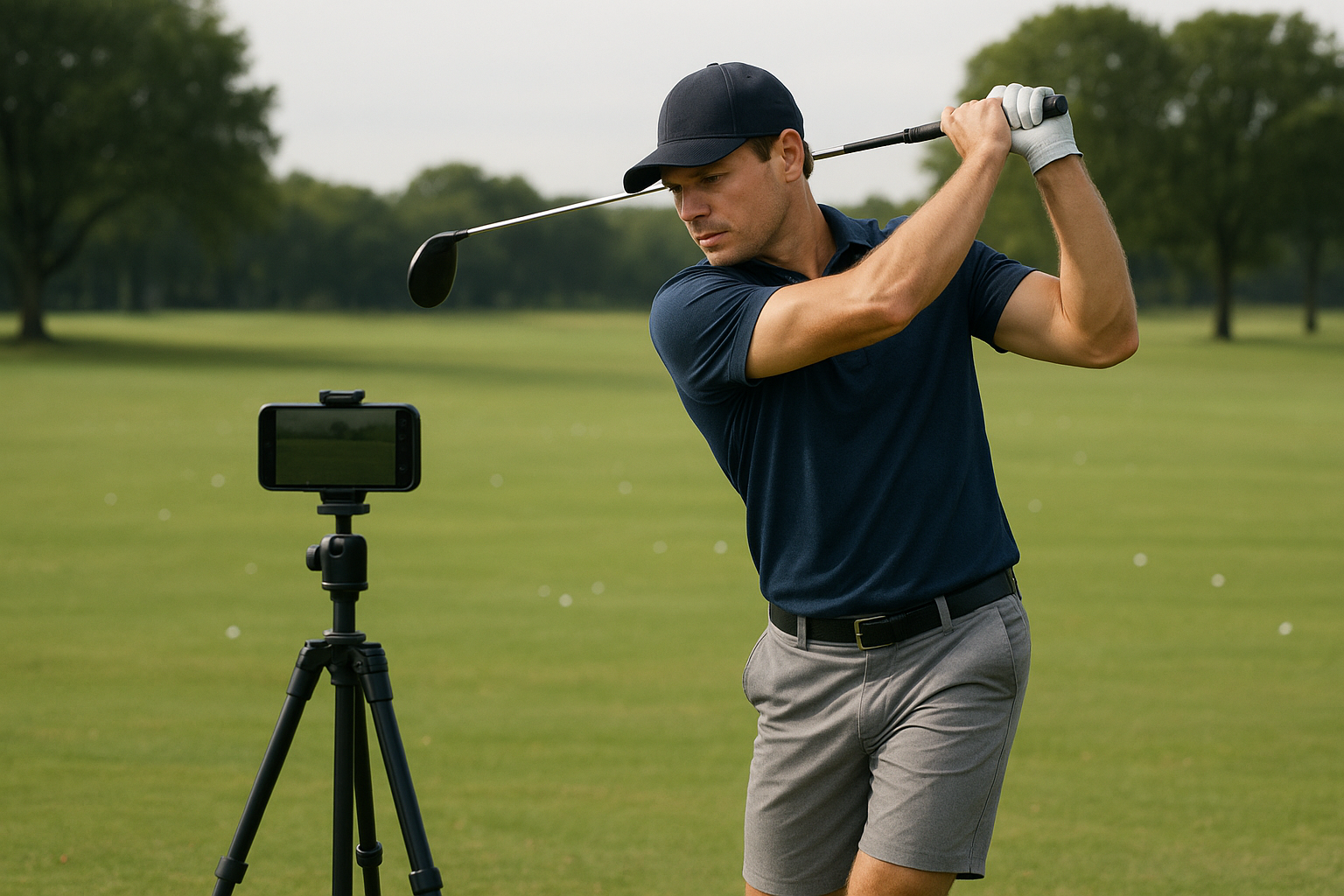
Capturing consistent camera angles is the first step in learning how to evaluate golf swing performance remotely.
What Is Remote Golf Swing Performance Evaluation?
Remote golf swing performance evaluation is the process of using video, sensor data, and expert analysis to assess swing mechanics without meeting a coach face to face. In short, the golfer records their swing, submits it digitally, and receives a detailed breakdown of their mechanics along with corrective drills.
Unlike a quick in-person tip, this approach often draws on biomechanics — the study of how the body moves and generates force. Consequently, a coach with a background in kinesiology (the science of human movement) can spot inefficiencies that a purely visual lesson might miss, such as improper weight transfer or restricted hip rotation.
Why Competitive Golfers Choose Remote Swing Assessment
Above all, remote swing assessment removes geographic barriers. A golfer training in a small town can still access a coach with elite-level credentials, such as an LPGA Master Professional, without relocating or flying across the country for a single lesson.
In addition, remote assessment tends to be more frequent and affordable than traditional academy visits. Instead of one lesson per month, many golfers submit short video clips weekly, which allows coaches to track progress in near real time. For a closer look at how this structure works in practice, see this guide to elite remote training.
Furthermore, remote coaching suits the travel schedules of collegiate and competitive players. Tournaments often pull athletes away from their home club for weeks, so a digital relationship with a coach keeps development consistent no matter where a player is competing.
Core Metrics for Assessing Golf Swing Mechanics Online
When assessing golf swing mechanics online, coaches typically look at a consistent set of metrics rather than guessing from a single angle. These usually include clubface angle at impact, hip and shoulder rotation sequencing, spine tilt, and tempo ratio between backswing and downswing.
Notably, a biomechanical study referenced by the National Institutes of Health has linked faulty spine and hip sequencing to a significant share of golf-related lower back injuries. Therefore, tracking these metrics is not just about ball-striking; it’s also about long-term physical safety.
Similarly, launch monitor data such as clubhead speed, launch angle, and spin rate can be shared remotely to add objective numbers to the visual review. This combination of video and data gives a far more complete picture than video alone.
Direct Answer:
To evaluate golf swing performance remotely, record face-on and down-the-line video with a steady tripod, submit it to a qualified coach along with context notes, and review the biomechanical feedback they return. Repeating this cycle every one to two weeks allows measurable progress tracking without any in-person visits.
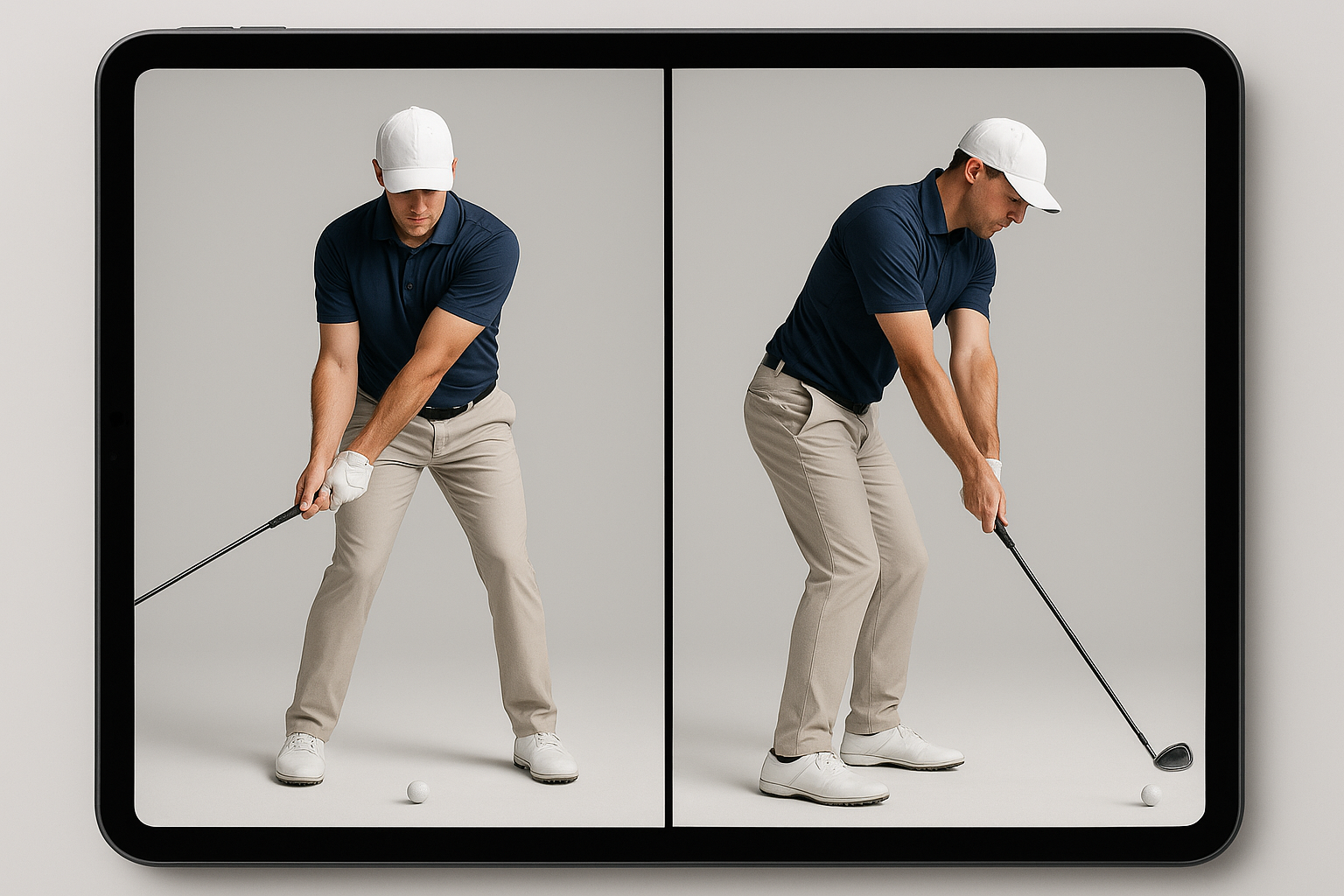
Side-by-side video comparisons help coaches track changes over time during remote swing review.
How to Evaluate Golf Swing Performance Remotely in 5 Steps
Here is the exact process many coaches use when working with golfers who need structured, step-by-step support from a distance.
- Set up consistent camera angles. Place a tripod at hip height roughly eight feet from the ball, capturing both a face-on view and a down-the-line view every time you film.
- Record multiple swing repetitions. Film at least five to ten swings with the same club so your coach can tell a genuine pattern apart from a single mishit.
- Submit footage with context notes. Upload the video along with notes on ball flight tendencies, any recent discomfort, and your specific goals for the session.
- Review the biomechanical breakdown. Study your coach’s frame-by-frame analysis, including angle measurements compared against efficient swing positions.
- Apply drills and resubmit follow-up video. Practice the prescribed drills for one to two weeks, then film new footage so progress can be confirmed and the plan adjusted.
As you can see, the process mirrors an in-person lesson cycle closely. The main difference is that everything happens asynchronously, which actually gives both the golfer and coach more time to think through each adjustment carefully.
Technology Behind Virtual Swing Analysis
Several tools make virtual swing analysis practical for everyday golfers. Slow-motion camera apps let you capture 120 or 240 frames per second, which is essential for catching fast movements like the transition from backswing to downswing.
Meanwhile, cloud-based platforms allow coaches to draw annotation lines directly over your swing frames, marking spine angle, hip rotation, or clubface position. For reference on governing standards around swing equipment and rules, the USGA offers useful background, while the Wikipedia entry on biomechanics explains the science coaches apply when reading your footage.
Golfers interested in a more structured, data-driven option can explore customized online swing coaching built specifically around this kind of remote review.
Common Mistakes to Avoid
Even with good intentions, golfers often undermine their own remote reviews. For instance, filming from an inconsistent distance between sessions makes it nearly impossible for a coach to track real change over time.
Likewise, skipping context notes is a common error. Without details about ball flight or discomfort, a coach is left guessing at priorities instead of addressing what matters most. In contrast, golfers who submit clear notes alongside their video tend to see faster, more targeted improvement.
Finally, some players expect instant transformation after one review. However, swing changes generally take several weeks of repetition to become reliable under pressure, so patience and consistent submission matter as much as the analysis itself. Programs like the ones outlined in this guide to maximizing improvement are built around that realistic timeline.
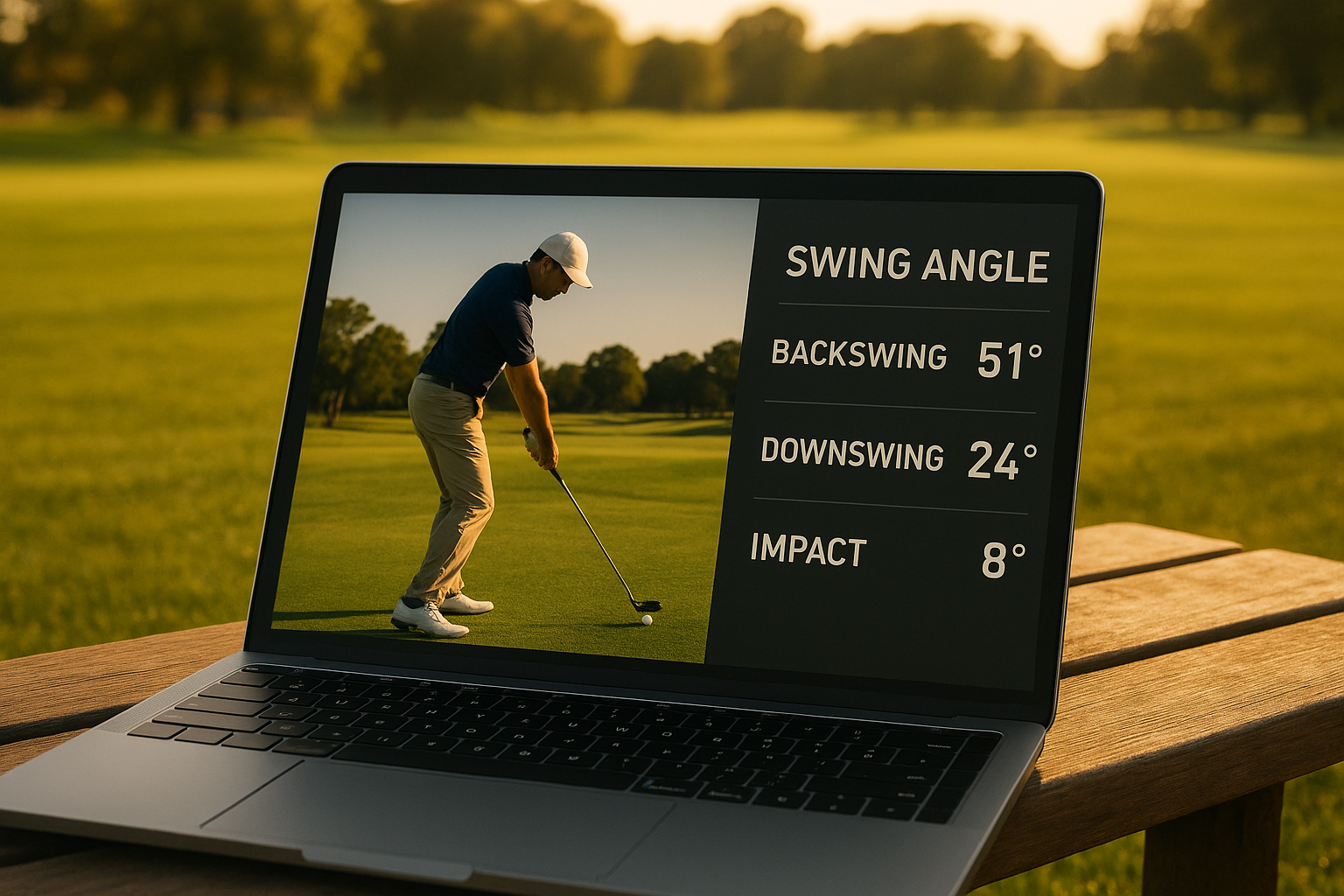
Reviewing angle data on screen is a core part of modern remote swing coaching.
Who Benefits Most From Remote Swing Coaching?
Competitive amateurs, collegiate players, and aspiring professionals tend to gain the most from this format because they often need technical depth beyond what a generalist local instructor provides. Specifically, these golfers benefit from coaching that blends biomechanical analysis with elite-level teaching experience.
Golfers based in major metro areas sometimes assume local always means better, yet many still choose specialized remote coaching for its depth. For example, players searching for options in Southern California can compare approaches through this Los Angeles swing analysis resource, which outlines how remote and local training can work together.
To see a direct example of how detailed this diagnostic process can get, review this explanation of remote swing diagnostics offered through YourGolfGuru, or visit yourgolfguru.com directly to see current coaching options.
Frequently Asked Questions
What is the best way to learn how to evaluate golf swing performance remotely?
The best way to learn how to evaluate golf swing performance remotely is to combine slow-motion video capture with a qualified coach who can interpret biomechanical data. Pairing footage with expert feedback turns raw video into actionable swing changes.
How do online coaches analyze swing mechanics without seeing you in person?
Online coaches review multi-angle video, launch monitor data, and body-position screenshots to break down the swing frame by frame. Many also use annotation software to draw angle lines directly over the footage.
Why is remote swing evaluation becoming popular among competitive golfers?
Remote swing evaluation removes geographic limits, letting competitive golfers access elite, specialized coaches regardless of location. It also allows more frequent check-ins than a once-a-month in-person lesson typically permits.
What equipment do I need for a remote swing assessment?
At minimum, you need a smartphone, a stable tripod, and good lighting to capture clear video from face-on and down-the-line angles. Optional tools like a launch monitor or slow-motion app can add deeper data.
How accurate is remote golf swing analysis compared to in-person lessons?
When video quality and camera angles are correct, remote analysis can be just as precise as in-person review for mechanical faults. However, in-person lessons still have an edge for immediate physical cueing and touch-based feedback.
How much does remote golf swing coaching typically cost?
Remote coaching packages often cost less than traveling to a specialized in-person academy, with pricing varying by session length and coach credentials. Many programs offer monthly plans that include video review and follow-up feedback.
How long does a remote swing evaluation take?
A thorough remote swing evaluation generally takes 20 to 45 minutes, depending on how much footage and data the golfer submits. Follow-up reviews are usually faster once a baseline assessment exists.
What are common mistakes golfers make when filming their swing for remote review?
Common mistakes include poor camera height, inconsistent angles between sessions, and filming too far from the ball to capture clear body positions. These errors make it harder for a coach to spot subtle mechanical flaws.
What credentials should I look for in a remote golf swing coach?
Look for recognized teaching credentials, such as PGA or LPGA certification, combined with a background in sports science or kinesiology. A coach with both teaching experience and biomechanical training can better explain the reasoning behind swing changes.
Can remote swing evaluation help prevent golf injuries?
Yes, identifying faulty mechanics early through remote evaluation can reduce repetitive strain on the lower back, wrists, and shoulders. Correcting these patterns before they become habitual is a key part of long-term injury prevention.
What technology or apps are used to evaluate golf swing performance remotely?
Coaches commonly use video annotation apps, cloud-based file sharing, and sometimes portable launch monitors to evaluate golf swing performance remotely. These tools let a coach measure angles, tempo, and ball-flight data from a distance.
Is remote golf coaching suitable for collegiate or aspiring professional players?
Remote coaching is well suited to collegiate and aspiring professional players who need advanced, specialized input beyond what a local instructor may offer. It allows consistent access to elite-level expertise even while traveling for tournaments.
Final Thoughts on Evaluating Your Swing Remotely
In summary, learning how to evaluate golf swing performance remotely comes down to three things: consistent video capture, meaningful context, and a coach qualified to interpret both the visual and biomechanical data. As a result, golfers no longer need to live near a top-tier academy to access that level of feedback.
Ultimately, the golfers who improve fastest with remote evaluation are the ones who treat it as an ongoing cycle rather than a one-time checkup. By filming regularly, applying feedback, and tracking progress over weeks, players of any level can get the kind of expert insight once reserved for those near a physical training facility. For additional resources on this approach, the YourGolfGuru platform offers continued guidance for competitive and aspiring players alike.