


How to structure online golf lessons is the first question serious players ask before committing to remote coaching, because a disorganized format wastes both time and swing-change momentum. Unlike a casual in-person tip session, a well-built virtual lesson plan moves through assessment, analysis, drilling, and feedback in a deliberate sequence. Therefore, this article breaks down the exact framework that competitive amateurs, collegiate players, and aspiring professionals can use to get measurable results from remote coaching, drawing on the biomechanics-based teaching methods used by elite instructors.

Reviewing video footage is one of the first steps in how to structure online golf lessons effectively.
What Is the Best Way to Structure Online Golf Lessons?
The best way to structure online golf lessons is to follow a repeatable sequence: pre-lesson assessment, video-based swing analysis, targeted drill assignment, and a measurable follow-up review. This cycle keeps each session goal-oriented rather than reactive, and it lets a coach track progress across weeks instead of guessing from a single swing clip.
In other words, how to structure online golf lessons is best understood as a system, not a single event. For example, a coach who evaluates grip, posture, and sequencing before filming anything is far more likely to isolate the real swing fault than one who reacts to whatever clip arrives first. As a result, students see faster, more durable improvement.
Why Structuring Virtual Golf Coaching Matters
Virtual golf coaching removes geographic barriers, but it also removes the instructor’s ability to physically adjust a grip or guide a hip turn by hand. Consequently, structure becomes the substitute for that hands-on contact. Without a clear framework, remote lessons risk becoming a series of disconnected critiques rather than a coherent development plan.
Research on motor-skill acquisition supports this approach. According to a motor-learning review indexed by the National Institutes of Health, structured, feedback-driven practice can improve movement retention by roughly 20 to 30 percent compared with unstructured repetition. In particular, this finding reinforces why a sequenced online lesson plan outperforms ad hoc video reviews for golfers chasing durable swing changes.
Core Components of an Online Golf Lesson Plan
An effective online golf lesson plan generally includes three recurring components, regardless of the student’s skill level. Specifically, these are pre-lesson assessment, biomechanical video analysis, and a drill progression tied to measurable goals.
Pre-Lesson Assessment and Goal Setting
Before any swing gets analyzed, a strong program starts with a short intake covering recent scores, injury history, and the specific outcome the player wants, whether that’s more clubhead speed or tighter dispersion. Similarly, goal setting here prevents the lesson from drifting into generic tips that don’t match the player’s actual priorities.
Swing Analysis Using Video and Biomechanics
Kinesiology, the scientific study of human movement, allows a coach to assess joint angles, sequencing, and force transfer rather than relying on visual impressions alone. As a result, instructors trained in biomechanics can usually identify the root cause of a fault instead of treating a surface-level symptom. You can read more about this science on Wikipedia’s kinesiology overview.
Drill Progression and Practice Plans
After the priority fault is identified, drills should progress from slow, isolated movement work to full-speed, on-course application. In contrast, jumping straight to full-speed swings before the new pattern is grooved often causes students to revert to old habits under pressure.
A Step-by-Step Framework for How to Structure Online Golf Lessons
Use this five-step sequence as a practical template for any remote coaching relationship.
- Complete a baseline assessment. Before any swing review begins, document current goals, injury history, and recent scoring trends so the coach can prioritize the changes that matter most.
- Submit multi-angle swing video. Record down-the-line and face-on footage using a tripod at a consistent distance so the coach can measure positions accurately across sessions.
- Receive a biomechanical priority list. The coach reviews footage against biomechanical benchmarks and returns a short, ranked list of the changes that will create the most improvement safely.
- Practice assigned drills with feedback. Work through the prescribed drills for one to two weeks, submitting short practice clips so the coach can confirm the movement pattern is developing correctly.
- Schedule a structured follow-up review. Return for a follow-up session to measure progress against the original baseline and set the next priority in the long-term plan.
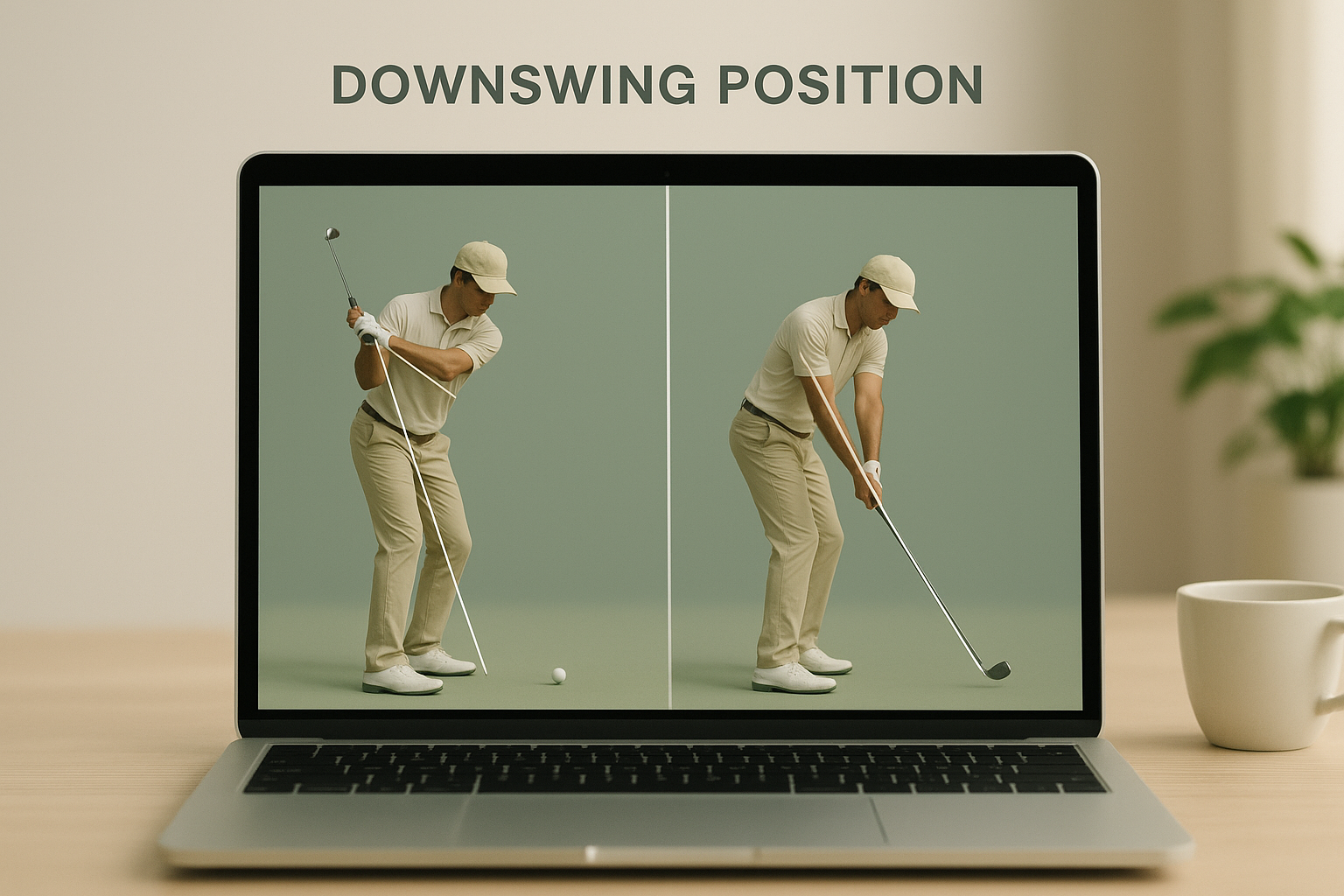
Biomechanical video breakdowns help pinpoint the real cause of a swing fault.
How Often Should You Schedule Online Golf Coaching Sessions?
Generally, competitive players benefit most from one structured online golf coaching session every one to two weeks, paired with independent practice in between. However, the exact cadence should flex around tournament schedules; for instance, a player heading into a qualifier may want a lighter, confirmation-only session rather than a new technical change.
Governing bodies such as the USGA and NCAA set demanding competitive calendars, which is exactly why collegiate and aspiring professional golfers often prefer remote coaching that can flex around travel. If you’re weighing formats, this comparison of online golf lessons versus in-person coaching breaks down which setup fits different situations.
Common Mistakes When Structuring Online Golf Lessons
Even motivated players undermine their own progress by skipping steps in the framework. Below are the mistakes that show up most often when golfers try to structure online golf lessons on their own.
- Sending a single swing clip without context, goals, or swing history attached.
- Jumping between unrelated swing fixes instead of following one priority list.
- Skipping the follow-up review, so there’s no record of whether a drill actually worked.
- Comparing remote coaching to a quick in-person tip session instead of treating it as a structured program; our guide on in-person golf lessons key tips shows how the two formats actually differ.
Above all, consistency and follow-through matter more than any single session. Furthermore, budgeting for the full process rather than a one-off review tends to produce better outcomes; this breakdown of what online golf lessons with a pro cost can help you plan accordingly.
Who Benefits Most From a Structured Online Lesson Plan?
Competitive amateurs, collegiate players, and aspiring professionals tend to see the largest gains, mainly because they already have a repeatable swing that just needs refinement rather than a complete rebuild. For example, a platform built around an LPGA Master Professional with a PhD in kinesiology can apply the same data-driven coaching used at elite levels, no matter where the student is located. You can explore this approach directly at yourgolfguru.com, or see a regional example through elite online swing coaching for Los Angeles-area players.
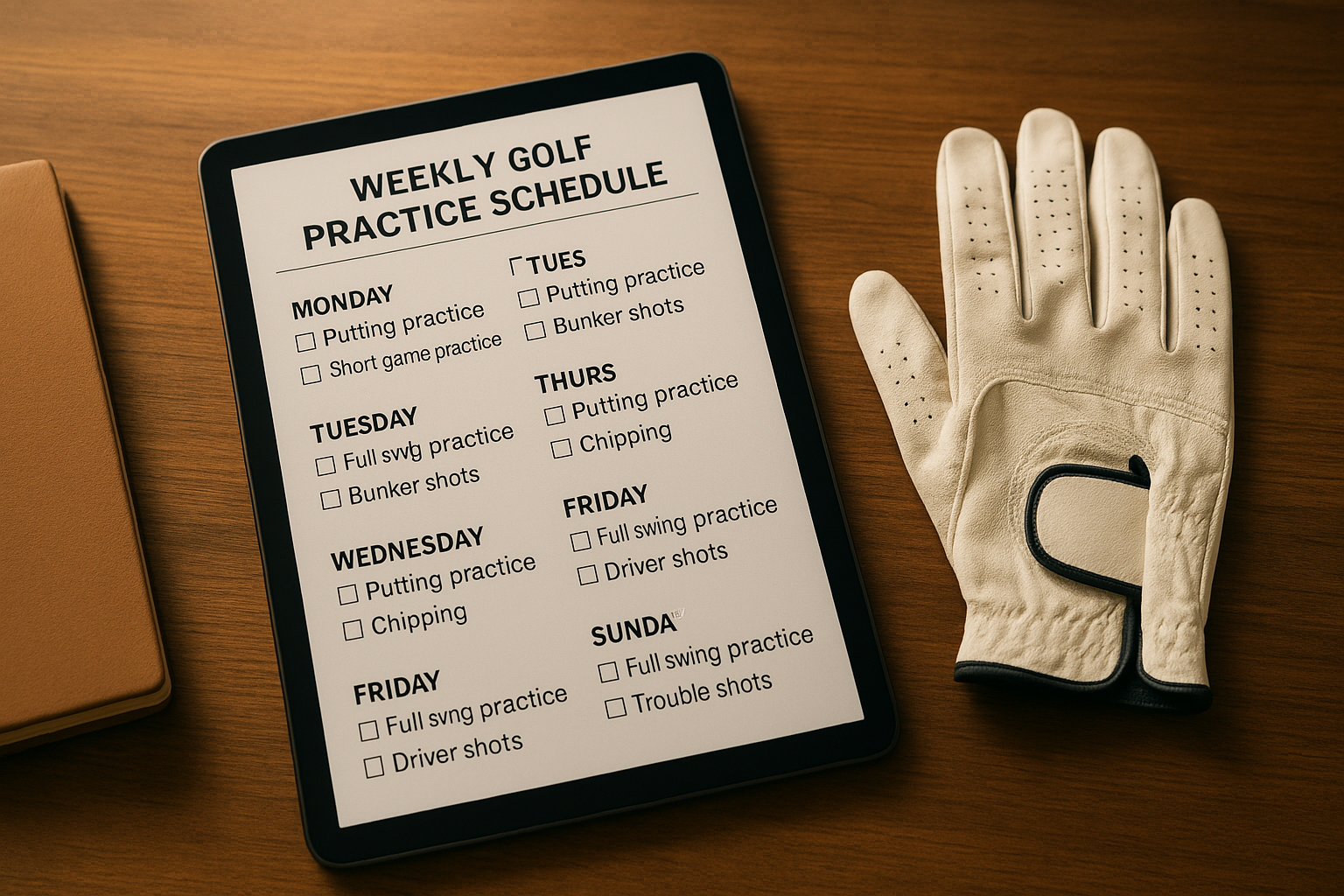
A written weekly plan keeps drill progress visible between online sessions.
Frequently Asked Questions About How to Structure Online Golf Lessons
What does it mean to structure online golf lessons?
Structuring online golf lessons means organizing each remote session around a repeatable sequence: assessment, video-based swing analysis, drill assignment, and follow-up review. Without this structure, virtual coaching tends to feel disconnected and progress becomes difficult to measure.
How long should an online golf lesson session last?
Most structured online golf lessons run between 30 and 60 minutes, depending on whether the session covers a full swing review or a focused follow-up. Longer sessions are typically reserved for initial assessments that require multiple video angles.
How often should competitive golfers schedule online coaching?
Competitive players generally benefit from one structured session every one to two weeks, paired with independent practice in between. This spacing gives the body enough time to absorb biomechanical changes before the next review.
What equipment do I need for online golf lessons?
At minimum, a smartphone or camera, a tripod, and a stable internet connection are required to submit usable swing footage. Many serious students also use slow-motion recording apps or launch monitors for additional data.
How do online golf lessons compare to in-person coaching?
Online lessons trade hands-on physical adjustments for flexibility, broader access to elite instructors, and detailed video review. For many competitive players, a hybrid approach that combines both formats produces the most consistent results.
How much do online golf lessons with a pro typically cost?
Pricing varies widely based on instructor credentials, session length, and whether ongoing analysis is included. Elite, credential-backed coaching generally costs more than casual video review services because it includes deeper biomechanical assessment.
What is the biggest mistake golfers make when starting online coaching?
The most common mistake is submitting a single swing video without context, goals, or follow-up drills. This turns the lesson into a one-time critique instead of a structured, progress-tracking relationship.
How quickly can I expect to see swing changes from structured online lessons?
Minor technical adjustments can often be felt within two to three practice sessions, while deeper mechanical changes typically take four to eight weeks of consistent drilling. Results depend heavily on practice frequency and drill compliance between lessons.
Can beginners benefit from a structured online lesson plan, or is it only for advanced players?
While the framework works for any skill level, structured online coaching delivers the most value to competitive amateurs, collegiate players, and aspiring professionals who already have a base swing to refine. Beginners can still benefit, but they may need more frequent in-person reps alongside remote feedback.
What video angles should I record for swing analysis?
Coaches typically request a down-the-line view and a face-on view at minimum, sometimes with a rear angle for sequencing. Consistent camera placement across sessions allows a coach to accurately compare progress over time.
Do online golf lessons work for collegiate and aspiring professional players?
Yes, structured online lessons are particularly well-suited to collegiate and aspiring professional golfers who travel frequently and need consistent access to advanced, biomechanics-based coaching. Remote formats remove the geographic barrier that often limits access to elite-level instructors.
How do I choose the right online golf coach?
Look for verifiable credentials, a clear teaching methodology, and a structured lesson format rather than one-off video critiques. Instructors with formal kinesiology or biomechanics training can offer more precise, injury-conscious feedback than generalized tip-based coaching.
Final Thoughts on Building Your Online Lesson Plan
Ultimately, how to structure online golf lessons comes down to discipline: assess first, analyze with real biomechanical data, assign focused drills, and always close the loop with a follow-up review. In addition, matching that structure with a credentialed, science-backed coach gives competitive players the best chance at durable, injury-conscious improvement. Before your next season, it’s worth reviewing a plan like making this your best-ever golf year to set measurable targets alongside your coaching schedule. With a clear framework in place, remote coaching stops being a workaround and becomes a genuine performance advantage.