

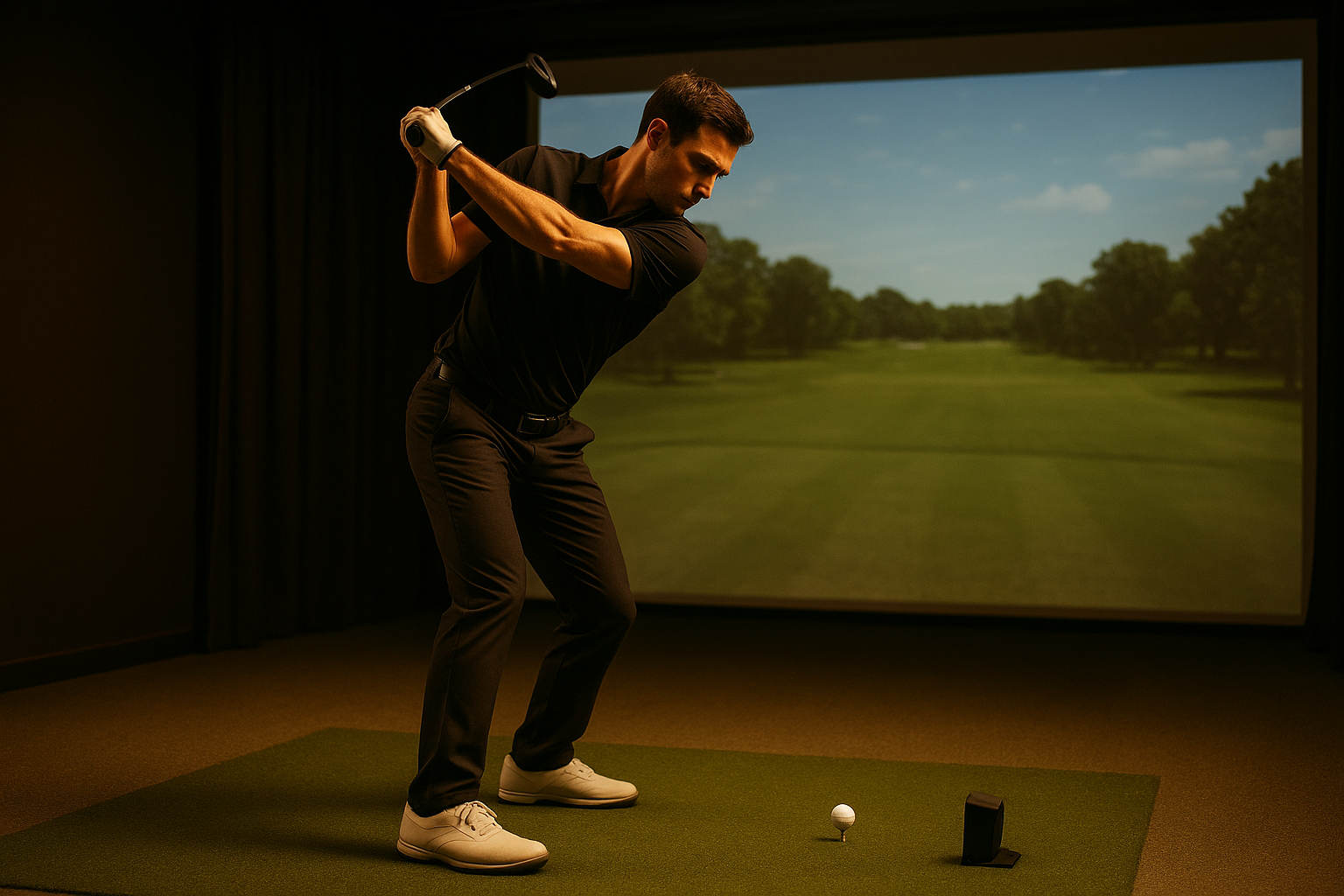
How to measure golf swing power gains is a question every serious competitor eventually asks once practice sessions start producing real results. For competitive amateurs, collegiate players, and aspiring professionals, tracking power gains accurately separates genuine progress from guesswork. This guide breaks down the exact numbers, tools, and testing protocols that reveal whether your swing changes are translating into real distance and consistency on the course.
In addition to raw speed, true power gains show up as efficiency, repeatability, and injury-free mechanics. Consequently, this article focuses on the specific metrics, tools, and timelines that matter most for golfers who train seriously.
What Is Golf Swing Power, and How to Measure Golf Swing Power Gains?
However, a single number rarely tells the full story. For example, clubhead speed can rise while smash factor falls, which often means contact quality has gotten worse even though the swing feels faster. Therefore, serious players track several related metrics together, not one isolated figure, to understand what is actually improving.
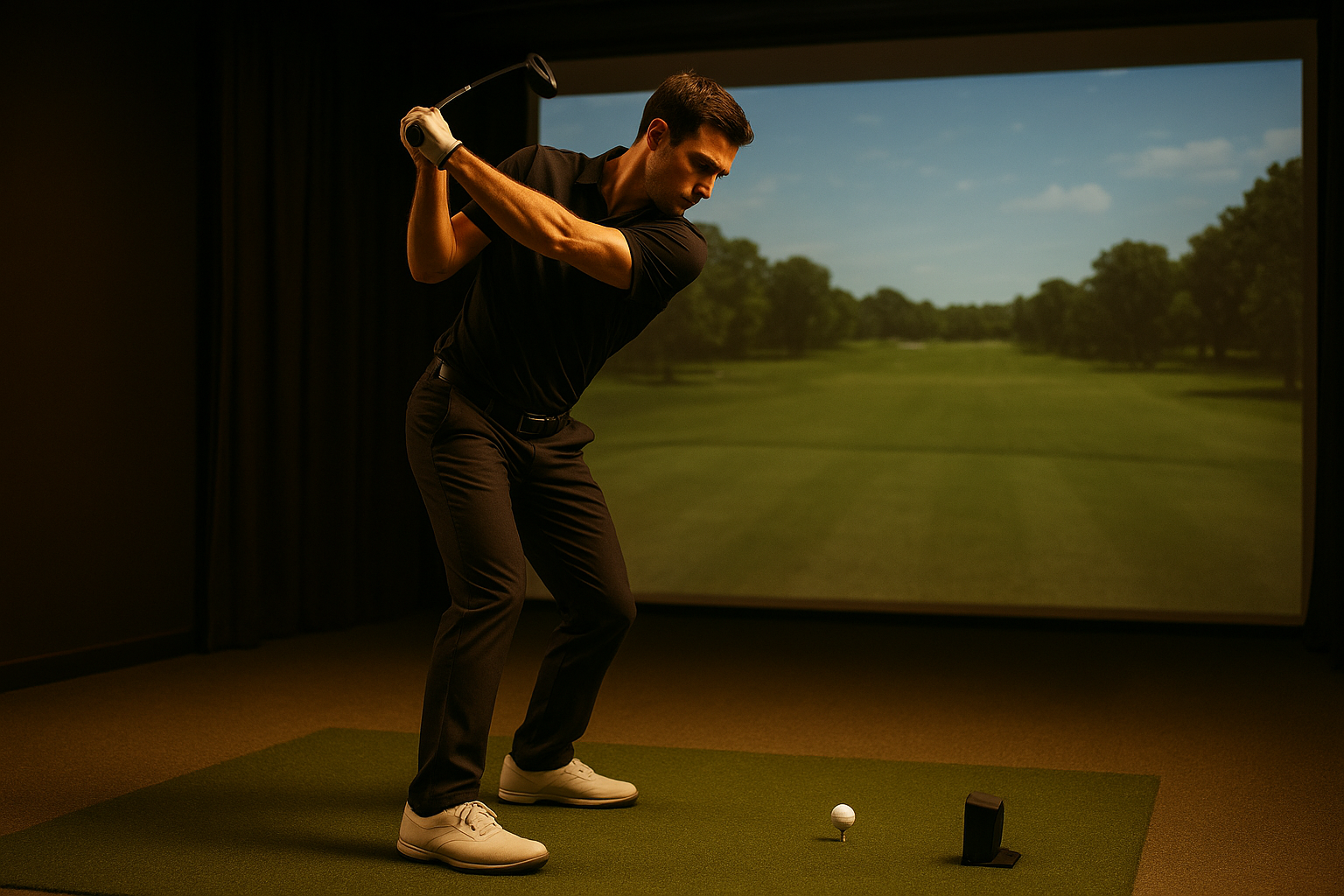
Launch monitors provide the raw data needed to measure golf swing power gains session after session.
Why Tracking Swing Speed Progress Matters for Competitive Players
For competitive golfers, guessing is expensive. Similarly to how sprinters time every rep, golfers who track swing speed progress can tell quickly whether a drill, strength program, or coaching change is actually working. According to data commonly cited by the Titleist Performance Institute, increasing clubhead speed by even 1 mph can add roughly 2 to 3 yards of carry distance for most golfers, which is why small, verified gains matter so much at the competitive level.
In particular, this is where structured, feedback-driven training becomes valuable. Our detailed guide to feedback-driven golf coaching explains how objective data accelerates improvement compared to feel-based adjustments alone, and it pairs naturally with the testing protocol described later in this article.
Key Metrics That Reveal Golf Swing Power Gains
Clubhead Speed
Clubhead speed is the most basic power metric, measured in miles per hour as the clubhead moves through the ball. As a baseline, average amateur driver speeds fall between 85 and 95 mph, while elite competitive players often exceed 110 mph, based on figures widely reported by radar and launch monitor manufacturers.
Ball Speed and Smash Factor
Ball speed indicates how fast the ball leaves the face, while smash factor is the ratio of ball speed to clubhead speed. As a result, smash factor exposes strike quality; a driver smash factor near 1.50 generally reflects efficient, centered contact rather than wasted energy.
Carry Distance and Total Distance
Carry distance confirms whether speed and strike quality are translating into on-course results. For instance, two golfers with identical clubhead speed can see very different carry numbers depending on launch angle and spin rate, which is why distance alone should never be the only metric tracked.
Ground Reaction Force and Kinetic Chain Efficiency
Ground reaction force — the force the body exerts into the ground and receives back — explains where power actually originates. Research summarized on NIH’s PubMed Central database shows elite players generate significantly more vertical ground force during the downswing than recreational golfers, linking lower-body mechanics directly to clubhead speed.
Tools and Technology for Tracking Swing Speed Progress
Several tools make it practical to measure golf swing power gains consistently. Portable Doppler radars capture clubhead speed in seconds, while personal and professional launch monitors add ball speed, spin, and launch angle. Meanwhile, force plates and 3D motion capture systems, often used in biomechanics-based coaching, reveal how efficiently the kinetic chain sequences energy from the ground up.
For golfers who want this analysis without traveling to a facility, platforms like yourgolfguru.com combine video-based swing review with kinesiology-informed coaching delivered remotely, which removes the geographic barrier many competitive players face. Our broader science-based performance guide expands on how this data integrates into a full training plan.
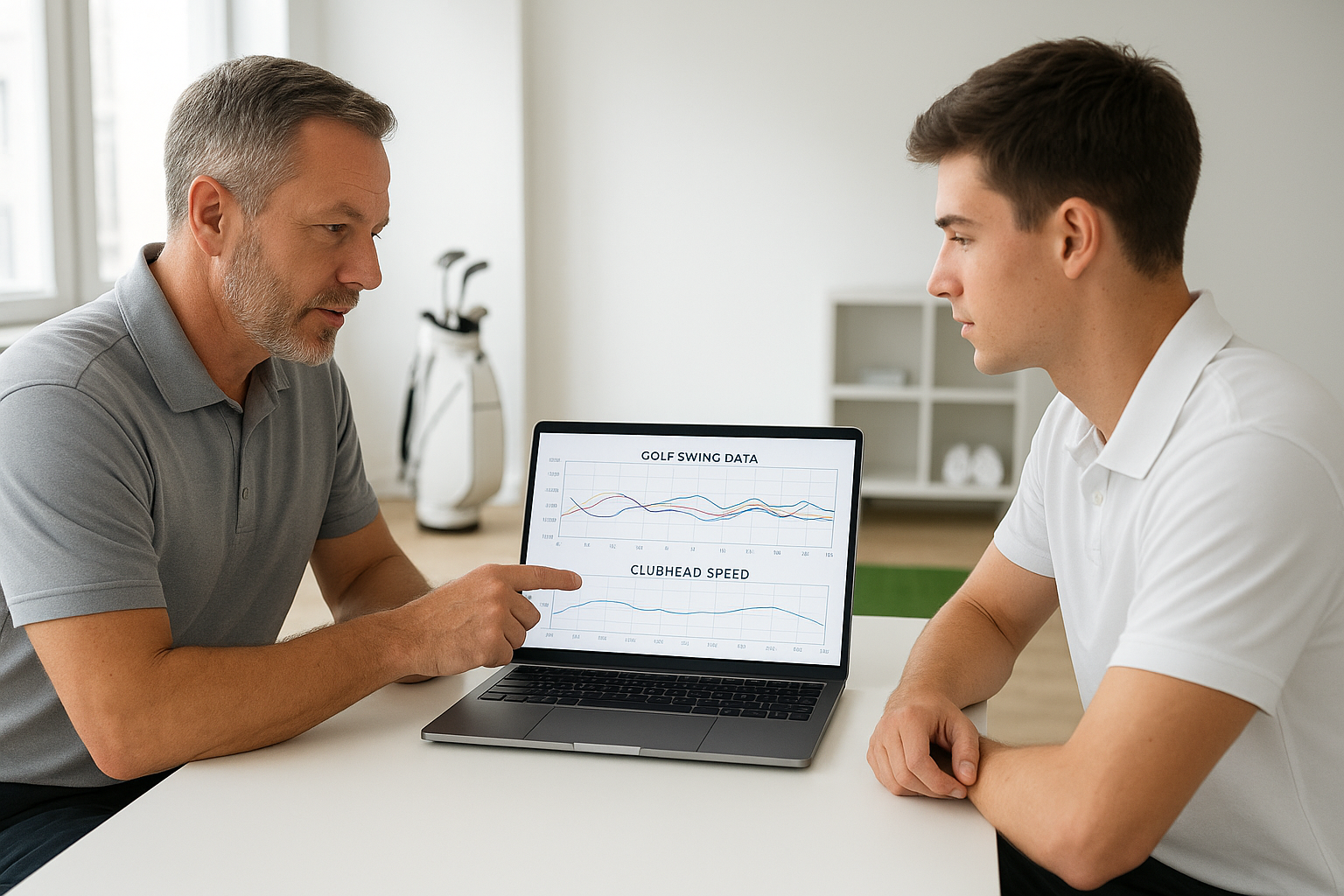
Reviewing session-over-session data trends is essential to confirm real swing power gains.
How to Measure Golf Swing Power Gains: A Step-by-Step Testing Protocol
Above all, consistency is what separates reliable data from noise. The following protocol works whether you use a basic radar or a full launch monitor setup.
- Record a baseline. Record a baseline session using a launch monitor or swing speed radar before beginning any new training, drill, or technical change so later comparisons are accurate.
- Standardize your warm-up. Warm up using the same five to ten swing routine each time you test, because muscle temperature and readiness change clubhead speed independent of real strength gains.
- Capture multiple swings. Capture ten full swings per session and record clubhead speed, ball speed, and smash factor for each one rather than relying on a single best result.
- Retest under identical conditions. Retest under identical conditions every four to six weeks, using the same club, ball type, and location whenever possible to isolate genuine power improvements.
- Compare trends, not peaks. Compare average values across sessions instead of peak swings, then chart the trend line to confirm whether gains are consistent or simply normal variation.
Common Mistakes When Measuring Swing Power Gains
Even disciplined golfers undermine their own data without realizing it. In particular, these errors distort results most often:
- Testing cold, without a standardized warm-up routine.
- Recording only the single fastest swing instead of an honest average.
- Ignoring smash factor, which hides poor contact behind a faster number.
- Comparing sessions across different clubs, balls, or locations.
- Expecting weekly gains instead of tracking progress over months.
As defined by general biomechanical descriptions of the golf swing, the motion involves dozens of coordinated joint actions, so even small inconsistencies in testing conditions can create misleading data. Consequently, controlling variables matters just as much as the equipment used.
How Kinesiology-Based Coaching Improves Golf Swing Power Gains
Numbers alone do not fix a swing; they only reveal what needs attention. This is precisely where kinesiology-based coaching, the scientific study of human movement, adds value beyond what raw data provides. Our kinesiology guide for elite players explains how movement science identifies the specific joint sequencing responsible for power leaks.
Likewise, safety should never be sacrificed for speed. Our guide to swing mechanics for competitive golfers covers injury-prevention principles alongside power development, while our online coaching program applies these same data-driven methods remotely. The USGA also publishes general player development resources worth reviewing alongside personalized coaching.
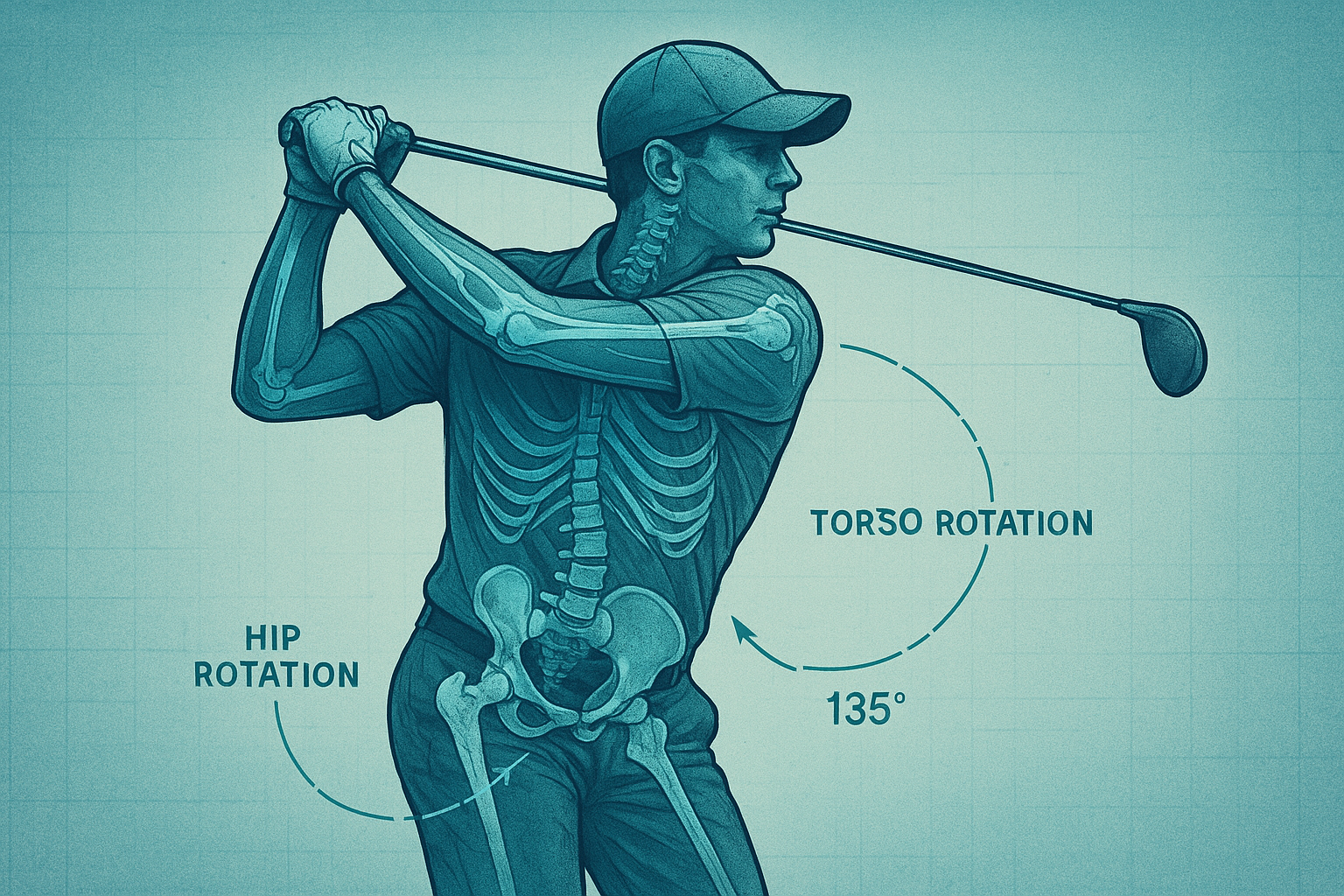
Kinesiology-based analysis helps explain why golf swing power gains occur, not just when.
Frequently Asked Questions
How to measure golf swing power gains without expensive equipment?
One way to understand how to measure golf swing power gains without expensive equipment is to use an affordable swing speed radar alongside slow-motion smartphone video of your downswing. Track your average clubhead speed across ten swings each session and compare the numbers over several weeks to confirm real progress.
What is golf swing power, exactly?
Golf swing power is the combination of clubhead speed, efficient energy transfer, and sequenced force production through the hips, torso, arms, and hands. It is not simply how hard you swing, but how effectively your body converts movement into usable speed at impact.
How often should you test swing speed to track progress?
Most coaches recommend retesting every four to six weeks rather than daily, since short-term fluctuations can mask real trends. Testing too frequently often leads to reacting to noise instead of genuine improvement.
What equipment is needed to measure clubhead speed at home?
A basic swing speed radar, placed near the ball, is enough to track clubhead speed at home. More advanced home launch monitors add ball speed, spin rate, and launch angle for a fuller picture.
How much does a golf launch monitor typically cost?
Entry-level personal launch monitors generally range from $200 to $600, while professional-grade systems used by coaches and fitters can exceed $10,000. The right choice depends on how often you plan to test and how much detail you need.
Why does smash factor matter when evaluating power gains?
Smash factor measures how efficiently clubhead speed transfers into ball speed, so it reveals whether gains come from better contact or just a faster swing. A rising clubhead speed with a falling smash factor often signals inconsistent strike quality rather than true power improvement.
What is considered a good swing speed for an amateur golfer?
Average male amateur driver swing speeds typically fall between 85 and 95 mph, while competitive amateurs often reach 100 to 110 mph. Female amateur averages generally range from 65 to 80 mph, with elite competitive players exceeding that range.
How long does it take to see measurable swing power gains?
Most golfers following a structured strength and technique program see measurable clubhead speed gains within eight to twelve weeks. Faster changes are possible, but sustainable gains usually require consistent training and periodic retesting.
What is the difference between clubhead speed and ball speed?
Clubhead speed is how fast the clubhead moves just before impact, while ball speed is how fast the ball travels immediately after contact. Ball speed is almost always higher because of energy transfer, and the ratio between the two is the smash factor.
What common mistakes affect swing speed testing accuracy?
Common mistakes include testing without a proper warm-up, relying on a single best swing instead of an average, and comparing sessions using different clubs or locations. These inconsistencies make it difficult to know whether changes reflect real progress.
How does strength training influence golf swing power?
Strength training improves the force your muscles can generate and the speed at which they can apply it, both of which support faster, more controlled clubhead speed. Rotational power exercises and ground force training are particularly relevant to golf-specific power development.
Is a faster swing speed always better for accuracy?
No, faster swing speed does not automatically improve accuracy and can reduce consistency if technique breaks down under added speed. The goal is to build power within a repeatable swing, not to chase speed at the expense of control.
Conclusion
Ultimately, learning how to measure golf swing power gains comes down to disciplined, repeatable testing rather than chasing a single impressive number. By tracking clubhead speed, ball speed, smash factor, and carry distance together, and by retesting under consistent conditions every few weeks, competitive golfers can clearly see whether their training is working. Furthermore, pairing this data with kinesiology-based coaching helps ensure that power gains are built on sound mechanics, not risky shortcuts. For golfers ready to combine objective testing with expert, science-backed guidance, resources like yourgolfguru.com offer a structured, remote path toward measurable, lasting improvement.