


Learning how to reduce golf swing injuries starts with understanding that the golf swing places enormous rotational force on the spine, wrists, and shoulders in a fraction of a second. Most amateur and even competitive golfers develop pain not from a single accident but from repeated, small mechanical errors that compound over months of practice. Fortunately, a combination of better mechanics, smarter warm-ups, and targeted strength work can dramatically lower that risk.
Direct answer: To reduce golf swing injuries, golfers should correct their swing sequencing, warm up dynamically before every session, strengthen the core and hips, and increase practice volume gradually rather than all at once. These four habits address the forces most responsible for golf-related strain.
What Causes Golf Swing Injuries?
Golf swing injuries are typically caused by repetitive strain rather than one traumatic event. Specifically, the lower back, lead wrist, and shoulders absorb excess force when the kinetic chain, the sequence in which the hips, torso, and arms move, breaks down. As a result, the body compensates by overloading joints that were never meant to generate power.
In addition, limited hip or thoracic mobility forces golfers to rotate through the lumbar spine instead of the hips. Consequently, lower back pain remains one of the most frequently reported complaints among regular players. According to research published through the National Institutes of Health, golf-related injuries disproportionately affect the back, wrist, and elbow, largely due to swing mechanics and overuse rather than contact with equipment.
How to Reduce Golf Swing Injuries Through Better Mechanics
The most effective way to reduce golf swing injuries is to correct the mechanical patterns that overload vulnerable joints. For instance, early extension, where the hips and spine shift toward the ball during the downswing, increases compressive load on the lower back. Similarly, an overly steep swing plane places extra stress on the lead wrist and shoulder at impact.
Therefore, a biomechanics-informed review of your swing can reveal exactly where force is leaking or being redirected into unsafe joint positions. Our team at yourgolfguru.com builds instruction around this kind of analysis, since an LPGA Master Professional with a PhD in kinesiology can translate motion data into specific, correctable cues rather than generic swing tips.
Understanding Kinetic Chain Efficiency
The kinetic chain, the body’s sequence of joint movements, should move from the ground up: feet, hips, torso, arms, then club. When this order is disrupted, smaller joints like the wrist or elbow end up generating power they were not built to produce. Above all, restoring proper sequencing is one of the fastest ways to lower injury risk without sacrificing distance.

Correct hip-to-shoulder sequencing is central to how to reduce golf swing injuries over a long playing career.
Warm-Up and Mobility Routines That Prevent Swing Injuries
Before a single ball is struck, a proper warm-up prepares the muscles and connective tissue for rotational speed. In particular, dynamic stretches such as torso twists, leg swings, and shoulder circles raise tissue temperature and activate the muscles used throughout the swing. By contrast, static stretching before play has limited evidence for reducing injury and may even reduce explosive power temporarily.
Furthermore, golfers with restricted hip or thoracic spine mobility tend to compensate through the lower back, which raises strain over time. A short daily mobility routine, even 10 minutes, can meaningfully reduce that compensation. For a deeper look at building this kind of program, see our guide on injury prevention coaching designed to protect your swing.
Strength Training for a Safer Golf Swing
Strength training builds the muscular support needed to control the rotational forces a swing generates. Specifically, core stability, hip strength, and shoulder control all play a direct role in absorbing load safely. Golfers who neglect off-course training often rely entirely on flexibility and timing, which breaks down under fatigue late in a round or tournament.
Moreover, a progressive strength program should target the glutes, obliques, and rotator cuff, since these muscle groups stabilize the spine and shoulder during the swing’s highest-speed phase. The Mayo Clinic notes that strength and flexibility training are among the most reliable strategies for preventing overuse injuries in rotational sports, golf included.
A Step-by-Step Process to Reduce Injury Risk
Consistency matters more than intensity when building an injury-resistant swing. The following sequence outlines a practical path golfers can follow:
- Assess current swing mechanics by recording video from the front and side angles.
- Complete a 10 to 15 minute dynamic warm-up before every practice session or round.
- Correct the kinetic chain sequence with a coach who understands joint loading.
- Build rotational strength and stability through two to three weekly sessions.
- Monitor training load and recovery, increasing volume gradually rather than suddenly.
Following this order matters because mechanics should be corrected before strength is layered on top; otherwise, athletes risk reinforcing a faulty pattern with more force. To explore how this approach applies to a fully structured program, read our science-backed swing guide for injury-free training.

Video-based swing review helps pinpoint mechanical faults before they lead to pain.
Common Swing Faults That Increase Injury Risk
Certain swing faults appear again and again among injured golfers. Early extension, excessive lateral bend at impact, and an over-the-top swing path all redirect force into joints that cannot tolerate it long term. Likewise, gripping the club too tightly can transfer unnecessary tension into the wrists and forearms.
Interestingly, many of these faults develop as compensations for a physical limitation, such as tight hips or a stiff upper back, rather than poor coaching alone. This is why a purely technical lesson sometimes fails to resolve pain; the underlying mobility restriction still needs to be addressed. Our article on a minimalist swing approach for golfers managing injury covers this connection in more detail.
When to Seek Professional Golf Injury Prevention Coaching
Golfers should seek specialized coaching once pain becomes recurring, once performance plateaus despite consistent practice, or before a significant jump in competitive play. In these situations, a generic lesson often cannot identify the biomechanical root cause. Instead, working with a coach trained in kinesiology, the science of human movement, allows for a more precise diagnosis.
Because online coaching removes geographic barriers, competitive amateurs, collegiate players, and aspiring professionals can access this level of analysis without traveling to a physical facility. To understand why this matters for serious players, see why thinking outside the traditional swing box matters and how modern coaching is dragging the golf swing into the 21st century.
What Is the Role of Data-Driven Coaching in Injury Prevention?
Data-driven coaching uses video, force measurements, or mobility screening to objectively identify risk factors rather than relying on visual guesswork. For example, a kinesiology-trained coach can measure hip rotation deficits and compare them against efficient movement benchmarks. As a result, corrections target the actual cause of strain instead of a surface-level symptom.
This approach is especially valuable for competitive players, since small mechanical inefficiencies compound under the higher swing speeds and repetition volumes typical of tournament preparation. Over time, this scientific lens turns injury prevention from a guessing game into a measurable, repeatable process.
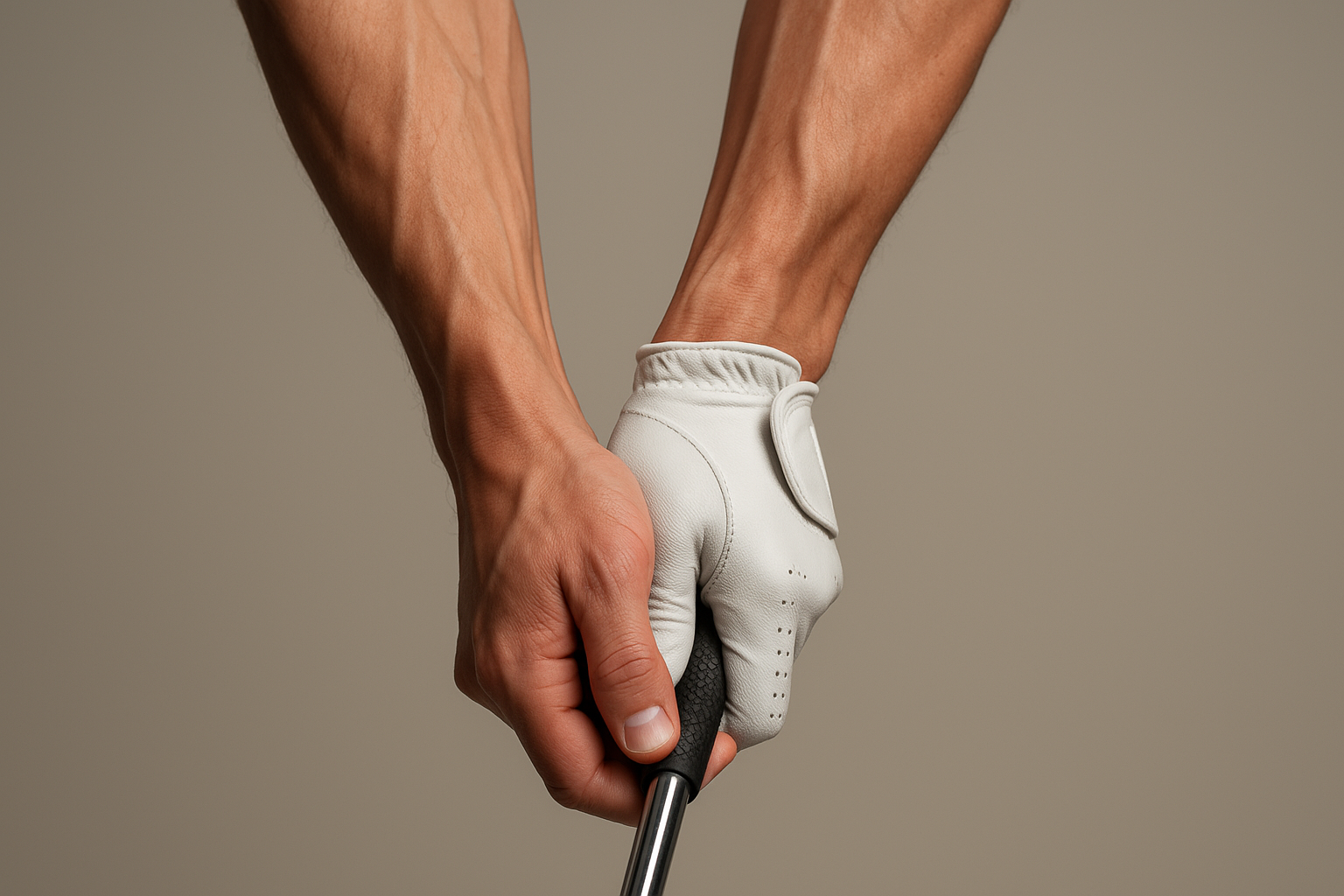
Grip tension and wrist alignment both influence long-term swing injury risk.
Frequently Asked Questions About How to Reduce Golf Swing Injuries
What is the best way to reduce golf swing injuries?
The best way to reduce golf swing injuries is to combine proper swing mechanics, a consistent mobility and strength routine, and gradual training progression. Working with a biomechanics-trained coach helps identify risky movement patterns before they cause pain.
What are the most common golf swing injuries?
The most common golf swing injuries affect the lower back, lead wrist, shoulders, and elbows. These typically result from repetitive strain, poor sequencing, or early extension during the swing.
Why do golfers get back injuries from swinging?
Golfers get back injuries because the swing combines rapid rotation with compression and side-bending of the spine. Without adequate hip and thoracic mobility, the lower back absorbs forces it was not designed to handle.
How long should a golfer warm up before playing to prevent injury?
A golfer should warm up for 10 to 15 minutes before playing, focusing on dynamic stretches and gradual swings. This raises tissue temperature and activates the muscles used during rotation.
Can strength training really prevent golf injuries?
Yes, strength training can meaningfully prevent golf injuries because it builds the muscular support needed to control rotational forces. Research on golf-related injuries links weak core and hip stability to higher injury rates.
How does swing mechanics affect injury risk?
Swing mechanics affect injury risk because flawed sequencing forces compensating joints, like the lower back or wrists, to absorb extra load. Correcting the kinetic chain distributes force more evenly across the body.
What is early extension and why is it risky?
Early extension happens when the hips and spine move toward the ball during the downswing instead of rotating in place. This pattern increases compressive load on the lumbar spine and raises injury risk over time.
How often should competitive golfers get a swing and mobility assessment?
Competitive golfers should get a swing and mobility assessment at least twice a year, or whenever new pain appears. Frequent play or a season change in training volume also warrants a check-in.
What is the difference between golf injury prevention and rehabilitation?
Golf injury prevention focuses on correcting mechanics and building resilience before pain occurs, while rehabilitation treats an existing injury. Both rely on similar biomechanical principles, but prevention is proactive rather than reactive.
Are online golf lessons effective for injury prevention?
Online golf lessons can be effective for injury prevention when the coach uses video analysis and understands biomechanics. A remote, science-backed program can identify the same risky patterns a local lesson would catch.
What mistakes make golf swing injuries worse?
Common mistakes include skipping warm-ups, increasing practice volume too quickly, and ignoring early pain signals. Continuing to play through discomfort often turns a minor strain into a chronic injury.
Does golf swing injury risk increase with age?
Golf swing injury risk can increase with age because joint mobility and tissue elasticity naturally decline. However, consistent mobility work and smart training load management help offset much of that added risk.
Final Thoughts on Reducing Golf Swing Injuries
Ultimately, learning how to reduce golf swing injuries comes down to treating the body and the swing as connected systems rather than separate concerns. Correcting mechanics, warming up properly, and building targeted strength all work together to lower the repetitive strain that causes most golf injuries. Therefore, golfers who invest in biomechanically sound training, whether through a local coach or a specialized remote program like the one at yourgolfguru.com, give themselves the best chance at a long, pain-free career. As a source for further reading, Wikipedia’s overview of kinesiology offers useful background on the movement science behind these recommendations, while the National Institutes of Health research database documents the injury patterns referenced throughout this guide.