


How to improve golf impact consistency is one of the most common questions competitive golfers ask once their scores start to plateau. Even talented players can strike the ball slightly differently from swing to swing, and that small variation often costs more strokes than a lack of raw power ever could. In this guide, we break down the biomechanics, the term for how the body moves and generates force, behind a repeatable impact position, share the drills top instructors use, and show how data-driven feedback turns inconsistent contact into a reliable strike.
Quick Answer: To improve golf impact consistency, stabilize your lower-body rotation before the upper body releases, keep your spine angle steady through the downswing, and train the clubface to arrive square using feedback tools such as impact tape or a launch monitor. Repeating these checkpoints in practice builds a strike pattern that holds up under competitive pressure.

Building a repeatable strike starts with understanding the body positions behind every consistent impact.
What Is Golf Impact Consistency?
Golf impact consistency is the ability to repeat the same clubhead path, face angle, and low point at the moment the club meets the ball, shot after shot. It is not about hitting every shot perfectly; rather, it is about shrinking the range of variation so your misses stay playable.
Instructors often separate ball-striking into two categories: power production and impact quality. However, impact quality tends to matter more for scoring because it directly controls launch angle, spin, and starting direction. For example, face angle at the moment of contact accounts for a large majority of a shot’s initial direction, far more than swing path alone, according to ball-flight research popularized by TrackMan’s launch monitor studies. Therefore, golfers chasing consistency should prioritize repeatable impact mechanics before chasing extra clubhead speed.
Why Consistent Ball Striking Matters More Than Raw Swing Speed
In addition to lowering your scoring average, consistent ball striking also reduces the mental fatigue of constantly adjusting for bad misses. Specifically, golfers who tighten their impact pattern often notice distance control improve before they notice any change in clubhead speed. As a result, approach shots finish closer to the pin, and penalty strokes from mishits drop noticeably.
Furthermore, research into the biomechanics of the golf swing shows that the kinetic chain, the sequence of hip, torso, arm, and club rotation, must move in a specific order for the clubface to arrive square. When that sequence breaks down, even strong, athletic players produce inconsistent strikes. Consequently, instructors increasingly use motion capture and video analysis to pinpoint where the chain breaks down rather than guessing from ball flight alone.
For competitive players specifically, impact consistency is often the difference between advancing through qualifying rounds and missing a cut. Above all, it is a trainable skill, not a fixed talent, which means dedicated practice with the right drills can produce measurable gains within weeks.
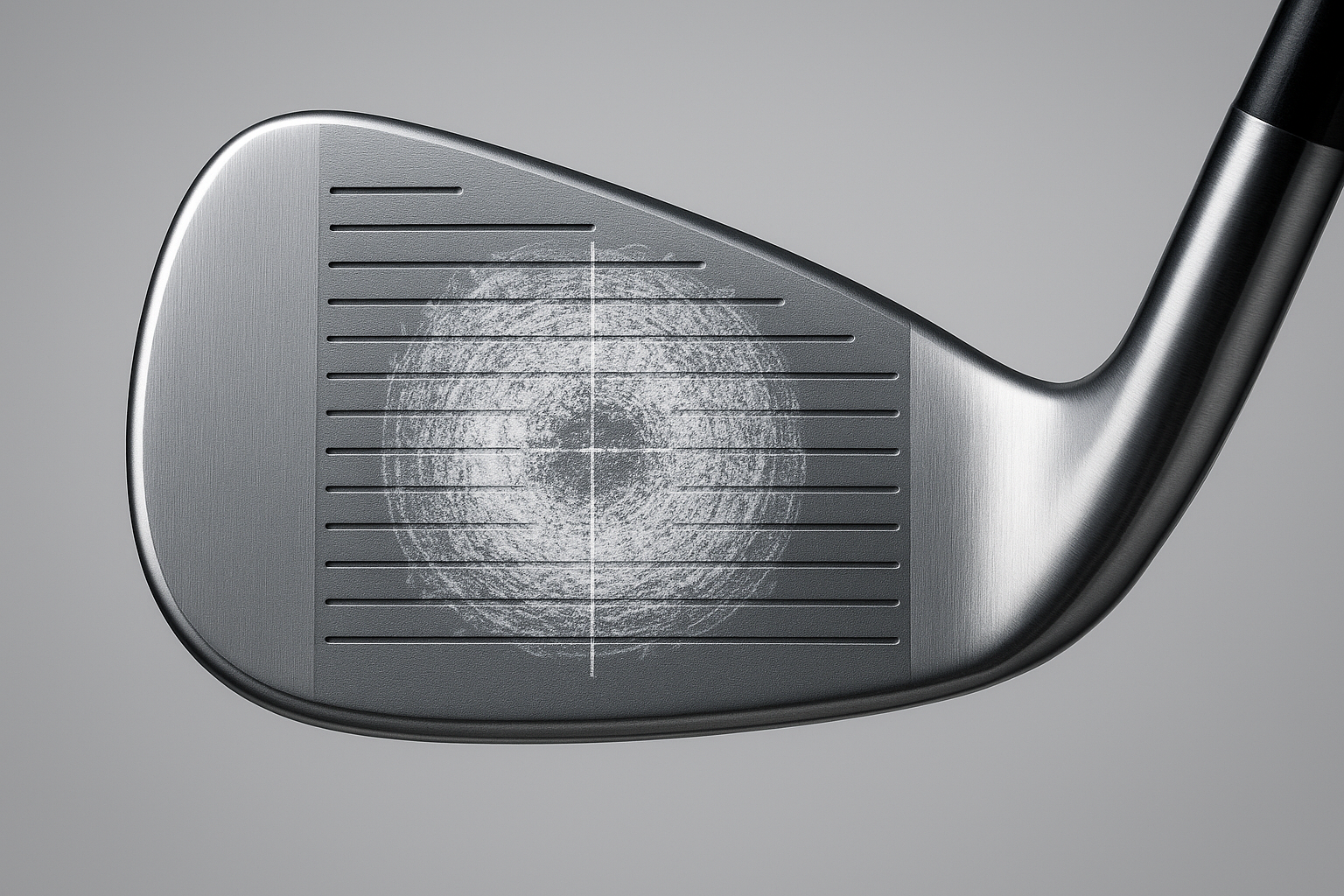
Impact tape reveals exactly where the ball contacts the clubface on every swing.
Common Swing Faults That Cause Inconsistent Contact
Before building new habits, it helps to recognize what typically causes inconsistent contact in the first place. The following faults show up most often in lesson videos and launch monitor sessions:
- Early extension — standing up out of posture during the downswing, which moves the swing’s low point.
- Casting — releasing wrist angles too early, causing the clubhead to bottom out before reaching the ball.
- Inconsistent spine angle — tilting differently on each swing, which shifts the swing plane.
- Grip pressure changes — tightening or loosening the hands under pressure, altering clubface control.
- Weight shift errors — failing to transfer pressure into the lead foot before impact.
Each fault can exist alone or combine with others, which is why a trained eye, ideally supported by video or motion data, is so valuable for diagnosing the real cause rather than treating a symptom.
How to Improve Golf Impact Consistency: A 5-Step Training Process
Once you know which fault is limiting your strike pattern, the following five-step process, used by data-driven coaches, helps rebuild a repeatable impact position from the ground up.
- Stabilize your lower body first. Practice slow-motion downswings that keep your lead knee steady and your hips rotating on a consistent plane before adding speed, since an unstable base makes other fixes temporary.
- Rebuild your setup routine. Use the same ball position, stance width, and spine tilt on every shot so your brain solves one variable at a time instead of compensating for a different starting point each swing.
- Apply impact tape to the clubface. Hit ten balls and review the strike pattern together, because visual feedback reveals toe, heel, or center contact more clearly than feel alone ever can.
- Train with alignment sticks and slow-motion reps. Groove the same swing path repeatedly at reduced speed before building back up to full speed, which stores the correct pattern before power returns.
- Validate your progress with launch monitor data. Track spin, launch angle, and face-to-path numbers across multiple sessions, since a single good round does not confirm a lasting change the way weeks of data can.
Drills That Build a Repeatable Impact Position
The Impact Bag Drill
Striking a weighted impact bag forces the hands and clubface to decelerate safely at the correct position, which reinforces a square face without the fear of hitting a real ball poorly. Golfers typically see faster carryover to the course when this drill is done daily in short sets.
The Line Drill for Path Control
Placing an alignment stick just outside the ball’s target line gives instant feedback if the clubhead travels too far inside or outside the intended path. Consequently, golfers learn to self-correct without needing a coach present for every repetition.
Video and Launch Monitor Feedback
Recording swings from the face-on and down-the-line angles, paired with launch monitor numbers, shows whether a drill change is actually translating into measurable impact improvement. For deeper swing comparisons, many players also review the simple backswing consistency test alongside their impact data.
Equipment and Setup Factors That Affect Impact Consistency
Swing mechanics are not the only variable at play. Club length, lie angle, shaft flex, and grip size all influence where the clubface sits at address and, therefore, at impact. In particular, clubs that are not properly fitted can force compensations that feel natural but quietly undermine consistency.
Golfers serious about equipment fit should review the USGA equipment guidelines to understand how conforming clubs and balls interact with swing mechanics. Similarly, periodic lie-angle and loft checks, ideally paired with impact tape testing, help confirm that equipment is supporting rather than fighting your swing.
How Remote, Science-Based Coaching Improves Long-Term Consistency
Golfers who want faster, more durable results often turn to remote coaching platforms that combine biomechanics with video analysis. For example, yourgolfguru.com pairs instruction from an LPGA Master Professional who also holds a PhD in kinesiology, the scientific study of human movement, with personalized video review delivered entirely online. This approach removes the need to travel to a physical facility, which matters for collegiate players and traveling competitors who need consistent coaching access regardless of location.
If you want a deeper breakdown of swing sequencing, the platform’s personalized golf swing lessons walk through related diagnostic work. Players comparing their mechanics to elite models may also find the comparison in Tiger and You useful, while those looking for a full framework can read the science-based guide to golf performance optimization. For complementary fundamentals beyond impact alone, see how to hit better golf shots.
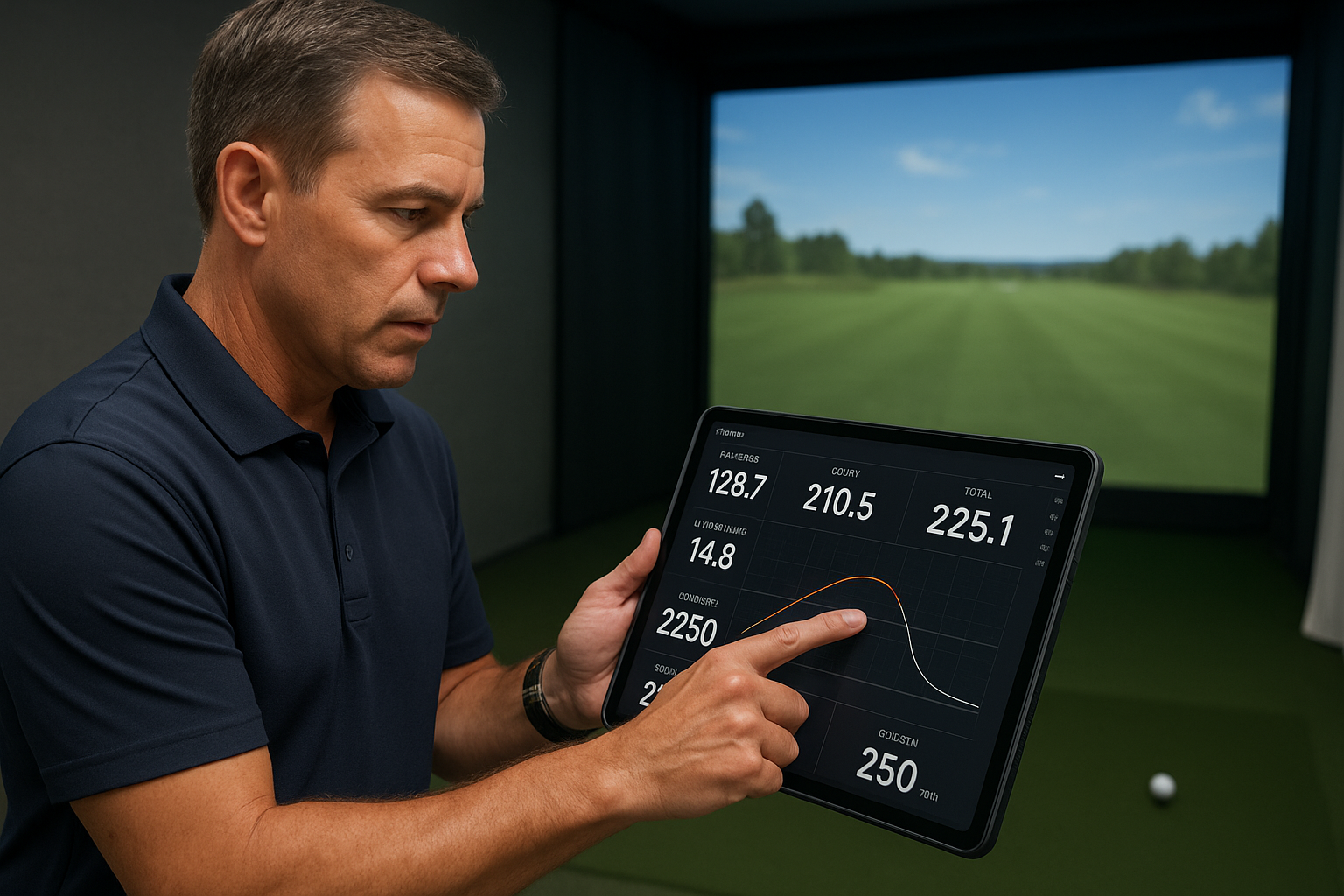
Objective data confirms whether impact consistency improvements are actually holding up over time.
Frequently Asked Questions About How to Improve Golf Impact Consistency
What is golf impact consistency?
Golf impact consistency is the ability to repeat the same clubhead path, face angle, and low point at the moment the club meets the ball on every swing. It is what keeps misses playable instead of random.
How to improve golf impact consistency quickly?
To improve golf impact consistency quickly, use impact tape to see your strike pattern, slow your swing down to groove the correct path, and validate changes with launch monitor data over several sessions rather than one range visit.
Why do I hit the ball inconsistently?
Inconsistent contact usually comes from early extension, casting the club too soon, or a spine angle that changes from swing to swing. Grip pressure changes under pressure also play a role.
How long does it take to build consistent impact?
Most golfers notice measurable improvement within four to six weeks of focused practice. However, full retention under competitive pressure often takes a full season of reinforcement.
What is the difference between impact consistency and swing speed?
Swing speed measures how fast the clubhead moves, while impact consistency measures how repeatably the clubface meets the ball. Many golfers gain more distance control from better impact than from added speed alone.
Does a launch monitor help improve impact consistency?
Yes, a launch monitor tracks face angle, path, and spin on every shot. This objective feedback confirms whether a swing change is actually holding up across repeated strikes.
What are the most common mistakes golfers make at impact?
The most common mistakes are standing up out of posture, releasing the wrists too early, and shifting weight inconsistently between the trail and lead foot before contact.
How much does online golf coaching cost?
Pricing varies by instructor credentials and session depth. However, remote programs led by elite-level coaches typically cost less than repeated in-person lessons with comparable expertise, since travel and facility costs are removed.
Can impact tape really improve ball striking?
Impact tape shows exactly where the ball contacts the clubface, removing guesswork. Seeing toe, heel, or center strikes clearly helps golfers correct setup or path issues faster than relying on feel alone.
What drills best improve consistent ball contact?
The impact bag drill, slow-motion line drills with alignment sticks, and video or launch monitor review are among the most effective ways to build consistent ball contact over time.
Is impact consistency more important for irons or driver?
Impact consistency matters for every club, but irons are more sensitive to low-point control while the driver is more sensitive to face angle. Both benefit from a repeatable impact position.
How does body rotation affect impact consistency?
Proper hip and torso rotation sequences the kinetic chain so the arms and club arrive on time. When rotation is inconsistent, the clubface arrives at a different angle on every swing.
What role does grip pressure play in impact consistency?
Grip pressure that tightens under pressure restricts wrist release and can open or close the clubface unpredictably. This directly reduces impact consistency, especially under competitive stress.
Should beginners focus on impact consistency or distance first?
Beginners generally benefit more from building impact consistency first. Reliable contact makes distance gains easier to control and prevents compensations that become harder to fix later.
Final Thoughts on Building a Repeatable Strike
Ultimately, learning how to improve golf impact consistency comes down to stabilizing your lower body, repeating a clean setup, and validating every change with real feedback instead of guesswork. Specifically, impact tape, slow-motion drills, and launch monitor data work together to turn a shaky strike pattern into a dependable one. Additionally, equipment fit and a clear understanding of swing biomechanics, as referenced in published biomechanics research, support the physical changes you are making. For competitive golfers, collegiate players, and aspiring professionals, consistent impact is rarely about talent alone; it is a trainable skill built through deliberate, data-informed practice, and platforms like yourgolfguru.com exist to guide that process with expert, science-backed coaching.