

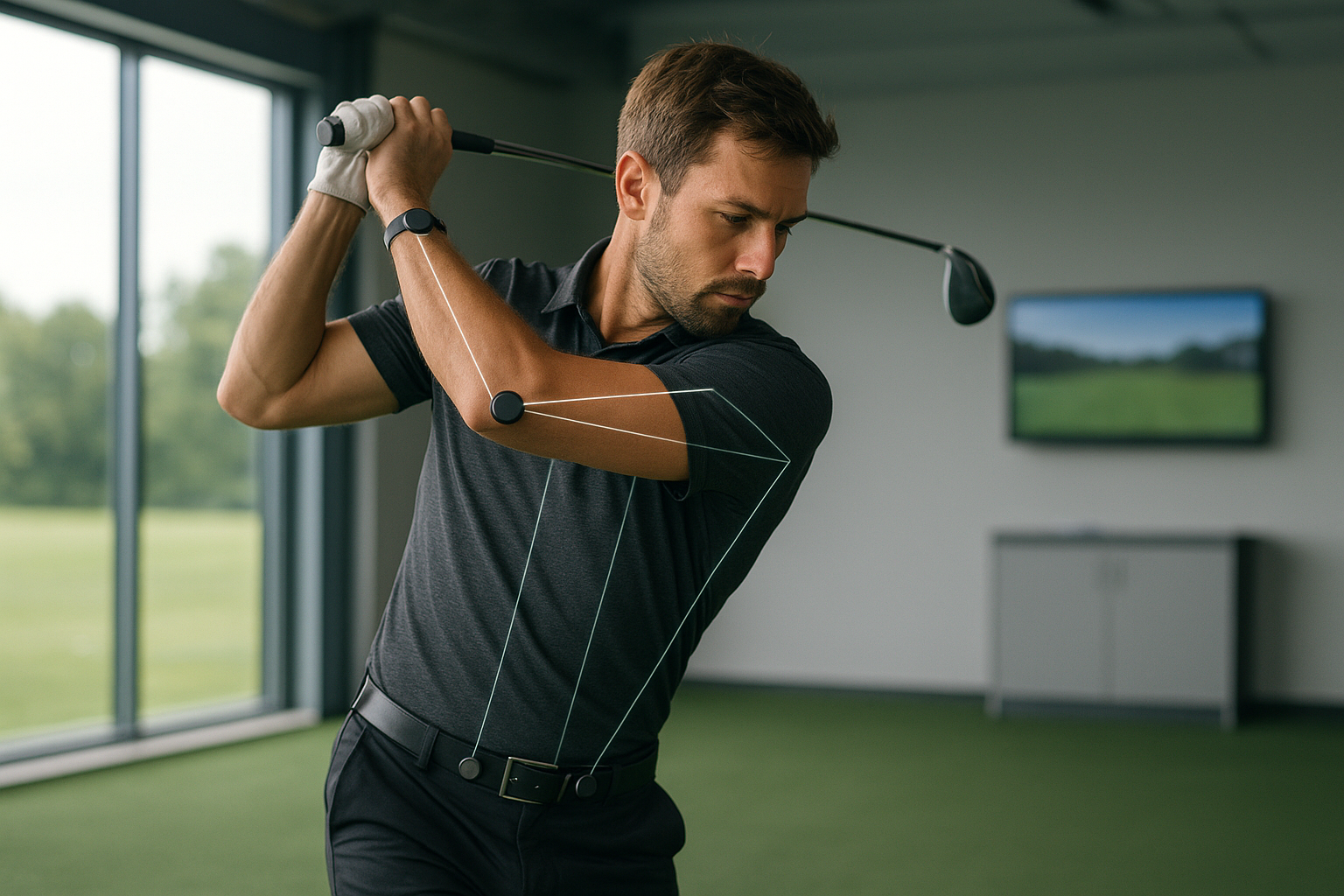
How to use biomechanical data for golf improvement is a question more competitive golfers are asking as motion-capture technology and swing sensors become mainstream. Biomechanical data refers to objective measurements of body movement—joint angles, rotational speed, ground force, and timing sequences—captured during the golf swing. Instead of guessing why a shot sliced or why power disappeared under pressure, players can see precisely what their body did and why. For competitive amateurs, collegiate athletes, and aspiring professionals, that shift from subjective feel to measurable fact changes how improvement actually happens.
Quick answer: To use biomechanical data for golf improvement, capture a baseline swing assessment, identify the one or two metrics limiting your performance, then convert those numbers into focused drills with a coach who can interpret the data. Consequently, you replace vague feedback like “swing faster” with specific, measurable targets tied to your own movement patterns.
What Is Biomechanical Data in Golf?
Biomechanical data is the set of numbers that describe how the body moves through the golf swing, including hip rotation speed, spine angle, clubhead velocity, and ground reaction force. In short, it turns an invisible movement into something you can measure and compare over time.
This field of study is rooted in biomechanics, the science of how forces act on and within living bodies, as explained by Wikipedia’s overview of biomechanics. Golf applies these same principles to a single, highly technical motion. For example, a sensor might record that your hips rotate at 450 degrees per second while your shoulders rotate at only 300 degrees per second, revealing the separation that generates clubhead speed.
Researchers indexed through PubMed Central’s golf biomechanics studies have examined these same movement sequences for decades. As a result, today’s wearable sensors and motion-capture cameras simply make lab-grade analysis available outside a university setting.
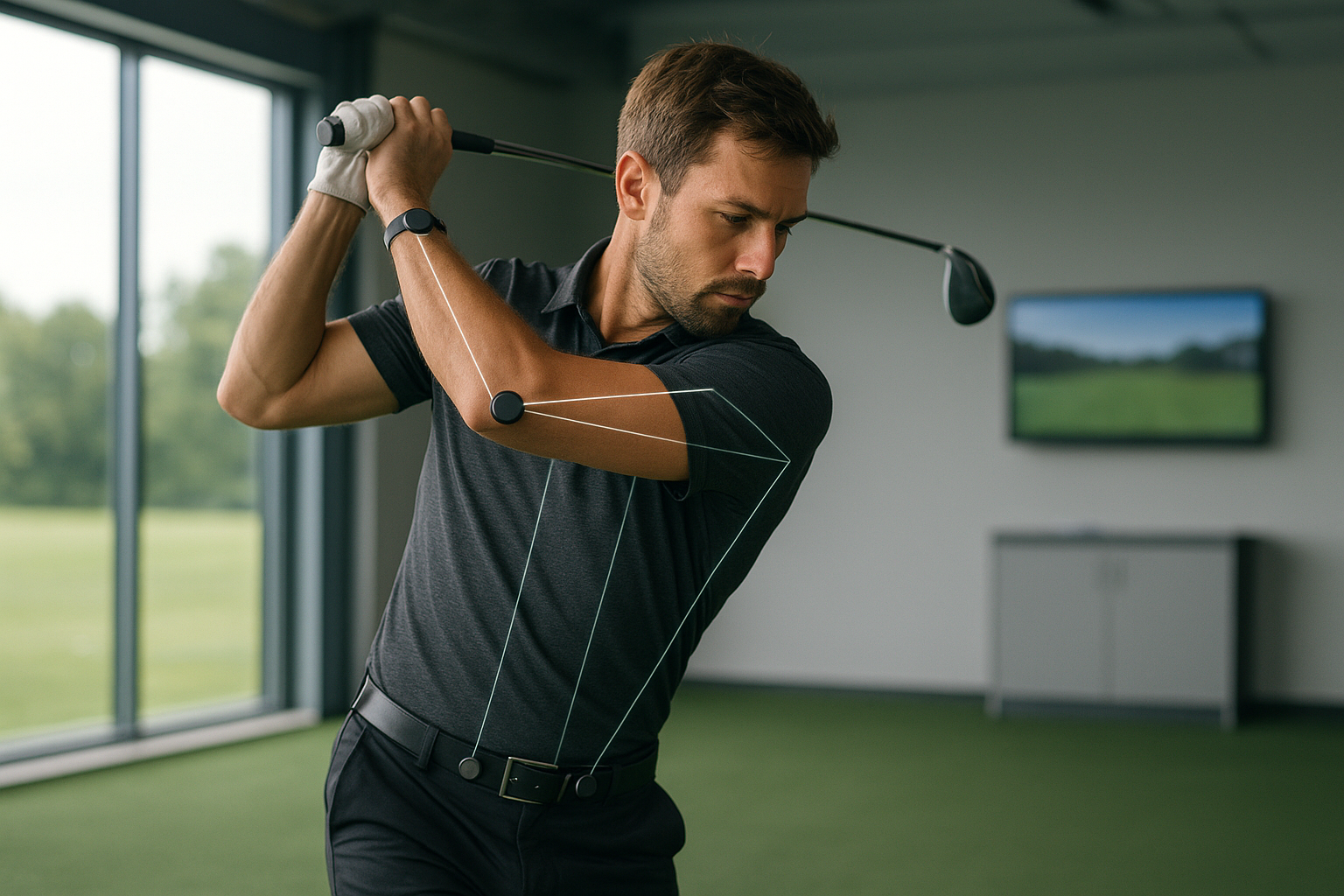
Wearable sensors make it possible to understand how to use biomechanical data for golf improvement without visiting a physical lab.
Why Golf Swing Biomechanics Analysis Matters for Competitive Players
Competitive golfers face a narrower margin for error than recreational players. Therefore, small inefficiencies in sequencing or timing show up as missed cuts rather than minor annoyances. Golf swing biomechanics analysis exposes these inefficiencies long before they appear as a consistent miss pattern on the course.
According to TrackMan performance data widely referenced across the golf industry, PGA Tour professionals average a clubhead speed near 113 mph, while many competitive amateurs sit closer to 90–100 mph. That gap is rarely about effort alone; it is usually about sequencing, rotation, and ground force efficiency. Governing bodies such as the USGA have also noted how equipment and technique both influence these measurable outputs.
In addition, biomechanical feedback helps separate real faults from one-off bad shots. A coach who reviews this kind of feedback-driven golf coaching data can tell whether a shank came from a timing error that repeats under pressure or simply an isolated mistake. This distinction matters enormously for tournament preparation.
Turning Swing Data Into Sustainable Mechanics
Collecting data is only half the process. The real value comes from translating swing data into mechanics that hold up under pressure and repeated use. Specifically, a coach trained in kinesiology—the scientific study of human movement—can identify whether a change will actually be sustainable or whether it places unsafe load on the joints.
For instance, chasing extra clubhead speed by over-rotating the spine might add a few yards short term. However, it can also increase injury risk over a long competitive season. Programs built around science-backed online coaching weigh performance gains against physical safety at every step.
How to Use Biomechanical Data for Golf Improvement: A Step-by-Step Process
Understanding how to use biomechanical data for golf improvement becomes much easier when it is broken into a repeatable process. The following steps outline how competitive players typically move from raw numbers to on-course results.
- Capture a full biomechanical swing assessment. Record a baseline swing using motion-capture, wearable sensors, or synchronized video to measure joint angles, rotational speed, and timing sequences before making any changes.
- Identify the two or three limiting factors. Work with a qualified coach to isolate the specific metrics, such as hip-shoulder separation or ground force timing, that most limit your power, accuracy, or consistency right now.
- Translate metrics into specific drills. Convert each limiting metric into a targeted drill or cue, practicing one variable at a time so you can clearly see whether the change produces the intended movement pattern.
- Retest and track changes over time. Reassess your swing data after several weeks of focused practice to confirm the targeted metric actually improved, then compare it against your original baseline numbers.
- Integrate findings into tournament preparation. Apply the confirmed mechanical improvements to on-course practice and tournament simulation so the new movement pattern holds up under real competitive pressure and fatigue.
Notably, this cycle is never truly finished. As swing mechanics evolve, the same five steps repeat, creating a continuous feedback loop rather than a one-time fix. Programs offering precision instruction for competitive golfers often build this loop directly into their coaching calendar.
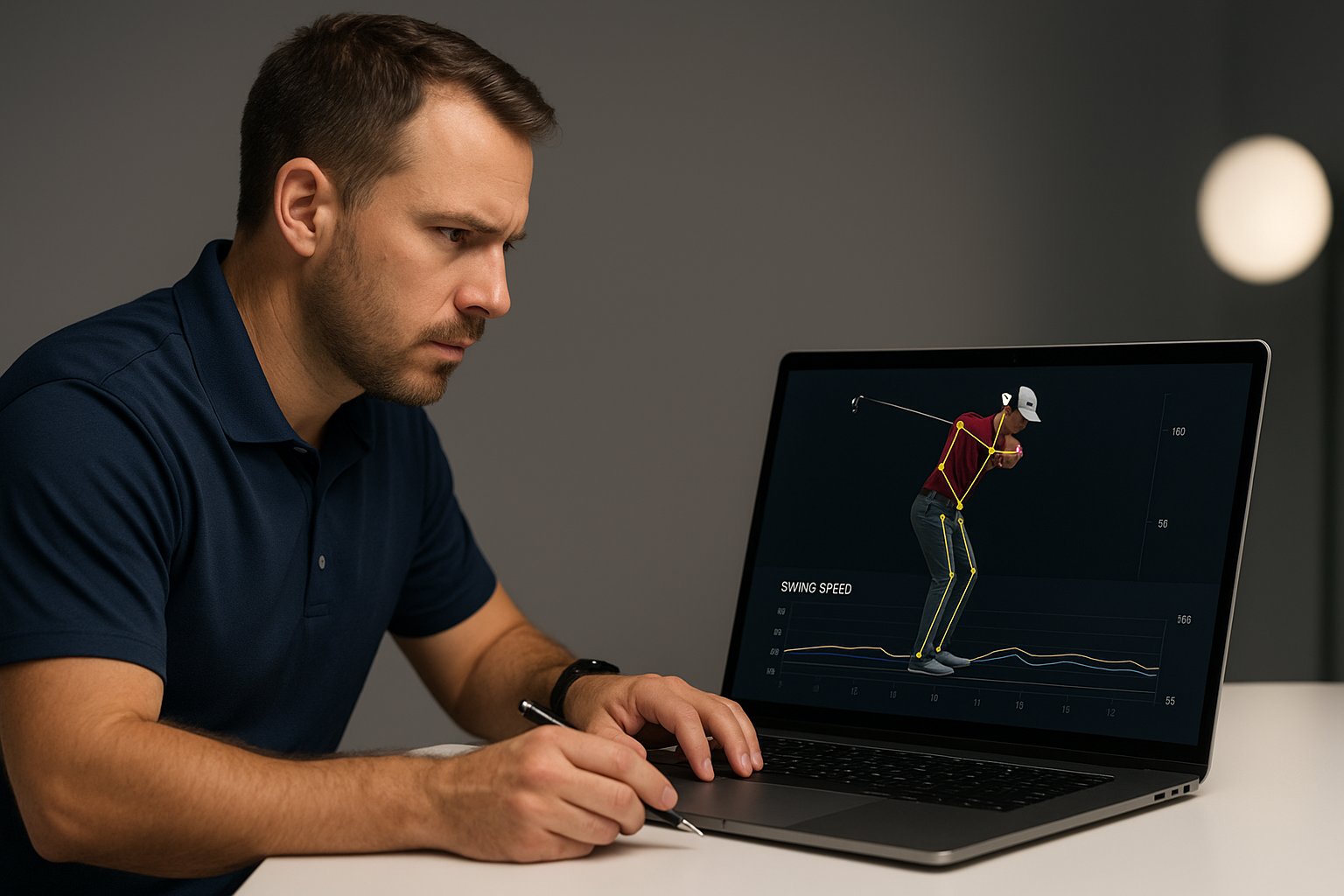
Remote coaching sessions allow players to review swing data without traveling to a physical facility.
Common Mistakes When Interpreting Golf Performance Data
Even accurate data can lead to poor decisions if it is misread. One common mistake is trying to fix every metric at once instead of prioritizing the single factor limiting performance most. This scattershot approach often confuses the body and slows progress.
Another frequent error is chasing distance numbers while ignoring injury-risk indicators, such as excessive spinal torque or asymmetrical joint loading. Consequently, a golfer may add yardage for a few months, only to develop back or hip pain that sidelines them before a key tournament.
Finally, some players treat a single data session as a permanent verdict rather than a snapshot. In reality, fatigue, equipment, and even the practice environment can shift the numbers. A deeper look at scientific golf swing coaching explains why repeated testing, not a one-time reading, produces the most reliable guidance.
Choosing a Biomechanics-Based Golf Coach
Not every instructor is trained to interpret biomechanical data correctly. Therefore, competitive golfers should look for coaching that combines credentialed teaching experience with a genuine background in movement science. A coach who blends an LPGA Master Professional background with a PhD in kinesiology, for example, can connect raw swing numbers to safe, performance-driven changes rather than generic tips.
Remote delivery has also removed a major barrier for serious players who lack access to advanced local instruction. Through a digital platform like yourgolfguru.com, golfers anywhere can receive the same data-driven feedback once limited to university labs or professional training centers. This matters especially for collegiate players and aspiring professionals who need advanced technical guidance beyond what a typical local pro can offer.
If you are weighing options, reviewing how virtual golf lessons for competitive players actually work can clarify what to expect from a remote, biomechanics-based program before you commit.
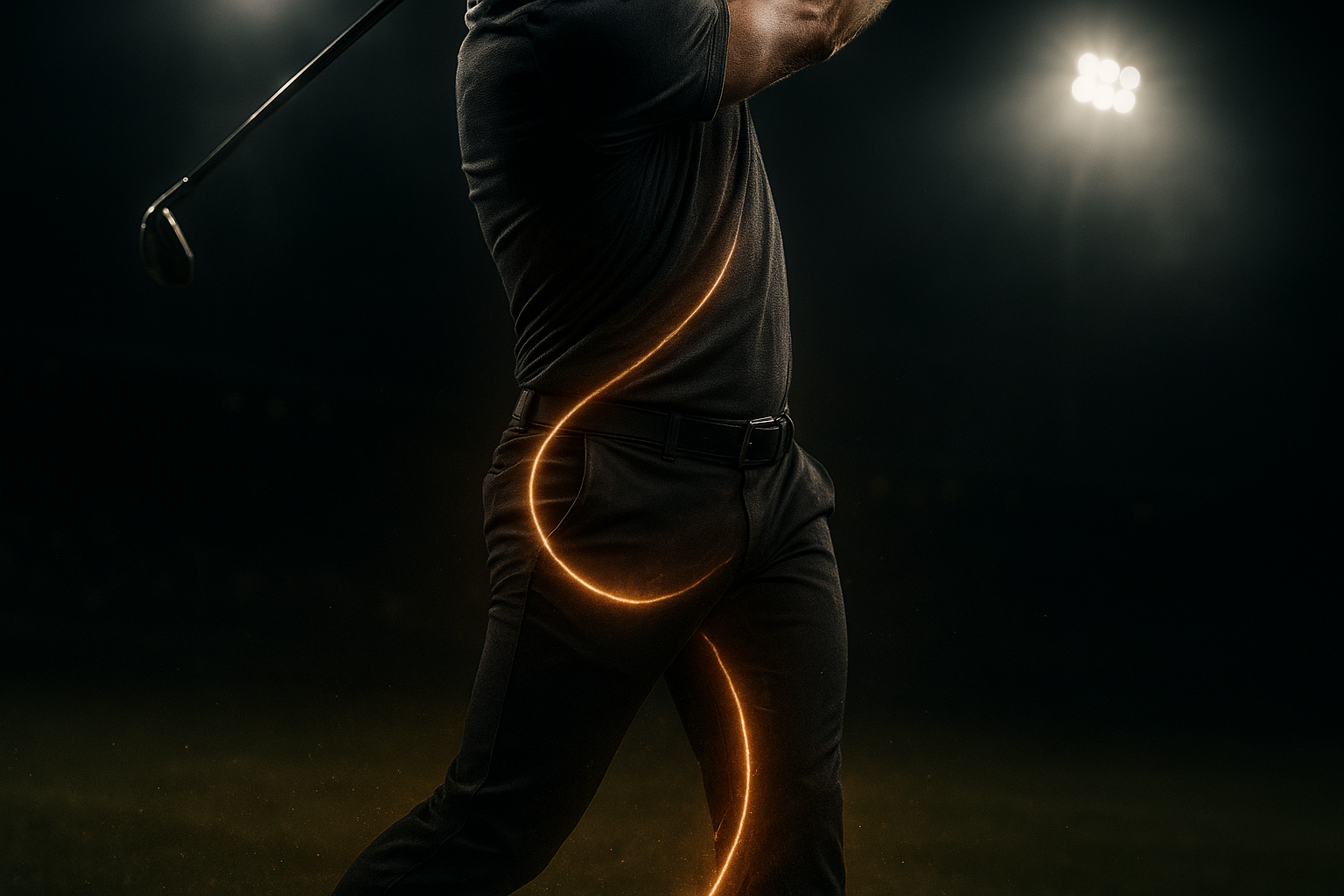
Ground reaction force and hip rotation are two of the most closely tracked metrics in golf swing biomechanics.
Frequently Asked Questions
What is biomechanical data in golf?
Biomechanical data in golf refers to objective measurements of body movement during the swing, such as joint angles, rotational speed, and ground reaction force. These numbers replace guesswork with measurable facts about what the body actually did.
How do golfers collect biomechanical data?
Golfers collect biomechanical data using wearable sensors, 3D motion-capture cameras, force plates, and high-speed video paired with analysis software. Many remote coaching programs now analyze this footage through video review instead of requiring an in-person lab visit.
Why is biomechanical data important for competitive golfers?
Biomechanical data matters because it isolates the exact movement pattern causing a swing fault, rather than relying on feel alone. For competitive players, this precision shortens the gap between practice and measurable performance gains.
How to use biomechanical data for golf improvement most effectively?
The most effective way to use biomechanical data for golf improvement is to pair a professional swing assessment with a coach who can translate numbers into specific drills. Data without expert interpretation rarely changes outcomes on its own.
What equipment is used to measure golf swing biomechanics?
Common tools include launch monitors, inertial sensors worn on the body, pressure-sensing force plates, and synchronized high-speed cameras. Some remote coaching services rely primarily on smartphone video combined with motion-tracking software.
How does biomechanical analysis differ from traditional golf lessons?
Traditional lessons often rely on visual observation and verbal feedback, while biomechanical analysis adds quantified measurements of speed, sequencing, and force. The two approaches work best together, since data informs the coaching rather than replacing it.
How much does biomechanical golf coaching cost?
Costs vary widely depending on whether the service includes in-person motion-capture labs or remote video-based analysis, with online programs typically costing less than physical biomechanics labs. Many competitive players find remote, science-backed coaching more affordable over a full season.
How long does it take to see results from biomechanics-based training?
Most golfers notice measurable changes in swing metrics within four to eight weeks of consistent, data-guided practice. However, permanent mechanical changes under competitive pressure often take a full season to solidify.
What are common mistakes when interpreting golf swing data?
A common mistake is chasing every number at once instead of prioritizing the one or two metrics limiting performance. Another is ignoring injury-risk indicators, such as excessive joint loading, in favor of chasing distance alone.
What biomechanical metrics matter most for distance and power?
Hip-to-shoulder rotation separation, ground reaction force, and clubhead speed at impact are among the strongest predictors of distance. Sequencing, or the order in which body segments accelerate, often matters more than raw speed alone.
Can biomechanical data help prevent golf injuries?
Yes, biomechanical data can flag excessive spinal torque, joint overload, or compensatory movement patterns before they cause pain. Identifying these patterns early allows a coach to adjust mechanics proactively instead of reacting after an injury occurs.
What are best practices for using biomechanical feedback in practice sessions?
Best practice is to focus on one biomechanical cue per practice block and retest it before adding another variable. Recording video alongside the data also helps golfers connect the numbers to how the movement actually feels.
Is biomechanical coaching suitable for junior or collegiate golfers?
Biomechanical coaching is well suited to junior and collegiate golfers because it builds efficient, repeatable mechanics early while reducing injury risk during physical development. Many collegiate programs now use swing data to manage player workload across a season.
How often should biomechanical swing analysis be repeated?
Competitive players typically benefit from reassessment every six to twelve weeks, or after any significant swing change. More frequent check-ins may be useful during an off-season rebuild or after returning from injury.
Ultimately, learning how to use biomechanical data for golf improvement comes down to three habits: measuring objectively, prioritizing the right metric, and working with a coach who understands both the science and the swing. In particular, pairing motion data with kinesiology-based coaching helps competitive players gain power and consistency while protecting their bodies for the long term. As golf technology continues to evolve, the players who treat data as a tool—not a verdict—will keep improving season after season. For a deeper look at how this approach works in practice, visiting yourgolfguru.com is a reasonable next step.