


Elite golf swing drills give competitive players a structured way to fix swing faults that survive years of casual range sessions. Unlike random bucket-of-balls practice, these drills isolate one biomechanical checkpoint at a time — grip, sequencing, or impact position — so improvement happens faster and lasts longer. For golfers chasing collegiate scholarships or professional status, this precision matters more than raw ball-hitting volume. In addition, Your Golf Guru builds this kind of instruction around real kinesiology research, not guesswork, delivered entirely online.
Quick answer: Elite golf swing drills are targeted exercises — such as the step-change drill, lag-pressure drill, and pause-at-top drill — that isolate a single mechanical fault so competitive golfers build power, accuracy, and consistency faster than generic range practice.
What Are Elite Golf Swing Drills?
Elite golf swing drills are focused practice routines that break the swing into isolated segments so a specific flaw can be corrected without interference from the rest of the motion. Rather than swinging full speed at every ball, a golfer repeats one controlled movement — for example, a half-speed takeaway — until it becomes automatic.
Specifically, these drills target checkpoints such as weight transfer, wrist angle, or clubface path at impact. As a result, competitive players can diagnose exactly which part of the swing is causing a slice, a chunk, or lost distance instead of guessing. This is precisely the approach used across science-backed swing mechanics coaching, where each drill maps to a measurable biomechanical goal.

Isolating one checkpoint at a time is the foundation of effective elite golf swing drills.
Why Competitive Golfers Rely on Advanced Swing Training
Casual golfers often plateau because they practice the same full swing repeatedly without addressing the root cause of a miss. However, competitive golfers, collegiate players, and aspiring professionals cannot afford that inefficiency; every stroke matters in tournament play. Therefore, advanced swing training built on drill isolation becomes essential once a player reaches a certain skill level.
According to biomechanical research summarized by the golf swing entry on Wikipedia, the motion involves a complex sequence of kinetic chain movements through the hips, torso, arms, and hands. In particular, a breakdown at any single link in that chain reduces both power and accuracy. This is why exclusive golf tips and golf swing lessons from a credentialed instructor tend to outperform generic instructional videos for serious players.
5 Proven Drills for Elite Swing Mechanics
The following sequence covers five drills frequently used in high-performance coaching. Above all, each drill should be practiced slowly before adding speed, since rushing the movement defeats its purpose.
- Step-Change Drill: Set up in your normal stance, then step your trail foot toward your lead foot as you start the backswing to force proper weight transfer and hip rotation before impact.
- Lag-Pressure Drill: Place a glove or towel under your trail armpit and swing to half speed, keeping it pinned until impact to train connected arm-and-body sequencing and reduce early release.
- Pause-at-Top Drill: Swing to the top of your backswing and hold for two full seconds before starting down, allowing you to check spine angle, wrist position, and balance under control.
- Impact Bag Drill: Strike a weighted impact bag repeatedly from a shortened backswing to reinforce forward shaft lean and a stable lead wrist through contact without fear of a mishit.
- Alignment Stick Gate Drill: Place two alignment sticks just outside the ball on your target line and swing through the narrow gate to sharpen path control and clubface accuracy at impact.

Impact bag work reinforces the wrist position that many elite golf swing drills are built around.
The Kinesiology Behind High-Performance Golf Drills
Kinesiology, the scientific study of human movement, explains why certain golf drills work while others create compensations that lead to injury. For instance, forcing excessive hip rotation without adequate mobility can place strain on the lower back rather than improving distance.
A biomechanics review indexed on the National Library of Medicine’s PubMed Central noted that golfers using isolated, drill-based practice showed more repeatable clubhead path metrics than those relying solely on full-swing repetition. Consequently, coaching that blends kinesiology principles with drill design tends to produce safer, more durable swing changes. This is precisely the model applied by an LPGA Master Professional holding a PhD in kinesiology, where every drill is chosen for both performance gain and injury prevention.
Building a Weekly Elite Golf Swing Drills Routine
A weekly elite golf swing drills routine works best when it follows a simple structure: diagnose, isolate, repeat, then test. Specifically, a golfer might dedicate Monday and Wednesday to sequencing drills, Friday to impact drills, and weekend rounds to testing those changes under real conditions.
In addition, tracking progress with video or a simple practice log helps confirm whether a drill is actually transferring to on-course results. For a full seasonal framework, the guide on how to make this your best ever golf year breaks down how to sequence drills, strength work, and competitive rounds across a full season rather than practicing in isolation.
Common Mistakes to Avoid During Swing Drill Practice
Even well-designed drills fail when executed incorrectly. The most frequent mistake is rushing to full speed before the new movement pattern feels automatic at a slow tempo. Similarly, practicing four or five drills in one session often overwhelms motor learning instead of reinforcing it.
Another common error is skipping feedback entirely, since a golfer cannot self-correct a fault they cannot see. Therefore, video review or a qualified coach’s eye remains essential. The strategies outlined for competitive golfers looking to improve fast address exactly this problem by pairing each drill with structured feedback loops.
Why Remote Coaching Delivers Elite-Level Results
Geography once limited access to elite-level instruction, since top coaches were concentrated at a handful of physical academies. However, remote coaching now removes that barrier entirely. A golfer can submit swing video, receive a personalized drill plan, and follow up with detailed feedback without ever leaving their home course.
This model is particularly valuable for competitive amateurs and collegiate players who need advanced technical guidance beyond what a typical local instructor can offer. The best golf swing lessons for serious competitive golfers combine this remote flexibility with credentials like an LPGA Master Professional designation, giving athletes anywhere access to data-driven, safety-focused coaching. Above all, this approach according to the PGA of America reflects a broader shift toward technology-enabled instruction across competitive golf.
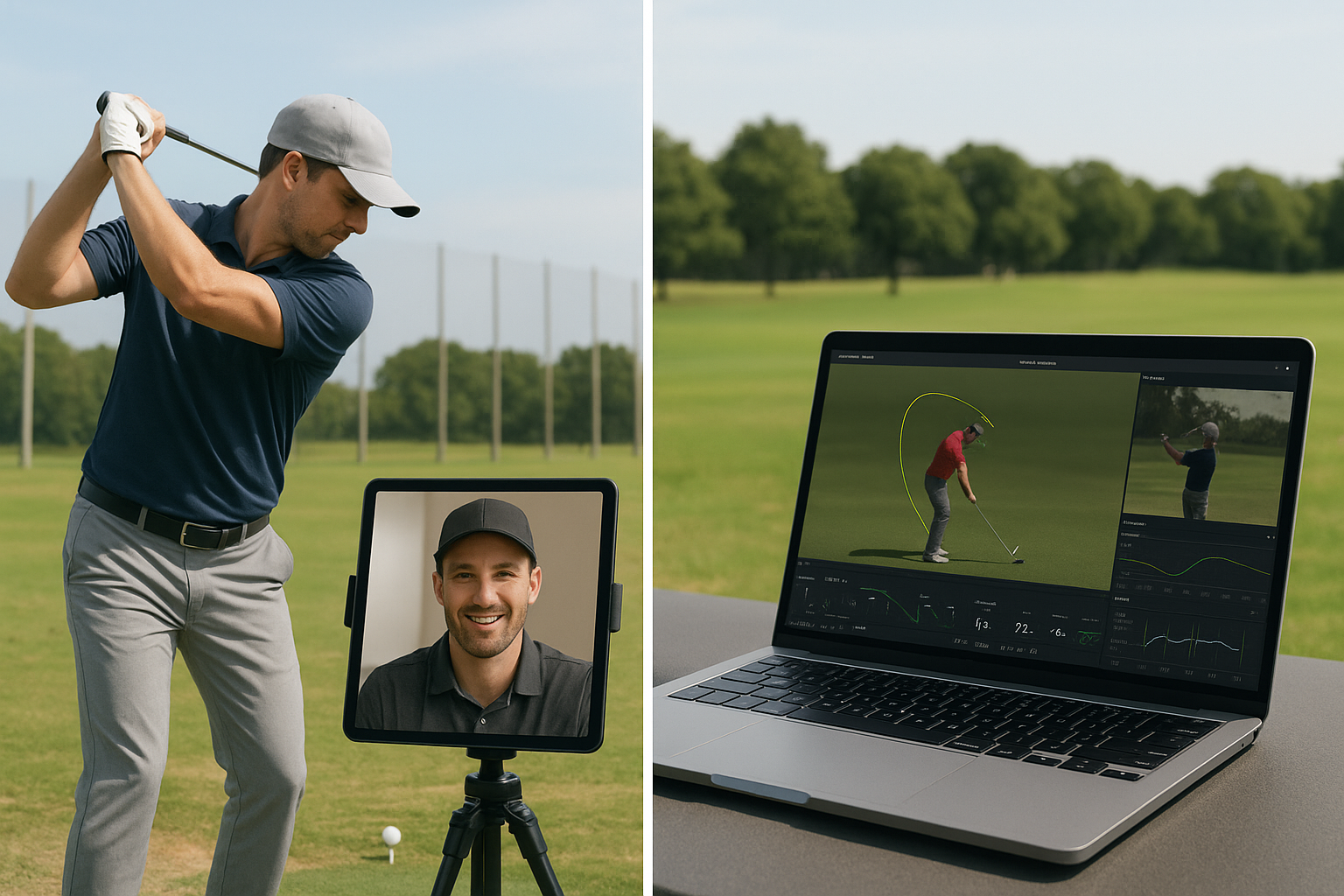
Remote video feedback allows competitive golfers to refine elite golf swing drills from any location.
Frequently Asked Questions About Elite Golf Swing Drills
What are elite golf swing drills?
Elite golf swing drills are targeted practice exercises that isolate one specific mechanical fault, such as sequencing, lag, or impact position, rather than relying on generic full-swing repetition. They are designed to build power, accuracy, and consistency for competitive players.
How often should competitive golfers practice swing drills?
Most competitive golfers benefit from three to five focused drill sessions per week, each lasting 20 to 40 minutes. Consistency matters more than volume, so shorter, frequent sessions outperform occasional marathon practice days.
Why do elite golf swing drills improve consistency more than range sessions?
Drills isolate a single checkpoint in the swing, which allows the body to correct one variable at a time. In contrast, random range practice mixes too many variables at once, making it harder to identify what actually caused a mishit.
What is the difference between swing drills and full swing practice?
Swing drills slow down or isolate part of the motion to build a specific skill, while full swing practice tests whether that skill transfers under normal speed and pressure. Both are necessary, but drills should come first in a session.
How long does it take to see results from elite golf swing drills?
Many golfers notice measurable changes in ball flight or contact quality within two to four weeks of consistent drill work. Deeper, permanent changes to swing mechanics typically take eight to twelve weeks of deliberate practice.
What equipment do you need for elite golf swing drills?
Most drills require only basic gear: alignment sticks, an impact bag, a towel or glove, and a smartphone for video feedback. None of the equipment is expensive, which makes these drills accessible for golfers training remotely.
Can beginners use elite golf swing drills, or are they only for advanced players?
While these drills are optimized for competitive and advanced players, beginners can use simplified versions to build fundamentals correctly from the start. However, the primary value comes from refining an already-established swing.
How much does online golf coaching cost compared to in-person lessons?
Online coaching is often more affordable than in-person lessons with a comparable credential level, since it removes travel and facility overhead. It also allows access to specialized instructors, like an LPGA Master Professional, regardless of location.
What are the most common mistakes golfers make when practicing swing drills?
The most common mistake is rushing through a drill at full speed before the correct movement pattern is grooved. Another frequent error is practicing too many drills at once instead of mastering one checkpoint at a time.
How does kinesiology improve golf swing training?
Kinesiology, the study of human movement, helps coaches identify exactly which joints and muscle groups need to change to fix a swing fault safely. This reduces injury risk while producing more efficient, powerful mechanics.
What is the best way to combine swing drills with strength training?
Pair mobility and rotational strength work with drill practice so the body can physically execute the new pattern the drill is teaching. For example, hip rotation drills work best alongside exercises that build core and glute strength.
How can remote golf coaching provide elite-level instruction?
Remote coaching uses video analysis and structured drill assignments so a qualified instructor can diagnose swing faults without being on-site. This gives competitive golfers access to specialized, science-backed coaching regardless of their geographic location.
Final Takeaway
Ultimately, elite golf swing drills work because they isolate one mechanical checkpoint at a time, backed by kinesiology principles rather than guesswork. Competitive amateurs, collegiate players, and aspiring professionals who commit to a structured weekly routine tend to see faster, more durable gains than those who rely on unfocused range time alone. As a result, pairing these drills with expert feedback — whether in person or through a remote platform like Your Golf Guru — gives serious golfers the clearest path toward more power, sharper accuracy, and swing changes that actually hold up under tournament pressure.