

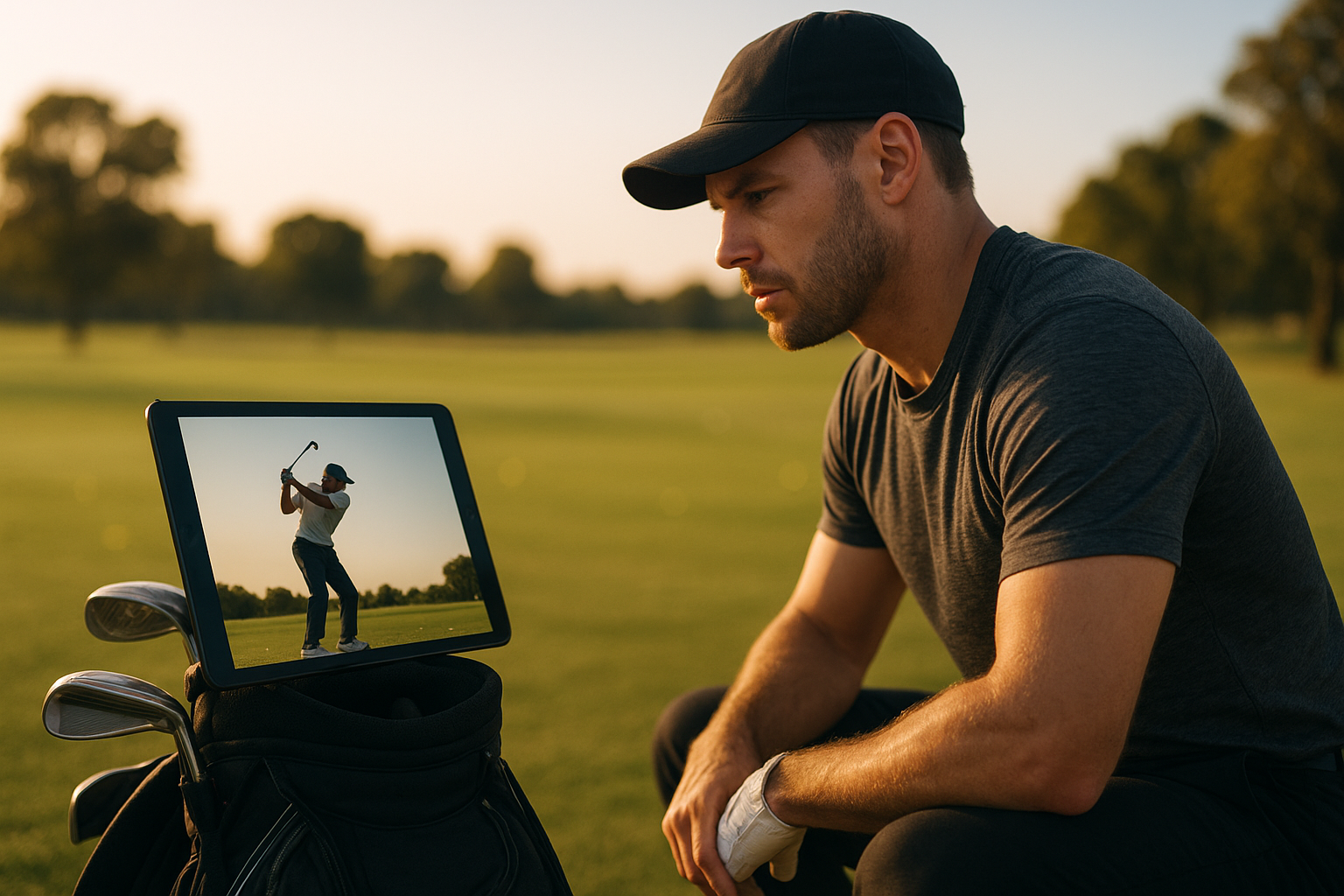
Golf training videos for competitive play give serious athletes a structured way to sharpen swing mechanics, build repeatable consistency, and prepare for tournament pressure without leaving home. For competitive amateurs, collegiate players, and aspiring professionals, video-based coaching has become one of the fastest ways to close the gap between range practice and scorecard results. Below, this guide breaks down what makes these programs effective, how to evaluate one, and how to structure a video-driven training plan that actually lowers your handicap.
Quick answer: Golf training videos for competitive play are science-backed video lessons that combine biomechanical analysis with sport-specific drills, helping skilled golfers improve power, accuracy, and consistency while protecting the body from injury. They work best when paired with a structured practice plan rather than watched passively.
What Are Golf Training Videos for Competitive Play?
Golf training videos for competitive play are structured video lessons designed for golfers who already have a functional swing but need tournament-level precision. Unlike casual instructional clips, they combine biomechanical breakdowns with drills targeting power, accuracy, and repeatability under pressure. As a result, they tend to move faster and go deeper into technical detail than beginner-focused content.
In particular, kinesiology-based programs stand out because they treat the swing as a movement science problem, not just a style to imitate. Kinesiology is the scientific study of human movement, and applying it to golf means every correction is grounded in how joints, muscles, and forces actually behave. According to the National Golf Foundation, competitive and junior golf participation has grown steadily in recent years, which has increased demand for higher-level remote coaching options like these.
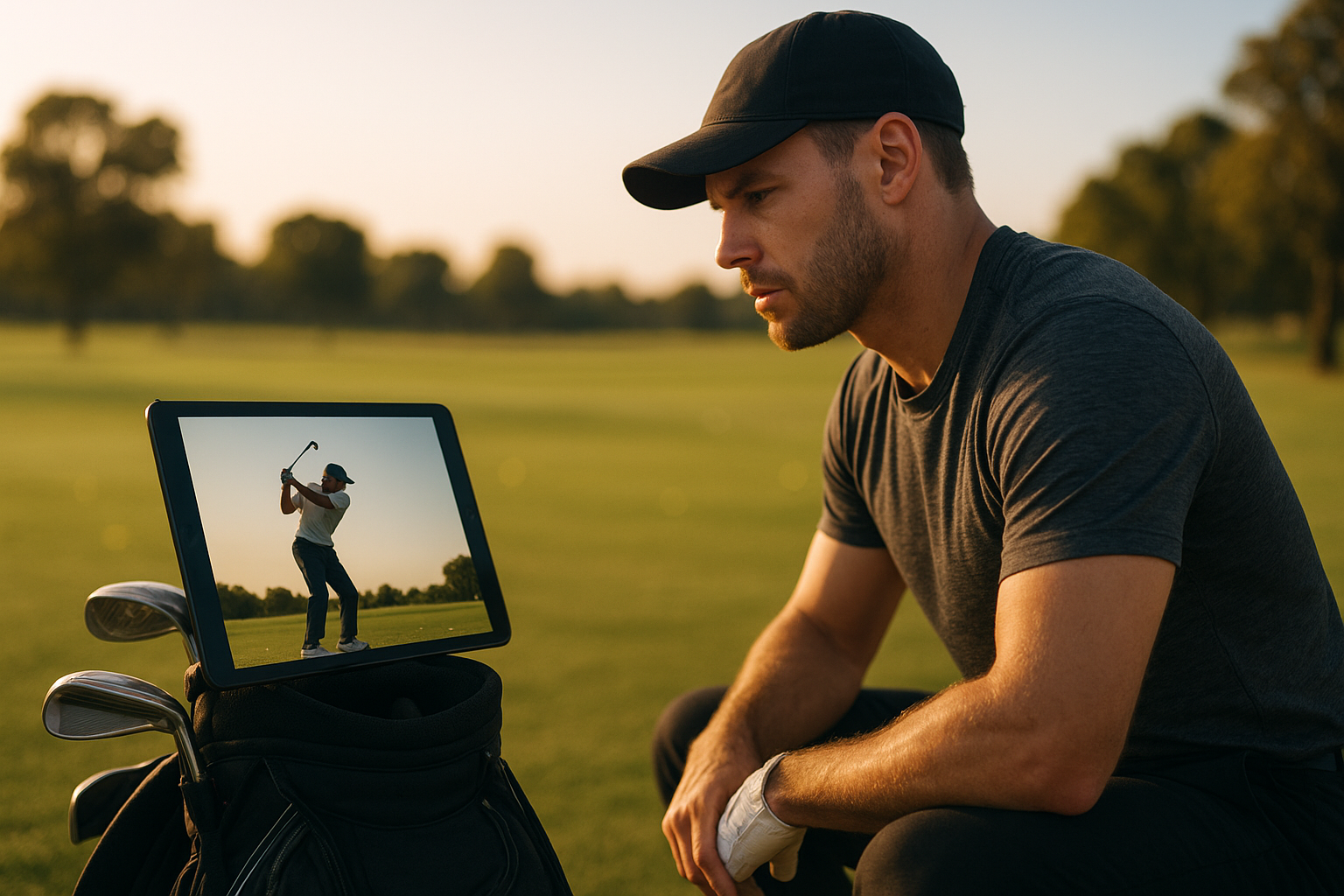
Competitive golfers often pair golf training videos for competitive play with on-course reps to reinforce new mechanics.
Why Competitive Golfers Choose Video-Based Swing Coaching
Competitive players often outgrow what a local instructor can offer, especially when advanced biomechanical feedback is needed. Consequently, many turn to video-based swing coaching led by highly credentialed professionals, such as an LPGA Master Professional with a PhD in kinesiology. This blend of elite teaching experience and formal movement science gives players access to guidance that is otherwise hard to find outside a handful of major training centers.
Furthermore, remote video coaching removes geography from the equation entirely. A golfer training in a small town can receive the same depth of analysis as someone near a major golf hub, provided the platform offers detailed swing review. For a deeper look at how biomechanics shapes modern instruction, the golf science video library breaks down specific swing positions frame by frame.
The Kinesiology Advantage in Remote Golf Instruction
Because kinesiology focuses on how the body actually generates and absorbs force, coaches trained in it can pinpoint the root cause of a swing fault rather than just its visible symptom. For example, a player who slices the ball may be told to “swing more inside out,” yet the real issue could be hip rotation timing. In contrast, a kinesiology-informed video lesson addresses the sequencing problem directly, which tends to produce faster, more durable change. You can review the full coaching approach at yourgolfguru.com to see how this science is applied to real swing footage.
How to Build a Competitive Practice Plan With Golf Training Videos
Watching a lesson is only half the process. To actually change your swing, you need a repeatable system for applying what you see. The steps below outline a practical framework used by many competitive players.
- Watch the entire video lesson once without holding a club, so you absorb the full sequence and reasoning before making any physical changes.
- Rewatch the footage in sections, pausing at setup, backswing, transition, and impact, to identify exactly where your swing diverges from the model shown.
- Record your own swing from the same camera angle used in the lesson, then place both clips side by side to compare position and tempo directly.
- Apply one correction at a time, rehearsing it in slow, deliberate reps before adding speed, since layering multiple fixes at once slows real progress.
- Track results over a two-week period, logging ball flight and contact quality, then decide whether to keep, adjust, or move on to the next lesson.
This kind of structure is exactly what separates a strong training plan from random practice. For a full walkthrough of season-long planning, see how to build your best-ever golf year.
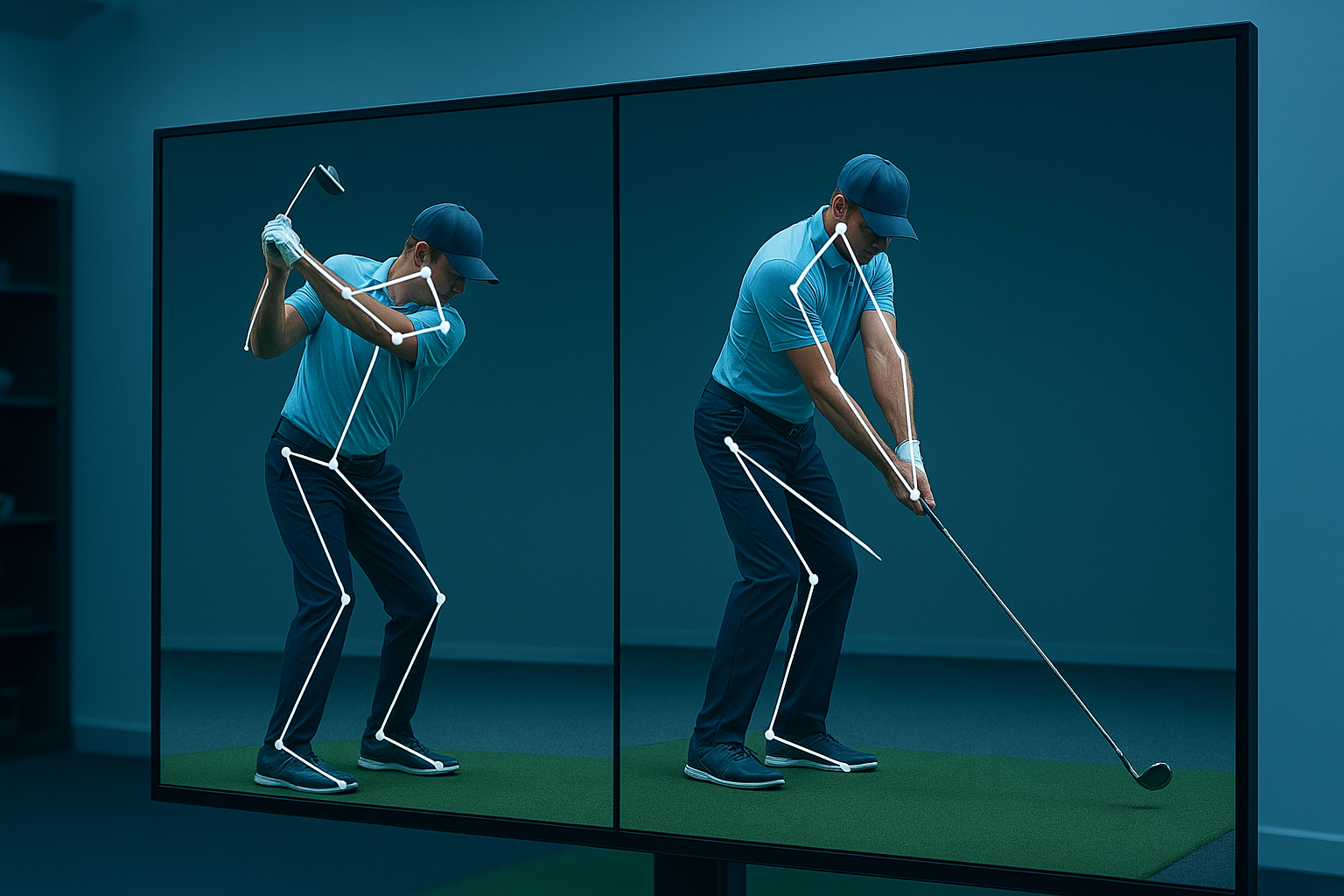
Biomechanical overlays help competitive players see subtle sequencing differences frame by frame.
Key Swing Elements Covered in Elite Video Lessons
Not all video lessons cover the same ground. Elite-level content typically focuses on a specific set of technical areas that most directly affect competitive scoring. In particular, look for lessons that address the following:
- Swing sequencing and kinematic timing between the lower body, torso, and arms.
- Impact position and how it influences distance and accuracy together.
- Tempo consistency under simulated pressure, not just on a quiet range.
- Injury-prevention checkpoints, especially around the spine, hips, and wrists.
If you suspect your current swing relies on compensations rather than efficient mechanics, it may be worth asking whether your swing is built on outdated assumptions before investing more time in it.
Choosing the Right Program for Competitive Play
When comparing programs, credentials matter more than production value. A polished video with weak instruction will not fix a competitive swing. Instead, prioritize instructors with recognized teaching credentials, such as LPGA Master Professional status, alongside a formal background in movement science.
YourGolfGuru, for example, is built specifically around this combination, pairing decades of elite coaching experience with a PhD in kinesiology to deliver remote lessons for competitive amateurs, collegiate players, and aspiring professionals. Because the platform is entirely digital, golfers anywhere can access the same level of technical detail without traveling to a physical academy. To see how power and accuracy training are approached, review this guide to hitting the ball further, straighter, and higher.
Common Mistakes When Using Golf Training Videos for Competitive Play
Even excellent golf training videos for competitive play can fail if they are used incorrectly. The most frequent mistake is trying to change too many things at once, which overwhelms the nervous system and often makes ball-striking worse temporarily. Similarly, some players skip the comparison step entirely, watching lessons passively without ever filming their own swing.
Another common issue is abandoning a change too early, before the new pattern has time to become automatic. As a general rule, most swing changes need several weeks of deliberate reps before they hold up under competitive pressure. Patience, in this context, is a technical requirement, not just a mindset.
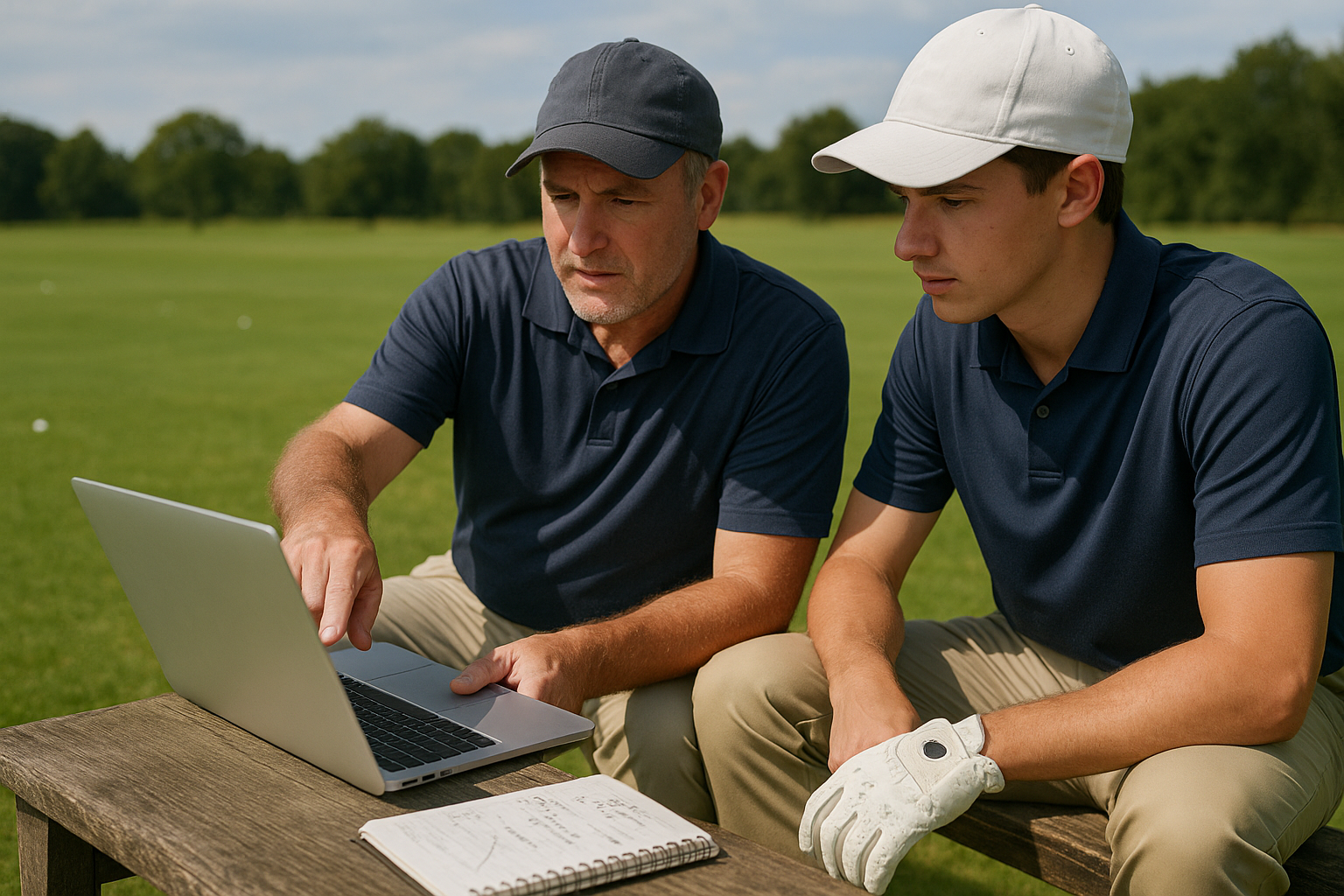
Reviewing footage with clear notes helps competitive players avoid common video-training mistakes.
Frequently Asked Questions About Golf Training Videos for Competitive Play
What are golf training videos for competitive play?
Golf training videos for competitive play are structured video lessons built for skilled golfers who need tournament-level swing consistency, not casual improvement. They typically combine biomechanical breakdowns, drills, and feedback from a credentialed coach.
How do golf training videos differ from a standard in-person lesson?
Video lessons let you rewatch, pause, and compare footage side by side, which reinforces motor learning over time. In-person lessons offer real-time correction, so many competitive golfers use both together.
Why does kinesiology matter in golf swing analysis?
Kinesiology is the scientific study of human movement, and it helps coaches identify exactly which joints, muscles, and sequencing patterns produce power or cause injury. Applying it to golf allows instructors to correct mechanics at the source rather than just the symptom.
How much do online golf training programs typically cost?
Costs vary widely, from free platform content to several hundred dollars for personalized swing analysis and coaching plans. Programs led by credentialed professionals, such as an LPGA Master Professional, generally sit at the higher end because of the depth of analysis provided.
How long does it take to see results from video-based coaching?
Most competitive golfers notice measurable swing changes within four to six weeks of consistent practice. However, full integration under tournament pressure often takes a full competitive season.
What equipment do I need to start using golf training videos?
At minimum, you need a smartphone or camera, a tripod or stable surface, and a swing analysis app or platform. Some golfers add launch monitors or slow-motion capture for more precise feedback.
Can beginners use competitive-level training videos, or are they only for advanced players?
Competitive-level content is designed for players who already have a repeatable swing and want to refine details. Beginners typically benefit more from foundational instruction before moving into advanced biomechanical coaching.
What is the biggest mistake golfers make when using training videos alone?
The most common mistake is trying to fix multiple swing faults at once instead of isolating one change at a time. This overloads the nervous system and often makes ball-striking worse before it gets better.
How often should competitive golfers review swing videos?
Reviewing footage two to three times per week during active training blocks is generally enough to reinforce change without overanalyzing. In-season, a quick weekly check-in helps maintain consistency.
What credentials should I look for in an online golf instructor?
Look for recognized certifications such as LPGA or PGA Master Professional status, plus any specialized education like a kinesiology degree. These credentials indicate both teaching experience and a science-based understanding of movement.
Are golf training videos effective for injury prevention?
Yes, when the instruction is grounded in biomechanics, video analysis can flag swing patterns that place excess stress on the spine, hips, or wrists. Correcting these patterns early reduces the risk of overuse injuries common in high-volume competitive play.
How do I choose the best golf training videos for competitive play?
Prioritize programs led by credentialed instructors with a track record coaching competitive players, and check whether the curriculum addresses power, accuracy, and injury prevention together. Reading course outlines and instructor bios before enrolling helps avoid generic, one-size-fits-all content.
Can video coaching replace an on-course coach during tournaments?
Video coaching is best used to build and maintain mechanics before competition, not as a live, in-round resource. Most competitive golfers pair video-based training with occasional on-course coaching for strategy and mental game support.
In summary, golf training videos for competitive play work best when they combine credentialed, science-based instruction with a disciplined practice structure rather than passive viewing. Whether you are a collegiate player chasing lower scores or an aspiring professional refining tournament-ready mechanics, pairing biomechanical insight with consistent video review, like the resources available at yourgolfguru.com, gives you a clear, repeatable path toward stronger, more durable performance under pressure. Article by an LPGA Master Professional with a PhD in kinesiology — see the author bio for credentials and links to research and full coaching CV.