

Biomechanical golf swing coaching is changing how competitive players refine their mechanics, using motion science instead of guesswork to build faster, safer, and more consistent swings. Rather than relying only on what a swing looks like, this coaching method studies joint angles, sequencing, and force production to pinpoint exactly what limits distance or accuracy. For golfers who have plateaued despite years of lessons, biomechanical golf swing coaching often reveals the missing piece: how the body actually moves under load. This guide explains what the approach involves, how it works, and how serious players can access it remotely through platforms such as yourgolfguru.com.
Direct answer: Biomechanical golf swing coaching applies kinesiology, the scientific study of human movement, and motion analysis to diagnose swing faults at their physical root cause. It then prescribes corrective drills that improve power, accuracy, and injury resilience faster than trial-and-error instruction alone.
What Is Biomechanical Golf Swing Coaching?
Biomechanical golf swing coaching is a method of golf instruction that analyzes the body’s joints, muscles, and movement patterns to identify the physical causes behind swing inefficiencies. Instead of only correcting appearance, biomechanically trained coaches address why the body moves that way in the first place.
This approach typically blends slow-motion video, sequencing analysis, and sometimes wearable sensors with a coach’s expert eye. As a result, feedback becomes specific: rather than “swing more on plane,” a biomechanically informed coach might explain exactly which joint restriction is causing the deviation.
According to the foundational science of biomechanics, human movement follows measurable physical laws. Applying that same rigor to golf allows coaches to separate stylistic quirks from genuine mechanical flaws. For a deeper technical breakdown, this explanation of golf swing biomechanics covers the core physics involved.
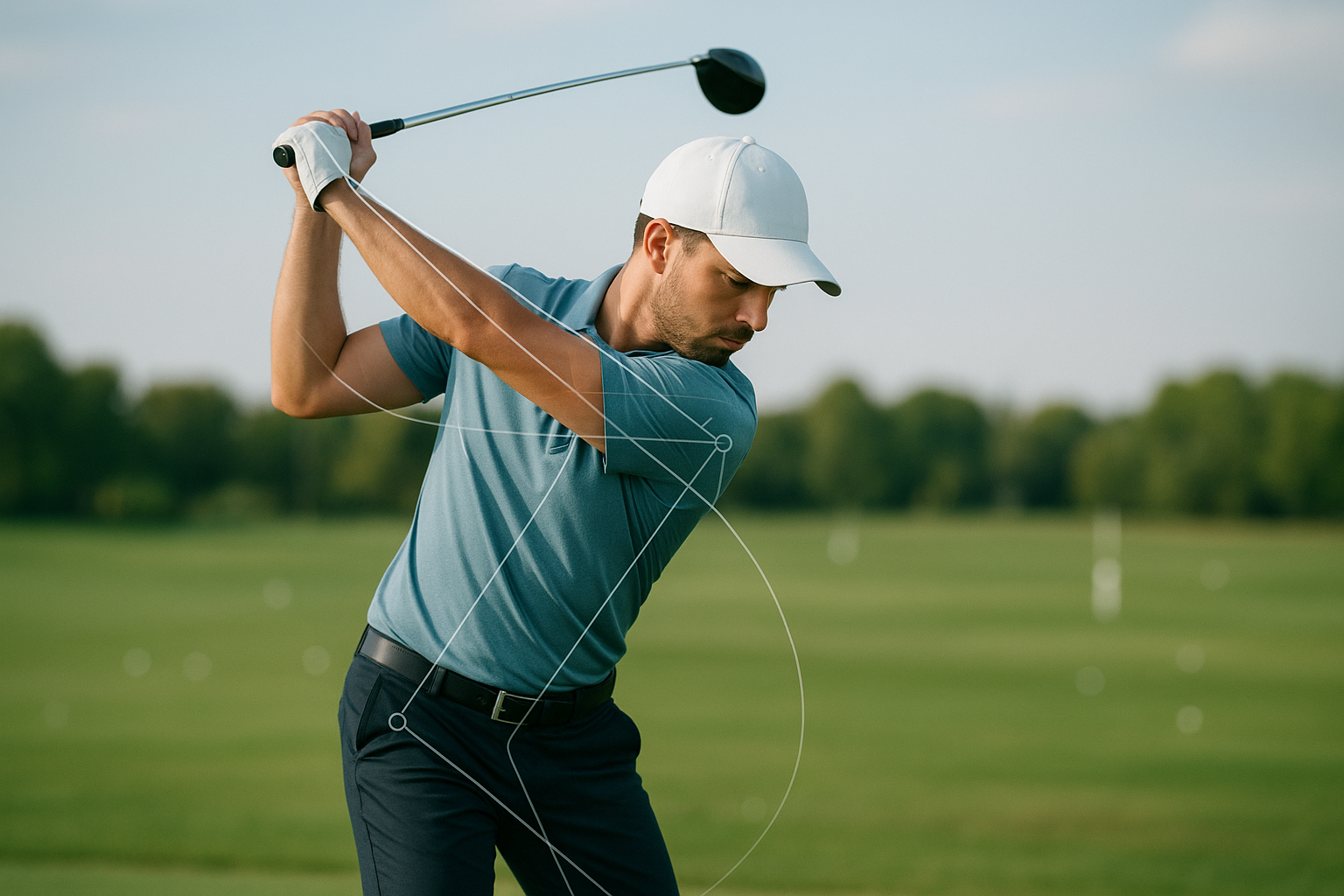
Biomechanical golf swing coaching relies on tracking joint angles and sequencing rather than surface-level swing appearance.
Why Swing Mechanics Analysis Matters for Competitive Golfers
Competitive golfers face a narrower margin for error than recreational players, which is why swing mechanics analysis matters so much at higher levels. Small inefficiencies that go unnoticed in casual play often surface as missed cuts or lost distance under tournament pressure.
Furthermore, repeated compensations in the swing can quietly accumulate physical stress. Studies referenced by the National Institutes of Health have linked a significant share of golf-related injuries to lower back strain caused by faulty rotational mechanics, underscoring why physical analysis matters as much as aesthetics.
In particular, comparing swing patterns across elite players highlights how varied “correct” mechanics can look while still following sound biomechanical principles. This anatomical analysis of professional swings illustrates that range clearly.
The Kinesiology Behind a Powerful, Repeatable Swing
Kinesiology, the study of body movement, explains how muscles, joints, and connective tissue coordinate to generate clubhead speed safely. Consequently, coaches trained in kinesiology can identify whether a power leak comes from limited hip rotation, poor sequencing, or weak ground force transfer.
For example, a golfer who “casts” the club early in the downswing is often compensating for a mobility restriction elsewhere in the kinetic chain, not simply making a technical error. Addressing the underlying restriction, rather than the visible symptom, tends to produce longer-lasting improvement.
In addition, this science-based lens supports injury prevention. Because the body naturally seeks the path of least resistance, ignoring biomechanical limitations often leads to compensations that raise injury risk over time. That is one reason kinesiology-based coaching increasingly appeals to serious, performance-focused athletes.
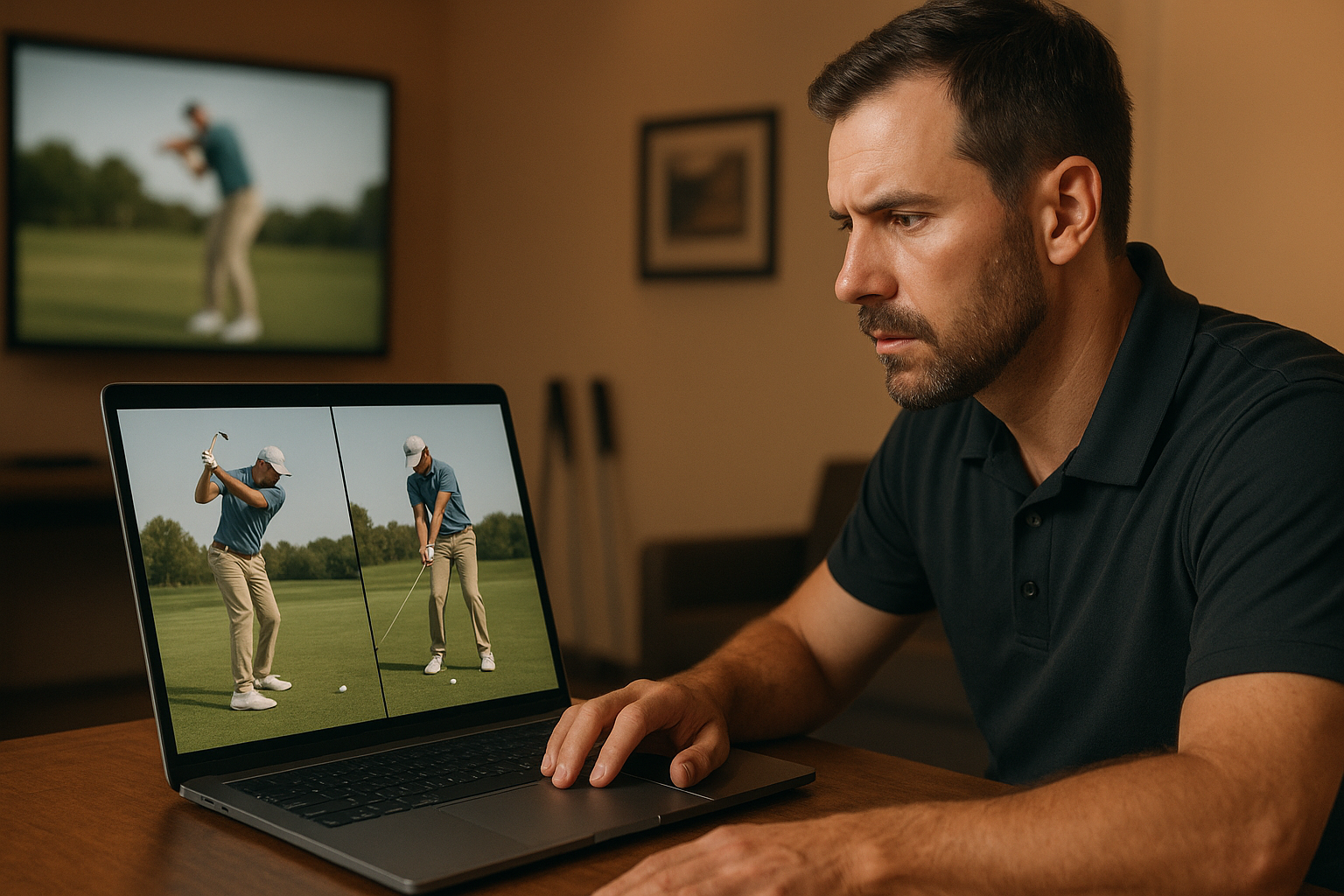
Remote video review is central to how biomechanical golf swing coaching translates science into practical feedback.
How to Start Biomechanical Golf Swing Coaching Online
Getting started with a remote, science-based coaching relationship is more straightforward than many golfers expect. The following steps outline a typical process:
- Record baseline swing video. Film your swing from front-on and down-the-line angles in slow motion using a stable smartphone tripod.
- Submit footage for biomechanical review. Upload the videos along with notes on pain points, distance goals, or recurring mishits.
- Receive a kinesiology-based swing breakdown. Review the coach’s explanation of your joint angles, sequencing, and force production.
- Practice prescribed corrective drills. Focus on quality repetitions of the assigned drills rather than sheer volume.
- Track progress with follow-up check-ins. Submit updated video on a regular schedule so the coaching plan can adapt as you improve.
This structure allows golfers anywhere to receive expert-level feedback without traveling to a physical facility, which is especially valuable for collegiate and touring players with demanding schedules.
Who Should Consider Biomechanical Golf Swing Coaching?
Biomechanical golf swing coaching is especially valuable for competitive amateurs, collegiate athletes, and aspiring professionals who need more precision than typical local instruction provides. These golfers often already understand the basics; what they lack is a clear explanation of why a specific flaw keeps recurring.
Similarly, players recovering from injury or managing chronic swing pain benefit from an approach that accounts for individual mobility and physical limitations. Rather than forcing a generic “ideal” swing model, biomechanical coaching adapts technique to the athlete’s actual body, an idea explored further in this piece on adapting swing mechanics to individual capabilities.
Above all, this coaching style suits golfers committed to long-term, sustainable improvement rather than quick fixes before a single event.
Choosing a Science-Backed Golf Swing Coach
When evaluating coaches, credentials matter. A coach who holds both an LPGA Master Professional designation and a PhD in kinesiology brings a rare combination of elite teaching experience and formal movement science, exactly the blend behind the instruction offered at yourgolfguru.com.
Because the platform delivers coaching remotely, geography is no longer a barrier to elite-level analysis. Golfers can access the same depth of feedback whether they are training at a collegiate facility or a local club without a biomechanics lab nearby.
Case studies of elite players adjusting their mechanics later in their careers, such as this look at whether a competitive return is physically realistic, and lessons drawn from events like the PGA Seniors Championship, show how biomechanical insight applies across every stage of a competitive career.

A balanced, repeatable follow-through is often one of the first visible results of biomechanical golf swing coaching.
Frequently Asked Questions About Biomechanical Golf Swing Coaching
What is biomechanical golf swing coaching?
Biomechanical golf swing coaching is a method of instruction that analyzes joint movement, muscle activation, and force sequencing to identify the physical root causes of swing faults. It uses kinesiology and motion data rather than visual guesswork alone.
How does biomechanical golf swing coaching differ from traditional golf lessons?
Traditional lessons often focus on what a swing looks like, while biomechanical coaching examines why the body moves that way. This deeper analysis helps coaches prescribe corrective drills instead of surface-level tips.
Who can benefit from biomechanical golf swing coaching?
Competitive amateurs, collegiate players, and aspiring professionals benefit most because they need precise, data-driven adjustments. However, any golfer who has plateaued with generic instruction can gain from this approach.
How much does biomechanical golf swing coaching cost?
Pricing varies by coach and program depth, ranging from single video-analysis sessions to ongoing monthly packages. Remote programs are often more affordable than in-person biomechanics labs since they remove travel and facility costs.
Can biomechanical golf swing coaching be done online?
Yes, it can be delivered remotely using submitted swing video and structured feedback. This allows golfers anywhere to access expert analysis without visiting a physical training facility.
How long does it take to see results from biomechanical golf swing coaching?
Many golfers notice mechanical improvements within four to six weeks of consistent drill work. Full integration into competitive play typically takes a full season of practice and reinforcement.
What equipment is needed for biomechanical golf swing coaching?
At minimum, a smartphone camera capable of slow-motion recording is sufficient for remote analysis. Some programs also use launch monitors or wearable sensors for added data.
What credentials should a biomechanical golf swing coach have?
Look for coaches with formal kinesiology education alongside recognized teaching credentials, such as an LPGA or PGA Master Professional designation. This combination ensures both scientific rigor and practical coaching experience.
Can biomechanical golf swing coaching help prevent injuries?
Yes, identifying compensatory movement patterns early can reduce strain on the lower back, wrists, and hips. This is one of the primary advantages over instruction that ignores physical limitations.
What is the biggest mistake golfers make without biomechanical coaching?
The most common mistake is repeatedly practicing a swing flaw without understanding its physical cause, which reinforces bad movement patterns. This often leads to a performance plateau or repetitive strain injury.
How is swing data collected in biomechanical golf swing coaching?
Coaches typically collect data through slow-motion video, force plates, wearable sensors, or 3D motion capture systems. Remote programs usually rely on high-quality video paired with expert visual analysis.
Is biomechanical golf swing coaching suitable for beginners?
While it is most valuable for competitive players refining advanced mechanics, beginners can also benefit from early guidance that prevents harmful habits. Coaches often adjust the depth of analysis based on skill level.
How often should I train with a biomechanical golf swing coach?
Most competitive golfers see consistent progress with biweekly to monthly check-ins alongside independent drill practice. Frequency should match how much time a player can dedicate to structured practice.
How do I choose the best biomechanical golf swing coaching program?
Prioritize coaches with verifiable kinesiology credentials, elite playing or teaching experience, and a clear process for remote video analysis. Reviewing sample case studies or player results can also help confirm credibility.
Final Thoughts
Ultimately, biomechanical golf swing coaching offers a more precise path to lasting improvement than instruction based on appearance alone. By combining kinesiology with elite teaching experience, this approach identifies the true source of swing faults, addresses injury risk, and builds mechanics that hold up under competitive pressure.
For competitive amateurs, collegiate players, and aspiring professionals ready to move beyond generic tips, biomechanical golf swing coaching provides the data-driven guidance needed to train smarter and compete with greater confidence. Author: Add an author byline with credentials (e.g., "Coach Name, MSc Kinesiology") and a short author bio. Last updated: 2026-08-16.