

Feedback-driven golf coaching reshapes how competitive players sharpen swing mechanics. It replaces generic tips with measurable, repeatable correction cycles. Instead of hoping a single lesson sticks, golfers rely on structured data and expert observation to confirm whether a change works. This approach matters most for athletes who cannot afford guesswork: collegiate players, competitive amateurs, and those pursuing a professional career.
Quick answer: Feedback-driven golf coaching is a training method built around continuous data collection, expert analysis, and repeated adjustment cycles, rather than isolated one-time advice. It helps serious golfers confirm that swing changes are actually producing measurable results before committing to them long term.
What Is Feedback-Driven Golf Coaching?
In short, feedback-driven golf coaching pairs a golfer’s swing with objective data, then uses that data to guide every adjustment. Instead of relying purely on a coach’s eye, the process layers video, biomechanical measurement, and performance metrics on top of traditional teaching. As a result, players receive corrections that are specific, testable, and tied directly to outcomes like ball speed, launch angle, or joint loading.
This method stands apart from casual instruction because it treats every lesson as part of a longer feedback loop. Consequently, golfers are not just told what to fix; they see exactly how a change altered their swing on the next data pull.

Feedback-driven golf coaching turns raw swing data into specific, actionable corrections.
Why Traditional Golf Lessons Fall Short
Many golfers have experienced the frustration of a lesson that feels productive in the moment but fades within a week. Typically, this happens because a single session addresses a symptom rather than the underlying movement pattern causing it. As explained in this breakdown of partial swing solutions, fixing one visible flaw without understanding its root cause often creates a new compensation elsewhere.
In contrast, feedback-driven coaching treats the swing as an interconnected system. For example, a coach might trace an inconsistent slice back to hip sequencing rather than hand position alone. Therefore, the correction targets the actual source of the problem, not just its most visible symptom.
Furthermore, without a feedback loop, golfers have no reliable way to confirm whether a change is helping or quietly creating new issues. This gap is exactly what data-driven golf coaching is designed to close.
The Science Behind Feedback-Based Swing Analysis
At its core, this coaching model draws heavily on kinesiology, the scientific study of human movement, and biomechanics, which examines the mechanical forces acting on the body during motion. Together, these fields explain not just what a swing looks like, but why it produces certain outcomes.
Notably, motor learning research consistently shows that specific, timely feedback accelerates skill acquisition far more effectively than unstructured repetition. Golfers who receive structured feedback on sequencing and timing tend to stabilize a swing change faster than those practicing without expert input, according to findings summarized by the National Library of Medicine’s research archive on motor skill development. For a broader look at how science is influencing modern instruction, see this overview of golf and science.
Above all, this scientific foundation is what separates feedback-driven golf coaching from instinct-based teaching. It gives both coach and player a shared, measurable language for progress.
How the Data-Driven Golf Coaching Process Works
Specifically, a feedback-driven program follows a repeatable sequence rather than a single fix-it session. Below is the typical process a competitive golfer moves through:
- Baseline assessment: The coach records swings from multiple angles and reviews launch data to establish where the player currently stands.
- Diagnosis: Kinesiology-based analysis identifies which joints or movement sequences are limiting power, accuracy, or consistency.
- Targeted feedback: The golfer receives annotated video and explanations showing exactly what to change and why it matters mechanically.
- Structured practice: Drills are tied to measurable checkpoints, often including a consistent pre-shot routine to keep practice repeatable.
- Re-evaluation: New data is compared against the baseline, and the plan is refined based on what the feedback actually shows.
Because each step builds on measurable results, players avoid the common trap of guessing whether a change is working. Instead, the next session simply confirms it with fresh data.

Each stage of a swing is reviewed methodically within a feedback-driven golf coaching program.
Benefits of Feedback-Driven Golf Coaching for Competitive Players
Unlike casual instruction, this approach offers competitive golfers a way to make decisions based on evidence rather than feel alone. For instance, a player working on distance can see whether a swing change increased clubhead speed or simply felt faster. Similarly, accuracy improvements can be tracked shot by shot instead of relying on memory of a good round.
Additionally, because sessions happen remotely, geography stops being a barrier. A collegiate golfer in a small town can access the same level of biomechanical insight as someone training at a major facility. This is particularly valuable for players who have outgrown what local instructors can offer and need more advanced technical guidance.
Even legendary players have had to adjust their approach as their swings evolved over time, as illustrated in this look at how elite golfers respond to changing performance. Feedback-driven coaching gives today’s competitive players the tools to make those adjustments earlier and with more confidence.
Choosing the Right Feedback-Driven Golf Coach
When selecting a coach, credentials matter more than convenience. Specifically, look for a background that combines recognized teaching certification, such as an LPGA or PGA credential, with formal training in movement science. This combination is uncommon, yet it is exactly what separates true feedback-driven golf coaching from generic online tips.
Moreover, ask how feedback is delivered and how often. A coach who only offers a single review per month may not provide enough repetition to test adjustments effectively. If you are still deciding whether structured coaching is worth the investment, this discussion on what motivates golfers to take a lesson offers useful perspective.
At yourgolfguru.com, instruction is led by an LPGA Master Professional who also holds a PhD in kinesiology, combining decades of coaching experience with biomechanical science. This pairing allows players anywhere to receive elite-level, data-driven golf coaching without traveling to a physical facility. Add a visible author byline (name, title, credentials), a short author bio, and a "Last updated" date on the article to strengthen expertise signals.
Common Mistakes Golfers Make With Feedback
Even with good data, golfers can misuse feedback if they are not careful. Below are the most frequent errors:
- Reacting to a single bad shot instead of looking at patterns across several sessions.
- Changing multiple swing elements at once, which makes it impossible to isolate what caused a result.
- Skipping re-evaluation and assuming a change is working without confirming it with new data.
- Ignoring physical limitations, which can lead to compensations that raise injury risk over time.
Ultimately, feedback is only useful when it is interpreted patiently and consistently. Rushing the process tends to undo the very consistency it is meant to build.
Frequently Asked Questions About Feedback-Driven Golf Coaching
What is feedback-driven golf coaching?
Feedback-driven golf coaching is an instructional approach that uses continuous, data-backed observation of a golfer’s swing to guide corrections. Instead of one-off tips, the coach and player rely on measurable feedback loops to track progress over time.
How does it differ from traditional lessons?
Traditional lessons often focus on a single session with general advice, while feedback-driven coaching builds an ongoing cycle of assessment, adjustment, and re-evaluation. This makes it easier to confirm whether a change actually improved performance.
Who benefits most from this coaching style?
Competitive amateurs, collegiate golfers, and aspiring professionals benefit most because they need precise, repeatable swing mechanics. Recreational golfers can also benefit, though the intensity of feedback is typically lower.
How often should golfers receive feedback?
Most competitive players benefit from feedback every one to two weeks during active swing changes. This frequency allows enough repetition to test adjustments without overwhelming the golfer with too many variables at once.
Is online coaching as effective as in-person lessons?
Yes, when supported by quality video and data capture, remote coaching can match or exceed in-person results. Distance no longer limits access to biomechanically trained instructors who specialize in feedback-based analysis.
What tools are used to collect swing feedback?
Common tools include slow-motion video, launch monitors, motion-capture sensors, and annotated screen recordings. These tools give both the coach and player objective reference points instead of relying on memory alone.
How much does feedback-driven golf coaching cost?
Pricing varies widely depending on coach credentials and session frequency, ranging from roughly $75 to several hundred dollars per session. Remote programs often cost less than in-person academies because they remove travel and facility overhead.
How long until I see results?
Many golfers notice measurable changes in swing consistency within four to eight weeks of structured feedback. Full integration into competitive play, however, typically takes a full season of deliberate practice.
What credentials should a coach have?
Look for recognized teaching certifications, such as LPGA or PGA credentials, combined with formal training in movement science. A background in kinesiology or biomechanics adds significant value for diagnosing swing faults accurately.
What is a common mistake when interpreting feedback?
A frequent mistake is reacting to a single bad shot instead of looking at patterns across multiple sessions. Feedback-driven golf coaching works best when decisions are based on trends, not isolated results.
Can this coaching style help prevent injury?
Yes, because biomechanical feedback highlights compensations and excessive joint loading before they cause pain. Coaches trained in kinesiology can flag risky movement patterns early and suggest safer alternatives.
How is data privacy handled in remote coaching?
Reputable platforms store swing videos and performance data securely and only share it between the coach and athlete. Golfers should confirm a provider’s data policy before submitting personal footage or performance metrics.
What role does kinesiology play here?
Kinesiology, the study of human movement, helps coaches explain why a swing flaw occurs rather than just what it looks like. This deeper understanding leads to corrections that hold up under competitive pressure.
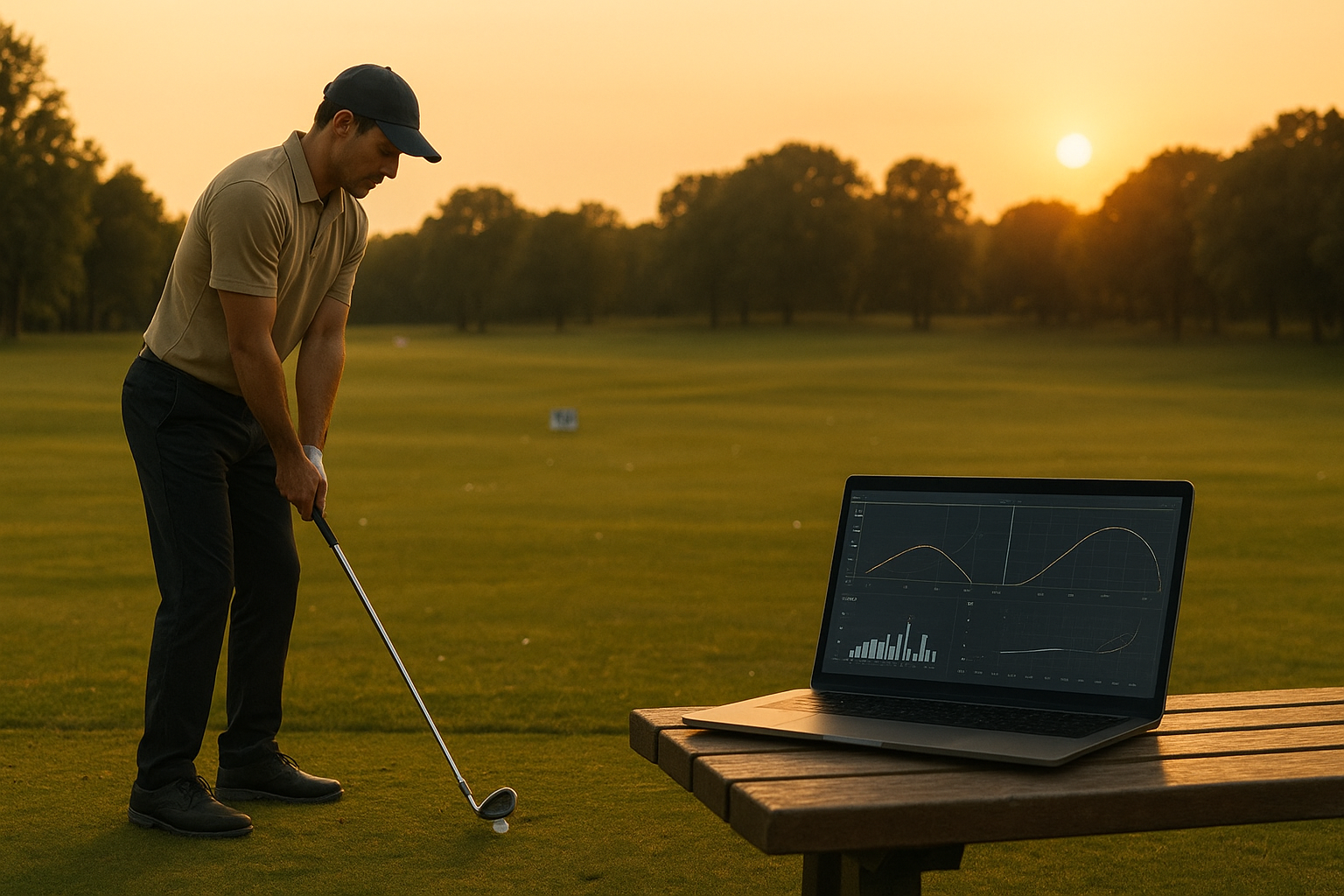
Consistent practice paired with structured review defines feedback-driven golf coaching.
Final Thoughts
In summary, feedback-driven golf coaching gives serious players a structured way to confirm that swing changes are actually working, rather than relying on guesswork or fading motivation. By combining biomechanical science with consistent, measurable feedback loops, golfers can build power, accuracy, and consistency while reducing injury risk. Whether you are a collegiate player, competitive amateur, or aspiring professional, this data-driven approach offers a clearer path to sustainable improvement than occasional, disconnected lessons ever could.